In a landmark advancement for condensed matter physics, a collaborative research effort has successfully demonstrated the creation of an exotic class of quantum states known as fractional Fermi seas. This discovery, published in the prestigious journal Physical Review Letters, marks a significant departure from established equilibrium paradigms and introduces a new critical phase of matter. The study was spearheaded by the research group of Hanns-Christoph Nägerl at the University of Innsbruck’s Department of Experimental Physics, in close collaboration with theoretical physicist Alvise Bastianello of the Centre National de la Recherche Scientifique (CNRS) and Université Paris-Dauphine. By pushing quantum particles far beyond their traditional equilibrium states, the team has uncovered a level of organization in highly excited systems that was previously thought to be unattainable under such extreme conditions.
The Quantum Architecture of One-Dimensional Systems
To understand the significance of the fractional Fermi sea, one must first consider the unique constraints of one-dimensional (1D) quantum systems. In the three-dimensional world, particles moving through space have the freedom to bypass one another. However, when particles are confined to a single dimension—essentially a quantum "wire"—their movements become inextricably linked. They cannot pass each other without interacting, leading to collective behaviors that differ fundamentally from those observed in bulk materials.
For decades, the gold standard for describing these 1D systems has been the Tomonaga-Luttinger liquid (TLL) theory. Developed in the mid-20th century, TLL theory posits that the low-energy excitations of 1D systems behave like collective waves rather than individual particles. While TLL has been remarkably successful in predicting the behavior of electrons in carbon nanotubes or cold atoms in optical traps, it primarily describes systems at or near their ground state—the state of lowest possible energy.
The new research led by Yi Zeng and the Nägerl group effectively breaks this mold. By subjecting ultracold cesium atoms to a continuous, periodic cycle of interaction strengths, the researchers forced the system into a "non-equilibrium" state. This process, often referred to in the broader scientific community as Floquet engineering, involves driving a system with a time-periodic force to create new effective Hamiltonians and phases of matter that do not exist in static environments.
Experimental Methodology: Ultracold Atoms and Interaction Cycling
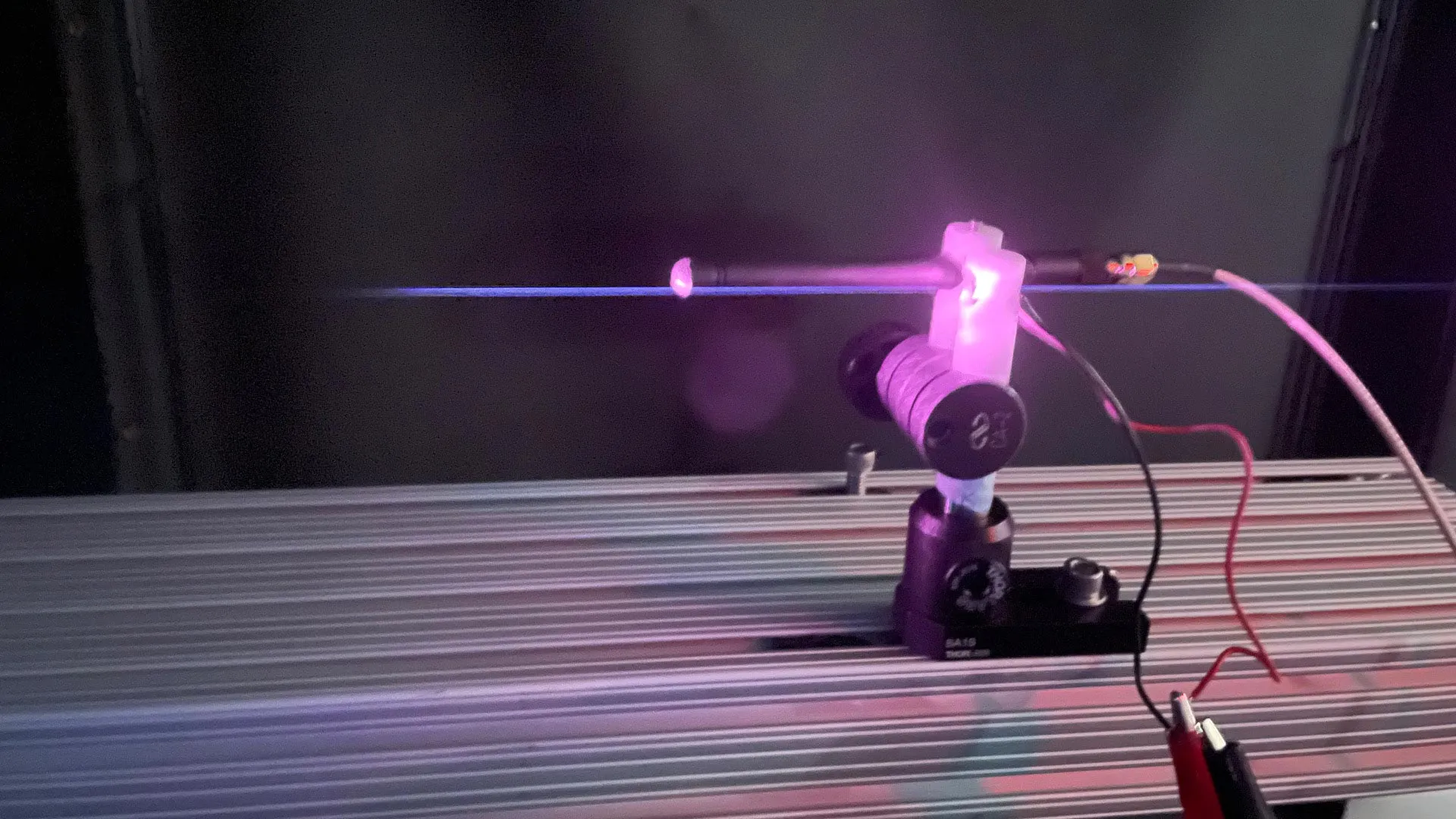
The experimental setup utilized by the Innsbruck team involved the use of cesium-133 atoms, a staple in high-precision quantum simulation due to their versatile magnetic properties. These atoms were cooled to temperatures only a few billionths of a degree above absolute zero (nanokelvin range) and trapped in an optical lattice—a "crystal of light" created by intersecting laser beams. This lattice confined the atoms to one-dimensional tubes, preventing any lateral motion.
The defining characteristic of this experiment was the manipulation of the interaction strength between the atoms. Using a technique known as Feshbach resonance, the researchers applied external magnetic fields to tune how the atoms perceive one another. By oscillating this field, they could transition the atoms from a state of strong repulsion (where atoms push each other away) to a state of strong attraction (where they tend to clump together).
Under normal circumstances, such violent oscillations would be expected to "heat" the system, injecting energy until the quantum order dissolves into a chaotic, thermalized gas. However, the researchers discovered that if the cycle is performed with specific precision and frequency, the atoms do not simply heat up. Instead, they reorganize into a highly excited but remarkably stable and structured configuration: the fractional Fermi sea.
Defining the Fractional Fermi Sea
In classical quantum mechanics, fermions—such as electrons—obey the Pauli Exclusion Principle, which dictates that no two identical fermions can occupy the same quantum state simultaneously. At absolute zero, fermions fill up the lowest available energy levels, much like water filling a container, creating what is known as a "Fermi sea." The surface of this "sea" is called the Fermi level.
The "fractional" Fermi sea observed in the Innsbruck experiment challenges this arrangement. According to Alvise Bastianello, the theoretical physicist who co-authored the study, the interaction cycle drives the atoms to obey a "reduced occupancy rule." In this state, the energy levels are not filled in the standard 100% capacity fashion. Instead, the particles occupy the available states in a fractional manner, creating a distribution that mimics a Fermi sea but with fundamentally altered density and correlation properties.
"Instead of simply heating the system, the interaction cycle reorganizes the atoms into a new many-body state," explained Yi Zeng, the study’s lead author. This reorganization represents a controlled exploration of "out-of-equilibrium" quantum matter, a field that remains one of the most challenging and exciting frontiers in modern physics.
Hidden Order and the "Super-Fermion"
One of the most striking findings of the study is the presence of "hidden order" within this highly excited state. Typically, high-energy states in quantum systems are synonymous with entropy and disorder. However, the fractional Fermi sea displays distinct mathematical correlations. Specifically, the researchers observed Friedel oscillations—ripples in the density of the particles—that persist across all levels of repulsive interaction.
These oscillations are characteristic of "critical" phases of matter, where the system is on the verge of a phase transition and exhibits universal scaling behaviors. The fact that these signatures appear in a highly excited, driven system suggests that the fractional Fermi sea is not a transient fluke but a robust, new phase of matter.
The nature of the particles within this sea has also sparked curiosity. In many-body physics, researchers often describe collective movements as "quasiparticles." Hanns-Christoph Nägerl has tentatively suggested the term "super-Fermions" to describe the entities inhabiting this fractional sea. These quasiparticles carry the characteristics of the driven system, behaving like fermions but within a framework that transcends the standard Tomonaga-Luttinger liquid description.
Chronology of Discovery and Peer Review
The journey toward this discovery began several years ago as the Nägerl group sought to push the limits of their 1D quantum simulators. The theoretical framework provided by Bastianello was essential in predicting that a stable, non-thermal state could survive the rigors of periodic driving.
- Phase I: Theoretical Modeling (2021-2022): Bastianello and the Innsbruck team developed the mathematical models suggesting that 1D systems could resist thermalization under specific interaction cycles.
- Phase II: Experimental Implementation (2023): Using the cesium lattice setup, the team successfully implemented the interaction cycling, observing the emergence of the predicted correlations.
- Phase III: Publication of Theoretical Framework (2024): The study detailing the existence and properties of the fractional Fermi sea was published in Physical Review Letters.
- Phase IV: Experimental Validation (Ongoing): A companion paper, which provides the raw experimental data and the direct realization of these states through quantum simulation, is currently under rigorous peer review.
Broader Implications for Quantum Technology
The discovery of fractional Fermi seas is more than a laboratory curiosity; it has profound implications for the future of quantum information science and materials engineering.
Quantum Simulation and Universal Behavior
By demonstrating that they can create states beyond the Tomonaga-Luttinger liquid paradigm, the researchers have shown that cold-atom simulators are capable of exploring "uncharted territory." This opens the door to simulating high-energy physics or exotic materials that cannot be studied in a traditional solid-state lab. The ability to find universal quantum behaviors in out-of-equilibrium states suggests that there may be a broader set of laws governing non-equilibrium thermodynamics that are yet to be fully understood.
Materials Science and Superconductivity
The study of 1D and 2D quantum states is often a precursor to understanding high-temperature superconductivity. In certain materials, electrons are confined to layers or chains, and their interactions drive the lossless flow of electricity. Understanding how "hidden order" emerges in excited states could provide clues on how to maintain quantum coherence at higher temperatures, potentially leading to more robust quantum materials.
Quantum Computing
One of the primary hurdles in quantum computing is decoherence—the tendency of quantum states to break down when they interact with their environment. The fractional Fermi sea represents a state that is highly excited yet stable and organized. If researchers can harness the mechanisms that allow this state to resist thermalization (a process known as many-body localization or pre-thermalization), they may find new ways to protect quantum information in future computing architectures.
Official Reactions and Expert Commentary
The physics community has responded to the publication with significant interest. While the experimental companion paper is still under review, the theoretical foundation has already begun to shift perspectives on 1D dynamics.
"The discovery of fractional Fermi seas shows how far we can push quantum simulation," said Hanns-Christoph Nägerl. "We are not only reproducing known models but creating and probing states that go beyond established paradigms. It challenges the notion that heating is the inevitable result of driving a quantum system."
Other experts in the field of ultracold atoms have noted that this work bridges the gap between integrable systems—those that are mathematically "solvable" and do not thermalize—and more complex, chaotic systems. By finding a "middle ground" where order emerges from periodic driving, the Innsbruck and Paris researchers have provided a new roadmap for non-equilibrium physics.
Conclusion: A New Chapter in Quantum Physics
The identification of the fractional Fermi sea as a new critical phase of matter marks a pivotal moment in the study of many-body quantum systems. It proves that the "rules" of quantum arrangement can be rewritten through precise manipulation of particle interactions. As the scientific community awaits the publication of the full experimental results, the theoretical groundwork established in Physical Review Letters stands as a testament to the power of international collaboration and the near-infinite flexibility of quantum simulators.
For the researchers at the University of Innsbruck and their partners in France, the focus now shifts to further characterizing these "super-Fermions" and determining whether similar fractional states can be induced in higher dimensions. The discovery confirms that even in the seemingly simple world of one-dimensional movement, the quantum realm still holds deep, structured secrets waiting to be uncovered.