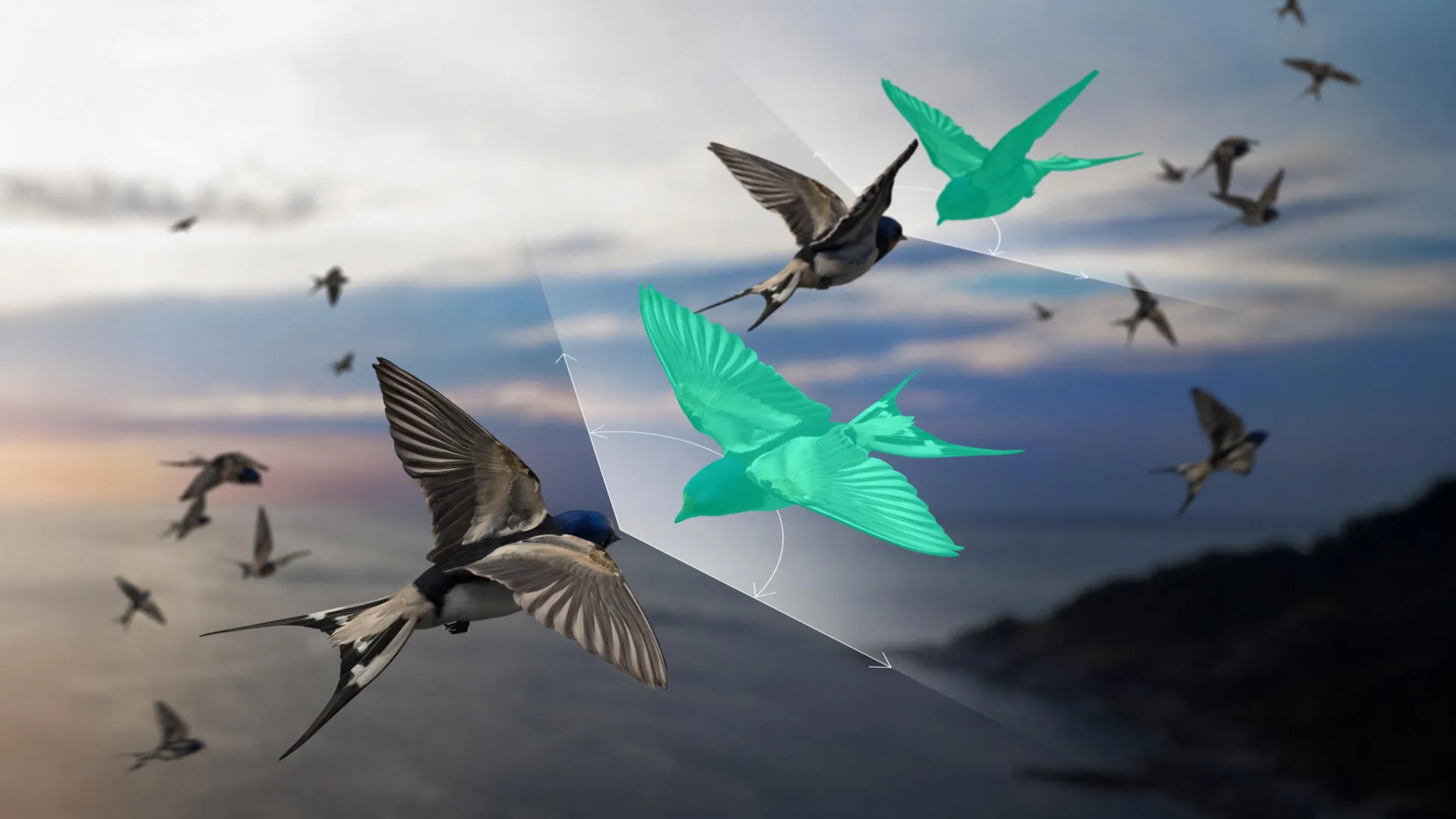
The fundamental laws of motion, established by Sir Isaac Newton in 1687, have served as the bedrock of classical physics for over three centuries. Among these, the third law—stating that for every action, there is an equal and opposite reaction—governs the mechanical interactions of the universe, from the recoil of a rifle to the propulsion of a jet engine. However, a significant challenge has long persisted in the scientific community: many complex, living systems appear to defy this reciprocal balance. From the synchronized swarming of bacteria to the elegant, directional flight of bird flocks, these "non-reciprocal" systems have remained notoriously difficult to simulate and understand through the lens of traditional physics.
A breakthrough study recently published in the journal Nature Physics by a collaborative team of researchers in Dresden and Würzburg has provided a revolutionary solution to this problem. Led by physicists at the Max Planck Institute for the Physics of Complex Systems and the Würzburg-Dresden Cluster of Excellence ct.qmat (Complexity, Topology, and Dynamics in Quantum Matter), the team has developed a mathematical framework that allows non-reciprocal systems to be described using established reciprocal methods. By introducing "fictitious partners" into their equations, the researchers have effectively bridged the gap between classical mechanics and the chaotic, one-way interactions found in nature.
The Paradox of Non-Reciprocal Interactions
In a standard physical system, interactions are reciprocal. When a person pushes against a wall, the wall pushes back with the same force. This symmetry ensures that energy and momentum are conserved in ways that physicists can easily calculate. However, in "active matter"—systems composed of individual agents that consume energy to move—this symmetry is frequently broken.
Consider a flock of starlings. When birds fly in close formation, they do not respond to every bird in the group. Instead, biological observations show that a bird primarily adjusts its speed and direction based on the neighbors directly in front of it or beside it. It does not react to the birds behind it. In this scenario, the interaction is unidirectional: Bird A influences Bird B, but Bird B does not exert a corresponding "reaction" force on Bird A. This violation of Newton’s third law creates a "non-reciprocal" interaction that renders traditional theoretical mechanics inapplicable.
This phenomenon is not limited to ornithology. It is observed in bacterial colonies where individuals follow chemical trails, in human crowds where pedestrians navigate based on their forward field of vision, and in the movement of cells within living tissue. Because traditional physics is built on the foundation of action and reaction, scientists have historically struggled to create accurate simulations of these systems. Without a balanced equation, the mathematical models often become unstable or fail to capture the collective behavior of the group.
The Mathematical Breakthrough: The Case of the Imaginary Bird
The research team, including group leader Marín Bukov and biophysicist Ricard Alert, sought to find a way to apply the rigorous tools of many-body physics to these unruly systems. Their solution involves a sophisticated mathematical "trick" that restores the appearance of reciprocity without altering the underlying reality of the system.
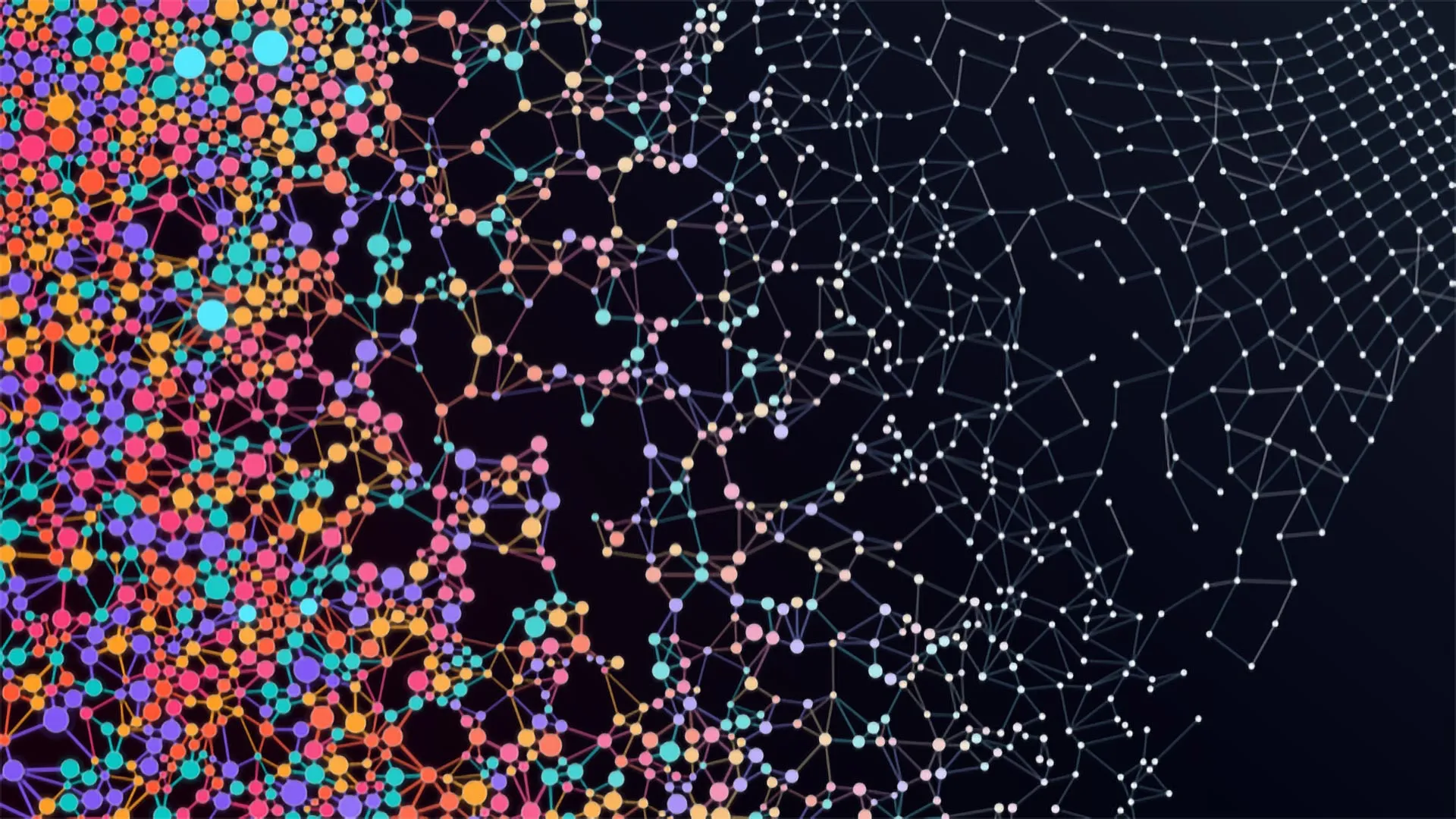
The core of their theory involves the introduction of "auxiliary degrees of freedom." In physics, a degree of freedom is a variable that describes a state, such as position or velocity. To model a non-reciprocal system like a flock of birds, the researchers create a "partner" for every real component in the system.
"The trick behind the new theory is that it constructs a partner for each component of the system—a fictitious partner that doesn’t exist in nature," explains Ricard Alert. "The original non-reciprocal interactions are replaced by reciprocal interactions with these auxiliary degrees of freedom."
In the context of a bird flock, this means that for every real bird, the simulation places an "imaginary bird" in front of it, aligned in the opposite direction. While these imaginary partners do not exist in the physical world, they serve as mathematical anchors. By creating a reciprocal relationship between a real bird and its imaginary counterpart, the researchers can use the well-established "action-reaction" equations that have been refined over the last 300 years. This allows the one-way interaction of the actual birds to be simulated with extreme precision, as the "missing" reaction force is accounted for by the fictitious partner.
A Chronology of Active Matter Research
The struggle to model collective motion dates back several decades. In the mid-1990s, the "Vicsek model" became one of the first widely accepted ways to simulate the alignment of self-propelled particles. While groundbreaking, the Vicsek model and its successors were often criticized for being overly simplistic or computationally expensive when scaled to complex biological systems.
Throughout the 2010s, the field of "active matter" physics grew rapidly as researchers realized that biological systems could be treated as a new state of matter. However, a unifying theory that could link these non-equilibrium systems back to the "equilibrium" physics taught in universities remained elusive.
The Würzburg-Dresden team began tackling this specific problem by looking at many-body physics—a branch of physics that deals with systems containing a large number of interacting particles. By the early 2020s, the researchers identified that the use of auxiliary variables, often used in quantum field theory to simplify complex integrals, could be adapted for non-reciprocal classical systems. This led to the development of the theory recently proven and published in 2024, marking a significant milestone in the timeline of theoretical mechanics.
Supporting Data and Simulation Precision
The implications of this theory are grounded in its ability to provide "exact" descriptions. In previous models, researchers often had to rely on approximations or "mean-field" theories, which average out the interactions of a group. While these provide a general sense of movement, they often miss the subtle "phase transitions"—sudden changes in behavior, such as a flock of birds suddenly veering or a crowd turning into a stampede.
The new framework allows for simulations that maintain the integrity of individual interactions. By using auxiliary degrees of freedom, the researchers demonstrated that they could achieve a level of precision that was previously impossible. This is particularly important for studying "fluctuations"—the small, random movements of individuals that can ripple through a system and cause large-scale changes.
Furthermore, the theory allows for the use of "Hamiltonian dynamics," a sophisticated mathematical framework used to describe the total energy of a system. By mapping non-reciprocal systems onto a Hamiltonian structure via fictitious partners, the researchers have opened up a vast library of existing analytical tools for use in biology and social sciences.
Official Responses and Scientific Collaboration
The success of the project is largely attributed to the interdisciplinary collaboration within the Würzburg-Dresden Cluster of Excellence ct.qmat. This cluster focuses on quantum matter, but the principles of interaction are universal across scales.
Marín Bukov emphasized the pedagogical importance of the discovery. "Whatever we normally teach our students in theoretical mechanics, it ultimately rests on the action-reaction principle," Bukov stated. "The research team has developed and proven a theory that makes much of what we teach our students applicable to non-reciprocal systems as well. This is exactly the kind of tool that has been missing in recent years."
Roderich Moessner, a Principal Investigator of ct.qmat and director at the Max Planck Institute for the Physics of Complex Systems, highlighted the broader scientific curiosity driving the research. "In Würzburg and Dresden, we study quantum matter whose particles interact under certain conditions in ways that give rise to new phenomena such as magnetism or lossless current transport," Moessner noted. "The exciting question now is whether these exceptions to Newton’s law lead to entirely new forms of collective quantum behavior."
Broader Impact: From Crowds to Quantum Matter
The enrichment of this theoretical framework has far-reaching implications across multiple fields of study.
1. Biological and Medical Research:
In living tissue, cells often move collectively to heal wounds or form organs. These movements are highly non-reciprocal, as cells respond to chemical gradients and the mechanical pull of their neighbors. Better simulations could lead to a deeper understanding of how cancer cells metastasize or how embryos develop.
2. Crowd Safety and Urban Planning:
By accurately modeling how humans react to those in their immediate vicinity, urban planners can design safer stadiums, subway stations, and public squares. Understanding the non-reciprocal nature of "following" behavior can help predict and prevent dangerous crowd crushes.
3. Autonomous Systems and Robotics:
As we move toward a future of autonomous vehicles and drone swarms, the ability to program "collective intelligence" is vital. This new theory provides a mathematical blueprint for how individual drones can maintain formation and respond to obstacles without needing a central controller, mimicking the efficiency of a flock of birds.
4. The Quantum Frontier:
Perhaps the most intriguing application lies in the realm of quantum physics. Most quantum systems are studied under the assumption of reciprocity. However, in "open" quantum systems—where a system interacts with its environment—non-reciprocal effects can emerge. The Würzburg-Dresden team is now investigating whether these "exceptions" to Newton’s law could lead to the discovery of entirely new phases of matter or novel ways to transport information in quantum computers.
Conclusion
The work of the Dresden and Würzburg researchers represents a rare moment in science where a fundamental limitation of a centuries-old law is not just identified, but elegantly bypassed. By proving that non-reciprocal systems can be "tamed" using the very tools they seemed to defy, the team has provided a powerful new lens through which to view the complexity of the natural world. As this theory is applied to everything from the smallest bacteria to the most advanced quantum materials, it promises to unlock a deeper understanding of the collective motions that define life and the universe.