A landmark study conducted by researchers at the University of Illinois Urbana-Champaign has challenged long-standing neuroscientific paradigms regarding how the brain processes information and arrives at decisions. Published in the Proceedings of the National Academy of Sciences (PNAS), the research provides compelling evidence that decision-making processes are not confined to the brain’s higher-order centers but instead begin much earlier in the sensory processing chain than previously understood. Led by Yurii Vlasov, a professor of electrical and computer engineering at The Grainger College of Engineering, the study suggests that the primary somatosensory cortex—once thought to be a mere relay station for tactile data—plays a pivotal role in the formation of choices. This discovery carries profound implications for the field of artificial intelligence, offering a biological blueprint for developing systems that are not only more cognitively capable but also significantly more energy-efficient than current architectures.
The Paradigm Shift in Neurobiological Decision Models
For decades, the prevailing model of brain function has been one of a strict, feed-forward hierarchy. In this traditional view, sensory inputs—such as the feeling of a texture or the sight of an object—are received by primary sensory regions and then passed upward through a series of increasingly complex processing layers. Only after this information reaches the frontal cortex, the brain’s executive hub, is a decision purportedly made. This linear "bottom-up" approach has served as the foundational inspiration for many modern artificial intelligence systems, particularly convolutional neural networks (CNNs), which process data in successive layers to identify patterns and categorize information.
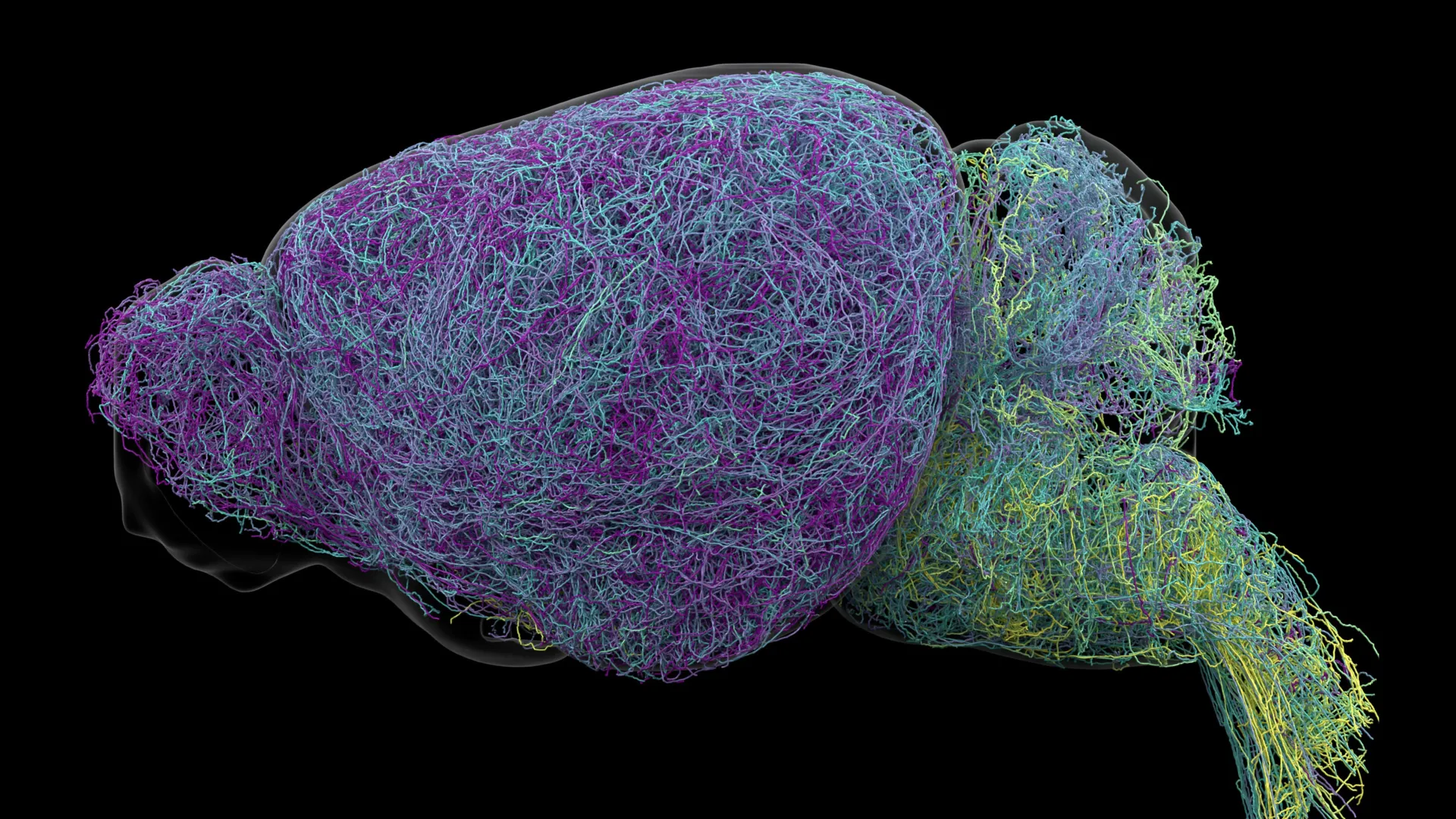
However, the UIUC research team, led by Professor Vlasov, has found that this model is incomplete. By monitoring the neural activity of mice as they performed perceptual tasks within a virtual reality environment, the researchers observed decision-related signals occurring within the primary somatosensory cortex (S1). This indicates that the very first regions to receive sensory input are already integrated into the decision-making loop. Rather than acting as a simple conduit, the S1 region appears to be heavily influenced by "top-down" feedback from higher brain regions, suggesting a continuous, bidirectional dialogue that shapes perception and action simultaneously.
The 21st Century Grand Challenge: Reverse Engineering the Brain
The significance of this study is underscored by the National Academy of Engineering’s 2008 declaration that reverse engineering the human brain is one of the 14 "Grand Challenges" for engineering in the 21st century. Despite the rapid advancement of digital technology, the human brain remains the most complex and efficient processing unit known to science. It performs trillions of operations per second while consuming approximately 20 watts of power—roughly the amount needed to light a dim bulb. In contrast, modern AI models, such as large language models (LLMs), require massive data centers consuming megawatts of electricity to perform comparable, though often narrower, cognitive tasks.
The UIUC study addresses this challenge by looking at the architectural organization of biological intelligence. Professor Vlasov notes that the brain’s efficiency is a product of nearly a billion years of evolution. By understanding how the brain utilizes feedback loops and distributed decision-making to conserve energy and increase speed, engineers can begin to design neuromorphic hardware and software that emulate these biological advantages.
Experimental Methodology and the Role of the Somatosensory Cortex
To uncover these insights, the research team utilized a sophisticated experimental setup involving mice navigating a virtual reality corridor. The mice were trained to make perceptual decisions based on tactile stimuli, a process that allowed researchers to isolate the neural correlates of decision-making. Using advanced recording techniques, the team tracked the firing patterns of neurons in the primary somatosensory cortex (S1) in real-time.
The somatosensory cortex is the part of the brain responsible for processing somatic sensations, such as touch, pressure, and vibration. Under the old model, S1 would simply register the presence of a stimulus and pass that data to the motor or prefrontal cortex. However, the UIUC data showed that the neural firing patterns in S1 were predictive of the animal’s eventual choice well before the physical action was taken. This suggests that the "neural code" for a decision is distributed across the brain, with early sensory areas participating in the "deliberation" phase through interconnected feedback loops.
The Feedback Loop: A Bidirectional Flow of Intelligence
One of the most critical findings of the study is the presence of top-down regulation. In biological systems, feedback loops allow higher-level cognitive centers to send signals back down to primary sensory areas. This mechanism serves several functions: it filters out noise, focuses attention on relevant stimuli, and prepares the sensory system for expected inputs.
In the context of the UIUC study, these feedback loops mean that the primary somatosensory cortex is not just seeing the world as it is, but is being "tuned" by the brain’s expectations and goals. This bidirectional flow is largely absent in standard artificial neural networks, which typically rely on backpropagation during the training phase but remain strictly feed-forward during execution (inference). By incorporating dynamic feedback loops into AI architecture, researchers believe they can create systems that are more adaptable and better at navigating "noisy" or uncertain environments, much like biological organisms.
Comparative Energy Efficiency: Biology vs. Silicon
The drive to emulate brain architecture is fueled by a growing crisis in AI energy consumption. As AI models grow in size, the environmental and economic costs of training and running them have skyrocketed. A single training run for a high-end AI model can emit as much carbon as five cars over their entire lifetimes.
The UIUC research suggests that the brain’s "distributed decision-making" is a key component of its efficiency. In a traditional AI system, every piece of data must pass through every layer of the network, consuming energy at every step. In the brain, if a decision can be initiated or influenced at an early sensory stage, the system can potentially "shortcut" more energy-intensive processes. Furthermore, the use of feedback loops allows the brain to be "event-driven," meaning it only activates specific circuits when necessary, rather than maintaining high levels of activity across the entire network.
Timeline of Neuro-Engineering Evolution
The path to this discovery has been built over decades of interdisciplinary research. To understand the context of Vlasov’s work, one must look at the timeline of neural modeling:
- 1950s-1960s: Hubel and Wiesel’s work on the visual cortex establishes the hierarchical, feed-forward model of sensory processing.
- 1980s: The emergence of Parallel Distributed Processing (PDP) begins to explore non-linear neural architectures.
- 2008: The National Academy of Engineering identifies reverse engineering the brain as a Grand Challenge.
- 2010s: The "Deep Learning" revolution sees the massive success of feed-forward Convolutional Neural Networks (CNNs).
- 2020-Present: Researchers increasingly recognize the limitations of feed-forward models in terms of energy and adaptability, leading to a renewed interest in neuromorphic computing and feedback-driven architectures.
- 2024: The UIUC study published in PNAS provides empirical evidence of early-stage decision activity in the S1 cortex, providing a concrete biological target for new AI designs.
Official Perspectives and the Future of AI Development
While the UIUC study does not provide a literal "wiring diagram" for a new AI, it acts as a foundational theoretical shift. Professor Vlasov emphasizes that the goal is to learn from the architectural principles of the brain. "The neural code of the brain is still mostly an unknown language," Vlasov stated. "But this systems-level understanding can be viewed as a potential impact on how more efficient artificial neural networks can be built."
The research community has reacted with cautious optimism. If AI researchers can successfully emulate the fast temporal dynamics and feedback structures observed in the mice’s somatosensory systems, the next generation of AI could move beyond the "black box" of deep learning. These systems would be more transparent in their decision-making processes because their "reasoning" would be integrated across multiple levels of processing rather than being buried in a final, opaque layer.
Broader Implications for Industry and Technology
The implications of this research extend far beyond the laboratory. Industries ranging from autonomous robotics to healthcare diagnostics stand to benefit from AI that operates more like a biological brain.
- Autonomous Vehicles: Current self-driving systems require immense onboard computing power. An AI that uses early-stage sensory feedback could process road hazards more quickly and with less power, extending the range of electric vehicles.
- Edge Computing: For devices like smartphones and IoT sensors, energy efficiency is paramount. Neuromorphic chips inspired by Vlasov’s findings could allow for complex decision-making to occur locally on the device rather than in the cloud.
- Environmental Sustainability: By reducing the energy requirements of large-scale AI, the technology can continue to grow without a corresponding spike in global energy demand.
Conclusion and Next Steps
The work of the University of Illinois Urbana-Champaign team represents a significant step forward in the quest to bridge the gap between biological and artificial intelligence. By demonstrating that decision-making is a pervasive, multi-level process that begins at the very edge of perception, the researchers have provided a new roadmap for AI development.
Moving forward, Professor Vlasov and his team plan to delve deeper into the timing of these neural signals. They are developing new technologies to measure neural activity with even higher precision, aiming to capture the millisecond-by-millisecond interactions within these feedback loops. As our understanding of the brain’s "temporal dynamics" improves, so too will our ability to build machines that think, learn, and decide with the elegance and efficiency of the human mind. The challenge now lies in translating these biological insights into silicon and code, a task that may define the next era of the digital age.