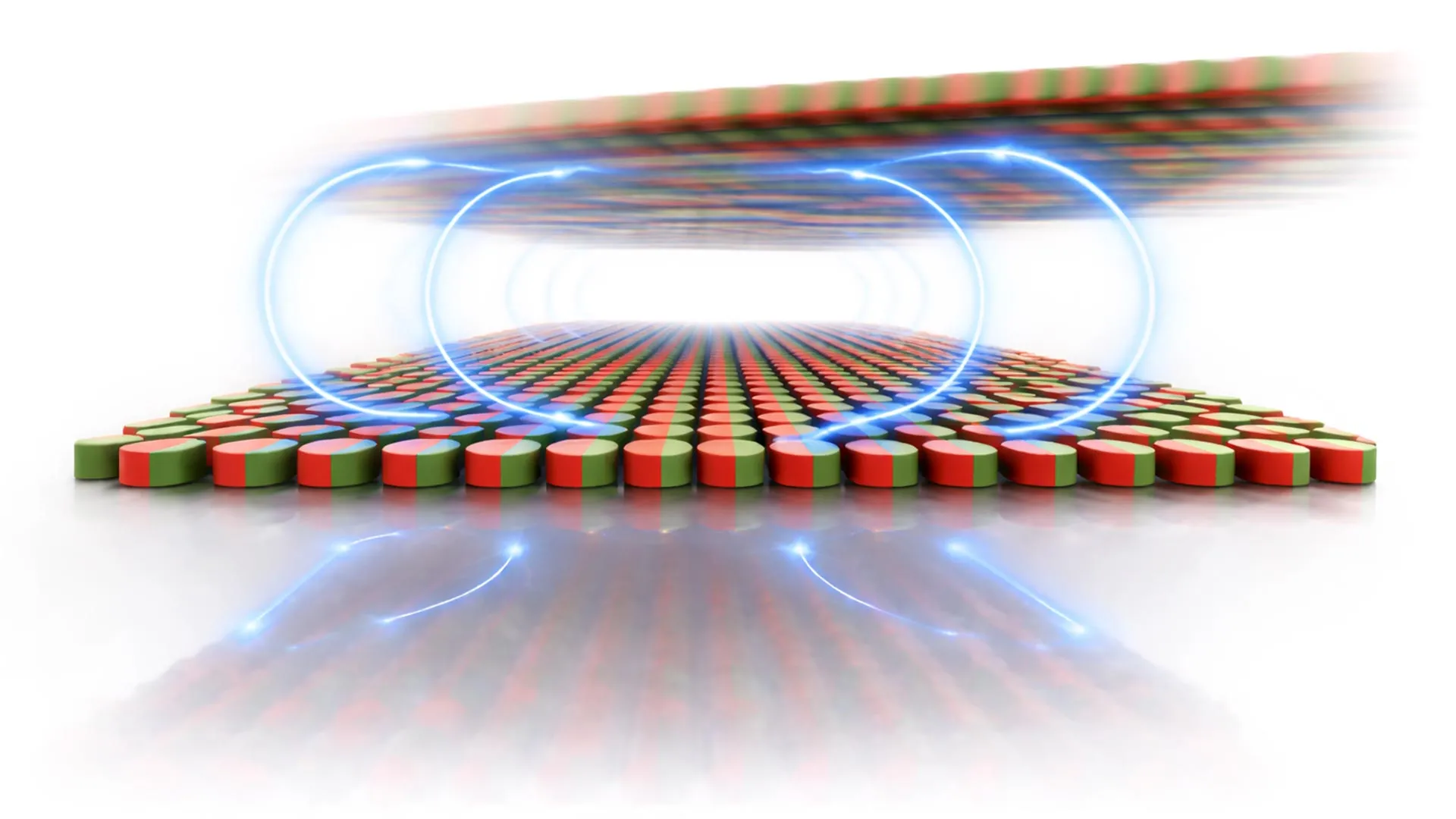
In a discovery that challenges three centuries of physical principles, researchers at the University of Konstanz have identified a novel form of sliding friction that occurs entirely without physical contact. This phenomenon, emerging from the collective behavior of magnetic elements, demonstrates that resistance to motion does not always follow the linear relationship between load and friction established by Amontons’ law. Instead, the research team observed a distinct peak in friction at specific interaction levels, a finding that could revolutionize the design of micro-machinery and our understanding of energy dissipation in magnetic systems.
For over 300 years, the scientific community has relied on Amontons’ law of friction to describe how two surfaces interact when sliding against one another. Formulated in 1699 by the French physicist Guillaume Amontons—and later refined by Charles-Augustin de Coulomb—the law posits that the friction force is directly proportional to the applied load. In everyday terms, this explains why pushing a heavy crate across a floor is significantly more difficult than pushing a light one. The traditional explanation for this linearity lies in the microscopic topography of surfaces; as more pressure is applied, the "asperities" or microscopic bumps on the surfaces deform and create more contact points, thereby increasing resistance.
However, the team at the University of Konstanz, led by Professor Clemens Bechinger, has demonstrated that this fundamental rule is not universal. Their study, recently published in a leading scientific journal, reveals that in systems governed by magnetic interactions rather than physical touch, friction can behave in a non-linear and highly unexpected manner.
The Historical Context of Tribology
To appreciate the magnitude of this discovery, one must look at the history of tribology—the science of wear, friction, and lubrication. Since the era of Leonardo da Vinci, who first recorded the basic sketches of friction laws, the assumption has been that friction is a surface-bound phenomenon. Engineers have spent centuries developing lubricants and materials to minimize the "interlocking" of surface irregularities.
In traditional mechanics, the internal structure of a material remains relatively static during sliding; the energy loss occurs at the interface. While modern physics has explored "superlubricity" (where friction nearly vanishes) and atomic-scale friction, these models still generally assume that friction increases as you press two objects closer together. The Konstanz experiment marks a departure from this trajectory by proving that internal reorganization of a system’s components can generate friction even when the "surfaces" never meet.
The Experimental Setup: A Tabletop Magnetic Laboratory
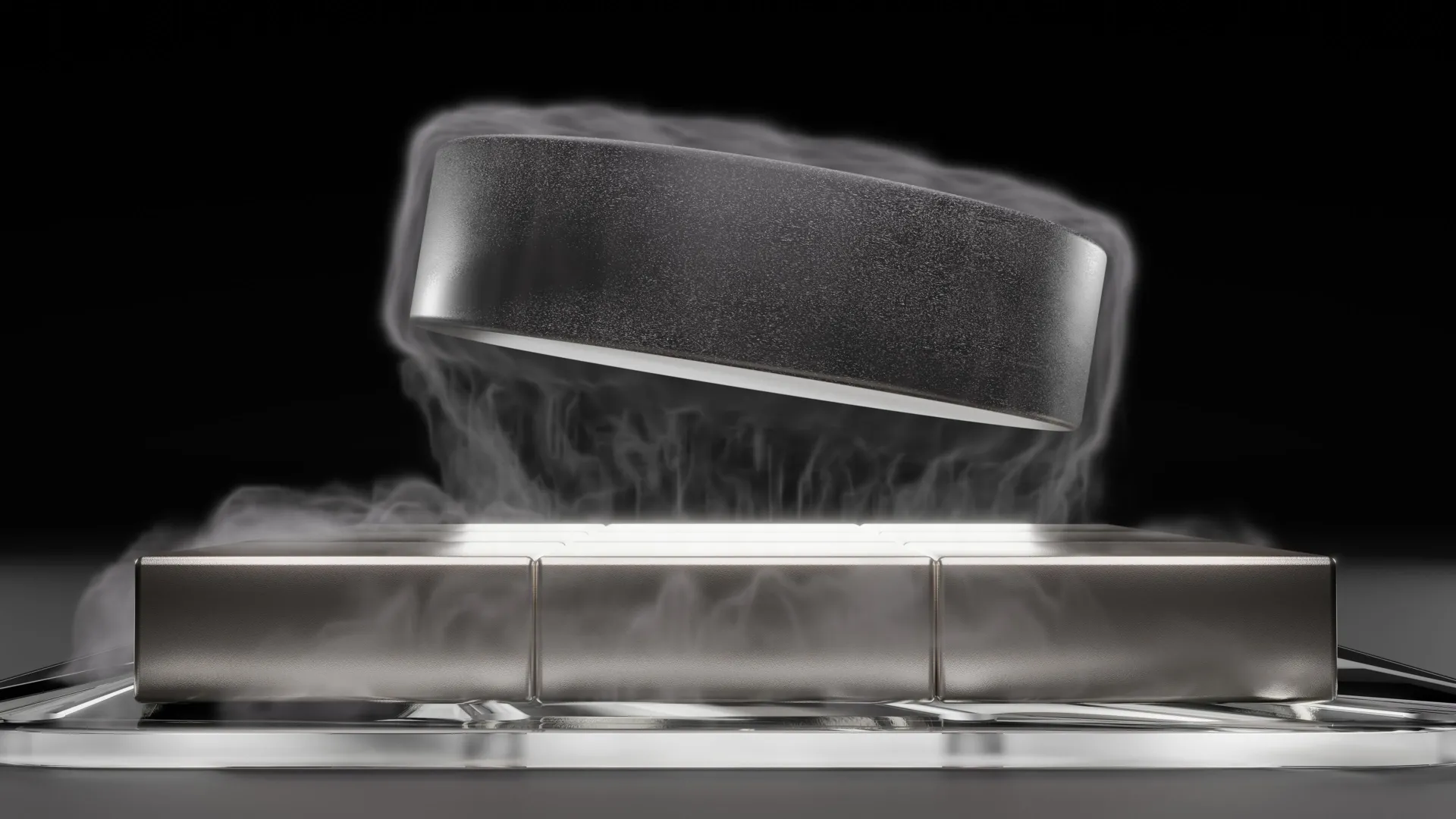
To investigate these unconventional dynamics, the researchers designed a sophisticated tabletop experiment. The setup consisted of a two-dimensional array of magnetic rotors—small, freely rotating magnetic elements—positioned above a secondary magnetic layer. Crucially, the researchers maintained a gap between these two layers, ensuring that no physical contact or mechanical interlocking could occur.
The "load" in this experiment was not represented by physical weight but by the magnetic coupling strength between the two layers, which the researchers could precisely control by adjusting the vertical distance. As the top layer was moved horizontally across the bottom layer, the team used high-resolution imaging and sensors to track the orientation of the magnetic rotors and measure the resulting resistance force.
Hongri Gu, a key researcher involved in the experimental phase, noted that by manipulating the distance, the team could drive the system into different states of magnetic interaction. This allowed them to observe how the individual rotors reacted to the moving magnetic field of the underlying layer, providing a direct view of the internal structural changes that traditional friction experiments often obscure.
The Discovery of Magnetic Frustration
The most striking result of the experiment was the emergence of a "friction peak." Under Amontons’ law, one would expect friction to be lowest when the layers are far apart and highest when they are closest together. Instead, the Konstanz team found that friction was minimal at both extremes of the distance scale.
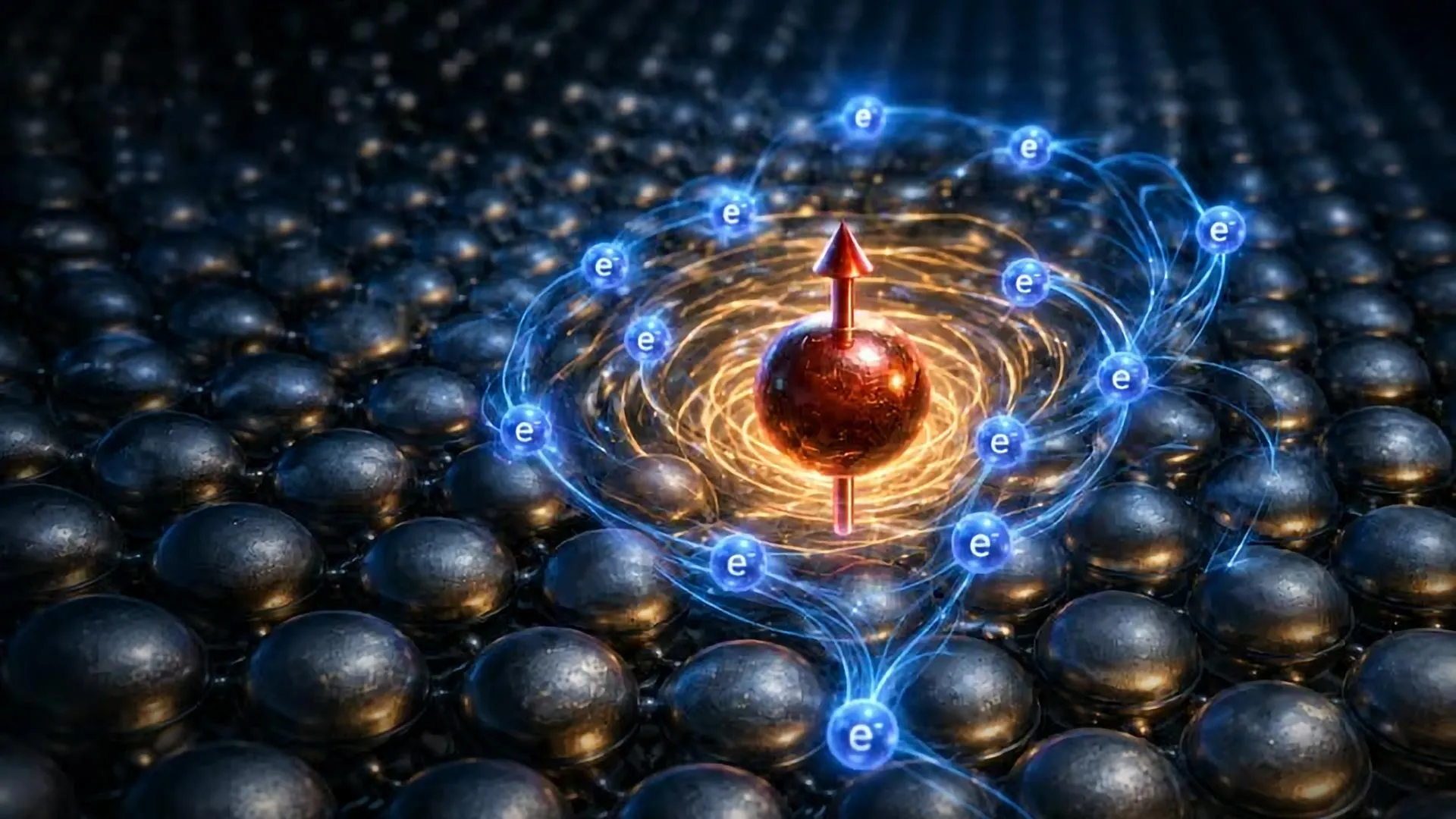
The resistance reached its maximum at an intermediate distance, a phenomenon the researchers attributed to "magnetic frustration." This occurs because of a fundamental conflict in how the magnets want to align. The upper layer of rotors is designed with a preference for an antiparallel configuration—where neighboring magnets point in opposite directions. Conversely, the magnetic field from the lower layer exerts a force that encourages a parallel arrangement.
When the layers are at a specific intermediate distance, neither preference can dominate. This creates a state of "frustration" where the magnetic moments are caught in a tug-of-war between two incompatible configurations. As the system moves, the rotors do not glide smoothly; instead, they are forced to repeatedly and abruptly flip between these states.
Hysteresis and Energy Dissipation
The mechanism behind this contactless friction is rooted in a concept known as hysteresis. In physics, hysteresis refers to systems where the current state is dependent on its history. In the Konstanz experiment, as the magnetic rotors switch orientations to resolve the conflict between the two layers, they do not do so instantaneously or efficiently.
Anton Lüders, who developed the theoretical framework for the study, explained that this constant switching leads to significant energy loss. "From a theoretical perspective, this system is remarkable because friction does not originate from a physical surface contact, but from the collective dynamics of magnetic moments," Lüders stated.
Every time a magnetic rotor flips its orientation, energy is dissipated into the system, manifesting as a measurable friction force. Because this flipping is most violent and frequent during the state of magnetic frustration, the friction force peaks at the intermediate distance where the conflict is most intense. This represents a complete breakdown of the linear relationship described by Amontons, as increasing the "load" (moving the layers even closer) actually causes the friction to decrease once the lower layer’s influence becomes strong enough to override the frustration and force a stable parallel alignment.
Analysis of Implications: A Wear-Free Future
The implications of this research are far-reaching, particularly for industries where mechanical wear is a primary cause of failure. Because this type of friction involves no physical contact, there is no material degradation. Traditional friction causes surfaces to grind down over time, leading to the accumulation of debris and the eventual breakdown of components. Magnetic friction, by contrast, generates resistance without shedding a single atom of material.
Professor Clemens Bechinger emphasized the purity of this mechanism. "What is remarkable is that friction here arises entirely from internal reorganization," he said. "There is no wear, no surface roughness, and no direct contact. Dissipation is generated solely by collective magnetic rearrangements."
This "clean" friction could be transformative for several high-tech sectors:
- Micro and Nanoelectromechanical Systems (MEMS/NEMS): In tiny devices like those found in medical sensors or smartphone components, traditional lubricants are often ineffective due to surface tension, and wear can destroy a device in a matter of cycles. Contactless magnetic friction could provide a way to control movement without the risk of mechanical failure.
- Space Exploration: In the vacuum of space, traditional lubricants evaporate, and metals can "cold weld" together upon contact. Magnetic bearings and contactless control systems based on these findings could offer a more reliable alternative for satellite mechanisms and rover joints.
- Adaptive Damping Systems: Since the friction peak is dependent on the distance between magnetic layers, engineers could design "frictional metamaterials" with tunable damping properties. By simply adjusting a magnetic field or a physical gap, the resistance of a system could be increased or decreased remotely and instantaneously.
Bridging the Gap Between Tribology and Magnetism
The research also establishes a new bridge between two previously distinct fields of physics: tribology and magnetism. By showing that mechanical measurements (friction) can be used to study collective spin behavior, the Konstanz team has provided physicists with a new tool for probing the internal states of magnetic materials.
This is particularly relevant for the study of atomically thin magnetic materials, such as van der Waals magnets. In these ultra-thin layers, even minor displacements can lead to massive shifts in magnetic ordering. The ability to "read" these magnetic states through friction measurements could accelerate the development of next-generation spintronic devices, which use the spin of electrons rather than their charge to process information.
Conclusion and Future Outlook
The work of the University of Konstanz researchers serves as a reminder that even the most established laws of physics are subject to revision when explored through the lens of modern experimental techniques. By isolating friction from the physical surface, the team has revealed a hidden world of energy dissipation driven by collective internal dynamics.
As the scientific community digests these findings, the next steps will likely involve scaling these experiments down to the molecular level and exploring different types of magnetic geometries. The potential for "friction on demand"—where resistance can be tuned without the mess of lubricants or the inevitability of wear—marks a significant milestone in the history of mechanics.
While Amontons’ law will continue to guide our understanding of the macroscopic world of crates and car tires, the realm of the very small and the very precise now has a new set of rules. The discovery of contactless magnetic friction ensures that the future of motion control will be defined not by how surfaces touch, but by how their internal forces interact in the silent, invisible dance of magnetic fields.