

In a landmark achievement for high-energy-density physics, researchers at the Helmholtz-Zentrum Dresden-Rossendorf (HZDR) have successfully documented the instantaneous ionization of matter with unprecedented temporal and spatial resolution. As detailed in the journal Nature Communications, the international team utilized a sophisticated dual-laser configuration to observe the transition of solid matter into a superheated plasma state. By combining the capabilities of the European X-ray Free-Electron Laser (XFEL) with the high-intensity optical laser ReLaX, the researchers have provided a granular view of atomic behavior under conditions that mimic the interior of stars or the environments surrounding neutron stars. This breakthrough not only advances fundamental plasma physics but also provides a critical diagnostic framework for the burgeoning field of inertial confinement fusion, a potential source of near-limitless clean energy.
The Frontier of Plasma Physics and Extreme States of Matter
The study of plasma—often referred to as the fourth state of matter—is central to understanding the universe. Comprising a soup of free electrons and positively charged ions, plasma makes up more than 99% of the visible cosmos. However, recreating and observing the birth of plasma in a laboratory setting requires technology capable of operating at scales far beyond human perception. The transition from a solid lattice to a turbulent plasma happens in picoseconds, requiring diagnostic tools that operate in the femtosecond range.
The HZDR experiment took place at the High Energy Density (HED) instrument’s HIBEF (Helmholtz International Beamline for Extreme Fields) experimental station, located at the European XFEL in Schenefeld, Germany. This facility is uniquely equipped to handle the extreme requirements of the study. By focusing an intense optical laser onto a target, researchers can generate temperatures of millions of degrees and pressures millions of times greater than Earth’s atmospheric pressure. The challenge, historically, has been "seeing" into this dense, hot environment, as traditional optical instruments are blinded by the plasma’s own luminosity. The use of hard X-rays provided by the XFEL serves as a high-speed camera capable of piercing through the chaos.
Experimental Methodology: The Pump-Probe Architecture
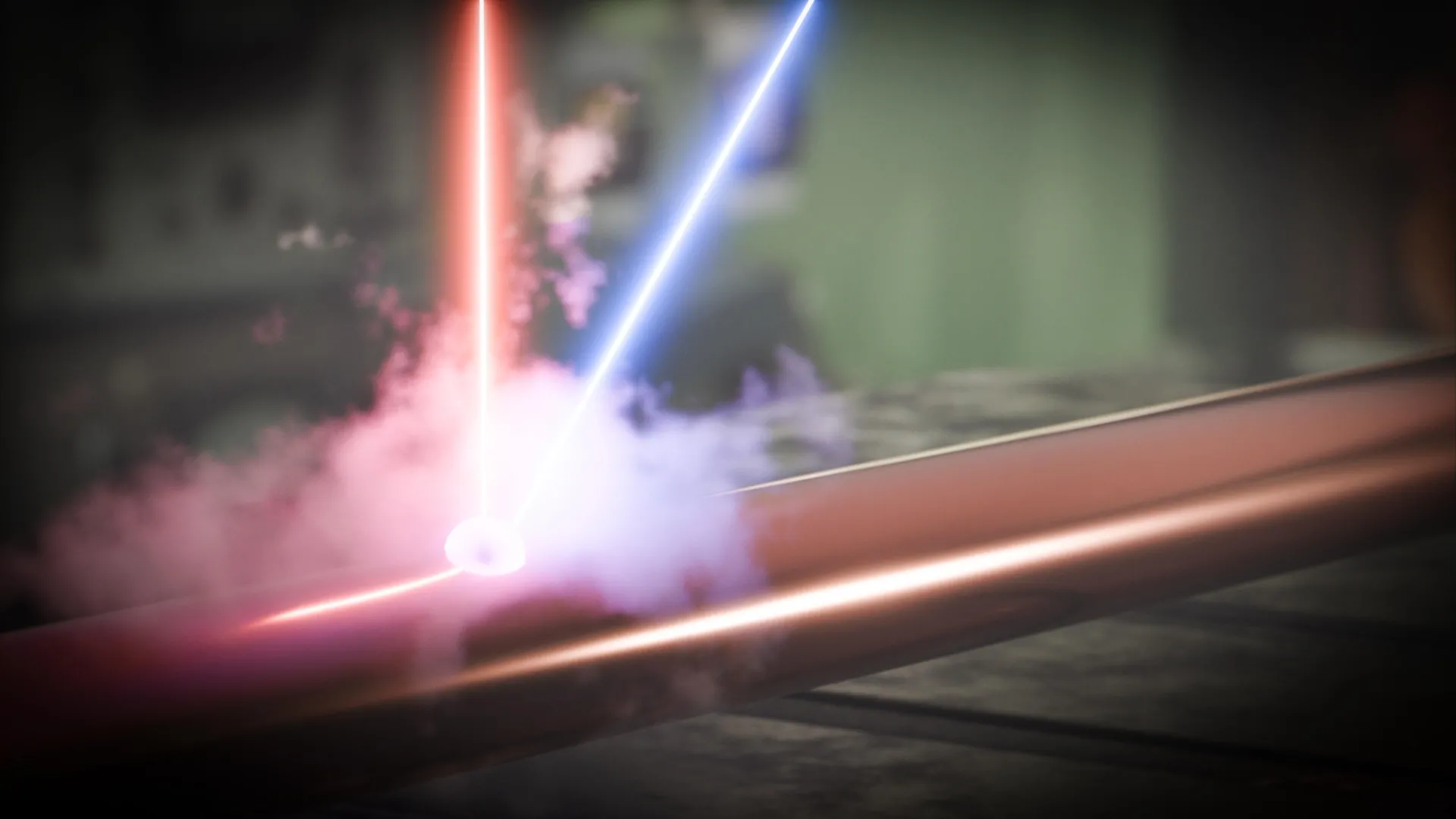
To capture the evolution of the plasma, the research team employed a "pump-probe" experimental design. This method involves two distinct laser pulses synchronized with nanosecond precision. The first pulse, the "pump," is delivered by the ReLaX (Relativistic Laser at XFEL) system. ReLaX is a high-intensity titanium-sapphire laser capable of delivering massive amounts of energy in a fraction of a second.
The target for this energy was a copper wire of microscopic proportions, measuring approximately ten micrometers in diameter—roughly one-seventh the thickness of a human hair. When the ReLaX pulse strikes the wire, it delivers an intensity of approximately 250 trillion megawatts per square centimeter. This colossal energy density causes the copper atoms to lose their bound electrons almost instantly, vaporizing the solid metal into a highly ionized plasma.
The second pulse, the "probe," is generated by the European XFEL. This pulse consists of hard X-rays with a photon energy of 8.2 kiloelectronvolts (keV). This specific energy level was not chosen at random; it was precisely tuned to trigger a "resonant absorption" in copper ions that have been stripped of exactly 22 electrons (Cu²²⁺). When these specific ions absorb the X-ray pulse, they enter an excited state and subsequently emit a characteristic X-ray signal. By measuring the intensity and timing of this emission, the researchers could quantify exactly how many Cu²²⁺ ions existed in the plasma at any given moment.
A Chronological Timeline of Ionization and Recombination
The precision of the femtosecond pulses allowed the HZDR team to construct a definitive timeline of the copper wire’s transformation. The entire process, from solid metal to peak ionization and back to a stabilized state, occurs within a window of roughly ten to fifteen picoseconds.
- T = 0 Femtoseconds: The ReLaX optical laser strikes the surface of the copper wire. The initial impact strips the outermost electrons from the copper atoms.
- T + 100 to 500 Femtoseconds: High-energy "hot" electrons, liberated by the initial pulse, begin to propagate through the wire. These electrons act as a wave of kinetic energy, colliding with neighboring atoms and triggering a secondary, cascading ionization process.
- T + 1.0 Picosecond: The density of highly charged ions (specifically Cu²²⁺) begins to rise sharply as the thermal energy equilibrates through the target material.
- T + 2.5 Picoseconds: The plasma reaches its peak state of ionization for the Cu²²⁺ species. At this juncture, the experimental data shows the highest concentration of these ions, indicating the maximum efficiency of the laser-matter interaction.
- T + 5.0 Picoseconds: As the plasma begins to expand hydrodynamically into the surrounding vacuum, it starts to cool. Free electrons begin to be recaptured by the positive ions—a process known as recombination.
- T + 10.0 Picoseconds: The concentration of Cu²²⁺ ions drops precipitously. Within this timeframe, the highly charged state effectively disappears as the plasma transitions into a lower-energy, less-ionized state.
Dr. Lingen Huang, the head of experimentation in HZDR’s Division of High-Energy Density, noted that the pulse durations of 25 and 30 femtoseconds were the "shutter speed" necessary to freeze these moments in time. Without such brevity, the data would appear as a blurred average of the entire process rather than a sequence of distinct phases.
Supporting Data: The Role of the Electron Wave
A critical discovery of the study involves the mechanism of "indirect" ionization. While the laser pulse itself provides the initial spark, it is the resulting "electron wave" that does much of the work. Computer simulations performed alongside the physical experiment revealed that the primary laser pulse only interacts directly with a small fraction of the copper atoms on the surface.
However, the electrons liberated by this interaction are "energy-rich" and move at relativistic speeds through the remainder of the wire. As Prof. Tom Cowan, former director of the Institute of Radiation Physics at HZDR, explained, these electrons spread out like a wave, knocking ever more electrons out of neighboring copper atoms. This secondary ionization is what allows the entire volume of the wire to reach such high states of ionization so rapidly.
The simulation data matched the experimental X-ray emission curves with high fidelity, confirming that the "electron wave" model is an accurate representation of high-intensity laser interactions. This validation is vital for physicists who rely on these models to predict how different materials will behave when subjected to extreme radiation.
Implications for Laser Fusion and Clean Energy
The practical applications of this research extend far beyond the laboratory. One of the most significant beneficiaries of these findings is the field of laser-driven inertial confinement fusion (ICF). In a fusion reactor, powerful lasers are used to compress and heat a fuel pellet (usually isotopes of hydrogen) to the point where atomic nuclei fuse, releasing massive amounts of energy.
For fusion to be viable, the plasma must be heated and compressed with extreme symmetry and efficiency. The "electron waves" identified in the HZDR study are the same mechanisms that drive the heating in fusion targets. By understanding the precise timeline of how ions form and how electrons distribute energy, engineers can refine the "pulse shapes" of fusion lasers to optimize the reaction.
Dr. Ulf Zastrau, who oversees the HED-HIBEF station at the European XFEL, emphasized that these concrete findings allow for the refinement of simulations that are essential for designing future fusion facilities. If the ionization process is not perfectly understood, the resulting plasma can become unstable, leading to energy loss and a failure to reach "ignition"—the point where the fusion reaction becomes self-sustaining.
Scientific Consensus and Future Directions
The broader scientific community has viewed the HZDR study as a significant validation of the HED-HIBEF facility’s capabilities. The ability to tune X-ray pulses to specific ionic transitions (like the 8.2 keV for Cu²²⁺) opens the door to studying a wide array of materials under extreme conditions. Future experiments may look at heavier elements or complex alloys to see how different atomic structures influence the speed of the electron wave.
Furthermore, the study highlights the importance of international collaboration in large-scale science. The European XFEL, a multi-billion euro project involving several nations, provides the only environment in the world where these specific "pump-probe" parameters can currently be met. The HIBEF consortium, led by HZDR, has successfully integrated high-power optical lasers into the X-ray beamline, creating a world-class laboratory for extreme physics.
As the data from this experiment is further analyzed, researchers expect to develop new diagnostic tools that can be used at other facilities, such as the National Ignition Facility (NIF) in the United States or the upcoming ELI (Extreme Light Infrastructure) in Europe. The goal is to move from simply observing these processes to actively controlling them, a feat that would mark a new era in human mastery over matter and energy.
In conclusion, the work of the HZDR team represents a milestone in the "cinematography" of the subatomic world. By capturing the birth and death of highly ionized copper in trillionths of a second, they have provided a roadmap for future energy solutions and a deeper understanding of the high-energy processes that govern the stars. The findings ensure that as the world looks toward fusion as a clean energy future, the path is illuminated by the most precise data science can currently offer.













Leave a Reply