

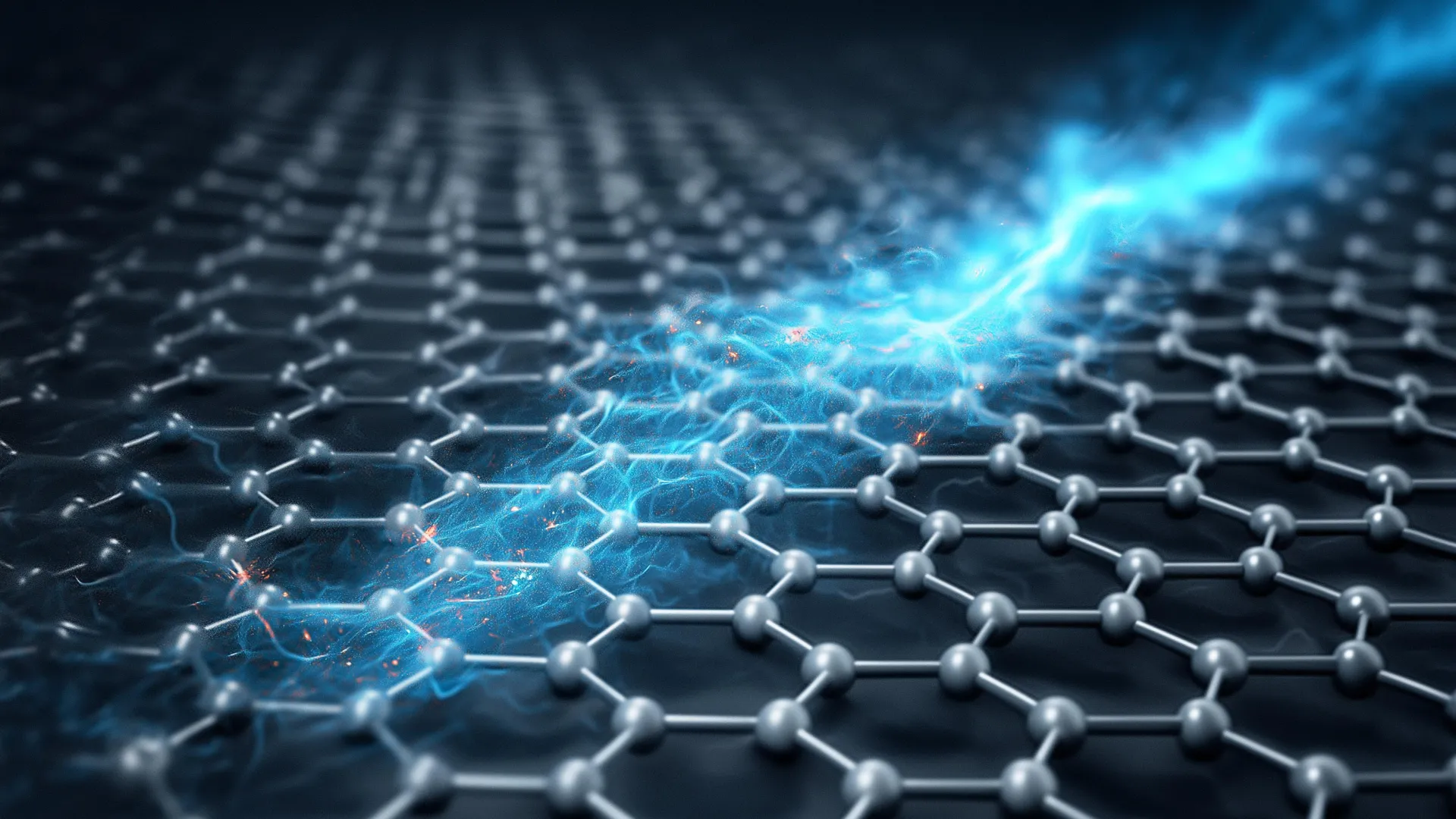
In a landmark achievement for condensed matter physics, researchers at the Indian Institute of Science (IISc) and the National Institute for Materials Science (NIMS) in Japan have successfully observed a "perfect fluid" of electrons within a single layer of graphene. This discovery, published in the journal Nature Physics, marks the culmination of decades of theoretical speculation regarding the hydrodynamic behavior of electrons. By creating an environment of unprecedented purity, the team has demonstrated that under specific conditions, electrons cease to behave as individual particles and instead flow collectively like a frictionless liquid. This phenomenon, known as a Dirac fluid, not only defies long-standing physical laws but also provides a terrestrial laboratory for studying extreme states of matter typically found in the hearts of stars or the early moments of the universe.
The Quest for Hydrodynamic Electrons
The pursuit of fluid-like electron behavior has been a central theme in quantum materials research for over half a century. In standard metallic conductors, electrons behave much like a gas; they move independently, frequently colliding with atomic defects, impurities, and the vibrating lattice of the material. these collisions create resistance and dissipate energy as heat. However, theoretical physicists have long predicted that in a material free from such "noise," electron-electron interactions would become the dominant force. In this regime, the electrons would begin to move in a coordinated, collective manner, exhibiting viscosity and flow patterns similar to water or honey.
Detecting this state has remained one of the most significant challenges in the field. Even the most advanced synthetic materials usually contain microscopic imperfections that "pin" electrons, disrupting their collective flow. The IISc-led team overcame this by utilizing graphene—a single-atom-thick layer of carbon—and employing specialized fabrication techniques to ensure the sample remained "exceptionally clean." By encapsulating the graphene between layers of hexagonal boron nitride, provided by the NIMS collaborators, the researchers were able to shield the electrons from external interference, allowing the delicate quantum fluid to emerge.
A Direct Challenge to the Wiedemann-Franz Law
The most striking evidence of this new state came from the team’s measurement of heat and electrical transport. For over 150 years, physicists have relied on the Wiedemann-Franz law to describe the relationship between thermal and electrical conductivity in metals. This fundamental principle states that the ratio of the thermal conductivity ($kappa$) to the electrical conductivity ($sigma$) of a conductor is proportional to its temperature ($T$). Essentially, because electrons carry both charge and heat, the two properties should move in tandem.
The results obtained by the IISc researchers were, in their own words, unexpected. At low temperatures, the team observed a massive deviation from the Wiedemann-Franz law—exceeding a factor of 200. Rather than increasing together, electrical and thermal conductivity moved in opposite directions. As the graphene sample was tuned toward a specific state, electrical conductivity rose while thermal conductivity plummeted.
This "decoupling" of heat and charge is a hallmark of a Dirac fluid. In a collective fluid state, the mechanisms that transport charge (the movement of the fluid as a whole) become separated from the mechanisms that transport heat (the internal energy fluctuations of the fluid). This 200-fold deviation represents one of the strongest violations of the Wiedemann-Franz law ever recorded in a solid-state system, signaling a complete breakdown of the standard particle-based model of electricity.
The Physics of the Dirac Point
The emergence of this fluid-like behavior is intrinsically linked to the unique electronic structure of graphene. In most materials, the energy of electrons is related to their momentum in a way that gives them an effective mass. In graphene, however, the electrons occupy a state where they behave as if they have no mass at all, mimicking the behavior of light particles (photons) or neutrinos. This occurs at the "Dirac point," a precise energy level where the valence and conduction bands of graphene meet.
"It is amazing that there is so much to do on just a single layer of graphene even after 20 years of discovery," noted Arindam Ghosh, Professor at the Department of Physics, IISc, and one of the corresponding authors of the study.
By using an external electric field to tune the number of electrons in the graphene, the researchers were able to bring the system exactly to this Dirac point. At this juncture, the material sits on the razor’s edge between a metal and an insulator. Here, the electron-electron collisions happen so frequently and intensely that the particles lose their individual identities. The result is the Dirac fluid—an exotic soup of electrons and "holes" (the absence of electrons) that flows with extremely low viscosity.
From Graphene to Quark-Gluon Plasma
The implications of this discovery extend far beyond the realm of carbon sheets. The Dirac fluid observed in the IISc laboratory is considered a "perfect fluid," a term used to describe substances with the lowest possible ratio of viscosity to entropy density. In the hierarchy of physics, such fluids are incredibly rare.
"Since this water-like behaviour is found near the Dirac point, it is called a Dirac fluid—an exotic state of matter which mimics the quark-gluon plasma," explained Aniket Majumdar, the first author of the study and a PhD student at IISc.
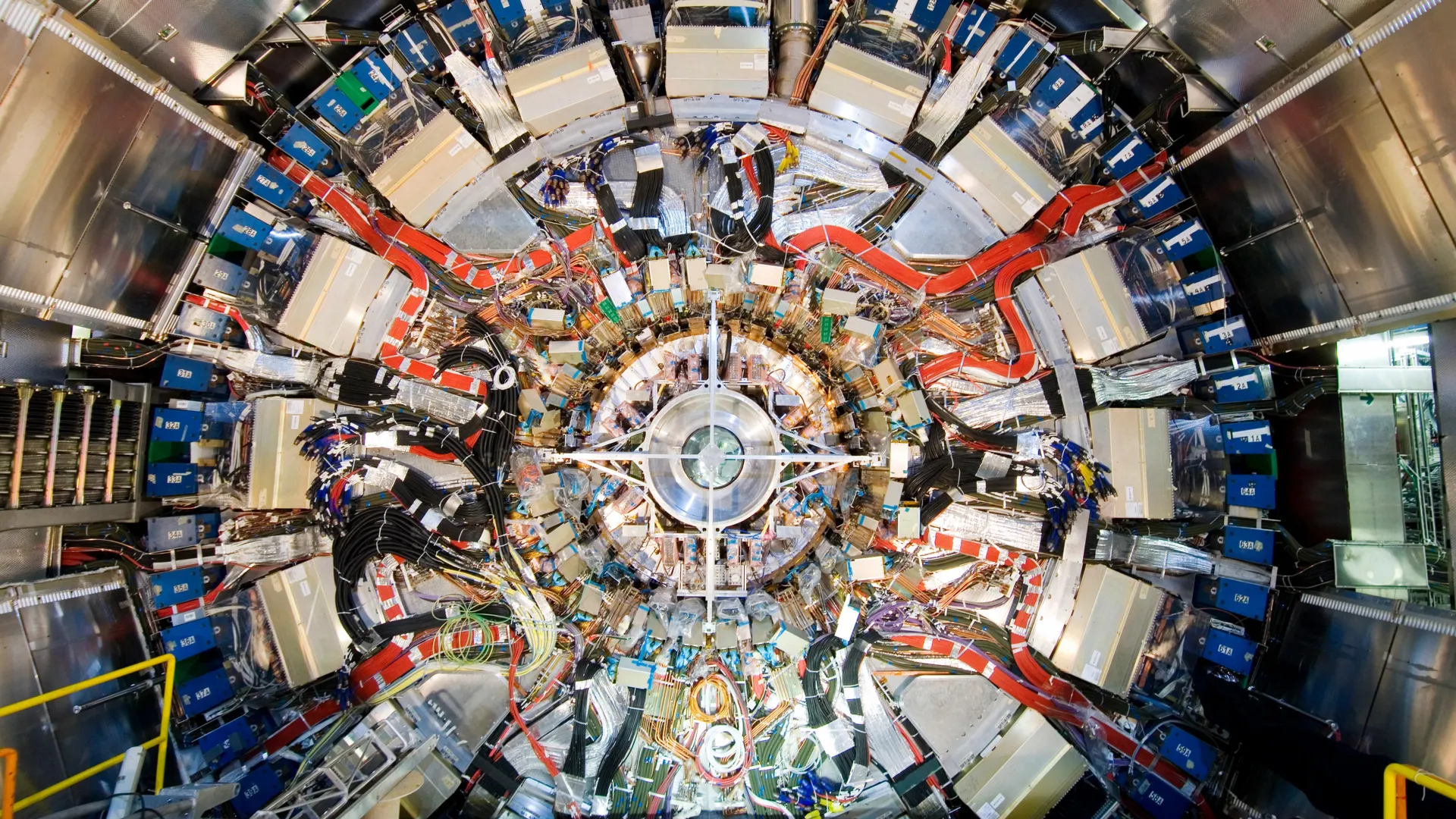
The quark-gluon plasma is the ultra-hot, ultra-dense state of matter that existed microseconds after the Big Bang. Today, it can only be recreated for fleeting moments in massive particle accelerators like the Large Hadron Collider (LHC) at CERN. The fact that a similar state of matter can now be studied on a desktop-sized experimental setup using graphene represents a massive leap forward for high-energy physics. It allows scientists to investigate the dynamics of "strongly correlated" systems—where particles are so tightly linked that they cannot be described individually—without the need for multi-billion-dollar accelerators.
A New Window into Extreme Environments and Astrophysics
The discovery positions graphene as a versatile platform for exploring concepts that were previously the sole domain of theoretical astrophysics and black hole thermodynamics. One such area is the study of entanglement entropy scaling. In quantum mechanics, entanglement describes how particles can remain connected across distances. In a Dirac fluid, the way this entanglement spreads is thought to follow patterns similar to the way information is processed at the event horizon of a black hole.
Furthermore, the extremely low viscosity of the Dirac fluid allows researchers to test theories related to the "holographic principle." This theory suggests that certain complex quantum systems can be described by simpler gravitational models in higher dimensions. By measuring the flow of electrons in graphene, the IISc team is effectively providing empirical data that can validate or refute these profound cosmological theories.
Practical Applications in Quantum Technology
While the fundamental scientific insights are the primary focus of the Nature Physics report, the practical applications of a Dirac fluid are equally compelling. The unique properties of collective electron flow could revolutionize the field of quantum sensing.
Standard sensors are often limited by "shot noise"—the randomness associated with individual electrons moving through a circuit. In a Dirac fluid, because the electrons move collectively, this noise is significantly reduced. This could lead to the development of:
- Ultra-Sensitive Magnetometers: Devices capable of detecting the minute magnetic fields produced by human brain activity or deep-earth mineral deposits.
- Advanced Thermal Management: Since the Dirac fluid allows for the separation of heat and charge, it may be possible to design circuits that can move electricity without the associated heat buildup that currently limits the speed of computer processors.
- Quantum Signal Amplifiers: The fluid’s ability to respond to incredibly weak electrical perturbations makes it an ideal candidate for amplifying signals in quantum computers, where maintaining "coherence" is vital.
Methodology and Chronology of the Discovery
The journey to this discovery began several years ago at IISc’s Department of Physics. The researchers first had to master the art of "van der Waals heterostructure" assembly. This involves using microscopic flakes of different 2D materials and stacking them like Lego bricks in a vacuum environment.
The timeline of the experiment involved:
- Phase 1: Material Synthesis: NIMS in Japan produced high-purity hexagonal boron nitride crystals, which act as an atomically smooth substrate for graphene.
- Phase 2: Device Fabrication: At IISc, the graphene was "sandwiched" and shaped into multi-terminal devices using electron-beam lithography.
- Phase 3: Cryogenic Testing: The devices were cooled to temperatures near absolute zero. The researchers then applied varying gate voltages to move the electron density toward the Dirac point.
- Phase 4: Data Analysis: Over several months, the team analyzed the divergence between thermal and electrical conductivity, eventually confirming the 200-fold violation of the Wiedemann-Franz law.
Conclusion: A Paradigm Shift in Material Science
The identification of the Dirac fluid in graphene marks a turning point in our understanding of how matter behaves at the quantum level. It proves that the "laws" of physics, such as the Wiedemann-Franz law, are not absolute but are instead emergent properties that can be suspended under the right conditions.
As researchers continue to probe the limits of this perfect fluid, graphene is no longer seen just as a material for faster transistors or stronger composites. It has become a window into the fundamental nature of the universe—a place where the physics of the very small meets the physics of the very large. The work of the IISc and NIMS teams ensures that graphene will remain at the forefront of scientific inquiry for decades to come, serving as a bridge between condensed matter physics, high-energy particle research, and the future of quantum technology.










Leave a Reply