In a period of escalating global water scarcity, a research team at the University of Rochester has unveiled a transformative desalination technology that utilizes laser-treated solar panels to purify seawater while simultaneously extracting valuable minerals like lithium. According to the United Nations, approximately 2.2 billion people—nearly one-third of the global population—lack access to safely managed drinking water. As climate change intensifies droughts and depletes traditional aquifers, regions ranging from the Mediterranean to the American Southwest have turned to desalination as a vital lifeline. However, current industrial methods remain hampered by high energy costs and significant environmental footprints. The Rochester innovation, led by Chunlei Guo, a professor of optics and physics, proposes a circular economy model that addresses both the water crisis and the rising demand for green energy materials.
The Environmental and Economic Constraints of Traditional Desalination
To understand the significance of the Rochester breakthrough, one must consider the limitations of the two dominant desalination technologies: reverse osmosis (RO) and thermal distillation. Reverse osmosis involves forcing seawater through semi-permeable membranes at high pressure to remove salts. While effective, it is energy-intensive and requires extensive chemical pretreatment to prevent "biofouling"—the buildup of microorganisms on the membranes. Thermal distillation, which mimics the natural water cycle by boiling water and collecting the steam, requires massive amounts of heat, often derived from fossil fuels.
A shared drawback of these methods is the production of brine, a highly concentrated saltwater byproduct. For every liter of fresh water produced, traditional plants typically generate about 1.5 liters of brine. This waste is often pumped back into the ocean, where its high salinity and chemical additives sink to the seafloor, creating "dead zones" by depleting oxygen and harming marine life. Furthermore, the operational costs of managing this waste and maintaining membranes contribute to the high price of desalinated water, making it inaccessible for many developing nations.
The Science of Superwicking and Femtosecond Lasers
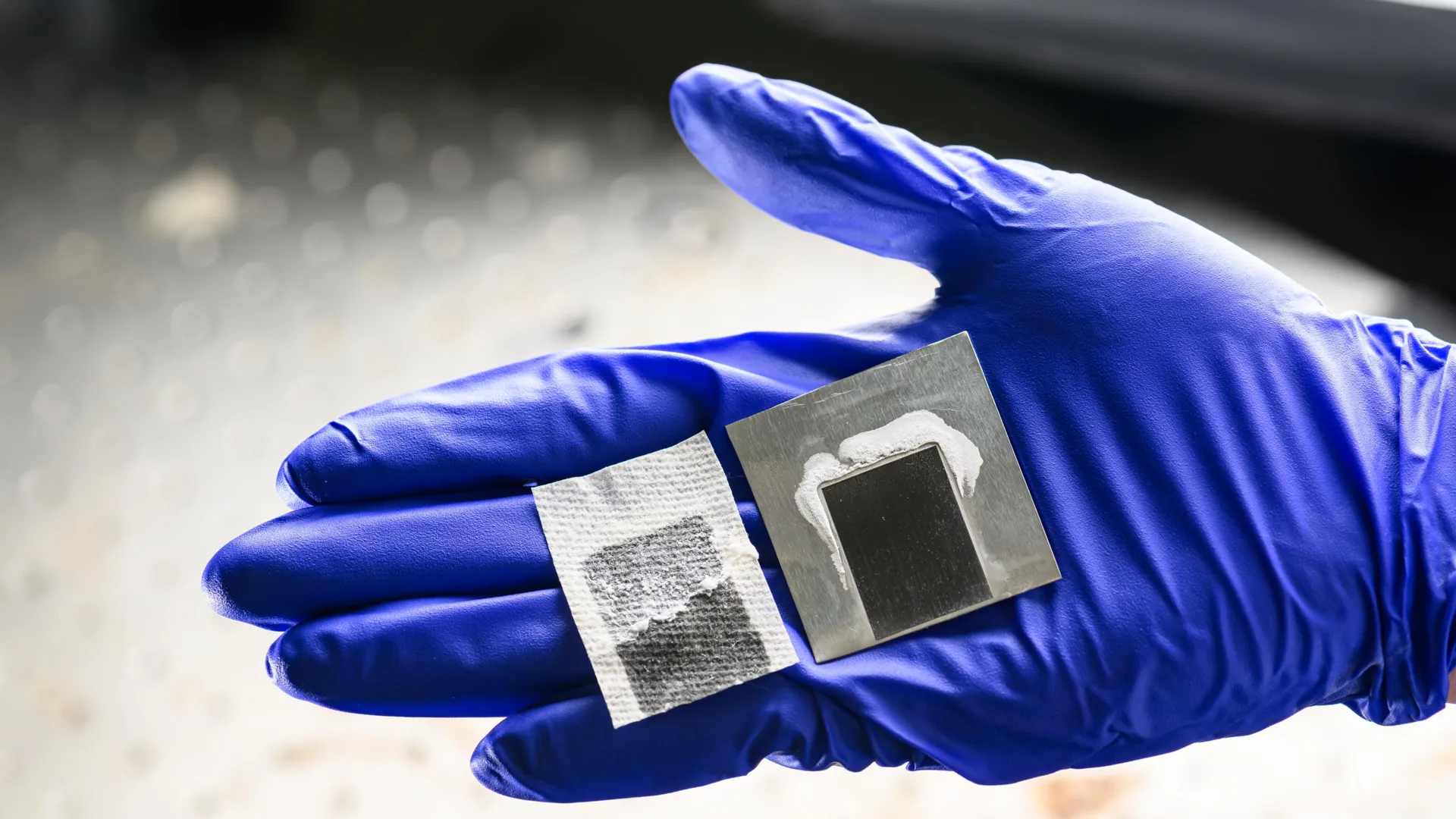
The University of Rochester’s approach departs from traditional methods by utilizing the power of the sun through specially engineered surfaces. The core of the system is a "black metal" solar panel created using femtosecond lasers. These lasers emit ultra-short pulses of light—lasting only a quadrillionth of a second—which restructure the surface of ordinary metals at the microscopic and nanoscopic levels.
This laser treatment accomplishes two critical physical changes. First, it turns the metal pitch-black, allowing it to absorb nearly 100 percent of the energy from incoming sunlight. Second, it creates a "superwicking" surface. In fluid dynamics, wicking refers to a material’s ability to draw liquid through capillary action. The laser-etched patterns on the Rochester panels are so efficient that they can pull a thin film of water upward against gravity, spreading it evenly across the entire active region of the panel.
When sunlight hits the black metal, the absorbed energy rapidly heats the thin layer of water. Because the water layer is so thin, it evaporates much more efficiently than a deep reservoir would. The resulting water vapor is then condensed into pure, fresh water, leaving salts and minerals behind.
Overcoming the "Tea Kettle" Problem: The Coffee Ring Effect
One of the primary hurdles in solar-thermal desalination is "scaling." In a laboratory setting, researchers often use "ideal" seawater—a simple mixture of water and sodium chloride. When this evaporates, the salt forms a porous structure that is easy to wash away. However, real-world seawater is a complex chemical soup containing magnesium, calcium, sulfates, and bicarbonates.
When these minerals crystallize, they often form hard, dense crusts similar to the limescale found in tea kettles or showerheads. In most solar desalination designs, this crust quickly coats the evaporation surface, blocking sunlight and stopping the flow of water. Professor Guo’s team solved this by utilizing the "coffee ring effect."
"If you drop coffee on a surface, eventually the water evaporates and there’s a ring left at the outer edge that is the concentrated coffee particles," explains Guo. By designing specific microscopic grooves on the metal, the researchers forced the evaporating water to push dissolved solids toward the edges of the panel—areas designated as "passive regions." This self-cleaning mechanism ensures that the "active region" remains clear of mineral buildup, allowing for continuous, long-term operation without the need for chemical descalers or manual scrubbing.
From Waste Management to Mineral Harvesting
Perhaps the most significant shift in the Rochester model is the transition from treating salt as a waste product to treating it as a resource. Conventional desalination views the leftover minerals as a liability. The Rochester system, by contrast, recovers nearly all dissolved salts in solid form.
In a secondary study published in the Journal of Materials Chemistry A, the team demonstrated that these panels could be modified to act as selective mineral extractors. By embedding hydrogen titanate nanoparticles into the laser-etched grooves, the researchers were able to isolate lithium from the remaining salt mixture. Lithium, often referred to as "white gold," is a critical component in the lithium-ion batteries that power electric vehicles (EVs) and renewable energy storage systems.
The demand for lithium is projected to increase fivefold by 2030, yet current mining practices are environmentally taxing. In the "Lithium Triangle" of South America (Chile, Argentina, and Bolivia), lithium is often extracted through massive evaporation ponds that consume billions of gallons of water in already arid regions. The Rochester team tested their technology using water from Utah’s Great Salt Lake and successfully recovered 50 percent of the available lithium. This suggests a future where desalination plants function as "mineral refineries," offsetting the cost of water production by selling high-value materials to the tech and automotive industries.
Chronology of Development and Collaborative Support
The development of this technology represents years of interdisciplinary research at the University’s Laboratory for Laser Energetics (LLE). The timeline of the project reflects a transition from fundamental physics to applied environmental engineering:
- Phase 1: Surface Discovery: Early experiments focused on using femtosecond lasers to change the properties of metals, discovering the "superwicking" effect in the mid-2010s.
- Phase 2: Desalination Proof-of-Concept: The team applied these surfaces to water purification, initially focusing on simple salt-water mixtures.
- Phase 3: Real-World Testing: Researchers collected samples from the Atlantic, Pacific, and Indian Oceans to test the "coffee ring" drainage system against complex mineral scaling.
- Phase 4: Mineral Integration: The most recent breakthrough involved the integration of nanoparticles to specifically target lithium extraction.
The research has garnered significant institutional support, reflecting its potential for global impact. Funding was provided by the National Science Foundation (NSF), which focuses on American technological competitiveness, and the Bill & Melinda Gates Foundation, which prioritizes low-cost sanitation and water solutions for the developing world. The Worldwide Universities Network also contributed, facilitating international collaboration.
Strategic Implications and Future Outlook
The implications of a chemical-free, solar-powered desalination system are vast. For coastal communities in developing nations, this technology could be deployed in decentralized, off-grid units, providing clean water without the need for a massive power grid or expensive chemical supply chains.
From a geopolitical perspective, the ability to extract lithium from seawater could reshape global supply chains. Currently, lithium production is concentrated in a few geographic locations, leading to concerns about energy security. If any coastal nation—or any region with saline lakes—can produce its own lithium while generating fresh water, the economic landscape of the green transition could become significantly more democratized.
However, challenges remain before the technology can reach industrial scales. While the "proof of concept" devices have been successful, scaling the laser-treatment process to create square kilometers of black metal panels will require advances in high-speed laser manufacturing. Furthermore, the efficiency of lithium recovery must be optimized to compete with traditional mining costs.
Professor Guo and his colleagues, including Senior Scientist Subash Singh and a team of PhD students, are now looking toward the next phase of development: scaling. If the system can be expanded to industrial levels, it could provide a rare "triple win" for the environment—reducing the energy required for fresh water, eliminating the discharge of toxic brine, and providing the raw materials needed for the global transition to renewable energy.
As the world grapples with the dual crises of water scarcity and climate change, the Rochester research offers a glimpse into a future where technology mimics natural processes to turn environmental challenges into sustainable opportunities. The transition from a "take-make-waste" model to a circular recovery system may be the key to ensuring that the 2.2 billion people currently without water are not left behind in the 21st century.