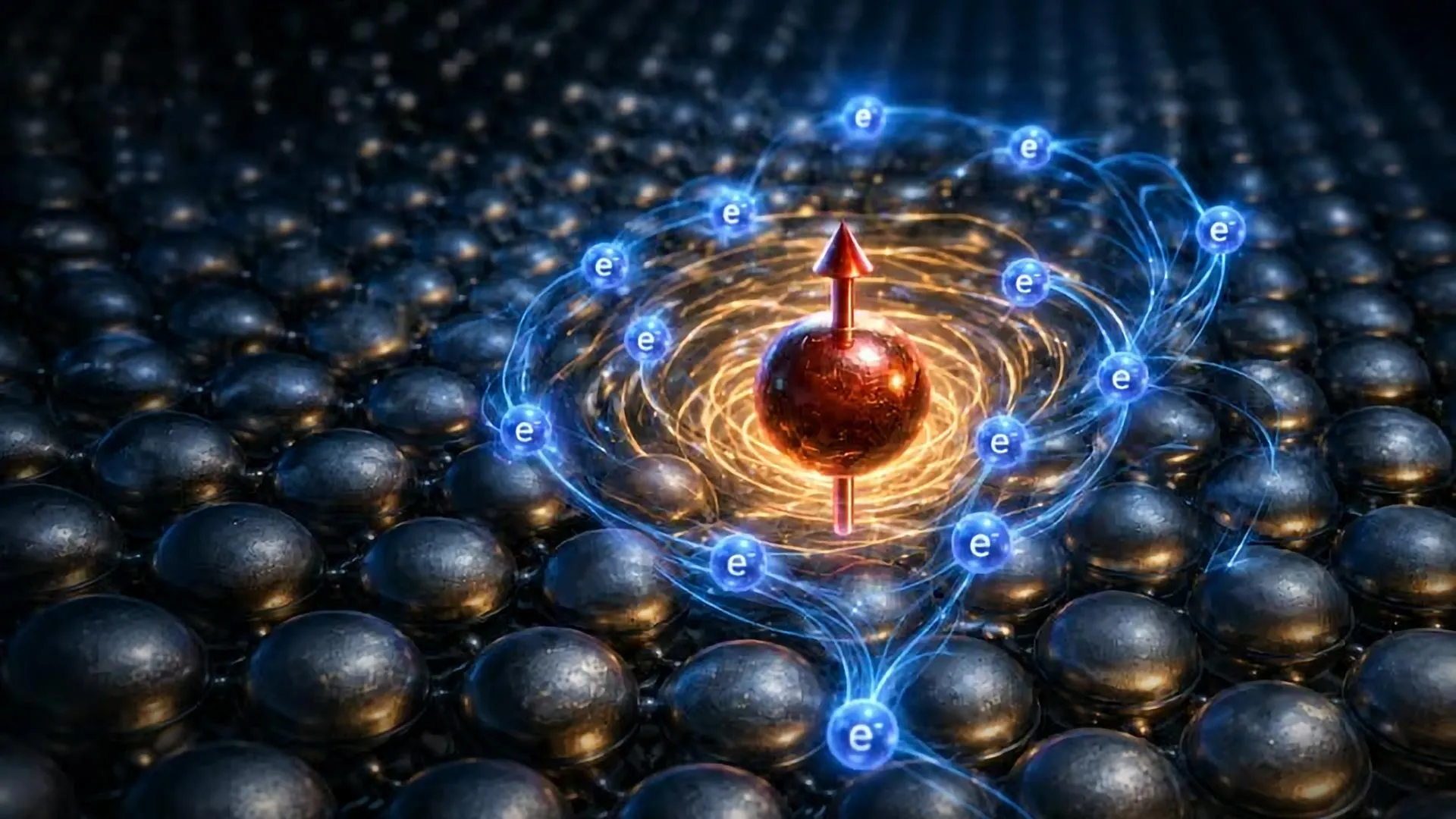
The rapidly evolving field of two-dimensional (2D) materials has reached a significant milestone as researchers uncover a phenomenon that challenges the established boundaries of moiré engineering. In a study recently published in Nature Nanotechnology, a global team of physicists revealed that magnetism in twisted atomic layers can behave in ways previously thought impossible. While moiré patterns—the interference designs created when two lattices are overlaid with a slight rotational offset—typically dictate the scale of electronic and magnetic properties, this new research demonstrates the emergence of "super-moiré" spin orders. These magnetic structures extend across hundreds of nanometers, far surpassing the dimensions of the underlying moiré unit cells. This discovery not only provides a new understanding of quantum matter but also offers a geometry-driven pathway for the development of next-generation, low-power spintronic devices.
The Evolution of Moiré Engineering: From Electrons to Magnets
To understand the significance of this discovery, one must look at the trajectory of condensed matter physics over the last two decades. The field was revolutionized in 2004 with the isolation of graphene, a single layer of carbon atoms. However, the true "moiré revolution" began in 2018 when researchers at the Massachusetts Institute of Technology (MIT) discovered that stacking two layers of graphene at a specific "magic angle" of 1.1 degrees could induce superconductivity and correlated insulating states.
This approach, known as moiré engineering, relies on the fact that a slight twist between layers creates a periodic interference pattern. This pattern acts as a landscape for electrons, slowing them down and forcing them to interact strongly with one another. Until recently, the consensus in the scientific community was that the physical effects of these systems—whether electronic, optical, or magnetic—were strictly confined to the size of the moiré unit cell. If a moiré pattern had a wavelength of 30 nanometers, it was assumed that any magnetic or electronic "texture" would also repeat every 30 nanometers.
The transition from studying electronic moiré systems to magnetic ones began in earnest around 2017 with the discovery of intrinsic 2D magnetism in materials like chromium triiodide (CrI3) and chromium germanium telluride (CrGeTe3). These van der Waals magnets allowed scientists to explore how magnetism survives at the atomic limit. By applying the principles of twistronics to these magnetic layers, researchers hoped to find new ways to control spin—the intrinsic angular momentum of electrons that forms the basis of magnetism.
The Discovery of Super-Moiré Textures
The new report in Nature Nanotechnology details an experiment involving twisted double bilayer chromium triiodide. Unlike a simple bilayer, this "double bilayer" structure involves stacking two sets of bilayers, creating a more complex environment for magnetic interactions. The research team, utilizing a specialized technique known as scanning nitrogen-vacancy (NV) magnetometry, aimed to map the magnetic landscape of this material with unprecedented resolution.
Scanning NV magnetometry uses a single atom-sized defect in a diamond crystal—a nitrogen-vacancy center—to sense incredibly weak magnetic fields at the nanoscale. As the diamond tip moves across the surface of the CrI3, it provides a real-time, high-fidelity image of the magnetic spin patterns.
What the researchers found was a deviation from the expected moiré template. In most moiré systems, the magnetic order is a local reflection of the atomic stacking. However, in these twisted antiferromagnetic layers, the magnetic spin patterns were not restricted to the small repeating unit cell. Instead, they observed magnetic textures reaching distances of approximately 300 nanometers. This is roughly ten times larger than the underlying moiré wavelength, which typically measures around 20 to 30 nanometers in such configurations.
This phenomenon, termed "super-moiré" spin order, indicates that the magnetism is self-organizing on a mesoscopic scale. It suggests that the collective behavior of the spins is being governed by forces that transcend the immediate atomic alignment, leading to the formation of large-scale topological structures.
A Counterintuitive Relationship with Twist Angles
One of the most striking aspects of the study is the relationship between the twist angle and the size of the magnetic textures. In standard moiré physics, there is a predictable mathematical relationship: as the twist angle between two crystal lattices decreases, the moiré wavelength increases. Scientists logically assumed that as the angle got smaller, the magnetic features would simply grow in tandem with the moiré cell.
The experimental data proved otherwise. The size of the magnetic textures did not grow linearly as the angle decreased. Instead, the textures reached a maximum size at a "sweet spot" near 1.1 degrees—coincidentally close to the magic angle of graphene—and then began to disappear as the angle increased beyond 2 degrees.
This reversal is a critical piece of data. It demonstrates that the magnetism is not merely "copying" the moiré template provided by the atoms. Instead, the magnetism is the result of a delicate and complex balance between several competing energetic forces. These include:
- Exchange Interactions: The force that aligns neighboring spins.
- Magnetic Anisotropy: The tendency of a material’s magnetic moment to align along a specific axis.
- Dzyaloshinskii-Moriya Interactions (DMI): A chiral interaction that favors the twisting of spins into non-collinear patterns, such as spirals or skyrmions.
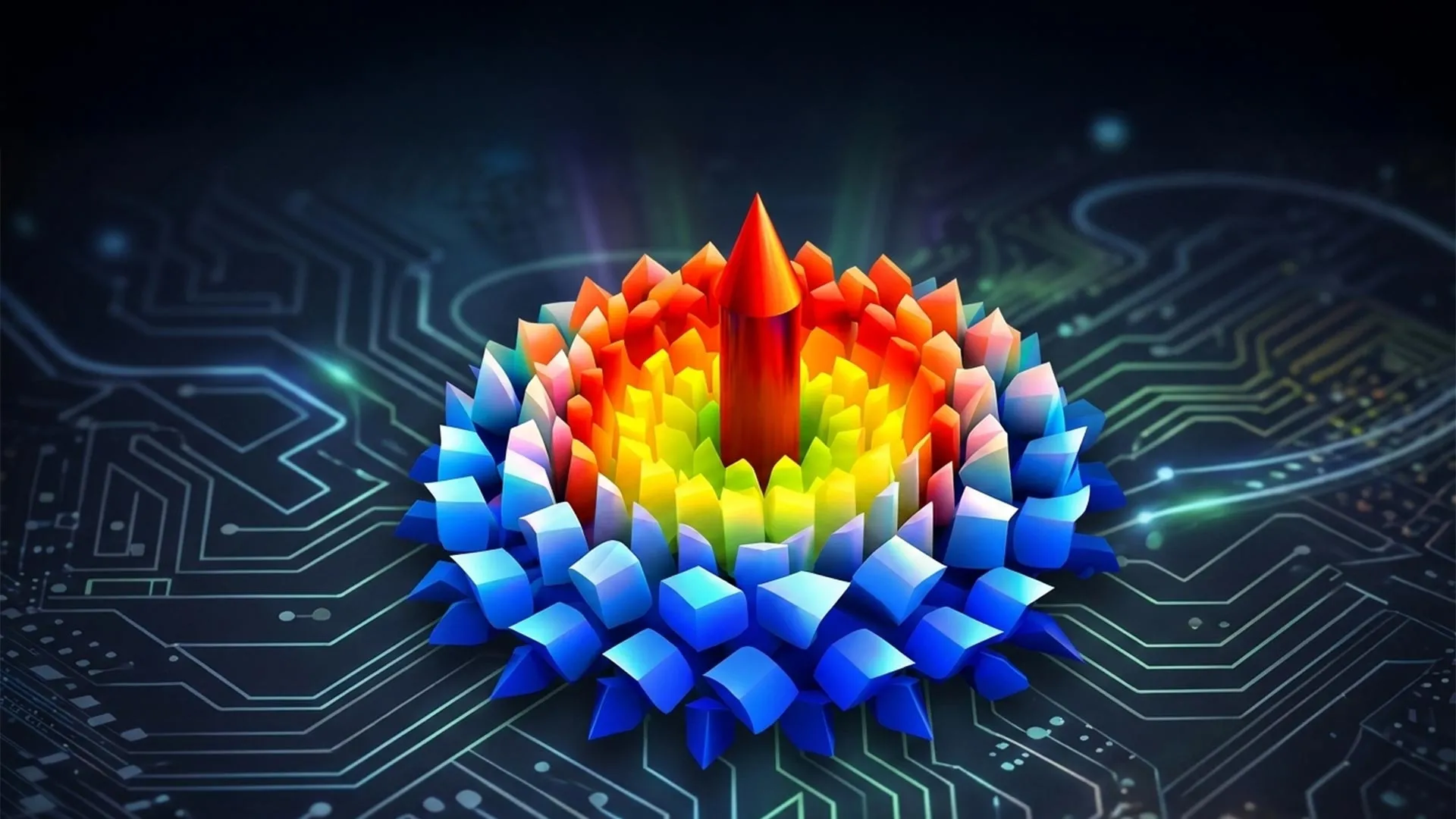
The researchers used large-scale spin dynamics simulations to confirm that at specific twist angles, these forces align to stabilize extended Néel-type antiferromagnetic skyrmions. These skyrmions are topological "knots" in the magnetic field that span multiple moiré cells, creating the observed 300-nanometer textures.
The Physics of Skyrmions and Topological Protection
The mention of Néel-type skyrmions is particularly important for the future of information technology. A skyrmion is a vortex-like configuration of spins that is "topologically protected." In simple terms, this means the spin pattern is exceptionally stable; it cannot be easily undone or "untied" by heat or minor defects in the material, much like a knot in a rope cannot be removed by simply pulling on the ends.
Because they are stable and can be made very small, skyrmions have long been proposed as the "bits" for future hard drives and logic gates. However, traditionally, skyrmions are created using complex lithography, the application of heavy metals to induce DMI, or the use of strong external electric currents.
The discovery that these structures can be generated simply by adjusting the twist angle of two-dimensional layers represents a paradigm shift. It offers a "clean" method of fabrication that relies on the intrinsic geometry of the material rather than external interference. Furthermore, because these skyrmions are hosted in an insulating material like CrI3, they can be manipulated with extremely low energy loss, as there is no traditional electrical resistance to overcome.
Reactions from the Scientific Community
The research was a collaborative effort, with the theoretical and modeling aspects led by Dr. Elton Santos, a Reader in Theoretical/Computational Condensed Matter Physics at the University of Edinburgh.
"This discovery shows that twisting is not just an electronic knob, but a magnetic one," Dr. Santos noted in a statement following the publication. "We’re seeing collective spin order self-organize on scales far larger than the moiré lattice. It opens the door to designing topological magnetic states simply by controlling angle, which is a remarkably simple handle with profound practical consequences."
Other experts in the field of spintronics have noted that the "super-moiré" scale is particularly advantageous for practical applications. While smaller is often better in electronics, ultra-small magnetic features can be difficult to detect and move reliably. A 300-nanometer texture is large enough to be easily integrated into current experimental device architectures while still being small enough to allow for high-density data storage.
Broader Implications and the Future of Spintronics
The implications of this research extend into the realm of "Post-CMOS" computing. For decades, the semiconductor industry has relied on Complementary Metal-Oxide-Semiconductor (CMOS) technology, which uses the flow of electrical charge to process information. However, as transistors shrink to the size of a few atoms, heat dissipation and quantum tunneling become insurmountable obstacles.
Spintronics, or spin-transport electronics, offers an alternative by using the spin of the electron rather than its charge. Devices that utilize topological magnetic textures like skyrmions could theoretically operate with a fraction of the power required by current silicon-based chips.
The timeline for integrating these findings into consumer technology remains long-term, likely spanning the next decade. The immediate next steps for researchers involve:
- Temperature Stability: Currently, many 2D magnets like CrI3 operate primarily at cryogenic temperatures. Finding or engineering materials that exhibit super-moiré spin order at room temperature is a primary goal.
- Active Control: Researchers are looking for ways to "switch" these magnetic textures on and off using light or small electric fields, which would be necessary for a functional logic gate.
- Material Diversity: While CrI3 served as the proof-of-concept, the principles of super-moiré physics likely apply to a wide range of other van der Waals magnets, some of which may have even more robust properties.
Conclusion
The revelation of super-moiré spin order marks a turning point in our understanding of how geometry and topology intersect in the quantum world. By proving that a simple rotational shift can generate complex, large-scale magnetic structures, the researchers have expanded the "twistronics" toolkit beyond the limits of the moiré unit cell.
As the scientific community continues to explore the mesoscale distances of these magnetic textures, the boundary between fundamental physics and applied engineering continues to blur. The ability to tune exchange, anisotropy, and chiral interactions through the mere act of twisting layers positions the twist angle as one of the most powerful thermodynamic control parameters in modern materials science. This discovery paves the way for a future where information is stored and processed not through the cumbersome movement of electrons, but through the elegant, low-energy dance of topological spins.