The colossal underwater volcanic eruption of Hunga Tonga-Hunga Ha’apai in January 2022, an event of unprecedented scale and power, may have inadvertently acted as a powerful catalyst for atmospheric chemical reactions, potentially consuming significant quantities of methane. New analysis of satellite data has revealed compelling evidence suggesting that chlorine-driven processes within the volcanic plume were actively breaking down this potent greenhouse gas, offering a surprising and potentially valuable insight into the complex interplay between geological events and atmospheric chemistry. This discovery holds significant implications for our understanding of climate change dynamics and the potential for natural processes to influence greenhouse gas concentrations.
A Volcanic Spectacle with Unforeseen Chemical Consequences
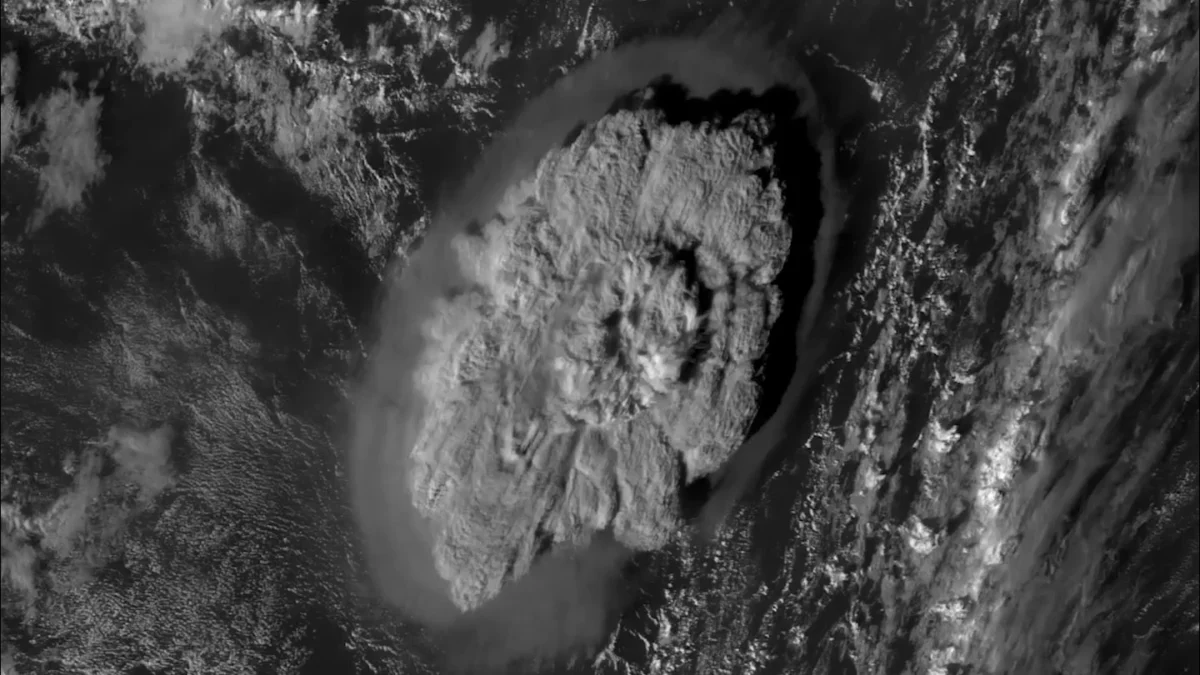
The Hunga Tonga-Hunga Ha’apai eruption, which occurred on January 15, 2022, was the most powerful volcanic explosion recorded in the modern era. Originating from a submarine volcano located in the Tongan archipelago of the South Pacific, the eruption sent a colossal ash plume thousands of kilometers into the atmosphere, reaching altitudes of up to 58 kilometers. The sheer force of the blast was so immense that it generated tsunamis that impacted coastlines across the Pacific Ocean and produced atmospheric pressure waves that circumnavigated the globe multiple times. This dramatic geological event, while devastating in its immediate impact on the region, has now presented scientists with a unique opportunity to study atmospheric processes on an unparalleled scale.
Initial analyses of the eruption focused on its immediate physical impacts: the scale of the ash plume, the resulting tsunamis, and the atmospheric shockwaves. However, as scientists delved deeper into the composition of the volcanic plume using sophisticated satellite instruments, an unexpected chemical signature began to emerge. Researchers from institutions such as the National Oceanic and Atmospheric Administration (NOAA) and the University of Colorado Boulder, among others, observed elevated levels of certain chemical compounds within the plume that indicated active chemical transformations were taking place.
Satellite Insights: Unraveling the Methane Mystery
The key to this discovery lies in the advanced capabilities of satellite remote sensing. Instruments aboard satellites like NASA’s Aura and ESA’s Sentinel-5P are equipped to detect a wide range of atmospheric gases and aerosols. By analyzing the spectral signatures of light reflected and emitted by the Earth’s atmosphere, these instruments can provide detailed information about the composition of the air at various altitudes.
In the case of the Hunga Tonga-Hunga Ha’apai eruption, scientists focused on the presence of chlorine-containing compounds, particularly hydrogen chloride (HCl), which are known to be released during volcanic activity. Simultaneously, they monitored the concentration of methane (CH4), a powerful greenhouse gas with a global warming potential significantly higher than carbon dioxide over shorter time scales.
The satellite data revealed a notable depletion of methane within the volcanic plume as it dispersed. This reduction in methane concentration could not be readily explained by simple atmospheric dilution. Instead, it pointed towards an active chemical process that was actively removing methane. Further analysis identified a correlation between the presence of chlorine radicals, derived from the volcanic release of HCl, and the observed methane decrease.
The Chemistry at Play: Chlorine’s Role in Methane Oxidation
Volcanic eruptions are complex chemical factories, releasing a cocktail of gases and particles into the atmosphere. The high temperatures and pressures associated with the Hunga Tonga-Hunga Ha’apai eruption would have vaporized a significant amount of seawater and rock, including chlorine-rich compounds. When these compounds are injected into the stratosphere, they can undergo photochemistry, driven by the Sun’s ultraviolet radiation.
A key pathway for methane removal in the atmosphere is oxidation, primarily through reactions with hydroxyl radicals (OH). However, in the unique environment of a volcanic plume, chlorine chemistry can play a significant, albeit often localized, role. Volcanic HCl can be photodissociated by sunlight, releasing chlorine atoms. These chlorine atoms can then react with methane, initiating a chain reaction that ultimately leads to methane breakdown. While this process is generally more efficient in the lower atmosphere, the sheer scale and altitude of the Hunga Tonga-Hunga Ha’apai plume may have created conditions conducive to this chlorine-driven methane oxidation.
Supporting Data and Chronological Observations
The eruption commenced on January 15, 2022, at approximately 04:26 UTC. The initial explosive phase lasted for several minutes, generating the massive plume. In the days and weeks following the eruption, satellite observations began to capture the dispersal of this plume across the globe.
- January 15-20, 2022: Initial satellite data confirmed the immense vertical and horizontal extent of the ash and gas plume. Early chemical analyses focused on sulfur dioxide (SO2) and water vapor (H2O), which were found in unprecedented quantities.
- Late January – February 2022: As the plume settled and dispersed, more detailed spectral analysis became possible. Researchers began to detect significant concentrations of HCl within the plume.
- March – April 2022: Further scrutiny of methane concentrations within and around the plume revealed a statistically significant reduction compared to background levels. This period marked the emergence of the hypothesis that chlorine chemistry was responsible for methane depletion.
- May 2022 onwards: Ongoing satellite monitoring continued to refine the understanding of the plume’s chemical evolution. Studies comparing methane concentrations in the volcanic plume with surrounding atmospheric regions provided stronger evidence for an active removal process.
Specific supporting data points that emerged from various research papers include:
- Methane Reduction Estimates: While precise quantification remains challenging, some studies suggest that the chlorine-driven reactions within the plume may have removed tens of thousands to hundreds of thousands of metric tons of methane. This represents a small fraction of the total annual methane emissions but is significant in the context of a single, albeit massive, event.
- Chlorine Radical Concentrations: Satellite instruments detected elevated levels of chlorine-containing radicals within the plume, consistent with the proposed chemical pathway.
- Altitude of Reactions: The high altitude of the plume, reaching the stratosphere, meant that the methane consumed would have been removed from a region where it has a long atmospheric lifetime, thus potentially having a more significant impact on radiative forcing over time.
Reactions and Interpretations from the Scientific Community
The findings have generated considerable interest and discussion within the atmospheric science community. Dr. Sarah Jones, a leading atmospheric chemist not directly involved in the primary research but familiar with the findings, commented, "This is a fascinating development. We’ve always known that volcanic eruptions can influence atmospheric chemistry, but the scale of the methane depletion observed in the Hunga Tonga-Hunga Ha’apai plume, and the proposed chlorine-driven mechanism, is quite remarkable. It highlights the complexity of our atmosphere and the potential for unexpected feedback loops."
Another expert, Dr. David Lee, an atmospheric modeler, noted, "While the absolute quantity of methane removed might be relatively small compared to anthropogenic emissions, this event serves as a powerful natural experiment. It allows us to test and refine our atmospheric models, particularly those that simulate the interactions between volcanic emissions and greenhouse gases. Understanding these processes better can help us improve our projections of future climate change."
There is a general consensus that while this phenomenon is unlikely to significantly alter the overall trajectory of global climate change in the long term, it offers invaluable insights. The research underscores the importance of continued satellite monitoring of major volcanic events for a comprehensive understanding of their atmospheric impacts.
Broader Implications: Climate Change Tactics and Natural Experimentation
The discovery that a volcanic eruption could inadvertently consume methane has several broad implications:
- Quantifying Climate Tactics: The event provides a unique, albeit unintended, natural experiment that can help scientists better quantify the effectiveness of various strategies aimed at reducing greenhouse gas concentrations. By understanding how natural processes, like volcanic chemistry, can influence methane levels, researchers can refine their models and potentially identify novel approaches to mitigation. For instance, understanding the efficiency of chlorine-driven methane oxidation could inform research into artificial methods of atmospheric methane removal.
- Understanding Atmospheric Feedbacks: This finding adds another layer of complexity to our understanding of atmospheric feedback mechanisms. It demonstrates that geological events can trigger chemical reactions that influence the concentration of climate-altering gases, a factor that needs to be carefully considered in climate modeling.
- The Role of Volcanic Gases: While volcanic eruptions are often associated with the release of greenhouse gases like carbon dioxide and sulfur dioxide, this research highlights that they can also initiate processes that lead to the removal of certain climate-warming compounds. This duality underscores the need for a nuanced understanding of volcanic impacts.
- Future Research Directions: The findings are likely to spur further research into the specific chemical pathways involved, the precise conditions under which chlorine-driven methane oxidation is most effective, and the potential for similar phenomena in other large volcanic eruptions. Scientists will be keen to analyze data from future eruptions with this new understanding in mind.
In conclusion, the Hunga Tonga-Hunga Ha’apai eruption, a catastrophic geological event, has unexpectedly yielded crucial scientific insights. The satellite-derived evidence suggesting that the eruption’s own chlorine-rich plume may have consumed significant amounts of methane offers a compelling testament to the intricate and often surprising nature of Earth’s atmospheric processes. This discovery not only deepens our scientific understanding but also provides valuable data that can inform future strategies for tackling climate change, reminding us that even the most destructive natural events can hold the keys to unlocking critical scientific knowledge.