A team of researchers at Michigan State University has successfully identified a critical molecular switch that drastically increases the energy production of mammalian sperm precisely when they prepare to fertilize an egg. Published in the Proceedings of the National Academy of Sciences and backed by the National Institute of Child Health and Human Development, this breakthrough sheds light on one of biology’s most specialized cellular transformations. The discovery not only demystifies the fundamental mechanics of mammalian reproduction but also establishes a concrete foundation for next-generation infertility treatments and innovative, nonhormonal birth control methods for both men and women.
The research was spearheaded by Melanie Balbach, an assistant professor in the Department of Biochemistry and Molecular Biology at Michigan State University, who joined the institution in 2023 to expand her pioneering research on sperm metabolism. Collaborating with scientific teams at Memorial Sloan Kettering Cancer Center and the Van Andel Institute, Balbach and her colleagues devised an advanced tracking methodology to observe how sperm process glucose during their arduous journey through the female reproductive tract. The implications of this study stretch across global reproductive health, offering a potential paradigm shift in how science approaches both family planning and fertility medicine.
The Unique Energetic Demands of Sperm Cells
Unlike most somatic cells in the human body, which maintain baseline metabolic functions to support various ongoing physiological needs, sperm cells exist for a singular evolutionary purpose.
"Sperm metabolism is special since it’s only focused on generating more energy to achieve a single goal: fertilization," Balbach explained.
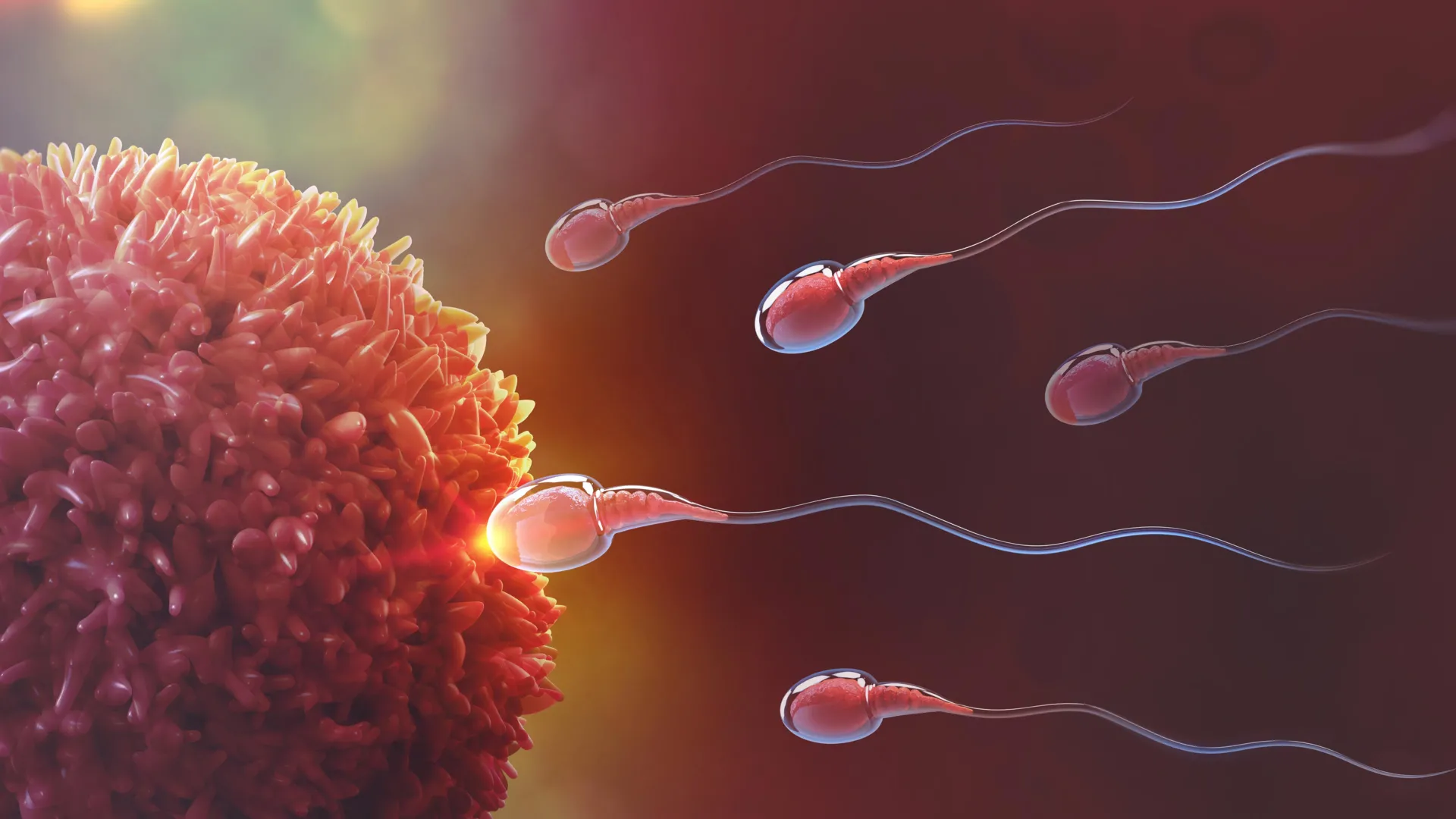
Before ejaculation, mammalian sperm reside in a quiescent, low-energy state, conserving their finite resources until they enter the female reproductive tract. Once inside, they undergo an explosive metabolic transformation. They begin to swim with significantly greater force and precision, while simultaneously altering their outer cellular membranes to prepare for successful interaction and fusion with an egg. This sudden behavioral shift demands an immediate and massive surge in cellular energy production, a metabolic choreography that has long fascinated and puzzled reproductive biologists.
While scientists have long understood that sperm require substantial fuel to execute this transition, the exact enzymatic pathways and regulatory switches governing the surge remained obscure. Until recently, researchers lacked the analytical tools to track the intricate metabolic reprogramming that occurs within a single, highly specialized cell type in real time.
Tracking Cellular Fuel: A Novel Tracing Methodology
To overcome these historical limitations, Balbach’s research team engineered an innovative experimental approach to map how sperm process glucose, the primary sugar they absorb from their surrounding environment to generate mechanical and chemical power.
By employing sophisticated tracing techniques, the researchers mapped the precise chemical pathways glucose takes inside the cell, uncovering stark metabolic contrasts between inactive sperm and their fully activated counterparts. Balbach utilized a vivid analogy to describe the tracking technique to the public and her scientific peers.
"You can think of this approach like painting the roof of a car bright pink and then following that car through traffic using a drone," Balbach said. "In activated sperm, we saw this painted car moving much faster through traffic while preferring a distinct route and could even see what intersections the car tended to get stuck at."
Using high-resolution analytical infrastructure, including the Mass Spectrometry and Metabolomics Core at Michigan State University, the researchers constructed a comprehensive, step-by-step roadmap of the high-energy processes sperm rely on. The data revealed that an enzyme known as aldolase acts as a linchpin in converting glucose into usable cellular energy. Furthermore, the findings demonstrated that sperm draw upon internal energy reserves stored long before the journey begins, while specific regulatory enzymes direct how glucose flows through metabolic pathways to maximize efficiency.
Chronology of the Discovery: From Weill Cornell to Michigan State University
The publication of this study marks a significant milestone in a research trajectory that spans more than a decade. Earlier in her career while working at Weill Cornell Medicine, Balbach laid the groundwork for these current discoveries. During her tenure there, she was part of a team that demonstrated how blocking a specific, critical sperm enzyme could induce temporary infertility in male mice. That landmark finding provided the foundational proof-of-concept that nonhormonal male contraception was not only theoretically possible, but biologically attainable.
Upon moving her laboratory to Michigan State University in 2023, Balbach accelerated her investigations into sperm metabolism by leveraging interdisciplinary collaborations. By partnering with cancer and epigenetics researchers at Memorial Sloan Kettering Cancer Center and the Van Andel Institute, her lab integrated advanced metabolomic profiling with reproductive biology. This collaborative chronology transformed isolated observations of enzyme inhibition into a holistic, dynamic model of sperm metabolic activation.
Implications for Global Infertility and Assisted Reproductive Technologies
The broader implications of this research extend deeply into the realm of clinical infertility, a pervasive global challenge. According to epidemiological data from the World Health Organization and related public health institutions, infertility affects approximately one in six people worldwide, placing immense emotional and financial burdens on individuals and families.
By mapping the precise biochemical pathways that govern sperm activation and energy regulation, Balbach’s team has opened new avenues for diagnosing and treating male factor infertility. Assisted reproductive technologies, such as in vitro fertilization (IVF) and intrauterine insemination (IUI), rely heavily on selecting and utilizing healthy, motile sperm. Enhanced understanding of how sperm manage their energy reserves and metabolize external sugars could lead to superior diagnostic assays that accurately predict fertilization success. Furthermore, culture media used in fertility clinics could potentially be optimized based on these metabolic insights, improving sperm vitality and increasing overall success rates for patients undergoing fertility treatments.
Redefining Contraception: The Case for Nonhormonal Options
Perhaps the most culturally and medically transformative potential of the Michigan State University study lies in the field of contraception. Historically, modern contraceptive burdens have fallen disproportionately on women, and conventional female birth control methods rely heavily on systemic hormones. While effective, hormonal contraceptives are frequently associated with a wide array of side effects, ranging from mood alterations and weight fluctuations to cardiovascular risks.
Conversely, historical efforts to develop male contraceptives have primarily focused on suppressing sperm production through hormonal interventions or permanent surgical procedures. These approaches have notable limitations. Hormonal male birth control methods often encounter challenges regarding patient side effects and fail to provide immediate, on-demand reversibility. Additionally, suppressing spermatogenesis takes weeks or months to take effect and reverse.
Balbach’s research points toward an entirely different paradigm: transient, targeted enzyme inhibition. By focusing on the metabolic "switches" and "traffic-control" enzymes that dictate sperm activation, scientists could theoretically develop on-demand, nonhormonal contraceptives that temporarily disable sperm function precisely when needed, without altering systemic hormone levels.
"Right now, about 50% of all pregnancies are unplanned, and this would give men additional options and agency in their fertility," Balbach noted. "Likewise, it creates freedom for those using female birth control, which is hormone-based and highly prone to side effects."
Future Directions and the Road to Human Trials
Despite the excitement surrounding these findings, researchers emphasize that the journey from murine models to clinically approved human therapeutics is rigorous and lengthy. The biochemical pathways identified in mice must be meticulously validated in human biological samples to ensure safety, efficacy, and cross-species conservation.
Balbach and her laboratory are already pivoting toward the next phase of investigation. Their immediate goals include examining whether the molecular switches and traffic-control enzymes identified in the recent study function identically in human sperm. Additionally, the team plans to explore how sperm utilize alternative fuel sources, such as fructose, to supplement or sustain their energy demands under varying physiological conditions.
As funding from institutions like the National Institute of Child Health and Human Development continues to support these foundational inquiries, the scientific community watches closely. The identification of a molecular energy switch in sperm does more than answer an enduring physiological question; it lays the groundwork for a future where reproductive health management is safer, more versatile, and equitably shared across genders.
"Better understanding the metabolism of glucose during sperm activation was an important first step, and now we’re aiming to understand how our findings translate to other species, like human sperm," Balbach concluded. "One option is to explore if one of our ‘traffic-control’ enzymes could be safely targeted as a nonhormonal male or female contraceptive. I’m excited to see what else we can find and how we can apply these discoveries."