A groundbreaking University of Bristol-led study, published on June 16 in the esteemed journal Nature Communications, has unveiled a remarkable evolutionary adaptation in a group of tropical butterflies, suggesting they may possess an extraordinary mechanism to extend their healthy lifespans by significantly slowing the aging process itself. This research sheds new light on the intricate biology of longevity and positions these vibrant insects as potential key models for future scientific exploration.
The Enigmatic Heliconius Tribe: A Case Study in Extended Lifespan
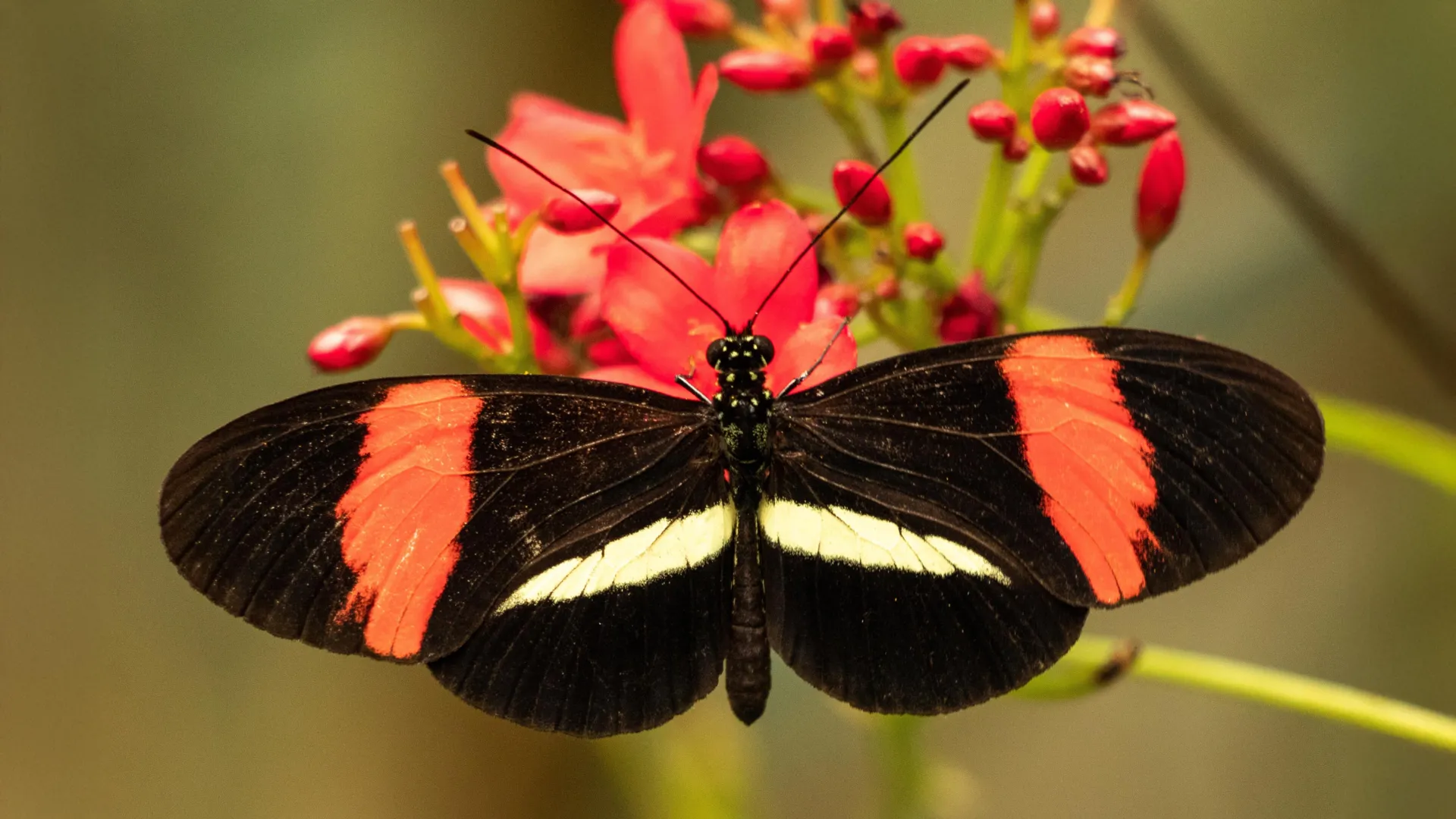
The focus of this extensive investigation is the Heliconius tribe, a diverse lineage of butterflies that adorn the lush rainforests of Central and South America. For years, entomologists have recognized these species for their unusually prolonged adult lifespans, setting them apart from the fleeting existence of most butterflies. The University of Bristol study confirms and quantifies this phenomenon, revealing that certain Heliconius species can live up to three times longer than their closest evolutionary relatives. In some exceptional cases, individuals have been documented to survive for nearly a full year, a stark contrast to the typical few weeks of adult life observed in the broader butterfly population.
A particularly striking example highlighted in the research involves Heliconius hewitsoni, which achieved an astonishing maximum lifespan of 348 days. This is contrasted with a closely related species, Dione juno, which had a mere 14-day lifespan. This represents a staggering 25-fold difference in maximum lifespan between these two species, underscoring the unique evolutionary trajectory of the Heliconius tribe. The implications of these findings are profound, suggesting that these butterflies have developed a distinctive strategy for extending their lives, offering unprecedented clues into the biological underpinnings of slowed aging in the natural world.
Unveiling the Evidence: A Glimpse into the Aging Process
The research team, collaborating with scientists from the Smithsonian Tropical Research Institute in Panama, made a further astonishing discovery: at least one species, Heliconius hecale, appears to exhibit minimal to no measurable physical deterioration as it ages. This observation challenges conventional understanding of aging in the animal kingdom, where a decline in physical performance is typically a hallmark of senescence.
To rigorously assess physical capabilities, the researchers employed a standardized grip strength test. The results were remarkable. Older H. hecale butterflies performed on par with their younger counterparts, displaying no discernible signs of age-related decline. In a comparative analysis, Dryas iulia, a species closely related to H. hecale but with a significantly shorter lifespan, exhibited a clear and measurable age-related decrease in grip strength. This stark difference suggests that Heliconius butterflies may largely circumvent the physical degradation that commonly accompanies aging in most organisms.
The comprehensive methodology employed by the research team involved a multi-faceted approach, integrating data from dedicated butterfly houses, extensive mark, release, and recapture studies conducted in their natural habitats, and meticulously controlled insectary experiments. This synergistic approach allowed for a robust comparison of lifespan and aging patterns across the entire Heliconiini tribe. The consistent findings across these diverse research avenues revealed that Heliconius butterflies consistently demonstrated longer average and maximum lifespans, lower baseline mortality rates, and notably slower rates of aging when compared to related species that do not engage in adult pollen feeding.
The Pivotal Role of Pollen Feeding: A Nutritional Advantage?
For a considerable period, scientists have been aware of the unusually long lives of Heliconius butterflies, but the precise reasons for this longevity remained an enigma. A prominent hypothesis centered on their rare and distinctive ability to feed on pollen as adults. Unlike the vast majority of butterfly species, which primarily subsist on nectar, adult Heliconius butterflies have evolved the capacity to consume pollen, a dietary habit considered highly unusual within the Lepidoptera order.
To empirically test this hypothesis, the researchers conducted a direct comparison between a pollen-feeding species, Heliconius hecale, and its non-pollen-feeding relative, Dryas iulia. The experimental outcomes provided compelling support for the nutritional advantage of pollen. H. hecale maintained its body mass and exhibited superior muscle performance for a significantly longer duration compared to D. iulia. Crucially, H. hecale did not display the pronounced age-related physical decline observed in D. iulia.
However, the study also revealed a nuanced picture. While pollen feeding clearly contributes to the longevity advantage, it is not the sole determinant. When pollen was experimentally removed from the diet of H. hecale, the butterflies still lived substantially longer than their short-lived relatives. This critical observation indicates that while nutrition plays a significant role, evolutionary adaptations specifically geared towards extending lifespan are also integral to the remarkable longevity of Heliconius butterflies. This suggests a complex interplay between dietary habits and inherent biological mechanisms that have evolved over time.
A New Frontier in Longevity Research: Harnessing Nature’s Models
The implications of this research extend far beyond the fascinating world of butterflies. Long-lived species across the animal kingdom have consistently offered invaluable insights into the fundamental biological mechanisms that govern healthy aging. The discovery of Heliconius butterflies’ unique aging processes positions them as a highly promising new model system for investigating how ecological shifts, such as the evolution of adult pollen feeding, can profoundly influence lifespan.
Dr. Jessica Foley, the lead author of the study and a researcher at the University of Bristol’s School of Biological Sciences, articulated the significance of these findings. "As the most species-rich animal class, insects are renowned for their extraordinary morphological and ecological diversity," Dr. Foley stated. "They also exhibit extreme variation in longevity, with maximum lifespans ranging from just a few days in adult mayflies to several decades in the reproductive castes of some ants and termites. This represents a roughly 5,000-fold difference within the class, compared with around a 100-fold difference in lifespan observed in mammals."
She further elaborated on the unique contribution of Heliconius: "Heliconius butterflies are among the longest-lived butterflies, but what makes them particularly remarkable is that they appear to have evolved not only longer lifespans, but also slower aging. This allows them to live significantly longer than closely related species from which they diverged relatively recently in evolutionary time."
The excitement surrounding this discovery lies in its potential to unlock fundamental secrets of aging. "The exciting implication of this lifespan extension is that it provides a powerful opportunity to identify the mechanisms that underpin longevity," Dr. Foley explained. "By comparing long-lived Heliconius butterflies with their short-lived relatives, we have a natural evolutionary experiment that can help reveal how lifespan is extended, making them a highly promising new model for research into the biology of aging and longevity."
Broader Scientific and Societal Implications
The insights gleaned from the Heliconius butterflies could have far-reaching implications for human health and aging research. Understanding the genetic and molecular pathways that enable these insects to slow their aging processes might offer novel therapeutic targets for age-related diseases in humans. While the leap from butterfly biology to human health is significant, the fundamental principles of cellular repair, metabolic efficiency, and stress resistance are conserved across many species.
The study’s findings also underscore the critical importance of biodiversity and ecological research. The unique adaptations observed in Heliconius butterflies arose in response to specific environmental pressures and opportunities. This highlights how studying diverse organisms in their natural habitats can reveal novel biological solutions to fundamental life challenges, including the process of aging. Conservation efforts that protect these fragile ecosystems are therefore crucial not only for preserving biodiversity but also for safeguarding potential sources of scientific breakthroughs.
Furthermore, the research team’s meticulous approach, combining field observations with controlled laboratory experiments, sets a precedent for future longevity studies. The ability to track individual butterflies over extended periods, assess their physiological health, and correlate these factors with their dietary habits and genetic makeup provides a robust framework for unraveling complex biological questions.
Future Directions and Unanswered Questions
While this study represents a significant leap forward, several avenues for future research remain. Scientists are keen to delve deeper into the specific molecular mechanisms responsible for the slowed aging in Heliconius. This may involve genome sequencing to identify key genes associated with longevity, as well as proteomic and metabolomic analyses to understand the biochemical differences between long-lived and short-lived species.
Investigating the role of other environmental factors, such as temperature, predation, and the presence of specific microbial communities within the gut, could also provide a more complete picture of Heliconius longevity. The interaction between diet, genetics, and environment is likely complex and multifaceted, and further research will be essential to disentangle these influences.
The potential for Heliconius butterflies to serve as a model organism for longevity research is immense. Their relatively short generation times, ease of laboratory rearing, and the clear phenotypic differences in lifespan between closely related species make them ideal candidates for genetic manipulation and comparative studies. As researchers continue to probe the secrets of these extraordinary insects, the hope is to unlock new strategies for promoting healthy aging and extending human healthspan, drawing inspiration from the vibrant resilience of tropical butterflies.