Scientists at the Baylor College of Medicine have announced a landmark discovery in the field of neurobiology, identifying a novel mechanism that may prevent the onset and progression of Alzheimer’s and Parkinson’s diseases. The research, published in the peer-reviewed journal Nature Communications, highlights the role of tubulin—a fundamental protein component of the cellular cytoskeleton—as an active protector against the formation of toxic protein aggregates. By investigating the interaction between tubulin and the proteins Tau and alpha-synuclein, researchers have uncovered a biological "redirection" strategy that could shift the paradigm of how neurodegenerative treatments are developed.
The study addresses a central challenge in neurology: the transition of essential proteins from beneficial components of healthy brain function to destructive agents of cognitive and motor decline. In patients suffering from Alzheimer’s and Parkinson’s, the proteins Tau and alpha-synuclein misfold and coalesce into dense, insoluble clumps. These aggregates disrupt neuronal communication, induce cellular death, and ultimately lead to the debilitating symptoms associated with these conditions, such as memory loss, tremors, and cognitive impairment.
The Pathological Context of Protein Aggregation
To understand the significance of the Baylor discovery, it is necessary to examine the roles of Tau and alpha-synuclein within the human brain. Under normal physiological conditions, Tau is primarily located in the axons of neurons, where it binds to and stabilizes microtubules. Microtubules serve as the structural framework and "railway tracks" of the cell, facilitating the transport of nutrients, organelles, and signaling molecules across long distances. Alpha-synuclein, predominantly found at the tips of nerve cells in structures called presynaptic terminals, is thought to play a role in regulating the release of neurotransmitters, which are essential for brain signaling.
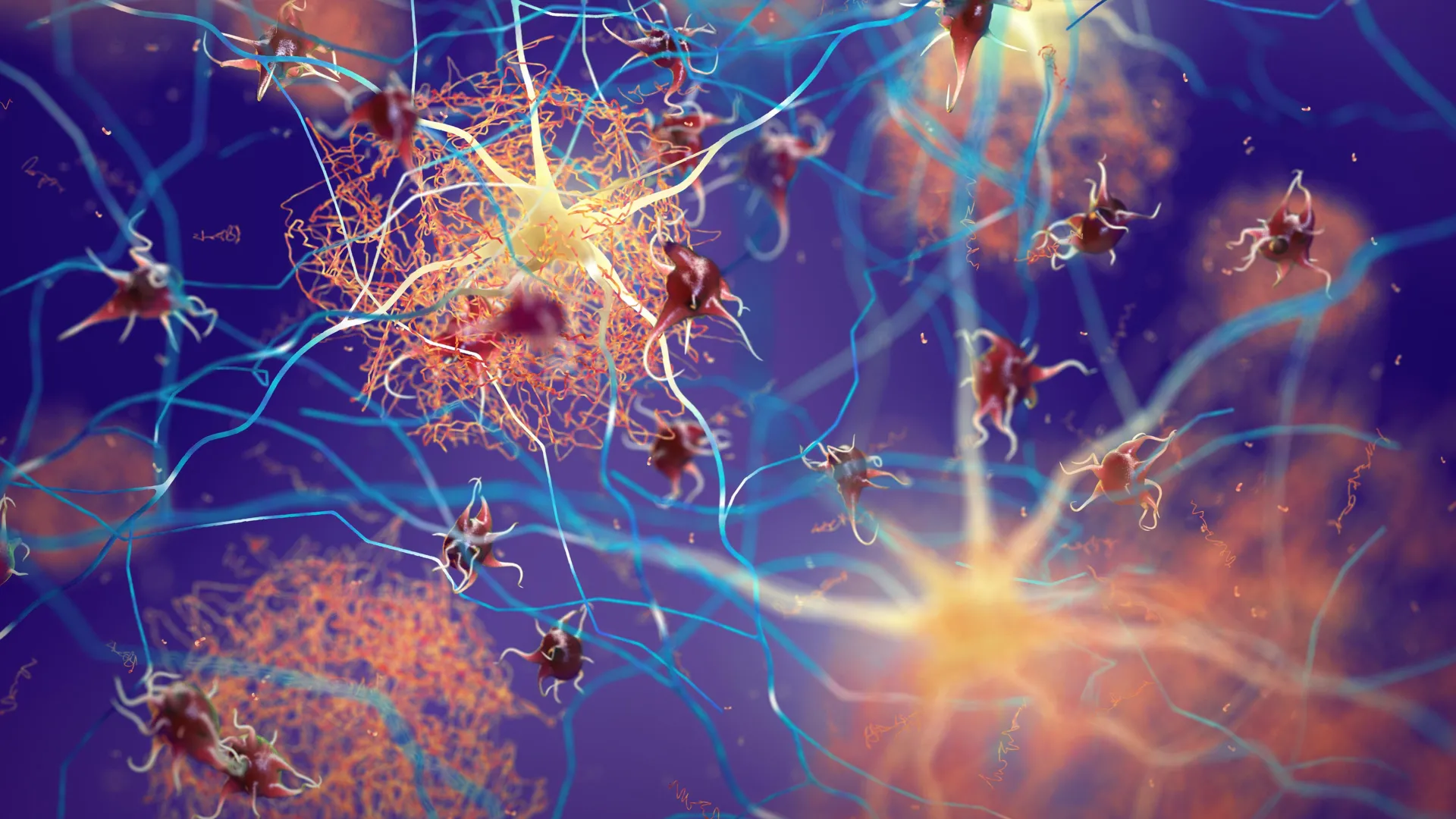
However, in neurodegenerative pathologies, these proteins undergo a transition. They begin to detach from their functional sites and enter a state of "liquid-liquid phase separation," forming tiny, concentrated liquid droplets known as condensates. While these condensates are a natural part of cellular organization, they can become breeding grounds for disaster. Inside these droplets, Tau and alpha-synuclein are packed so densely that they are prone to misfolding and sticking together, eventually hardening into the toxic fibrils and plaques characteristic of diseased brains.
For decades, the scientific community has focused on either clearing these plaques once they form or attempting to prevent the formation of the liquid droplets altogether. The latter approach has faced significant hurdles, as these droplets are also necessary for healthy cellular processes. Dissolving them entirely could inadvertently sabotage the very neurons doctors are trying to save.
A New Hypothesis: Redirection Over Destruction
The research team at Baylor College of Medicine, led by Dr. Allan Ferreon, an associate professor of biochemistry and molecular pharmacology, proposed a different approach. Rather than eliminating the droplets, the team sought to identify a factor that could influence the behavior of the proteins within those droplets.
"This led us to the following idea: what if instead of preventing the formation of droplets, we created conditions that would drive Tau and alpha-synuclein inside the droplets toward their healthy path, discouraging them from taking the disease path?" said Dr. Ferreon, who served as a co-corresponding author of the study.
The researchers identified tubulin—the globular protein that polymerizes to form microtubules—as the potential "guidance counselor" for these proteins. By utilizing high-resolution microscopy and sophisticated biochemical assays, the team observed how tubulin interacts with Tau and alpha-synuclein in real-time. They found that when tubulin is present in sufficient quantities, it acts as a competitive binder. It occupies the proteins, engaging them in the productive task of microtubule assembly, which prevents them from bonding with each other to form toxic aggregates.
The "Troublemaker" Analogy and Biological Evidence
Dr. Lathan Lucas, the study’s first author and a postdoctoral associate in Dr. Ferreon’s lab, provided a relatable analogy to explain the molecular dynamics at play. He likened Tau and alpha-synuclein to "troublemaker kids in school."
"You can keep them in the classroom with little to do but to act out, or keep them engaged with schoolwork, sports, or theater so they do not get in trouble," Lucas explained. "We found that tubulin can drive Tau and alpha-synuclein troublemakers down a healthy path."
The data supporting this analogy is compelling. In laboratory models, the researchers demonstrated that when tubulin levels are depleted—a condition frequently observed in the brains of Alzheimer’s patients—the "troublemaker" proteins have nothing to occupy their time. Left to their own devices within cellular condensates, they rapidly form the harmful clumps that lead to neurodegeneration. Conversely, when the researchers introduced higher concentrations of tubulin, the formation of these aggregates was significantly inhibited. The tubulin effectively "recruited" the Tau and alpha-synuclein back into their structural roles, reinforcing the microtubule network.
Chronology of the Discovery and Research Methodology
The journey to this discovery involved several years of interdisciplinary work. The timeline of the research reflects a meticulous progression from theoretical modeling to empirical validation:
- Initial Observation (Pre-2020): Researchers noted a recurring correlation between decreased tubulin density and increased Tau tangles in post-mortem brain tissue of Alzheimer’s patients. This raised the question of whether tubulin loss was a symptom or a driver of the disease.
- Hypothesis Formulation (2021): The Ferreon lab hypothesized that tubulin might serve as a "molecular chaperone," a protein that assists in the proper folding or stabilization of other proteins.
- Experimental Phase (2022-2023): The team employed biophysical methods, including nuclear magnetic resonance (NMR) spectroscopy and fluorescence microscopy, to watch how Tau and alpha-synuclein behave in the presence and absence of tubulin. They focused specifically on the "condensate" environment to mimic the conditions inside a living neuron.
- Neuron-Based Assays (Late 2023): The findings were validated in neuron-based models, confirming that increasing the available "pool" of tubulin could protect cells from the toxicity typically induced by misfolded proteins.
- Publication (2024): The comprehensive findings were published in Nature Communications, offering a new theoretical framework for neurodegenerative intervention.
Supporting Data and Molecular Mechanics
The study’s data suggests that tubulin’s role is far more active than previously understood. Traditionally, tubulin was viewed as a passive building block—a "brick" used by Tau to build the microtubule "wall." The Baylor study redefines tubulin as a regulatory agent.
In biochemical experiments, the researchers measured the rate of protein fibrillation—the process by which proteins turn into harmful fibers. They found that adding tubulin to a solution containing Tau and alpha-synuclein reduced the rate of fibrillation by a statistically significant margin. Furthermore, using high-resolution imaging, they observed that the presence of tubulin changed the physical properties of the protein droplets. The droplets remained liquid and dynamic rather than hardening into solid, toxic masses, provided tubulin was available to interact with the internal proteins.
This interaction is particularly vital because Tau and alpha-synuclein are "intrinsically disordered proteins," meaning they do not have a fixed three-dimensional shape. This flexibility allows them to perform many tasks but also makes them prone to folding into the wrong shapes. Tubulin provides the necessary template or "work" to keep these flexible proteins in a functional state.
Broader Implications for Therapeutic Development
The implications of this discovery for the pharmaceutical industry and clinical medicine are profound. Currently, most FDA-approved treatments for Alzheimer’s, such as monoclonal antibodies like lecanemab, focus on clearing amyloid-beta plaques from the brain. While these treatments represent progress, they often come with risks of brain swelling or bleeding and have shown only modest effects on slowing cognitive decline.
The Baylor research suggests a more "selective" therapeutic strategy. Instead of a "scorched earth" approach that targets all protein droplets or tries to clear existing plaques, future drugs could focus on "boosting the tubulin pool." By increasing the concentration or the binding affinity of tubulin, clinicians might be able to keep Tau and alpha-synuclein engaged in their healthy roles, preventing the transition to disease before irreversible damage occurs.
"Our findings significantly shift tubulin’s role in neurodegeneration, from a passive casualty of disease to an active protector against toxic protein aggregation," Dr. Ferreon stated. "Boosting the tubulin pool… can curb toxic aggregation while preserving the healthy roles of Tau and alpha-synuclein."
Official Responses and Collaborative Effort
The study was a collaborative effort involving several key researchers at Baylor College of Medicine, including co-first author Phoebe S. Tsoi, as well as My Diem Quan, Kyoung-Jae Choi, and co-corresponding author Josephine C. Ferreon.
The scientific community has reacted with cautious optimism. Independent experts note that while the study provides a brilliant mechanical insight, the next challenge will be "translation"—finding a way to safely increase tubulin activity in the human brain without disrupting other essential cell division processes (since tubulin is also vital for mitosis).
The research was made possible through significant public and private funding, reflecting the high priority placed on neurodegenerative research. Support was provided by the National Institute of Neurological Disorders and Stroke (NINDS-NIH) grant R01 NS105874, the Welch Foundation grant Q-2097-20220331, and the National Institute of General Medical Sciences (NIGMS-NIH) grant R01 GM122763.
The Global Context of Neurodegenerative Disease
The urgency of the Baylor study is underscored by the rising global burden of brain diseases. According to the Alzheimer’s Association, more than 6 million Americans are currently living with Alzheimer’s, a number projected to rise to nearly 13 million by 2050. Similarly, Parkinson’s disease affects approximately 1 million people in the United States, with 90,000 new cases diagnosed annually.
The economic impact is equally staggering, with the costs of care for these conditions reaching hundreds of billions of dollars each year. Beyond the numbers, the human toll on families and caregivers is immeasurable. The identification of tubulin as a protective factor offers a new "molecular handle" for researchers to grasp in the fight against these relentless diseases.
Conclusion and Future Directions
The Baylor College of Medicine study marks a pivotal shift in the understanding of the molecular origins of Alzheimer’s and Parkinson’s. By demonstrating that tubulin is not merely a structural component but a critical regulatory protein that keeps "troublemaker" proteins in check, the researchers have opened a new door for drug discovery.
Future research will likely focus on identifying small molecules or gene therapies that can stabilize tubulin levels or enhance its interaction with Tau and alpha-synuclein. If successful, this approach could lead to treatments that are not only more effective but also have fewer side effects by working with the brain’s natural machinery rather than against it. As the global population ages, the "tubulin-protection" strategy may become a cornerstone of 21st-century neurology, offering hope to millions of patients and their families worldwide.