

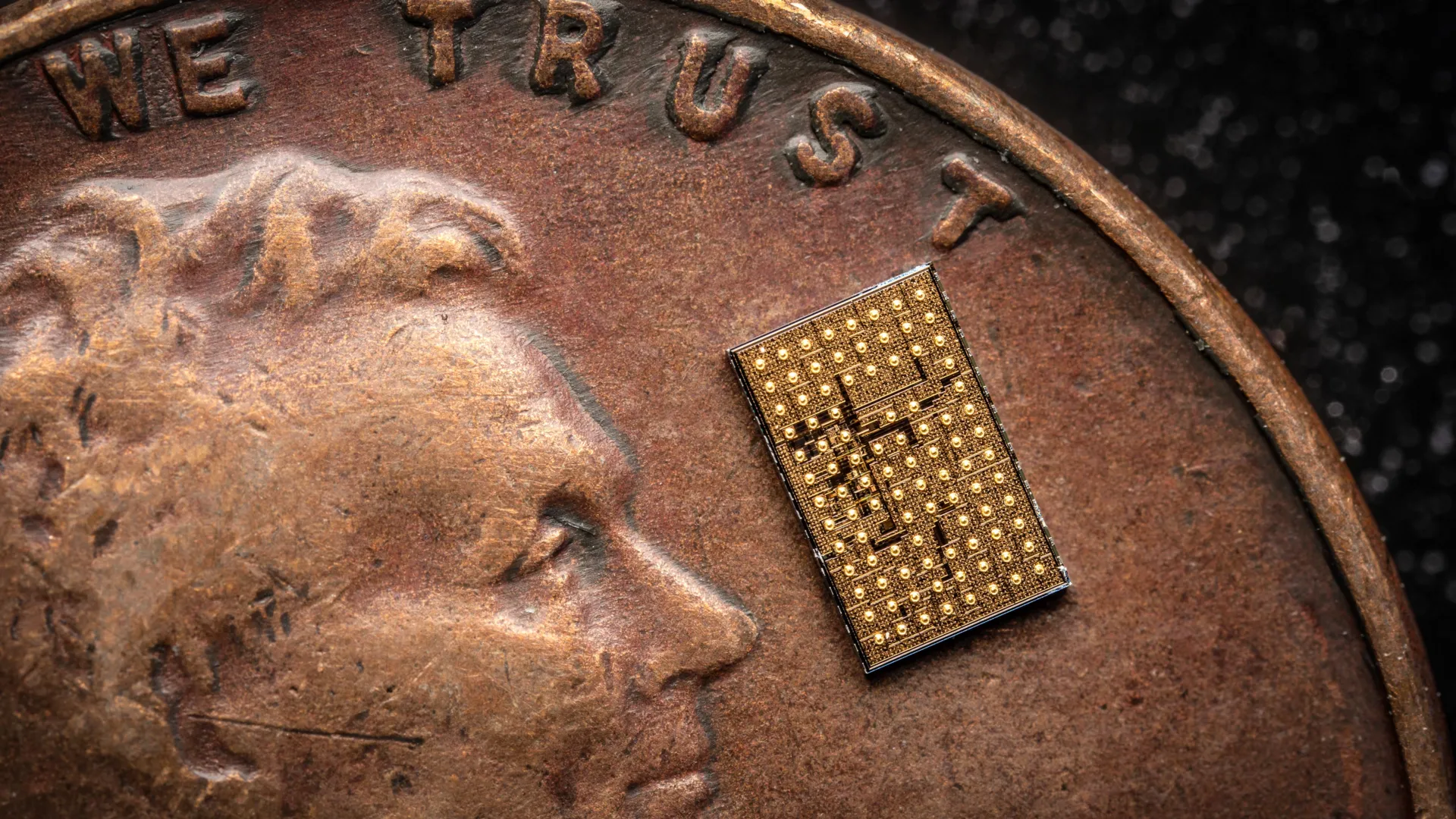
The global digital infrastructure is currently facing an unprecedented energy crisis, driven largely by the rapid expansion of artificial intelligence, cloud computing, and high-performance data processing. As data centers scale up to meet these demands, the efficiency of power delivery systems has become a primary bottleneck in hardware performance. In a significant technological breakthrough, engineers at the University of California San Diego have developed a novel hybrid chip design that fundamentally reimagines how electricity is managed within high-performance computing environments. By utilizing piezoelectric resonators instead of traditional magnetic components, the research team has demonstrated a way to convert high-voltage electricity into the lower levels required by graphics processing units (GPUs) with significantly higher efficiency and a smaller physical footprint.
The Growing Crisis of Data Center Energy Consumption
The urgency of this innovation is underscored by the staggering energy requirements of modern computing. According to reports from the International Energy Agency (IEA), data centers currently account for approximately 1% to 1.5% of global electricity use. With the rise of Large Language Models (LLMs) and generative AI, this figure is projected to double by 2026. Within these facilities, the power delivery chain is a major source of energy loss. Electricity typically enters a data center at high voltages and is stepped down through multiple stages before reaching the processor.
In contemporary server architectures, power is often distributed across the backplane at 48 volts. however, the sophisticated silicon at the heart of the system—the GPUs and CPUs—operates at much lower voltages, frequently between 1 and 5 volts. The process of bridging this gap, known as DC-DC step-down conversion, is where significant energy is dissipated as heat. As processors become more power-hungry, requiring hundreds of amps of current, the limitations of existing conversion technologies have become a critical barrier to further densification and efficiency.
The Technological Wall: Why Traditional Inductors are Failing
For decades, the backbone of power conversion has been the inductive DC-DC converter. These devices rely on inductors—coils of wire that store energy in magnetic fields—to regulate voltage. While inductive technology is mature and highly reliable, it is approaching a point of diminishing returns.
As the difference between the input voltage (48V) and output voltage (sub-5V) grows, traditional inductors struggle. To maintain efficiency at high conversion ratios, inductors must become physically larger, which conflicts with the industry’s push for compact, high-density server blades. Furthermore, inductors are prone to "switching losses" and resistive heating. Professor Patrick Mercier, a senior author of the study and a faculty member at the UC San Diego Jacobs School of Engineering, noted that the industry has reached a plateau. "We’ve gotten so good at designing inductive converters that there’s not really much room left to improve them to meet future needs," Mercier explained. This realization prompted the UC San Diego team to look beyond magnetism for a solution.
Piezoelectric Resonators: A Mechanical Alternative to Magnetics
The core innovation of the UC San Diego team involves replacing or supplementing magnetic inductors with piezoelectric resonators. Unlike inductors, which store energy in a magnetic field, piezoelectric materials store and transfer energy through mechanical vibrations. When an electric field is applied to a piezoelectric crystal, it physically deforms; conversely, mechanical stress generates an electric charge.
Piezoelectric resonators offer several theoretical advantages over inductors. They can be manufactured in much smaller form factors, they possess higher quality factors (meaning less energy is lost per cycle), and they are inherently more compatible with the semiconductor fabrication processes used to make the chips themselves. However, historically, piezoelectric-based converters have struggled with "power density"—the ability to move large amounts of current through a small device—especially when tasked with large voltage drops.
The Hybrid Breakthrough: Combining Capacitors and Resonators
To solve the historical limitations of piezoelectric technology, the UC San Diego researchers, led by Ph.D. student Jae-Young Ko, developed a unique hybrid architecture. This design does not rely on the piezoelectric resonator alone; instead, it integrates the resonator with a strategically arranged network of small, commercially available capacitors.
This hybrid configuration creates a multi-pathway system for energy transfer. By distributing the electrical load across both the mechanical vibrations of the resonator and the electrostatic fields of the capacitors, the system reduces the physical strain on any single component. This synergy allows the chip to handle the high-current demands of a modern GPU while maintaining the high-efficiency characteristics of piezoelectric materials.
In laboratory testing, the prototype chip successfully converted a 48-volt input down to 4.8 volts. This 10-to-1 conversion ratio is a standard requirement for many intermediate power stages in data centers. The results, published in the journal Nature Communications, were record-breaking: the device achieved a peak efficiency of 96.2%. Perhaps more importantly for industrial applications, the hybrid design delivered approximately four times more output current than any previous piezoelectric-based converter of a comparable size.
Empirical Data and Performance Metrics
The performance of the UC San Diego prototype provides a glimpse into the future of power electronics. The following data points highlight the significance of the achievement:
- Conversion Efficiency: 96.2% at peak performance, significantly reducing the amount of electricity wasted as heat.
- Voltage Step-Down: Successfully converted 48V to 4.8V, meeting the industry standard for server-rack power distribution.
- Current Density: The hybrid design demonstrated a 400% increase in current-handling capability compared to non-hybrid piezoelectric designs.
- Footprint Reduction: Because piezoelectric resonators operate at higher frequencies and store energy more densely than inductors, the total volume of the power module can be reduced, allowing for more processors to be packed into the same server space.
Industry Implications: Cooling, Costs, and Carbon Footprints
The implications of a 96% efficient converter extend far beyond the chip itself. In a massive data center, even a 1% or 2% increase in power conversion efficiency translates to millions of dollars in annual energy savings. Furthermore, because less energy is wasted as heat, the demand on the facility’s cooling systems is reduced.
Cooling is one of the most expensive and energy-intensive aspects of data center management, often accounting for nearly 40% of total energy expenditure. By reducing the "thermal load" at the chip level, the UC San Diego technology could enable more sustainable "free cooling" methods or allow for higher compute densities without the risk of thermal throttling. This contributes directly to a reduction in the carbon footprint of the digital economy, a primary goal for tech giants like Microsoft, Google, and Amazon, all of whom have committed to carbon-neutral or carbon-negative goals by 2030.
The Path to Commercialization: Overcoming Integration Challenges
Despite the impressive laboratory results, the transition from a university prototype to a mass-produced industrial component faces several engineering hurdles. One of the most significant challenges is the physical nature of the piezoelectric resonator itself. Because these devices function by vibrating at high frequencies, they cannot be attached to a circuit board using traditional soldering techniques. Standard solder would dampen the vibrations, effectively "killing" the resonator’s ability to transfer energy.
"Piezoelectric-based converters aren’t quite ready to replace existing power converter technologies yet," Professor Mercier cautioned. The team is currently exploring new "packaging" and integration strategies, such as specialized bonding techniques that allow the resonator to vibrate freely while maintaining a robust electrical connection.
Furthermore, the longevity and reliability of these vibrating components under the 24/7 high-load conditions of a data center must be rigorously tested. Materials science will play a crucial role in the next phase of development, as researchers look for piezoelectric ceramics that can withstand billions of cycles without fatigue or loss of performance.
Chronology of Development and Future Outlook
The development of this hybrid converter is part of a multi-year effort supported by the Power Management Integration Center (PMIC), an Industry-University Cooperative Research Center funded by the National Science Foundation. The timeline of this research reflects a steady progression from theoretical physics to practical engineering:
- Phase 1 (Fundamental Research): Identification of piezoelectric materials as a viable alternative to magnetic inductors for high-frequency switching.
- Phase 2 (Design Innovation): The conceptualization of the hybrid capacitor-resonator topology to overcome the current-density limits of pure piezoelectric designs.
- Phase 3 (Prototyping): Fabrication of the UC San Diego chip and initial benchmarking against 48V data center standards.
- Phase 4 (Current State): Peer-reviewed publication in Nature Communications and demonstration of 96.2% efficiency.
- Phase 5 (Future Roadmap): Optimization of packaging techniques, material durability studies, and collaboration with industry partners for pilot testing in server environments.
Conclusion: A New Trajectory for Power Electronics
The work of Mercier, Ko, and their colleagues represents a pivotal shift in power electronics. For decades, the industry has relied on the incremental improvement of 19th-century magnetic principles to power 21st-century digital dreams. The UC San Diego hybrid piezoelectric converter suggests that the future of power management may not be magnetic, but mechanical.
While challenges remain in manufacturing and system integration, the prototype provides a clear "trajectory for improvement," as Mercier noted. As the world becomes increasingly reliant on AI and data-heavy applications, the ability to power these systems efficiently will be as important as the code that runs on them. The UC San Diego breakthrough offers a promising solution to keep the engines of the digital age running cooler, faster, and more sustainably.












Leave a Reply