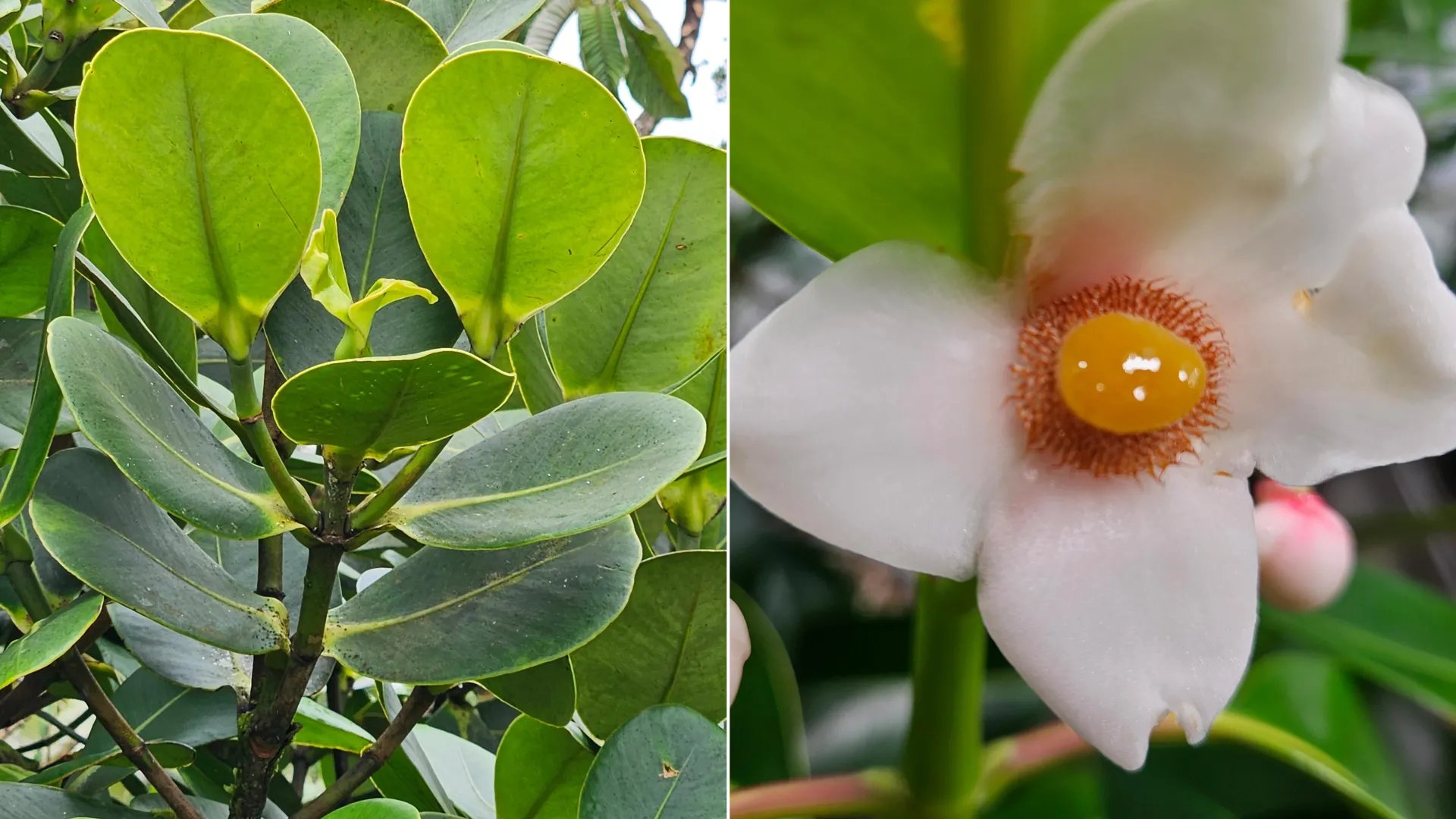
The delicate balance between sunlight, water, and atmospheric carbon dioxide has dictated the survival of plant life on Earth for over a billion years. While most plants rely on the conventional C3 photosynthetic pathway—a process that is highly efficient but water-intensive—a specialized group of plants has developed a sophisticated workaround known as Crassulacean Acid Metabolism, or CAM. Recent research conducted by a team at the University of Vienna has provided a definitive breakthrough in understanding how this drought-resistant strategy evolved, focusing on the tropical genus Clusia. By analyzing the genomes of three distinct species, researchers have mapped how ancient genetic duplication and subsequent reorganization have allowed these trees to master water conservation in some of the world’s most challenging environments.
A Two-Century Botanical Mystery
The scientific intrigue surrounding Clusia dates back to the dawn of the 19th century. In approximately 1800, the pioneering polymath and explorer Alexander von Humboldt observed a physiological anomaly while studying tropical trees in the Americas. During his fieldwork, Humboldt submerged leaves from a specific tree in water, expecting to see the characteristic oxygen bubbles associated with active daytime photosynthesis. Instead, the leaves remained inert.
This observation was, at the time, baffling. It would take decades for science to fully grasp the mechanism at play: the plant was employing a "night-shift" approach to respiration. Unlike standard C3 plants that open their stomata—microscopic pores on the leaf surface—during the day to capture CO2, these trees keep their stomata tightly sealed under the sun to prevent water loss through evaporation. They instead intake carbon dioxide under the cover of darkness, chemically fixing it into malic acid for use during the following daylight hours. While this process, now formally termed CAM, has been well-documented in succulents like cacti and pineapples, its presence in trees is rare. Clusia stands as a unique outlier in the botanical world, as it is the only known genus of trees that utilizes this water-efficient pathway.
Genomic Architecture and Evolutionary Plasticity
To decode the evolutionary history of these trees, a research team led by Wolfram Weckwerth, Professor of Molecular Systems Biology at the University of Vienna, performed a comparative genomic analysis on three species: Clusia rosea, Clusia minor, and Clusia major. The study, published in Nature Communications, represents a landmark effort in functional evolutionary ecology.
The genetic analysis revealed that the secret to Clusia’s diverse photosynthetic strategies lies in an ancient evolutionary phenomenon: polyploidization. At some point in their ancestral lineage, these plants underwent genome duplication, effectively doubling their genetic material. However, the study highlights that this was not merely a simple expansion of the genome. Over millions of years, these duplicated genomes underwent a complex process of "diploidization," involving the loss, silencing, and functional reconfiguration of gene copies.
"The genomes have not simply multiplied; over millions of years, they have been reorganized, reduced and functionally rewired," notes Wolfram Weckwerth. This genomic plasticity is the engine driving the physiological diversity seen in the genus today. Hannes Kramml, the study’s lead author, points out that the genes specifically tasked with the nocturnal storage of CO2 were subject to the most intense selective pressures during this reorganization. This suggests that the plants were not merely adapting to climate fluctuations but were actively "fine-tuning" their internal machinery to survive in varying ecological niches.
Comparative Analysis: Three Paths to Survival
The research team utilized a rigorous, multi-layered approach to link these genomic changes to plant behavior. By monitoring the trees under controlled, near-natural greenhouse conditions, they simulated varying levels of water availability, combining physiological measurements with comprehensive data on gene expression, protein production, and metabolic output. The resulting data revealed a clear spectrum of photosynthetic strategies:
- Clusia rosea: This species exhibits a high-functioning, robust form of CAM. It consistently stores large quantities of malic acid at night, allowing it to maintain metabolic activity even in environments with severe water scarcity.
- Clusia minor: This species demonstrates a more opportunistic approach. It functions as a "facultative" CAM plant, activating its water-saving mechanism primarily when it detects environmental stress.
- Clusia major: This species utilizes a hybrid strategy, effectively balancing standard C3 photosynthesis with CAM. This dual-capability allows it to maximize growth when water is available while maintaining a safety net for periods of drought.
This range of strategies confirms that CAM did not emerge in Clusia as a singular, uniform evolutionary event. Instead, it was the result of iterative, repeated genomic reorganizations that granted individual species the flexibility to thrive in everything from humid rainforests to arid, rocky slopes.
Scientific Implications and Future Agricultural Applications
The implications of the Clusia study extend far beyond the canopy of tropical forests. As global climate change accelerates, the frequency and intensity of drought events are projected to rise, threatening food security and the viability of traditional crop cultivation.
The scientific community has long viewed CAM as the "gold standard" for water-use efficiency. Plants utilizing CAM can produce equivalent biomass to C3 plants while consuming significantly less water. By identifying the specific genetic pathways that allowed Clusia to transition between C3 and CAM, the researchers have created a roadmap for potential synthetic biology and crop engineering applications.
Johannes Herpell, co-lead author of the study, emphasizes that understanding how these trees "rewired" their metabolic pathways provides a new toolkit for researchers. "Genes crucial for nocturnal CO2 storage in CAM metabolism are particularly affected by this process," Herpell notes. If researchers can replicate these metabolic switches in common food crops, it could theoretically lead to the development of drought-resilient varieties capable of producing high yields in semi-arid environments where conventional farming currently fails.
A New Era of Botanical Research
The University of Vienna study is significant not only for its findings on Clusia but for the methodology it establishes for studying plant evolution. By integrating genomics with metabolic profiling and real-time physiological observation, the team has moved away from static genetic mapping toward a dynamic understanding of how plants "think" and adapt.
The research also underscores the vital importance of preserving biodiversity within the Clusia genus. Because these trees represent a unique bridge between standard photosynthetic plants and highly specialized CAM plants, they function as a living laboratory. Losing such species would mean losing the only remaining evidence of a vital evolutionary transition.
As the global agricultural sector prepares to face the realities of a warming planet, the lessons extracted from these tropical trees offer a glimmer of hope. The evolutionary success of Clusia serves as a testament to the power of genetic adaptation. By leveraging these insights, the scientific community may one day bridge the gap between ancient, hardy tropical biology and the modern demands of global food production. The mystery that first caught the eye of Alexander von Humboldt in 1800 has now, through the lens of modern genomics, become a cornerstone for the next generation of climate-resilient agriculture.