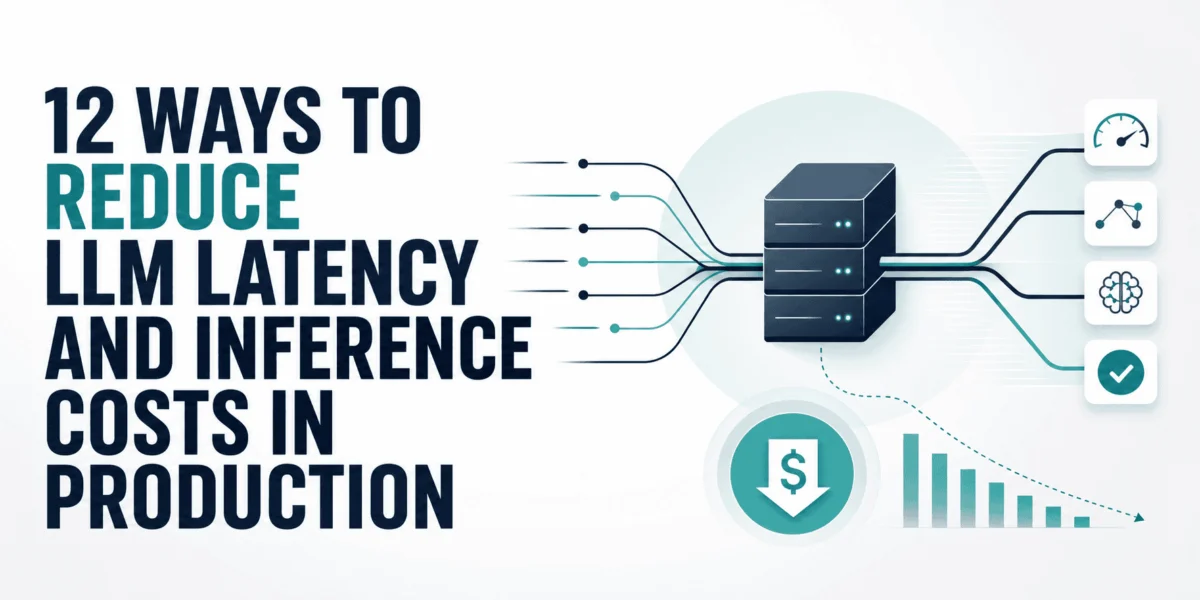
The rapid proliferation of Large Language Models (LLMs) in enterprise applications has unveiled a critical challenge: the escalating costs and performance bottlenecks associated with their deployment in production environments. While initial prototypes often demonstrate impressive capabilities with minimal overhead, scaling these applications to accommodate real-world user traffic, complex queries, and prolonged interactions quickly reveals significant latency and inference cost issues. The conventional wisdom of simply upgrading hardware or leveraging more powerful models often falls short; instead, the most impactful optimizations stem from a nuanced approach to workflow design, resource management, and intelligent system architecture. This article delves into 12 practical, field-tested strategies that empower organizations to make their LLM applications faster, more cost-effective, and robust, without compromising on quality.
Industry Context: The Escalating Stakes of LLM Deployment
The global investment in artificial intelligence, particularly generative AI, is soaring. According to recent industry reports, the market for generative AI is projected to reach hundreds of billions of dollars within the next decade, with enterprise adoption driving much of this growth. Companies are integrating LLMs into customer service, content generation, data analysis, and developer tools, making their performance and cost efficiency paramount. Inefficient LLM operations can translate directly into higher cloud computing bills, degraded user experience due to slow response times, and missed business opportunities. A recent survey of AI practitioners indicated that over 60% face significant challenges in managing the operational costs of their LLM deployments, with latency being a top concern for user-facing applications. This growing pressure highlights the urgency for robust optimization strategies beyond mere computational power.
Phase 1: Foundational Metrics and Output Optimization
1. The Imperative of Granular Latency Measurement
Before any optimization effort can yield meaningful results, a precise understanding of where time is being spent within the LLM system is crucial. End-to-end latency, while a useful high-level indicator, provides insufficient detail to pinpoint bottlenecks effectively. Production LLM systems must meticulously track a suite of granular metrics to diagnose issues accurately. Key metrics include:
- Time To First Token (TTFT): Measures the delay from receiving a request to the generation of the first output token. A high TTFT can indicate issues with prompt processing (e.g., excessively long prompts), slow retrieval-augmented generation (RAG) processes, or significant queueing delays within the inference pipeline.
- Inter-Token Latency: Represents the time taken to generate successive tokens after the first. Elevated inter-token latency often points to an oversized model for the task, an overloaded Graphics Processing Unit (GPU), suboptimal batching configurations, or memory pressure within the serving infrastructure.
- Queueing Time: The duration a request spends waiting for available resources before processing begins. High queueing times are a clear sign of insufficient capacity or inefficient scheduling.
Without these detailed measurements, development teams frequently misdiagnose performance issues, leading to misdirected optimization efforts—such as scaling up GPUs when the actual problem lies in prompt engineering or caching. For instance, a system experiencing high TTFT might be unnecessarily upgraded with more powerful GPUs when the root cause is an inefficient RAG pipeline that fetches and processes excessive context.
2. Precision in Output: Aggressively Reducing Token Generation
One of the most direct and impactful ways to reduce both latency and inference costs is by minimizing the number of tokens the LLM generates. Each output token is generated sequentially, meaning a response twice as long can take roughly twice as long to produce and incur significantly higher costs. The principle is simple: avoid paying for tokens that users will not read or do not need.
Strategies for reducing output tokens include:
- Strict Length Limits: Implement hard caps on response length, forcing the model to be concise. For example, a customer support chatbot might be configured to provide a maximum of three bullet points and a link to a knowledge base article, rather than a verbose 700-word explanation.
- Structured Output: Demand specific, structured formats like JSON. This often inherently reduces verbosity by compelling the model to extract and present only essential data points.
- Few-Shot Prompting: Provide examples of concise, effective responses in the prompt to guide the model towards brevity.
- Prompt Engineering for Conciseness: Use explicit instructions such as "Be concise," "Summarize," or "Provide only the key takeaways."
Analyst observations suggest that optimizing output length can lead to substantial gains. A recent case study by a leading tech firm demonstrated that by implementing aggressive output token reduction strategies, they achieved a 25% decrease in average inference cost and a 15% reduction in perceived latency for their internal documentation assistant, without impacting user satisfaction.
Phase 2: Intelligent Model and Workflow Management
3. Strategic Model Routing: Matching Task to Model Capability
The assumption that "one large model fits all" is a common and costly misconception in LLM deployments. Not every task requires the largest, most expensive, or most capable model. Many production workloads involve repetitive and structured tasks that can be handled effectively by smaller, more specialized, and less resource-intensive models.
Examples of such tasks include:
- Sentiment analysis
- Text classification (e.g., categorizing customer queries)
- Named entity recognition
- Simple summarization
- Data extraction from structured text
These tasks often achieve acceptable quality with a smaller model, resulting in significantly lower inference costs and faster response times. A robust model routing pattern typically involves:
- Initial Lightweight Classification: A small, fast model or a deterministic rule engine first assesses the incoming request.
- Conditional Routing: Based on this assessment, the request is directed to the most appropriate LLM—either a smaller, specialized model for routine tasks or a larger, general-purpose model for complex, nuanced queries.
Routing decisions can be based on factors such as prompt length, identified task type, user tier, confidence scores from a smaller model, or the quality of retrieved context. This intelligent routing prevents the most capable and expensive model from being the default answer to every request, optimizing resource allocation.
4. Streamlining Operations: Minimizing Redundant LLM Calls
A frequent source of latency and cost in production LLM applications is the design of workflows that involve an excessive number of sequential model calls. For instance, a complex agent might execute a multi-step process:
- Classify the user’s intent.
- Perform a search based on the intent.
- Summarize the search results.
- Generate a final response incorporating the summary.
Each individual LLM call adds latency, incurs cost, introduces potential failure points, and increases operational complexity. Organizations must scrutinize their workflows for opportunities to combine steps. A single, well-designed prompt leveraging structured output instructions can often replace two or three sequential model calls.
Furthermore, it is critical to identify and offload steps that do not require an LLM at all. Deterministic code should be used for tasks such as:
- Input validation
- Data formatting
- Simple arithmetic operations
- Basic conditional logic
- Pre-processing or post-processing of data
For tasks that are independent, such as parallel retrieval, classification, or background data enrichment, executing them concurrently can significantly reduce overall latency by eliminating unnecessary waiting times.
5. Optimizing Context: The Art of RAG Budgeting
Retrieval-Augmented Generation (RAG) is a powerful technique for enhancing LLM accuracy by providing relevant external knowledge. However, if not managed carefully, RAG can become a major contributor to latency and cost. A common pitfall involves indiscriminately stuffing large volumes of context into the prompt.
This typically occurs when:
- The retrieval system returns too many documents.
- Document chunks are excessively large.
- Reranking mechanisms are absent or ineffective, leading to irrelevant information being included.
The consequence is an unnecessarily large prompt that is expensive to process, slower for the model to generate from, and paradoxically, often less accurate because the model must sift through irrelevant information, a phenomenon known as "lost in the middle."
To counteract this, implement a strict context budget:
- Limit Retrieved Documents/Chunks: Set a maximum number of documents or chunks that can be passed to the LLM.
- Optimize Chunk Size: Ensure document chunks are small enough to be highly relevant but large enough to provide sufficient context.
- Advanced Reranking: Employ robust reranking models to prioritize the most pertinent information.
- Dynamic Context Window: Adjust the context window size based on the complexity of the query or the confidence of initial retrieval, rather than always using the maximum available.
- Context Summarization: For very long documents, consider using a smaller LLM to summarize them before passing to the main model.
The maxim "more context is not always better context" holds true. Strategic context management ensures that the LLM receives only the most relevant information, improving both efficiency and accuracy.
Phase 3: Advanced Caching and Infrastructure Tuning
6. Leveraging Caching for Efficiency: Multi-Layered Strategies
Caching is a cornerstone of performance optimization in any distributed system, and LLM applications are no exception. Beyond simple prompt caching, a robust production LLM system benefits from several distinct cache layers.
6.1. Prefix Caching: Structuring Prompts for Reusability
Prompt caching, specifically prefix caching, is highly effective for reducing cost and time when dealing with repeated long prompts. Most LLM applications include stable content that appears in nearly every request, such as:
- System instructions (e.g., "You are a helpful AI assistant.")
- Role definitions
- Few-shot examples
- Pre-defined persona descriptions
By placing this reusable, static content at the beginning of the prompt and positioning the dynamic, changing user query later, the LLM serving infrastructure can often cache the processed "prefix." This means that for subsequent requests with the same prefix, the system doesn’t have to re-process those initial tokens, leading to significant savings in computation and latency. The ordering is critical; any change early in the prompt can invalidate the reusable prefix, turning a potential cache hit into a costly re-computation.
6.2. Beyond Prefixes: Implementing Comprehensive Cache Layers
A truly optimized LLM application integrates multiple caching mechanisms:
- Exact Response Cache: Stores the complete response for identical incoming requests. This is highly effective for stable, frequently asked questions (FAQs) or deterministic queries where the answer is unlikely to change. For example, "What are your operating hours?" or "What is the capital of France?" Proper versioning and time-to-live (TTL) values are essential to prevent serving outdated information.
- Semantic Cache: A more advanced cache that reuses an answer when a new request is semantically similar to a previously processed one, even if the wording differs. For example, "How do I reset my password?" and "I forgot my password, what do I do?" might receive the same cached response. This requires embedding models to determine similarity and careful tuning of similarity thresholds, tenant isolation, content versioning, and evaluation checks to ensure accuracy.
- Retrieval Cache: Caches intermediate RAG components such as embeddings of queries, raw search results from vector databases, reranking results, and processed document chunks. This prevents redundant computations for frequently accessed knowledge.
- Tool Result Cache: For agent-based systems, many tools interact with external APIs or databases that produce deterministic or slowly changing data. Caching outputs from API calls, database queries, product lookups, or web scraping where freshness requirements permit can significantly reduce agent execution time and external service costs.
The overarching goal of these multi-layered caches is to prevent the model from repeatedly processing information that the system has already computed or retrieved, thereby drastically cutting down on redundant work.
7. Workload Separation: Moving Non-Interactive Work to Batch Processing
Not every LLM task demands an immediate, real-time response. Distinguishing between interactive and non-interactive workloads is a critical step towards optimizing resource utilization and protecting user experience. Tasks that can tolerate a delay should typically be run asynchronously in batch mode.
Examples of suitable batch processing tasks include:
- Generating comprehensive reports
- Mass content creation (e.g., blog posts, marketing copy)
- Data labeling or annotation
- Offline analysis of large text corpora
- Summarizing long documents that are not immediately needed
By segregating these workloads, organizations can:
- Reduce Costs: Batch jobs can often be processed during off-peak hours, leveraging cheaper compute instances or lower-priority queues.
- Protect Interactive Traffic: Prevent background, resource-intensive jobs from competing with and slowing down real-time user requests.
- Improve Predictability: Make infrastructure usage more stable and easier to forecast.
Real-time systems should remain focused solely on requests that directly impact user interaction. Offline jobs should be routed to lower-priority queues, specialized batch APIs, or scheduled workers, ensuring optimal resource allocation across the entire LLM ecosystem.
8. Resource Allocation: Batching and KV Cache Management
8.1. Strategic Batching: Balancing Throughput and Latency
Batching is a fundamental technique for improving GPU efficiency by processing multiple requests concurrently. However, aggressive batching, while increasing overall throughput, can paradoxically harm user-facing latency, particularly Time To First Token (TTFT). Larger batches often lead to longer queueing times as requests wait for a batch to fill up, or for existing batches to complete. A system might appear highly efficient from a GPU utilization perspective, yet users experience frustratingly slow responses.
Therefore, batching configurations must be carefully tuned against user-facing Service Level Objectives (SLOs), prioritizing metrics such as:
- P95 and P99 Latency: The latency experienced by 95% or 99% of users, rather than just average latency.
- Time To First Token (TTFT): Especially crucial for interactive applications where immediate feedback is valued.
For self-hosted models, advanced techniques like continuous batching (also known as in-flight batching or dynamic batching) are invaluable. These methods allow completed requests to leave a batch while new requests enter, optimizing GPU utilization without forcing all requests to wait for the slowest one in the batch. The ultimate goal is not maximum GPU utilization at all costs, but rather the best possible user experience within an acceptable cost envelope.
8.2. Managing the KV Cache: The Constraint of Long Context
The Key-Value (KV) cache is a critical component in LLM inference, storing intermediate representations (keys and values) of previously processed tokens that are needed for generating subsequent tokens. While enabling efficient auto-regressive generation, the KV cache can quickly consume significant GPU memory, especially with long context windows and a high number of concurrent requests.
Unmanaged KV cache growth can lead to:
- Out-of-Memory (OOM) Errors: Crashing the inference server.
- Reduced Batch Size: Limiting the number of concurrent requests that can be processed.
- Swapping to CPU Memory: Drastically increasing latency due to slower memory access.
To mitigate these issues, it is essential to set realistic limits for:
- Maximum Context Length: Do not expose a massive context window simply because the model supports it; most applications do not need to use the maximum limit for every request.
- Maximum Concurrent Requests: Control the number of parallel inference streams.
Advanced techniques such as paged KV cache systems, KV cache quantization (reducing the precision of stored values), and memory-aware scheduling can help manage memory more efficiently. However, these optimizations must be thoroughly validated against actual production workloads to ensure they deliver the expected benefits without introducing new issues.
Phase 4: Validation, Resilience, and Future Outlook
9. Rigorous Benchmarking: Validating Serving Optimizations on Real Traffic
The self-hosted LLM serving ecosystem offers a plethora of performance features and optimizations, including:
- Speculative Decoding: Uses a smaller, faster draft model to predict tokens, which are then verified by the larger model.
- Tensor Parallelism / Pipeline Parallelism: Distributes model layers or tensors across multiple GPUs to handle larger models.
- Quantization: Reduces the precision of model weights (e.g., from FP16 to INT8) to decrease memory footprint and increase inference speed.
- Custom Kernels: Highly optimized low-level code for specific operations.
While these features promise significant performance gains, they are not universal wins. Each optimization has trade-offs and its effectiveness is highly dependent on the specific workload, hardware, and model architecture. For example, speculative decoding might improve throughput for a short-prompt, high-batch-size workload but add overhead or reduce cache efficiency for long-prompt, low-batch-size scenarios. Quantization can reduce memory usage but might subtly affect quality or speed differently across various hardware configurations.
Therefore, it is critical to benchmark every change using representative production traffic and real-world request patterns. Relying solely on isolated benchmark numbers or theoretical tokens-per-second claims can be misleading. A robust benchmarking strategy should include:
- A/B Testing: Deploying changes to a subset of live traffic.
- Shadow Deployments: Running the optimized system in parallel with the production system without affecting live users.
- Comprehensive Metrics: Tracking latency (TTFT, inter-token), throughput, memory utilization, and cost.
This empirical approach ensures that optimizations genuinely deliver tangible benefits in your specific operational context.
10. Building Resilience: Admission Control and Graceful Degradation
Even the most optimized LLM system can be overwhelmed by sudden traffic spikes or sustained high load. Without proper resilience mechanisms, a normally fast system can quickly devolve into a slow, expensive, and ultimately unusable service. A robust production application must have predefined strategies for managing capacity limitations.
Useful controls include:
- Rate Limiting: Restricting the number of requests a user or application can make within a given time frame.
- Request Prioritization: Assigning different priority levels to requests (e.g., premium users over free tier, critical internal tools over non-essential background jobs).
- Dynamic Model Switching: During peak load, temporarily routing requests to a smaller, faster, or less expensive model that can handle the volume, even if it offers slightly reduced quality.
- Fallback Mechanisms: Providing pre-canned responses or directing users to alternative resources (e.g., FAQs) when the LLM service is under extreme stress.
- Truncated Responses: Delivering shorter, essential responses instead of full, verbose ones during high load.
For instance, during periods of high demand, a product might temporarily disable advanced features like detailed context retrieval, provide a simplified response, or display a message indicating higher-than-usual wait times. This approach, known as graceful degradation, is far superior to allowing every request to queue indefinitely, leading to an entirely unusable experience for all users. It ensures a baseline level of service and manages user expectations effectively.
Expert Perspectives and Broader Implications
"The journey from LLM prototype to production is often a rude awakening for many organizations," notes Dr. Anya Sharma, lead AI architect at a prominent cloud provider. "The initial excitement around a model’s capabilities can quickly turn into frustration over exorbitant cloud bills and sluggish performance. Our research consistently shows that the biggest wins aren’t found in buying more powerful GPUs, but in designing intelligent systems that simply do less unnecessary work. It’s a fundamental shift from brute-force computation to surgical precision in resource utilization."
The cumulative effect of implementing these strategies extends beyond mere cost savings. By focusing on reducing output tokens, avoiding redundant calls, intelligently leveraging caching, routing tasks to appropriate models, separating batch jobs, and fine-tuning infrastructure, organizations can achieve a trifecta of benefits: enhanced operational efficiency, significant reductions in infrastructure costs, and a demonstrably superior user experience characterized by faster, more reliable LLM-powered applications.
The landscape of LLM deployment is rapidly evolving, with a growing emphasis on MLOps practices tailored specifically for generative AI. Future trends are likely to include even more sophisticated dynamic routing mechanisms, advanced cost-aware AI development frameworks, and self-optimizing inference engines that adapt to real-time traffic patterns. Ultimately, the success of LLM integration into mainstream applications hinges not just on the models’ inherent intelligence, but on the operational intelligence with which they are deployed and managed.