Beneath the surface of our planet lies a colossal, unseen infrastructure, a dynamic network of fungi that forms the very foundation of terrestrial ecosystems and plays a critical, yet often overlooked, role in regulating Earth’s climate. For the first time, scientists have meticulously charted the extent and density of these vital underground fungal systems, creating global maps that reveal an astonishing scale of interconnectedness crucial for plant life and carbon sequestration. This groundbreaking research, published in the prestigious journal Science, illuminates the hidden partnerships that sustain nearly all plant species and underscores the profound implications for conservation and climate action.
The Unseen Architects of Life: Arbuscular Mycorrhizal Fungi
At the heart of this discovery are arbuscular mycorrhizal (AM) fungi, a diverse group of microorganisms that forge symbiotic relationships with an estimated 70% of all plant species on Earth. These subterranean allies act as an extension of plant root systems, facilitating the uptake of essential nutrients like phosphorus and water, while receiving vital carbon compounds produced by plants through photosynthesis. This mutually beneficial exchange is not merely a biological curiosity; it is a fundamental process that underpins the health and productivity of ecosystems worldwide.
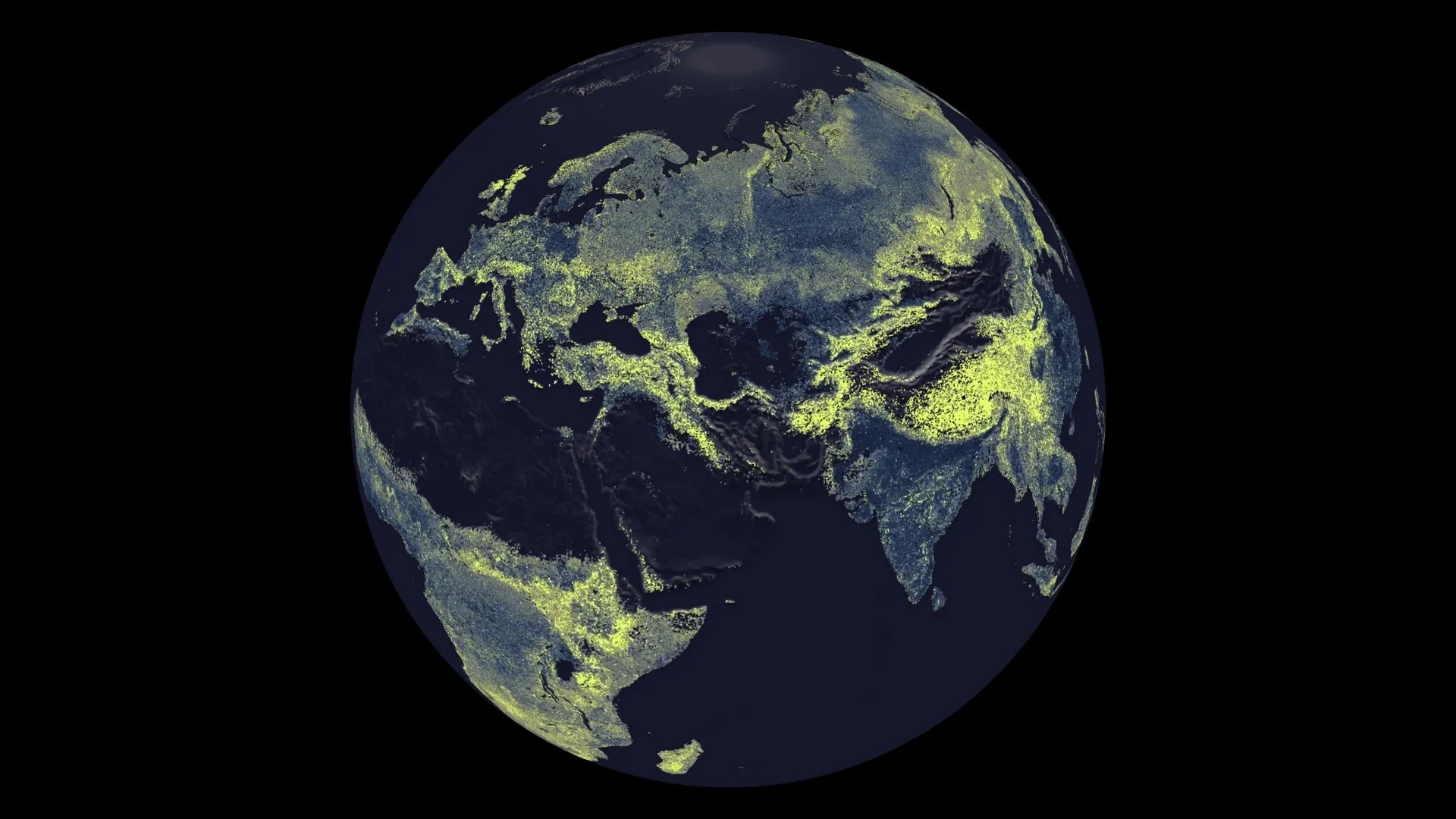
The newly released maps, accompanied by an interactive visualization tool dubbed the "Mycorrhizal Infrastructure Map," provide an unprecedented glimpse into the physical presence and distribution of these fungal networks. Developed in collaboration with award-winning data visualization designer Moritz Stefaner, the map allows users to explore the intricate global tapestry of these underground highways. This accessibility is intended to empower researchers, policymakers, and the public to identify areas where these fungal communities are thriving and, crucially, where they may be vulnerable to degradation.
A Monumental Mapping Effort: Data, Technology, and Discovery
The creation of these comprehensive global maps represents a significant undertaking, drawing upon an immense dataset and cutting-edge scientific methodologies. Researchers meticulously compiled data from over 16,000 soil cores collected from diverse environments across the globe, ranging from arid deserts to lush forests and frigid tundra. This vast collection of physical samples provided direct measurements of fungal network density in numerous locations.
To extrapolate these findings to regions lacking direct sampling, the research team employed sophisticated machine-learning models. These models integrated the direct measurements with extensive environmental data, including soil type, climate variables, and vegetation cover, to predict fungal network density across vast geographical areas. This synergistic approach allowed for the generation of high-resolution estimates for nearly every square kilometer of terrestrial land, excluding only the ice-covered polar regions and areas with insufficient data for reliable predictions.
Further enhancing the accuracy and scope of the research was the innovative use of robotic imaging. In collaboration with the Physics of Behavior group at the AMOLF research institute, scientists analyzed over 300,000 living AM fungal hyphae cultivated under laboratory conditions. This high-throughput imaging provided invaluable insights into the physical structure and growth patterns of these microscopic threads, contributing to a more robust estimation of the total length and biomass of the global fungal network.
Quantifying the Unimaginable: Scale and Significance
The results of this ambitious endeavor are staggering. The analysis suggests that the collective length of AM fungal networks across the planet extends to an astonishing approximately 110 quadrillion kilometers. To put this into perspective, this is a length that would wrap around the Earth approximately 2.75 billion times. Furthermore, these intricate networks are estimated to contain around 300 megatons of carbon, a figure that dwarfs the mass of all living humans by an estimated four to six times.
Dr. Justin Stewart, lead author of the study and affiliated with the Society for the Protection of Underground Networks (SPUN), emphasized the profound scale of this discovery. "It is hard to overstate the importance and enormity of these fungi," Dr. Stewart stated. "There could be up to 10 meters (32 feet) of mycorrhizal network in just a teaspoon of soil." This quote starkly illustrates the density and ubiquity of these hidden structures, even in seemingly unremarkable samples of earth.
Earth’s Underground Circulatory System: Beyond Nutrient Exchange
Scientists have long referred to mycorrhizal networks as Earth’s "circulatory system," a fitting analogy given their vital role in transporting carbon, essential nutrients, and water throughout underground ecosystems. These living conduits are far more than passive channels; they actively facilitate the flow of resources that sustains plant communities and, by extension, terrestrial life.
In healthy soils, these fungal networks dramatically expand the reach of plant roots, increasing their effective foraging area by as much as 100 times. This enhanced nutrient acquisition is critical for plant growth and survival, with AM fungi often supplying over 80% of a plant’s phosphorus requirements. This fundamental support system is essential for the productivity of forests, grasslands, and agricultural lands alike.
The research also builds upon previous findings published by several of the same authors in Nature. That earlier work, released in 2025, explored the efficiency with which mycorrhizal fungi and plants create intricate systems for carbon and nutrient exchange. Researchers in that study measured carbon movement through these living networks at speeds reaching 120 micrometers per second, a rate that, if experienced from within the network, would feel akin to traveling at approximately 400 kilometers per hour. The current study elevates this understanding to a planetary scale, examining how these flows operate globally and their cumulative impact on Earth’s systems.
Dr. Corentin Bisot, a biophysicist at AMOLF and co-lead author, highlighted the transformative impact of new technologies. "With the emergence of new technologies in high-resolution imaging, machine-learning and robotics, we are starting to reveal what has long been hidden under our feet," Dr. Bisot commented. "We are learning how the complex bodies of network-forming fungi transport nutrients and help regulate the climate." This sentiment underscores a new era of scientific exploration, where previously inaccessible biological processes are now coming into focus.
Climate Implications: Fungi as Carbon Sequestration Powerhouses
The role of AM fungal networks in carbon sequestration is a critical component of their planetary importance. By actively moving carbon from the atmosphere, through plants, and into soils, these fungi act as significant carbon sinks. The 300 megatons of carbon stored within these networks represent a substantial reservoir that contributes to mitigating climate change.
The research highlights the potential for these fungal systems to influence global carbon cycles. Understanding where these networks are most dense and how they are affected by land use practices is therefore paramount for developing effective climate mitigation strategies. The publicly available data from the "Mycorrhizal Infrastructure Map" provides governments and decision-makers with a powerful new tool for monitoring the health of these underground carbon reservoirs.
Threats to the Subterranean Infrastructure: Agriculture and Habitat Loss
Despite their immense ecological and climatic significance, AM fungal networks face considerable threats, particularly from human activities. The study identifies agricultural lands as areas of particular concern. Network densities in croplands are predicted to be roughly half those found in comparable wild ecosystems. This reduction in fungal biomass and complexity can have cascading negative effects on soil health, nutrient cycling, and overall agricultural productivity.
Furthermore, the research points to wild grasslands as crucial reservoirs of AM fungal biomass, containing approximately 40% of the world’s arbuscular mycorrhizal carbon. However, these vital ecosystems are under severe pressure. Grasslands are being converted to agricultural land at a rate four times faster than forests, leading to significant habitat loss and fragmentation for these essential fungal communities.
This alarming trend is consistent with previous research by SPUN, which found that an overwhelming 95% of biodiversity hotspots for arbuscular mycorrhizal fungi are located outside of protected areas. This stark statistic underscores a critical gap in current conservation efforts, which have historically focused on above-ground biodiversity while neglecting the equally crucial subterranean realm.
Dr. Toby Kiers, Executive Director of SPUN and a renowned evolutionary biologist, emphasized the urgent need to integrate fungi into conservation and climate planning. "Fungi have been ignored in climate and conservation for too long. Now is the time to change that trajectory," Dr. Kiers urged. Her recognition with prestigious awards such as a MacArthur Fellowship and the Tyler Prize for her work on plant-fungal relationships further solidifies the importance of this field.
Future Directions and Unanswered Questions
While this study represents a monumental leap in our understanding of global fungal networks, it also illuminates the vast expanse of what remains unknown. Large regions of the planet are still undersampled, presenting a clear roadmap for future scientific inquiry. Dr. Merlin Sheldrake, a co-author and biologist, noted the ongoing mysteries surrounding these ancient organisms. "Mycorrhizal fungi have shaped life on earth for hundreds of millions of years, but we still understand too little about how the infrastructure of these living transport systems is distributed across the planet," Dr. Sheldrake stated. "This study is an exciting step towards understanding how this planetary circulatory system operates and suggests ways that we can better work with fungi to help address many of the unfolding challenges of our times, from food security to climate change."
The research provides a crucial foundation for future studies aimed at understanding the intricate dynamics of these underground networks, their resilience to environmental change, and their potential to contribute to solutions for global challenges such as food security, biodiversity loss, and climate change. As scientists continue to delve deeper into the hidden world beneath our feet, the importance of these unassuming fungi in sustaining life on Earth becomes increasingly apparent, demanding a paradigm shift in how we perceive and protect our planet’s vital ecosystems.