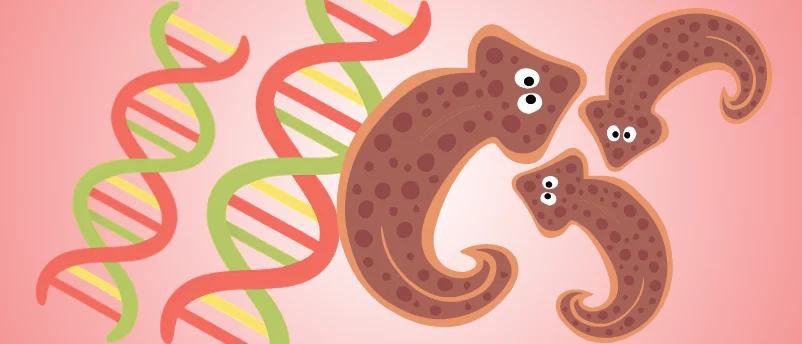
A groundbreaking discovery by scientists at Memorial Sloan Kettering Cancer Center (MSK; NY, USA) has fundamentally reshaped our understanding of how proteins achieve their correct three-dimensional shapes, a process vital for all cellular life. Challenging a long-held principle in molecular biology, researchers in the lab of molecular and cell biologist Christine Mayr have revealed that the often-overlooked ‘tail’ region of messenger RNA (mRNA), known as the 3′ untranslated region (3’UTR), acts as a crucial chaperone, guiding the proper folding of thousands of complex regulatory proteins. This revelation, published in a recent study, positions RNA not merely as a passive carrier of genetic instructions but as an active, indispensable participant in the intricate machinery of protein construction.
The Intricate Dance of Protein Folding: A Foundation of Life
Proteins are the workhorses of the cell, orchestrating virtually every biological process, from catalyzing metabolic reactions and transporting molecules to transmitting signals and controlling gene expression. Their ability to perform these diverse functions is entirely dependent on their precise three-dimensional structure. A protein begins as a linear chain of amino acids, but it must fold into a specific, intricate shape to become functional. This folding process is incredibly complex and susceptible to errors. Misfolded proteins can accumulate, become toxic, and contribute to a wide array of diseases, including neurodegenerative disorders like Alzheimer’s and Parkinson’s, various cancers, and cystic fibrosis.
For decades, the prevailing view in biology has been that the sequence of amino acids itself largely dictates a protein’s final shape. When proteins struggled to fold correctly, specialized helper proteins, termed "chaperones," were understood to step in, preventing aggregation and guiding nascent polypeptide chains to their functional conformations. This established paradigm has been central to our comprehension of cellular homeostasis and disease pathogenesis. The Mayr lab’s new findings introduce an entirely new class of chaperones, suggesting that the very molecules carrying the genetic blueprint can also assist in its proper execution.
Unmasking the Hidden Functions of Messenger RNA
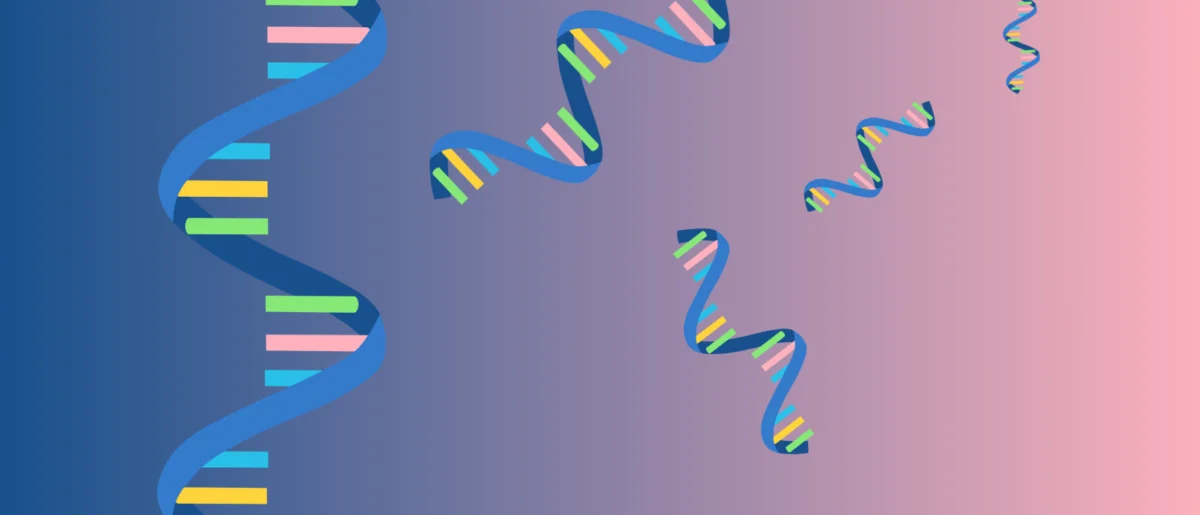
Messenger RNA (mRNA) is famously known as the intermediary molecule that carries genetic information from DNA in the nucleus to the ribosomes in the cytoplasm, where it serves as a template for protein synthesis. An mRNA molecule is typically divided into three main components: the 5′ untranslated region (5’UTR) at the beginning, the coding sequence (CDS) in the middle, and the 3′ untranslated region (3’UTR) at the end. While the coding sequence contains the direct instructions for the amino acid sequence of the protein, the untranslated regions, particularly the 3’UTR, were historically considered less significant, often seen as mere regulatory elements influencing mRNA stability, localization, and translational efficiency.
However, Dr. Christine Mayr and her team at the Sloan Kettering Institute, a hub for discovery science within MSK, harbored suspicions about the true extent of the 3’UTR’s role. "For many years, scientists mostly ignored the 3’UTR as unimportant," Mayr commented. "But we saw that thousands of human 3’UTRs had highly conserved sequences. And these patterns are the same across vertebrates, from fish to birds to mammals. For us, this was a clue that they might actually be doing something important. Biology doesn’t usually preserve things that aren’t needed." Evolutionary conservation across diverse species is a powerful indicator of functional importance, suggesting that these sequences have been maintained over millions of years due to an essential biological role. This observation spurred the team to investigate further, leading to the profound discovery led by first author Yang "Vicky" Luo, a postdoctoral researcher in the Mayr Lab.
A Novel Mechanism: mRNA as its Own Chaperone
The study zeroes in on a specific class of proteins: complex regulatory proteins. These include critical transcription factors such as MYC, UTX, and JMJD3, which are responsible for orchestrating which genes are turned on or off, ultimately controlling a cell’s behavior, growth, and differentiation. Unlike small, compact proteins that often fold spontaneously, many of these larger, more intricate regulatory proteins contain what scientists refer to as "intrinsically disordered regions" (IDRs). IDRs are long, flexible stretches of amino acids that do not adopt a stable, fixed three-dimensional structure on their own. While their flexibility is crucial for their diverse interactions, it also makes them particularly challenging to fold correctly.
"Left to their own devices, there are clusters of sticky amino acids on these long, complex proteins that can grab onto other parts of the protein during assembly and keep it from folding correctly," explained Dr. Luo. This self-interference can lead to misfolding or aggregation, rendering the protein non-functional or even harmful. The Mayr team’s breakthrough revealed an ingenious cellular solution to this problem: the mRNA molecule itself intervenes.
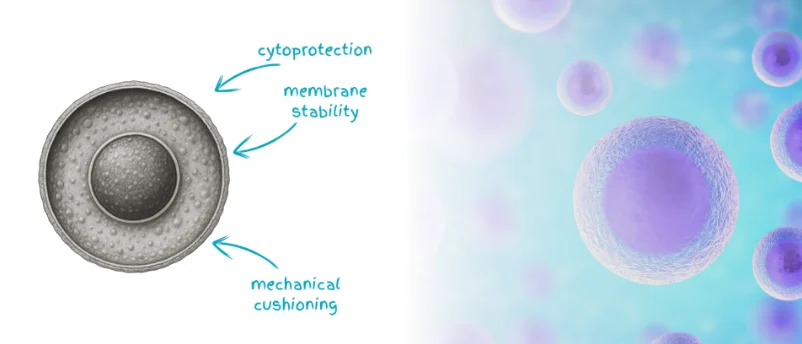
The mechanism involves specialized cellular compartments called "meshlike condensates." These condensates are dynamic, membraneless organelles that form through liquid-liquid phase separation, acting as localized environments where specific biochemical reactions can be concentrated. In the context of this discovery, these meshlike condensates serve as "maternity wards" for these challenging-to-fold regulatory proteins. As the protein is being synthesized by the ribosome, the 3’UTR of its own mRNA physically interacts with and holds onto these "sticky patches" within the nascent protein’s intrinsically disordered regions. This crucial interaction prevents the problematic amino acid clusters from interfering with the proper folding process, ensuring that the protein achieves its correct, functional conformation. In essence, the mRNA acts as a self-chaperone, guiding its own protein product to maturity.
The Astounding Scale of the Phenomenon

The implications of this discovery are vast, not just in principle but also in scale. The research team identified more than 2,700 genes in the human genome that possess highly conserved 3’UTRs and encode proteins containing these challenging intrinsically disordered regions with sticky patches. This represents approximately one in every eight protein-coding genes in humans. This means that a significant portion of the human proteome, particularly the complex regulatory proteins that govern cellular behavior, likely depends on this mRNA-mediated chaperoning mechanism for proper folding and function.
"What we show is that for thousands of regulatory proteins in human cells, the genetic code alone isn’t enough to make a functional protein, you need the RNA chaperone too," Mayr emphasized. This statement encapsulates the paradigm shift: the genetic sequence provides the blueprint, but the mRNA tail provides critical guidance during construction, ensuring the blueprint is correctly translated into a functional structure. Without the 3’UTR, these proteins would be misfolded, less active, or entirely non-functional.
A History of Uncovering Hidden Cellular Functions
This latest discovery is not an isolated event for the Christine Mayr lab; it builds upon a compelling track record of unearthing previously unrecognized aspects of cellular biology. In 2018, the team made headlines by discovering a new organelle, a specialized compartment within cells. More recently, they revealed that the cytoplasm, the watery internal environment of a cell, is not a uniform soup but is in fact divided into distinct regions, each responsible for translating different types of mRNA. These prior discoveries underscore a consistent theme in the Mayr lab’s research: a keen eye for challenging conventional wisdom and an ability to uncover fundamental biological processes hiding in plain sight. Their work consistently pushes the boundaries of our understanding of cellular organization and function, demonstrating that even well-studied molecules and cellular environments harbor profound secrets.
Profound Implications for Research, Disease, and Therapeutics
The ramifications of this discovery extend across multiple domains of biological science and medicine.
1. Fundamental Molecular Biology: This finding necessitates a re-evaluation of the core principles of protein folding and the functional repertoire of RNA. It expands our understanding of RNA’s roles beyond genetic information transfer and regulation to active participation in protein structural integrity. This could open new avenues for exploring other potential RNA-mediated chaperone activities or novel functions of non-coding RNA.
2. Impact on Laboratory Research Practices: The most immediate and practical implication lies in how scientists conduct experiments. It is a common practice in molecular biology to clone and express only the coding sequence of a protein, deliberately omitting the untranslated regions, including the 3’UTR, for simplicity in experimental design or to focus solely on the protein’s amino acid sequence. Mayr’s findings demonstrate that for thousands of regulatory proteins, this approach is fundamentally flawed. "For thousands of regulatory proteins, removing the 3’UTR means you’re studying a misfolded, less active version of the protein," Mayr concluded. This calls for a critical re-evaluation of experimental designs and interpretations across countless studies that may have unknowingly been analyzing compromised protein function. Future research, particularly on complex regulatory proteins, will need to consider the full mRNA context.
3. Understanding Disease Mechanisms: Misfolded proteins are central to the pathology of numerous diseases. This discovery offers a fresh perspective on how misfolding might arise. Dysfunction in this mRNA-chaperone mechanism could contribute to diseases where regulatory proteins are implicated, such as various cancers (where transcription factors like MYC are often dysregulated), developmental disorders, and potentially even neurodegenerative conditions. For example, if mutations in the 3’UTR or disruptions in the meshlike condensates impair this chaperoning activity, it could lead to the accumulation of misfolded regulatory proteins, triggering disease.
4. Therapeutic Development: The identification of a novel protein folding pathway opens new avenues for therapeutic intervention. If specific diseases are linked to a failure of mRNA-mediated chaperoning, targeting this interaction could offer new drug development strategies. For instance, developing small molecules that enhance or stabilize the interaction between the 3’UTR and its nascent protein target, or modulating the formation and function of meshlike condensates, could potentially prevent the misfolding of critical regulatory proteins.
5. Evolutionary Biology and Genomics: The strong evolutionary conservation of these 3’UTR sequences across vertebrates highlights their ancient and essential role. This discovery adds another layer of complexity to genomic studies, emphasizing that the functional significance of non-coding regions can be far more profound and direct than previously appreciated. It also raises questions about how this mechanism evolved and whether similar processes exist in other domains of life.
Ultimately, the work profoundly redefines the role of RNA. As Dr. Luo articulates, "RNA isn’t just a passive messenger carrying genetic instructions… RNA is an active participant in building proteins – providing guidance to ensure they fold correctly and can do their jobs properly." This revelation marks a significant stride in our understanding of cellular biology, promising to catalyze new research directions and potentially pave the way for innovative approaches to tackling diseases rooted in protein dysfunction. The unsung tail of mRNA has finally had its vital role brought to light, illuminating a new frontier in molecular medicine.