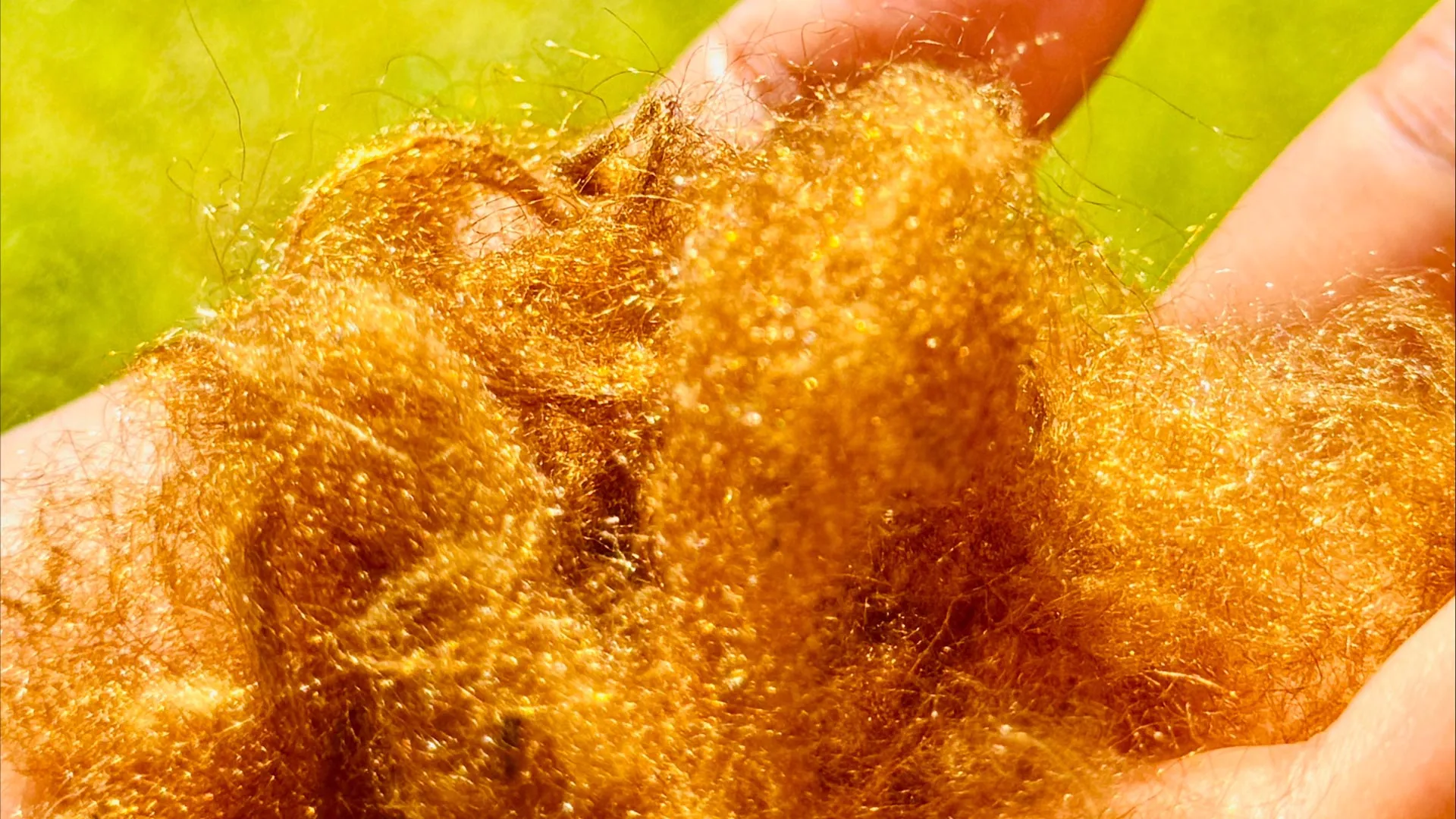
For millennia, a fabric whispered about in tales of opulence and power, known as sea silk, captivated the world. Revered by emperors, popes, and royalty, its shimmering golden hue and ethereal lightness made it one of history’s most exclusive luxury materials. Now, a groundbreaking achievement by researchers in South Korea has not only resurrected this legendary fiber but also unveiled the scientific marvel behind its enduring, vibrant color. This development promises to revive an ancient craft and pave the way for sustainable, high-value textiles derived from marine resources.
The Lost Luxury: A Brief History of Sea Silk
The allure of sea silk, often dubbed the "golden fiber of the sea," dates back to antiquity. Its origins lie in the byssus threads, tough filaments secreted by large bivalve mollusks, most notably the Pinna nobilis, a species of fan mussel native to the Mediterranean Sea. These threads serve as an anchor, allowing the mollusk to firmly attach itself to the seabed. For centuries, these naturally produced fibers were painstakingly collected and transformed into textiles that possessed an unparalleled luminescence, a delicate weight, and remarkable resilience.
During the Roman Empire, sea silk garments were the ultimate status symbol, accessible only to the most affluent and powerful. Its rarity stemmed from the limited geographical distribution of Pinna nobilis and the arduous, labor-intensive process of harvesting and preparing its byssus threads. The material’s fame grew, with legends and historical accounts attesting to its almost mythical properties. Perhaps the most evocative connection to sea silk is the Holy Face of Manoppello, a religious relic housed in Italy, believed by many to be woven from this extraordinary fiber, its pristine condition over centuries a testament to its durability.
However, the very ecosystems that sustained this luxury began to falter. In recent decades, escalating marine pollution and environmental degradation have had a devastating impact on Pinna nobilis populations. The species has faced a precipitous decline, pushing it to the brink of extinction. In recognition of its critically endangered status, the European Union has imposed a complete ban on its harvesting, effectively halting the production of authentic sea silk on any significant scale. Consequently, genuine sea silk has become astronomically rare, with only a handful of skilled artisans worldwide producing minuscule quantities, further cementing its status as a lost luxury.
A New Dawn for Sea Silk: Korean Innovation with the Pen Shell
The quest to revive sea silk led a dedicated team of researchers at POSTECH (Pohang University of Science and Technology) in South Korea to explore alternative sources. Led by Professor Dong Soo Hwang from the Division of Environmental Science and Engineering and the Division of Interdisciplinary Bioscience & Bioengineering, and Professor Jimin Choi from the Environmental Research Institute, their investigation focused on the pen shell, Atrina pectinata. This particular species of shellfish is already cultivated and harvested in Korean coastal waters, primarily for its culinary value, presenting a readily available and sustainable source of byssus threads.
The researchers discovered that the byssus threads produced by Atrina pectinata share striking similarities, both physically and chemically, with those of the endangered Pinna nobilis. This crucial finding provided the foundation for their ambitious project. Through meticulous research and innovative processing techniques, the POSTECH team developed a method to transform these pen shell byssus threads into a material that remarkably replicates the appearance and tactile qualities of ancient sea silk.
"Our initial goal was to recreate the aesthetic and material properties of historical sea silk," explained Professor Hwang in a statement accompanying the research. "The pen shell offered a viable, abundant alternative to the now-endangered Mediterranean fan mussel. By understanding the biological and structural characteristics of its byssus, we could develop a pathway to a lost textile."
Unraveling the Secret of the Golden Sheen: Structural Coloration
While the successful recreation of the fiber was a significant accomplishment, the POSTECH team’s research extended to a deeper, more profound understanding of sea silk’s most captivating attribute: its vibrant, enduring golden color. For centuries, the source of this luminous hue remained a mystery, often attributed to lost dyeing techniques or inherent properties of the material. The researchers have now definitively proven that the color is not a result of pigments or dyes, but rather a sophisticated phenomenon known as structural coloration.
Structural coloration occurs when microscopic structures on a material’s surface interact with light, causing it to scatter, reflect, and refract in specific ways, thereby producing color. In the case of sea silk, the POSTECH scientists identified that the iridescent golden appearance is generated by precisely arranged, layered spherical protein structures they have termed "photonin." These intricate molecular architectures function akin to microscopic prisms, manipulating light waves to create the characteristic shimmering effect.
The principle behind structural coloration is analogous to the vibrant colors seen in soap bubbles or the iridescent wings of butterflies. These natural phenomena rely on the interference of light waves reflected from different surfaces or layers, resulting in a dazzling display of color that changes with the viewing angle. Crucially, because this color is a consequence of the material’s physical structure rather than embedded pigments, it exhibits remarkable stability and resistance to fading.
The researchers further elaborated that the precision with which these photonin proteins are organized directly correlates with the strength and vividness of the color. The more ordered the arrangement, the more intense and brilliant the golden hue. This inherent property of the fiber itself, generating its color from the internal arrangement of its constituent proteins, explains why sea silk has been able to retain its lustrous brilliance for centuries, a stark contrast to dyed textiles that inevitably fade over time.
"The revelation that sea silk’s color is structural is a significant scientific breakthrough," commented Dr. Evelyn Reed, a materials scientist specializing in biomimicry, who was not involved in the study. "This explains its legendary longevity. It’s a testament to nature’s engineering prowess and offers a blueprint for creating colorfast textiles without relying on potentially harmful dyes or heavy metals."
Timeline of Discovery and Innovation
The journey from identifying the potential of the pen shell to understanding the science of structural coloration involved a multi-stage research process:
- Early 21st Century: Growing awareness of the endangered status of Pinna nobilis and the resulting scarcity of authentic sea silk. Initial academic interest in exploring alternative sources for historical luxury fibers.
- Circa 2018-2020: POSTECH researchers, led by Professors Hwang and Choi, initiate investigations into the byssus threads of Atrina pectinata, a species readily available in Korean aquaculture.
- 2021-2022: Successful development of a processing method to transform pen shell byssus into a fiber resembling ancient sea silk. Preliminary analysis reveals structural similarities to historical samples.
- 2023: Advanced microscopic and spectroscopic analysis by the POSTECH team conclusively identifies the "photonin" protein structures responsible for structural coloration in sea silk. The mechanism of light interaction and color generation is elucidated.
- Late 2023 / Early 2024: Publication of the comprehensive research findings in the peer-reviewed journal Advanced Materials, detailing both the recreation of the fiber and the scientific explanation for its color. This marks the official unveiling of the breakthrough.
Broader Implications: Sustainable Textiles and Waste Valorization
The implications of this research extend far beyond the revival of a single, albeit legendary, textile. The POSTECH team’s work presents a compelling model for sustainable material innovation and waste valorization within the marine sector. Historically, the byssus threads of pen shells have been treated as a byproduct, often discarded after the edible meat has been harvested. By transforming these threads into a high-value textile, the researchers are demonstrating a pathway to significantly reduce marine waste.
This approach aligns with the growing global demand for sustainable and ethically sourced materials, particularly within the fashion industry. The ability to produce a luxurious, naturally colored, and durable fiber from a resource that would otherwise be considered waste offers a powerful alternative to conventional textile production, which often carries a substantial environmental footprint.
Professor Hwang emphasized the potential for scalability and broader application: "Our technology enables the creation of textiles with inherent color resistance, eliminating the need for dyes and pigments. This not only reduces environmental impact but also opens up exciting new avenues for creating long-lasting, aesthetically pleasing materials for various applications, from high-end fashion to advanced technical textiles."
The development could also stimulate economic opportunities in coastal communities involved in pen shell aquaculture, by adding value to their harvests. Furthermore, it offers a tangible link to cultural heritage, allowing for the recreation of historically significant garments and artifacts, potentially for museums or specialized heritage projects.
Official Responses and Future Outlook
While specific official statements from international heritage organizations or major fashion houses have yet to be widely publicized, the scientific community has reacted with considerable enthusiasm. Experts in materials science, textile history, and sustainable development have hailed the POSTECH breakthrough as a significant advancement.
"This research is a perfect marriage of historical preservation and cutting-edge science," noted Dr. Anya Sharma, a curator specializing in ancient textiles. "The ability to understand and recreate sea silk not only satisfies our curiosity about historical luxury but also provides a blueprint for sustainable material innovation that respects both our past and our planet’s future."
The next steps for the POSTECH researchers likely involve optimizing the processing techniques for larger-scale production, exploring variations in the resulting fiber’s properties, and potentially collaborating with designers and manufacturers to bring this revived luxury to the market. The successful recreation of sea silk serves as a powerful reminder of the untapped potential within natural resources and the ingenuity of scientific research in unlocking ancient secrets for modern solutions. The "golden fiber of the sea" may have been lost to the mists of time, but thanks to Korean innovation, its radiant legacy is poised for a vibrant resurgence.