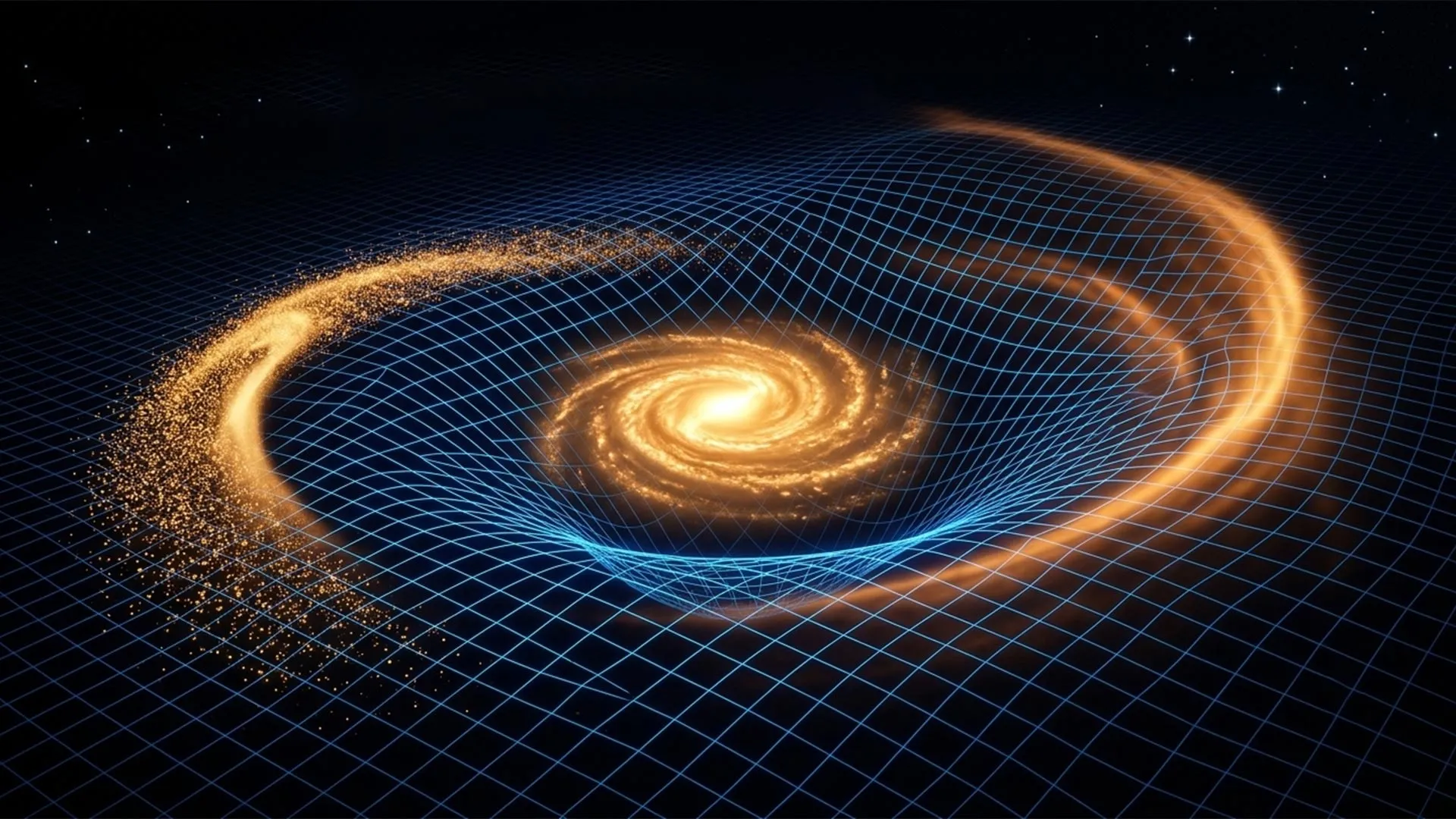
For more than a century, the field of theoretical physics has been anchored by two monumental pillars that, while individually successful, remain fundamentally incompatible. Albert Einstein’s general relativity describes gravity as the geometric warping of space and time by mass and energy, successfully predicting everything from the orbit of Mercury to the existence of gravitational waves. Conversely, quantum mechanics governs the microscopic world of subatomic particles and fields, providing the framework for modern electronics, lasers, and nuclear energy. However, when physicists attempt to combine these two theories to explain the most extreme phenomena in the universe—such as the interiors of black holes or the initial moments of the Big Bang—the mathematical frameworks collapse into contradictions.
A research team has recently proposed a paradigm-shifting framework known as the Quantum Memory Matrix (QMM) to bridge this historic divide. The central premise of the QMM is that information, rather than matter, energy, or even spacetime itself, serves as the most fundamental constituent of reality. This approach suggests that the universe does not merely exist in a state of constant flux but functions as a vast, self-archiving system. By treating spacetime as a discrete medium capable of recording every interaction within its fabric, the QMM provides potential solutions to long-standing mysteries involving dark matter, dark energy, and the ultimate fate of the cosmos.
The Discreteness of Spacetime and the Information Imprint
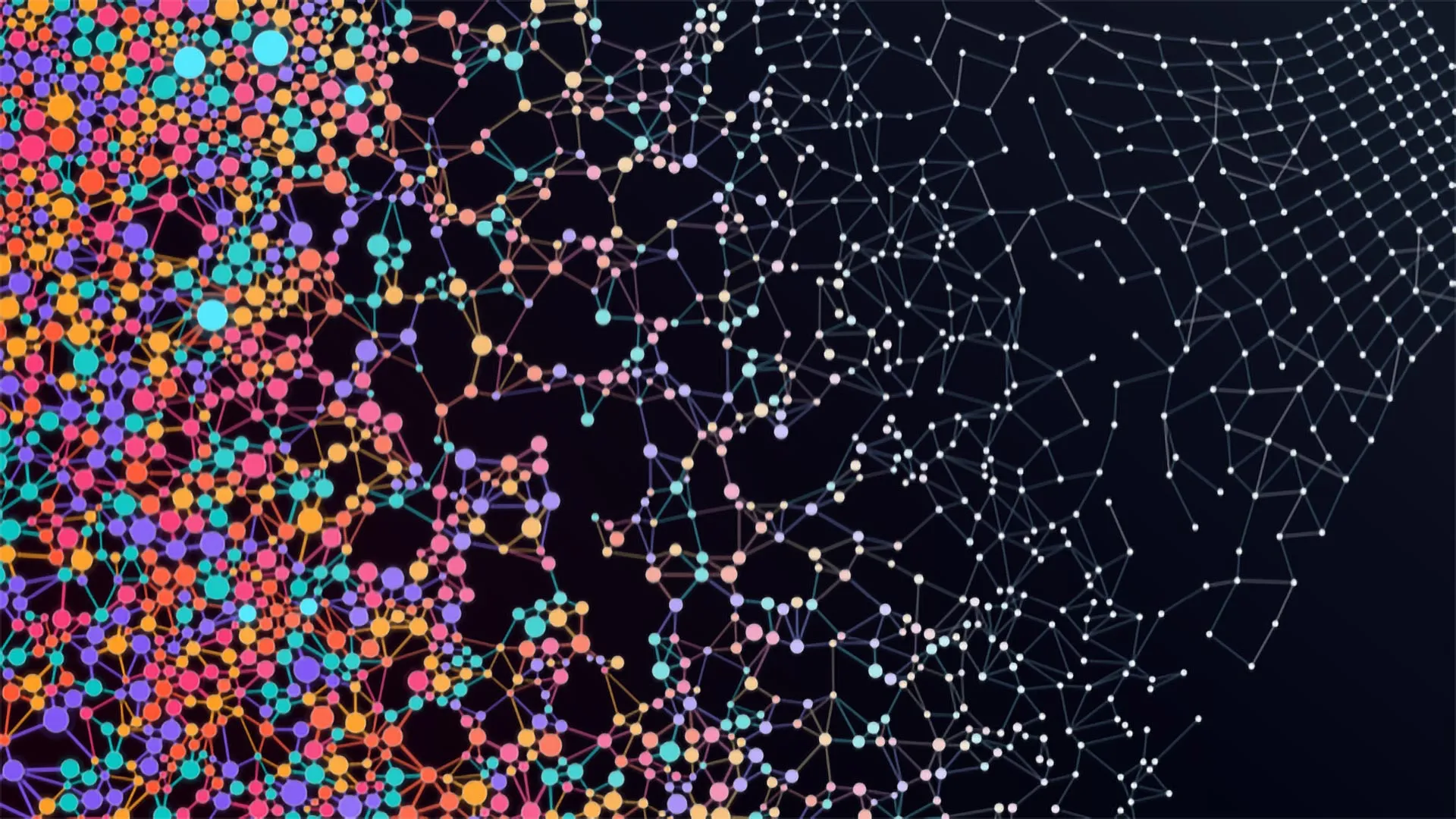
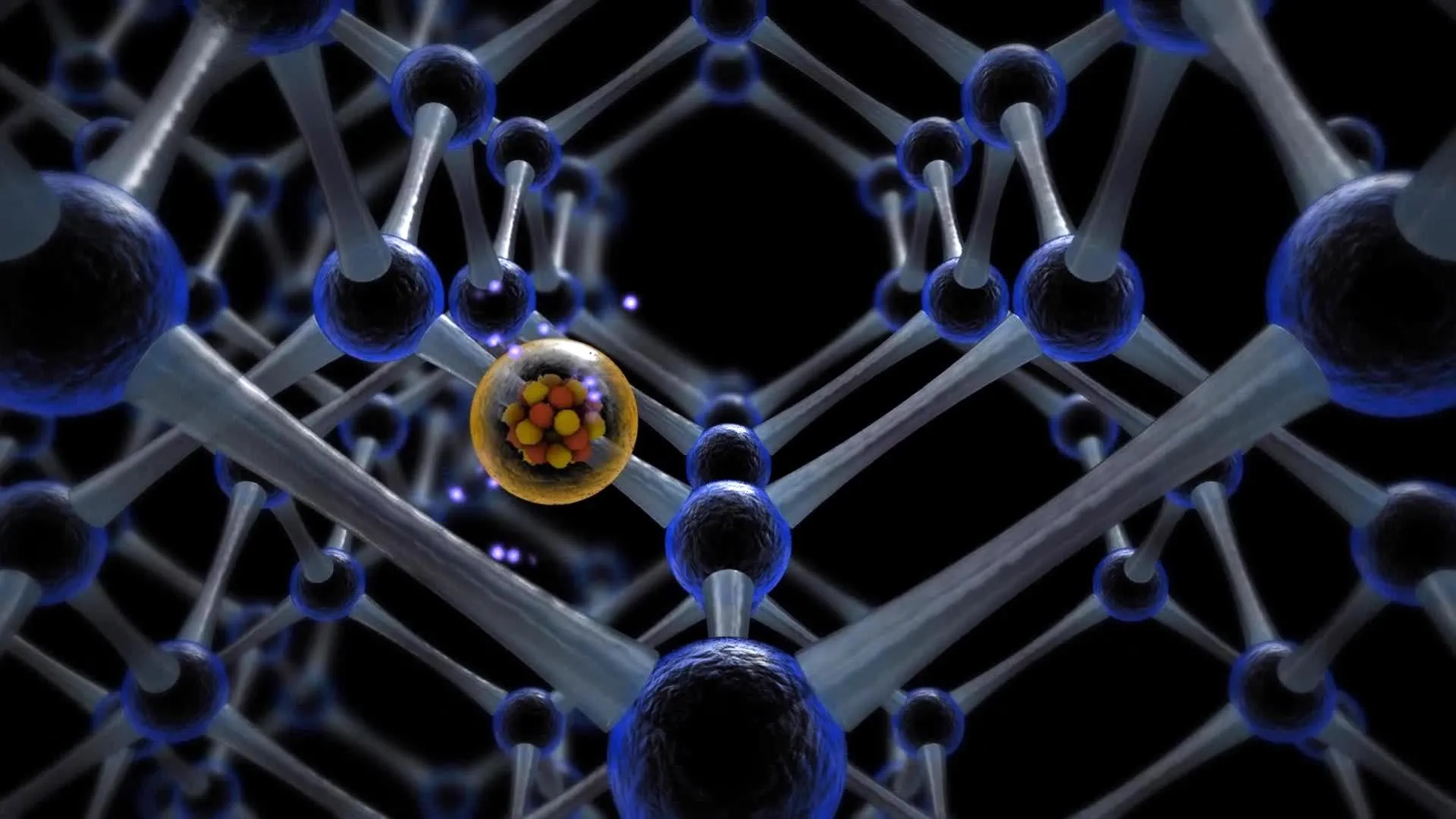
At the heart of the Quantum Memory Matrix is the rejection of the classical notion that spacetime is a smooth, continuous fabric. Instead, the theory aligns with quantum mechanical principles by suggesting that spacetime is "quantized," or composed of infinitesimal, discrete units referred to as "cells." These cells are theorized to exist at the Planck scale—the smallest possible unit of length in physics.
According to the research team, each of these spacetime cells functions as a localized memory storage unit. When a particle passes through a cell or a force such as electromagnetism acts upon it, the event leaves behind a "quantum imprint." This process is governed by a mathematical construct called the "imprint operator," a reversible rule that ensures the state of the cell is altered to reflect the interaction. In this framework, the evolution of the universe is synonymous with the accumulation of information. The universe, in effect, "remembers" its own history through these persistent changes in the local quantum states of spacetime.
Resolving the Black Hole Information Paradox
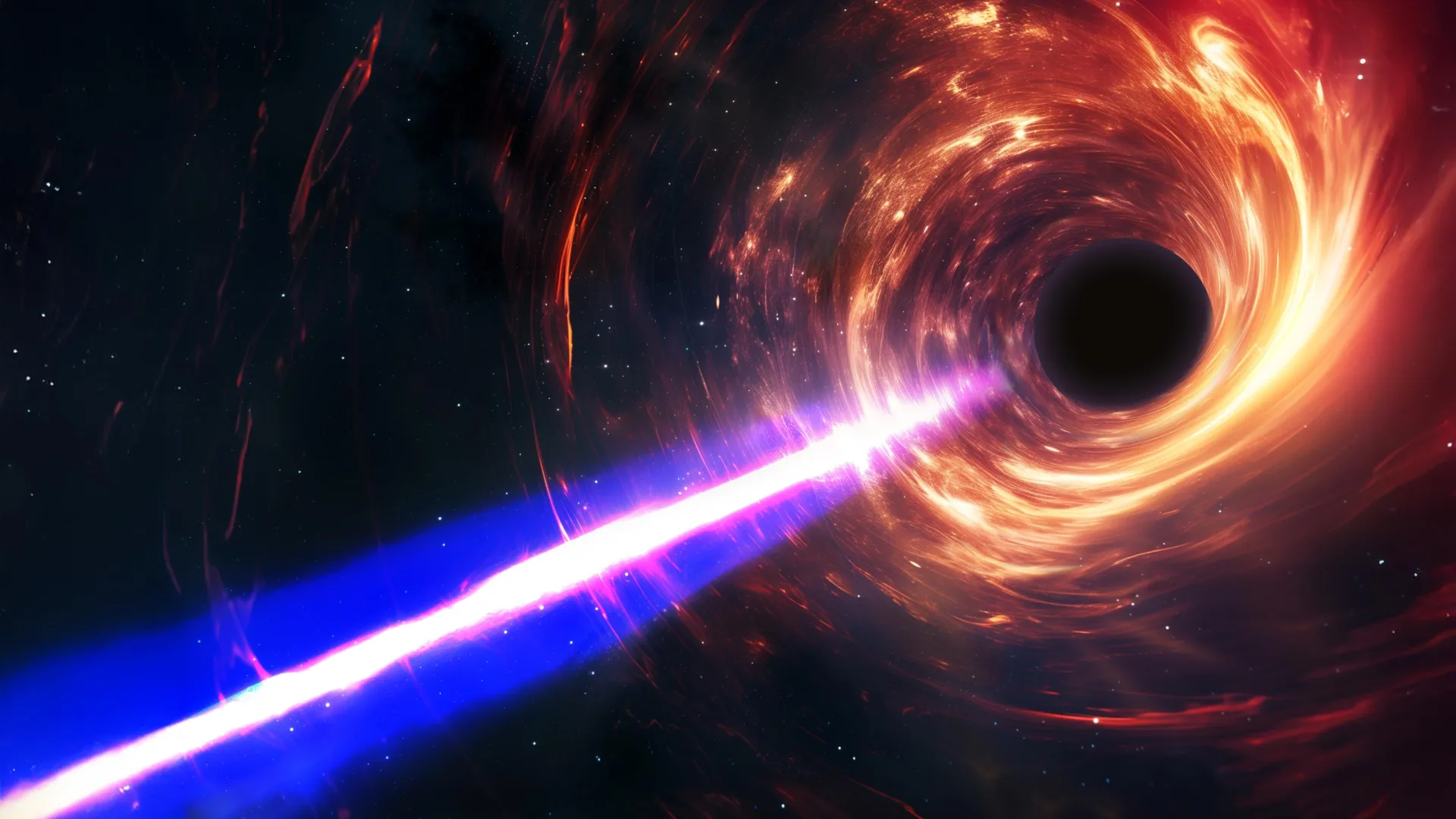
The development of the QMM was largely motivated by the black hole information paradox, a problem that has plagued physics since the 1970s. According to general relativity, any object or information that crosses a black hole’s event horizon is irrevocably lost to the external universe. However, quantum mechanics dictates that information can never be destroyed—a principle known as unitarity. If a black hole were to evaporate through Hawking radiation without returning the information it consumed, the fundamental laws of quantum mechanics would be violated.
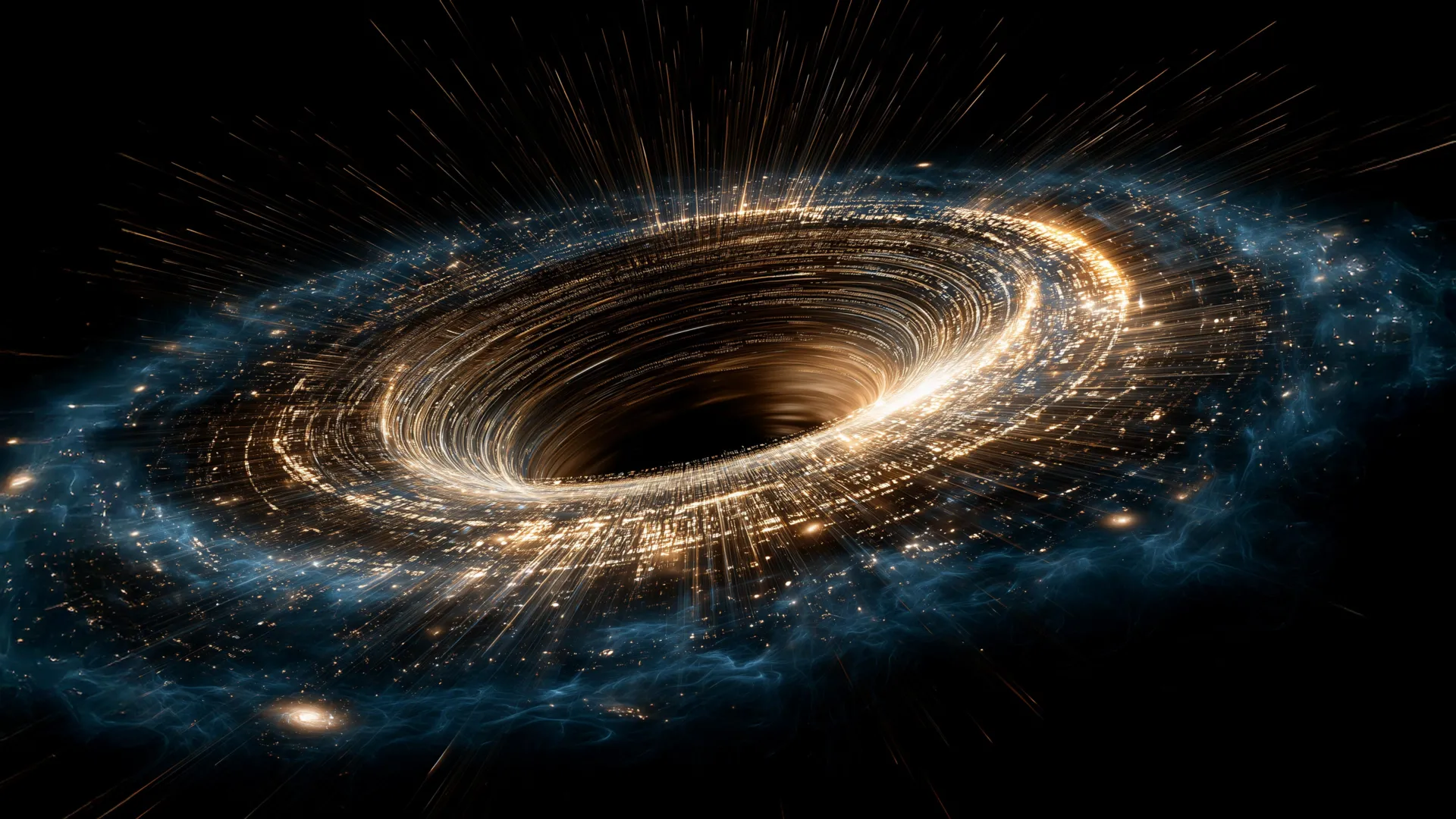
The QMM offers a resolution by positing that as matter approaches and falls into a black hole, the surrounding spacetime cells record its quantum signature. Even if the matter itself is crushed into a singularity or disappears, the "memory" of its existence remains encoded in the discrete structure of spacetime. When the black hole eventually evaporates, the information is not lost because it was never truly "inside" in a way that precluded its preservation; it was written into the fabric of the cosmos. This mechanism ensures that information conservation is maintained, satisfying the requirements of quantum theory while respecting the gravitational dynamics of relativity.
Expanding the Framework: From Gravity to Nuclear Forces
While the initial iterations of the QMM focused on gravity, the research team has systematically expanded the theory to include the other fundamental forces of nature. In a series of papers, the researchers demonstrated that the strong and weak nuclear forces—the interactions responsible for holding atomic nuclei together and governing radioactive decay—also leave distinct traces within spacetime cells.
Most recently, the team extended the framework to electromagnetism. Their findings indicate that even a simple electric field induces a change in the memory state of the local spacetime cells. This suggests a universal "geometry-information duality," a principle where the physical shape and behavior of spacetime are influenced not only by the presence of mass and energy—as Einstein posited—but also by the distribution and density of quantum information. This duality implies that information is a physical quantity that exerts a measurable influence on the structure of the universe.
Addressing the Dark Matter and Dark Energy Enigmas
One of the most significant implications of the QMM is its ability to explain the phenomena currently attributed to dark matter and dark energy without the need for undiscovered particles or "ghost" energies. Dark matter, which accounts for approximately 27% of the universe’s mass-energy content, is traditionally invoked to explain why galaxies rotate faster than their visible mass would suggest. Dark energy, making up roughly 68%, is the mysterious force driving the accelerated expansion of the universe.
In a study currently undergoing peer review, the QMM team found that "clumps" of quantum imprints—areas where spacetime has recorded a high density of interactions—generate a gravitational pull identical to that of dark matter. These informational clusters would naturally aggregate around galaxies, providing the additional gravity needed to explain observed orbital velocities. This suggests that dark matter may not be a substance at all, but rather the gravitational manifestation of accumulated quantum information.
Similarly, the theory provides a novel explanation for dark energy. The researchers argue that spacetime cells have a finite informational capacity. As the universe evolves and more interactions occur, these cells eventually become "saturated." Once a cell can no longer record new, independent information, it contributes to a residual, background energy. This "leftover" energy takes the mathematical form of the cosmological constant ($Lambda$) used in Einstein’s field equations. The QMM calculations for this residual energy align with the observed magnitude of dark energy, suggesting that cosmic acceleration is a byproduct of spacetime reaching its informational limit.
The Cyclic Cosmos and the 62-Billion-Year Timeline
The finite memory capacity of spacetime leads to profound cosmological conclusions regarding the origin and end of the universe. In a paper accepted by The Journal of Cosmology and Astroparticle Physics, the team proposes a "cyclic" model of the universe. If spacetime has a maximum entropy (disorder) or informational bound, the universe cannot expand or contract indefinitely.
According to the QMM equations, when the informational capacity of the universe is reached, the contraction of a previous universe would not result in a "singularity"—a point of infinite density. Instead, the stored entropy triggers a "bounce," initiating a new phase of expansion. This suggests that what we perceive as the Big Bang was actually a transition from a prior cycle.
By comparing their model to cosmic microwave background data and other observational metrics, the researchers estimate that our universe has already completed three or four of these expansion-contraction cycles. They further project that fewer than ten cycles remain before the total informational capacity of spacetime is fully exhausted. Once this saturation occurs, the universe will no longer "bounce" but will enter a final, permanent phase of slow expansion. This model extends the "informational age" of the cosmos to approximately 62 billion years, far beyond the 13.8 billion years elapsed since the current cycle began.
Empirical Validation via Quantum Computing
To transition the QMM from a purely theoretical construct to a testable model, the research team conducted experiments using contemporary quantum computers. In these simulations, qubits (the fundamental units of quantum information) were treated as proxies for individual spacetime cells. By applying "imprint" and "retrieval" protocols derived from the QMM equations, the researchers attempted to store and recover quantum states.
The results demonstrated a recovery accuracy of over 90%, confirming that the mathematical logic of the imprint operator is functional within real-world quantum systems. Beyond its cosmological implications, the QMM has demonstrated practical utility in the field of quantum information science. When integrated with standard error-correction algorithms, the QMM protocols significantly reduced logical errors in the quantum hardware. This suggests that the same rules governing the memory of the universe could be used to stabilize and improve the performance of future quantum technologies.
Broader Implications and Scientific Analysis
The Quantum Memory Matrix represents a significant departure from traditional physics by elevating information to a primary status. While the scientific community generally requires extraordinary evidence for such sweeping claims, the QMM’s ability to unify disparate phenomena—black hole paradoxes, dark matter, and cosmic expansion—under a single informational umbrella makes it a compelling subject for further scrutiny.
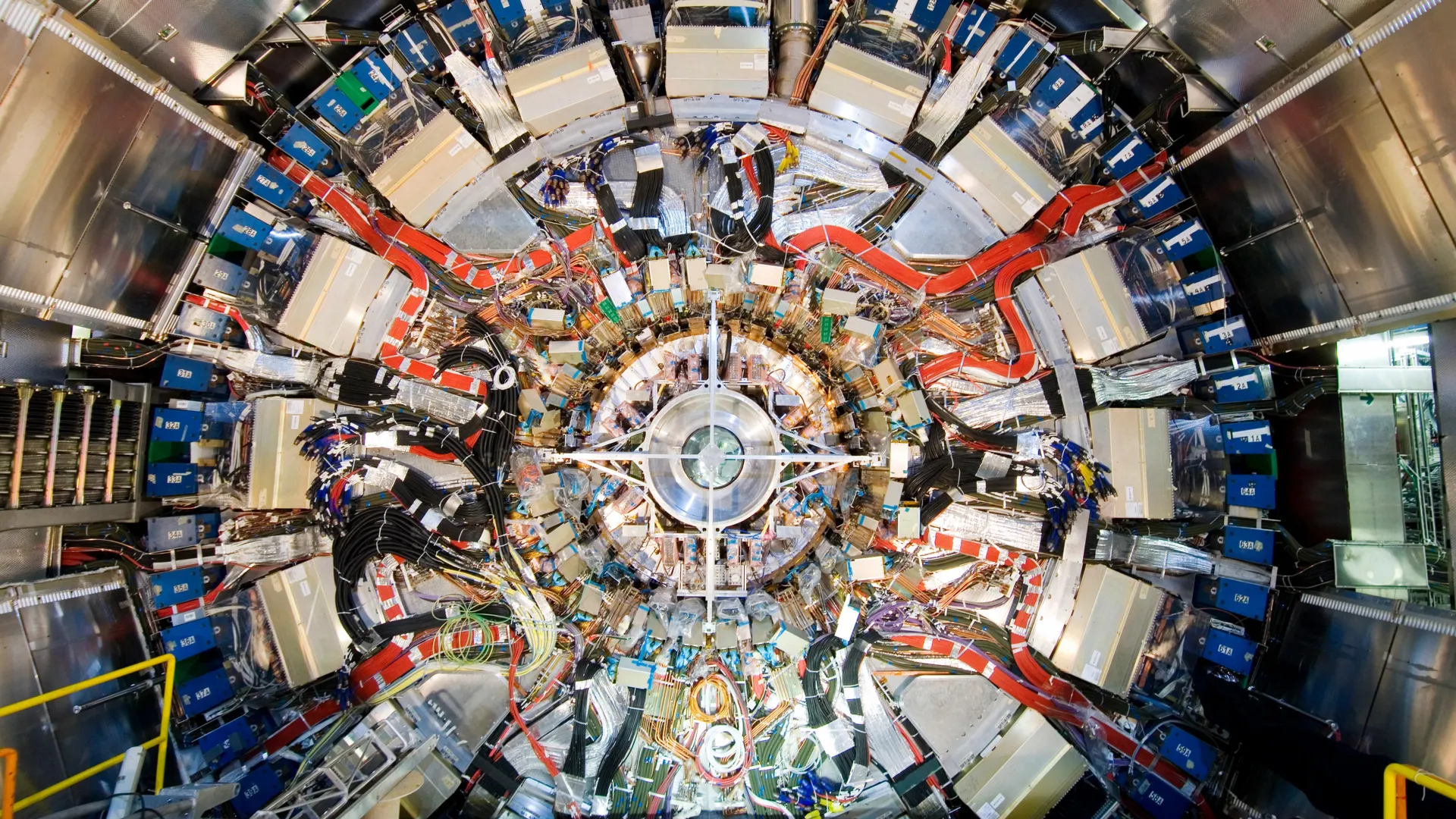
Critics of the theory may point to the lack of direct observational evidence for the "discrete cells" of spacetime, as the Planck scale remains far beyond the reach of current particle accelerators. However, the QMM’s reliance on the geometry-information duality provides a pathway for indirect verification. If future astronomical observations of galaxy cluster dynamics or the cosmic microwave background align more closely with QMM predictions than with standard cold dark matter models, the theory could gain significant traction.
Furthermore, the QMM provides a potential answer to the "arrow of time." If the universe is fundamentally a memory-recording device, the flow of time can be viewed as the sequential accumulation of imprints. Time "moves forward" because the informational state of the universe is constantly expanding toward its saturation limit.
Whether the Quantum Memory Matrix becomes the definitive "Theory of Everything" or serves as a conceptual stepping stone, it challenges the scientific community to reconsider the nature of reality. It suggests a universe that is not merely a collection of particles moving through an empty void, but a sophisticated, living record of every event that has ever occurred. In this view, the history of the cosmos is not lost to the past; it is permanently etched into the very structure of the space we inhabit.