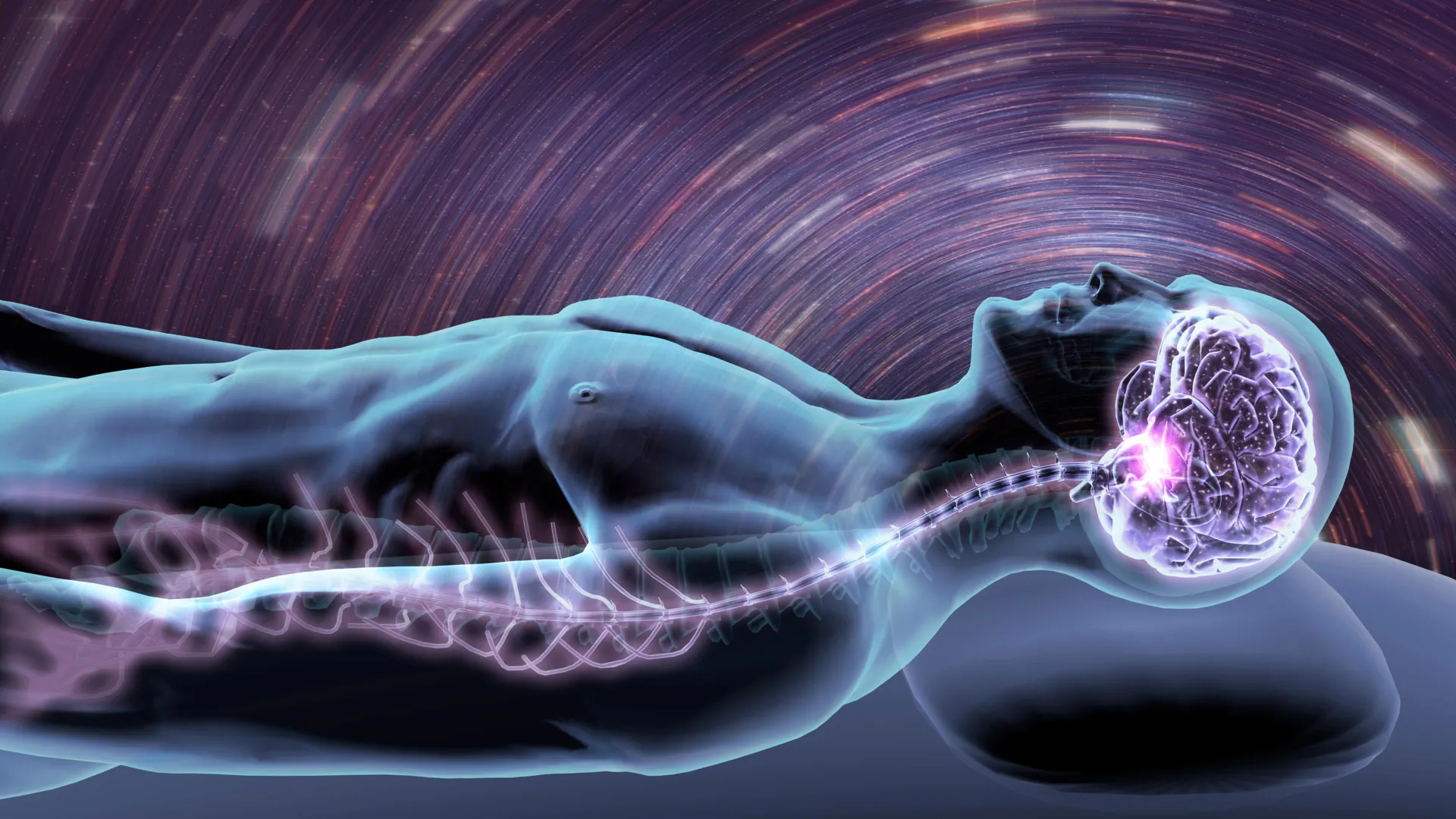
The traditional understanding of general anesthesia as a state of total cognitive "shutdown" has been fundamentally challenged by a landmark study conducted by researchers at Baylor College of Medicine. Published in the journal Nature, the research demonstrates that the human brain remains capable of performing remarkably sophisticated language tasks, including the real-time processing of speech and the prediction of upcoming words, even when a patient is fully unconscious. This discovery suggests that the hippocampus, a region primarily associated with memory, plays a much more active role in continuous environmental monitoring than previously suspected, functioning as an analytical engine that operates beneath the threshold of conscious awareness.
For decades, the medical community viewed general anesthesia as a "reversible coma" where the brain’s higher functions—specifically those related to language and complex reasoning—ceased to operate. However, the Baylor study, led by Dr. Sameer Sheth, a professor and Cullen Foundation Endowed chair of neurosurgery, reveals a far more nuanced reality. By recording the activity of individual neurons in patients undergoing surgery, the team found that the brain does not simply "turn off." Instead, it continues to filter, categorize, and even anticipate linguistic stimuli, suggesting that consciousness may be less about the activity of specific brain regions and more about the integrated communication between them.
Methodological Breakthroughs: The Role of Neuropixels Probes
The precision of this study was made possible through the use of Neuropixels probes, an advanced electrophysiology technology that allows researchers to record the activity of hundreds of individual neurons simultaneously. While these probes have been used in animal models for several years, their application in the human hippocampus during clinical procedures represents a significant leap forward in neuroscientific methodology.
The data was gathered from patients with epilepsy who were undergoing scheduled neurosurgical procedures. Because these patients already required the implantation of electrodes to map seizure activity, researchers were granted a rare and ethical window into the deep structures of the living human brain. During the administration of general anesthesia—a state characterized by a lack of response to painful stimuli and a total absence of conscious recall—the research team monitored the hippocampal response to various auditory inputs.
This environment provided a controlled setting to observe how the brain handles information without the "interference" of conscious thought. The use of Neuropixels allowed for a level of granular detail that traditional fMRI or EEG scans cannot achieve, pinpointing exactly which neurons were firing in response to specific linguistic cues.
Experimenting with Sound: From Tones to Complex Narratives
The research was structured in two distinct phases, moving from simple auditory stimuli to complex language processing. In the first phase, patients were exposed to a series of repeating tones, interspersed with occasional "oddball" or unexpected sounds. This is a classic paradigm used to test the brain’s ability to detect changes in its environment.
The results were immediate and conclusive: neurons in the hippocampus consistently fired in response to the unexpected tones. More significantly, the researchers observed that the brain’s response to these tones improved over time. This indicates a level of neural plasticity—the ability of the brain to adapt and learn from new information—even while under the influence of potent anesthetic agents. This finding suggests that the "unconscious" brain is not static; it is actively updating its internal model of the world based on incoming data.
Building on this, the second phase of the experiment introduced high-level linguistic complexity. Patients were played short stories while the researchers tracked hippocampal activity. The data revealed that the hippocampus was not merely reacting to the sound of the voices, but was actually distinguishing between different parts of speech. The neural firing patterns changed predictably depending on whether the patient heard a noun, a verb, or an adjective. This implies that the hippocampal circuitry retains the ability to perform semantic and syntactic analysis without the requirement of a conscious "observer."
Predictive Coding and the AI Parallel
Perhaps the most startling discovery made by Dr. Sheth and his colleagues was evidence of "predictive coding." In cognitive science, predictive coding is the theory that the brain is constantly generating and updating a mental model of the environment to anticipate future events. In the context of the Baylor study, the researchers found that hippocampal signals could be used to predict upcoming words in a story before they were actually played.
"The brain appears to anticipate what comes next in a story, even without conscious awareness," Dr. Sheth noted. This type of anticipatory behavior was previously thought to be a hallmark of an attentive, awake mind. The fact that it occurs during general anesthesia suggests that prediction is a fundamental, "always-on" feature of human neural architecture.
The researchers highlighted a fascinating parallel between this biological process and the mechanics of modern Artificial Intelligence (AI). Large language models (LLMs), such as those powering advanced chatbots, function by calculating the statistical probability of the next word in a sequence. The Baylor study suggests that the human hippocampus employs a similar probabilistic approach to language, processing speech as a series of expected and unexpected tokens. By understanding how the hippocampus performs these calculations while "offline," scientists may gain new insights into the development of more efficient and human-like AI architectures.
Redefining the Nature of Consciousness
The implications of this study extend far beyond the operating room, touching upon the very definition of human consciousness. If the brain can process language, learn from new stimuli, and predict future events while unconscious, what exactly is the role of consciousness?
Dr. Benjamin Hayden, a professor of neurosurgery at Baylor and a contributor to the study, suggested that these findings support a theory where consciousness is a product of global brain connectivity rather than local activity. In this view, the hippocampus continues its specialized work of processing and predicting, but because the anesthetic has disrupted the communication channels between the hippocampus and other regions (such as the prefrontal cortex), the information never reaches the "global workspace" required for conscious awareness.
This shift in perspective suggests that being "unconscious" does not mean the brain is idle. Instead, it may mean that the various specialized modules of the brain are working in isolation, unable to share their findings with the rest of the network. This "fragmentation" model of anesthesia could lead to more precise ways of measuring the depth of anesthesia during surgery, potentially reducing the risk of accidental awareness or post-operative cognitive dysfunction.
Potential for Speech Prosthetics and Rehabilitation
The discovery that the hippocampus processes language in a structured, predictable way opens new doors for medical technology, particularly in the field of neuroprosthetics. Dr. Vigi Katlowitz, the study’s first author and a neurosurgery resident at Baylor, emphasized the potential for using these hippocampal signals to help patients who have lost the ability to speak due to stroke or traumatic brain injury.
Currently, most speech prosthetics rely on signals from the motor cortex—the area of the brain that controls the muscles used for speaking. However, if the hippocampus contains a high-level representation of language and word prediction, it could serve as a powerful alternative or supplementary source of data for "brain-to-text" devices. By tapping into the brain’s internal linguistic engine, engineers might be able to create prosthetics that are more intuitive and faster at decoding a user’s intended speech.
Furthermore, the evidence of neural plasticity under anesthesia suggests that rehabilitative therapies could potentially be initiated even in patients who are in semi-conscious or minimally conscious states. If the brain is still "listening" and "learning," auditory stimulation programs might be used to maintain neural pathways in patients recovering from severe brain injuries.
Broader Reactions and Future Directions
The scientific community has greeted these findings with a mixture of excitement and caution. While the study provides robust evidence for hippocampal language processing, experts note that the research was limited to a specific type of general anesthesia. It remains to be seen whether similar levels of activity occur during natural sleep, in patients in a vegetative state, or under different classes of anesthetic drugs.
There is also the question of "depth." While the hippocampus is processing these signals, it is unclear to what extent they are integrated into long-term memory. Most patients under general anesthesia have no recollection of events, which suggests that while the brain is "processing" the stories, it may not be "storing" them in a way that is accessible upon waking.
The researchers at Baylor are already planning follow-up studies to explore these variables. Future investigations will likely look at other regions of the brain to see how widespread this unconscious processing is and will attempt to map the exact pathways that anesthesia interrupts to produce the state of "unconsciousness."
"This work pushes us to rethink what it means to be conscious," Dr. Sheth concluded. "The brain is doing much more behind the scenes than we fully understand." As neuroscientists continue to peel back the layers of the unconscious mind, the boundary between the "awake" and "asleep" brain continues to blur, revealing a biological machine that is far more resilient, active, and sophisticated than previously imagined.