Scientists have uncovered a previously unknown and remarkably counterintuitive method by which sea anemones defend themselves against viral infections. This groundbreaking discovery, published in the prestigious journal Nature Ecology & Evolution, challenges long-held assumptions about the evolutionary trajectory of animal immune systems. The research, a collaborative effort led by PhD candidate Ton Sharoni and Professor Yehu Moran at the Hebrew University of Jerusalem, in conjunction with scientists from the University of North Carolina at Charlotte, suggests that the evolutionary path to robust antiviral defense is far more varied than previously understood. The findings indicate that the animal kingdom has independently developed multiple, distinct strategies for combating viruses, underscoring the immense creativity of natural selection.
The newly identified defense mechanism in sea anemones hinges on a protein that, on the surface, bears a striking resemblance to a cornerstone of human antiviral immunity. However, this protein, dubbed CARDIB (CARD Inhibitor Binding protein), performs an astonishingly opposite function. While its human counterpart, MAVS, is crucial for activating the immune response to viral invasion, CARDIB in sea anemones acts as a crucial suppressor of this response under normal conditions. This seemingly paradoxical role, however, is precisely what allows the anemones to effectively mount a defense when truly threatened, suggesting that evolution has found success in both accelerating and carefully modulating immune activity.
Unraveling an Ancient Immune Strategy
For billions of years, viruses have been a persistent threat to life on Earth, driving the evolution of complex defense mechanisms across all biological domains. In vertebrates, including humans, the protein MAVS (Mitochondrial antiviral signaling protein) plays a pivotal role in initiating the innate immune response. Upon detecting viral genetic material, MAVS triggers a cascade of signaling pathways that alert the immune system, leading to the production of antiviral molecules and the activation of immune cells to combat the infection. This MAVS-dependent pathway has long been considered a fundamental, ancient component of animal immunity, passed down from a common ancestor.
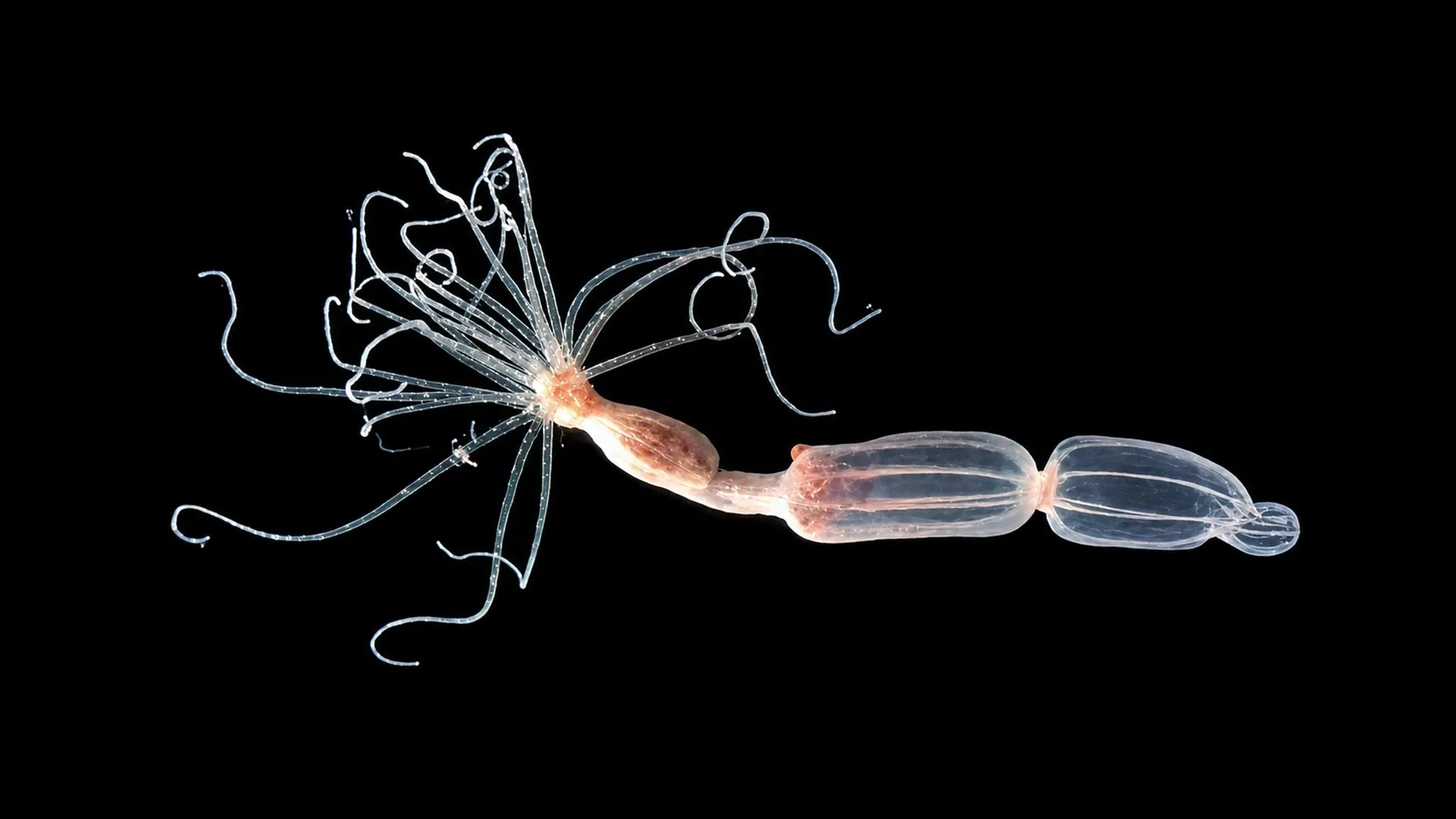
To probe the deep evolutionary roots of antiviral defense, the research team turned their attention to sea anemones. These cnidarians, belonging to an ancient lineage that diverged from the evolutionary branch leading to vertebrates over 600 million years ago, are considered living fossils of early animal evolution. As close relatives of corals and jellyfish, they offer a unique window into the development of immune strategies in organisms that predate the emergence of complex nervous systems and sophisticated immune organs. Their relative simplicity, coupled with their evolutionary distance from mammals, makes them ideal subjects for understanding the foundational principles of animal immunity.
The Paradoxical Protein: CARDIB’s Unexpected Role
During their investigation into the sea anemone’s immune repertoire, the researchers identified a novel protein that initially appeared to be the anemone’s equivalent of MAVS. The structural similarities were compelling, leading to the hypothesis that this protein would function similarly in triggering antiviral responses. However, subsequent experimentation quickly revealed a profound divergence in function.
"Everything about CARDIB suggested it should function like MAVS," explained Professor Yehu Moran, the senior author of the study and head of the Department of Ecology, Evolution and Behavior at the Hebrew University. "Instead, we discovered that it does the exact opposite. Rather than activating antiviral defenses, CARDIB normally suppresses them."
This discovery presented a significant puzzle: why would an organism evolve a protein that actively dampens its own immune system, especially in the face of constant viral threats? The researchers hypothesized that this suppression might not be a weakness, but rather a sophisticated regulatory mechanism.
Experimental Evidence: A Brake Essential for the Accelerator
To test this hypothesis, the research team employed CRISPR-Cas9 gene editing technology to precisely remove the gene responsible for producing CARDIB in sea anemones. These genetically modified anemones, along with control groups, were then deliberately exposed to various viruses. The results were striking and, as Dr. Sharoni noted, "completely counterintuitive."
The sea anemones lacking functional CARDIB exhibited a drastically impaired ability to combat viral infections. Viruses multiplied at significantly higher rates within these individuals, their capacity to initiate antiviral responses was severely compromised, and their overall survival rates plummeted compared to their unmodified counterparts. This demonstrated that, far from being a liability, the suppression of the immune system by CARDIB under normal conditions is, in fact, a critical prerequisite for a successful and timely antiviral response.
"Although CARDIB acts as a brake on the immune system under normal conditions, that brake turns out to be essential for mounting an effective antiviral response," stated Dr. Sharoni. "It appears to prevent a constant, low-level immune activation that could be detrimental, allowing for a more potent and focused response when a real threat emerges."
The experimental data collectively indicated that sea anemones utilize an antiviral pathway that is fundamentally distinct from the one found in humans, despite the presence of molecular components that share remarkable similarities. This suggests a case of convergent evolution, where different evolutionary pressures have led to analogous structures performing analogous functions, but through vastly different operational mechanisms.
Validation in the Natural Environment: Beyond the Laboratory
The significance of CARDIB’s role extended beyond the controlled environment of the laboratory. To confirm that this newly discovered pathway was relevant in a natural setting, the researchers introduced genetically modified sea anemones lacking CARDIB into outdoor marine mesocosms. These controlled, yet naturalistic, environments in South Carolina were designed to mimic the complex ecological conditions found in estuaries, exposing the anemones to a diverse array of viruses and microorganisms present in their natural habitat.
Within days of their introduction into these mesocosms, the differences between the modified and unmodified anemones became starkly apparent. Individuals deficient in CARDIB accumulated substantially higher viral loads than their genetically intact counterparts. Furthermore, the researchers observed that a particular immune gene, which had shown only moderate importance in laboratory tests, proved to be crucially important for survival under these more challenging, natural conditions.
"This demonstrated that the pathway we discovered is not simply a laboratory phenomenon," Professor Moran emphasized. "It plays a crucial role in helping these animals cope with the viral challenges they face in nature." This finding is critical, as it validates the biological relevance of CARDIB’s function and ensures that the implications of the research extend beyond theoretical immunology to practical ecological understanding.
A Mosaic of Immune Evolution: Multiple Paths to Viral Resistance
The findings from this study have profound implications for our understanding of evolutionary biology and immunology. They strongly suggest that evolution has not converged on a single, universally optimal strategy for antiviral defense. Instead, different lineages of animals appear to have independently evolved distinct molecular systems for recognizing and neutralizing viruses.
"Humans and sea anemones both need protection from viruses, but this work shows that evolution can organize those defenses in fundamentally different ways," Professor Moran added. This perspective reframes the study of immunity from a search for a single ancient blueprint to an exploration of a diverse evolutionary toolkit. It implies that many other animal groups may harbor unique antiviral mechanisms yet to be discovered.
The research also highlights the invaluable contribution of studying organisms that lie outside the traditional focus of laboratory research. While model organisms like mice and cell lines derived from humans are essential for certain types of investigation, ancient creatures such as sea anemones can act as repositories of evolutionary innovations that might be lost or masked in more derived species. By examining these evolutionary outliers, scientists can uncover a richer and more complete picture of the biological processes that have shaped life on Earth.
As scientific exploration continues to delve into the extraordinary diversity of the natural world, discoveries like the counterintuitive viral defense of sea anemones serve as powerful reminders that evolution has repeatedly devised ingenious and often unexpected solutions to life’s most fundamental challenges, pushing the boundaries of our current biological understanding. The study not only expands our knowledge of marine invertebrate immunity but also prompts a broader re-evaluation of how antiviral defense has evolved across the entire animal kingdom. The next steps for researchers may involve investigating whether similar "inhibitory" immune strategies are present in other invertebrate groups, further illuminating the multifaceted landscape of immune evolution.