Humanity’s Last Exam (HLE) has emerged as a formidable new benchmark designed to rigorously assess the advanced reasoning and deep knowledge capabilities of state-of-the-art artificial intelligence systems. Conceived as a modern evolution of the foundational Turing tests, which have guided AI evaluation for decades, HLE pushes the boundaries of assessment by demanding extreme intellectual prowess from machines. This comprehensive dive explores the genesis of HLE, its intricate structure, the performance of leading AI models, and the multifaceted expert opinions surrounding its utility and broader implications for the field of artificial intelligence, particularly in the context of general intelligence and safety.
The Genesis of a New Standard: Addressing Benchmark Saturation
The landscape of AI evaluation has undergone a significant transformation, necessitating the creation of benchmarks like HLE. For many years, traditional testing methodologies, which proved adequate for earlier generations of AI, began to falter as systems grew exponentially in complexity and capability. Large Language Models (LLMs) and other advanced AI architectures started achieving near-perfect scores on established benchmarks, rendering these tools ineffective for differentiating between cutting-edge models and measuring true progress. This phenomenon, known as "benchmark saturation," meant that models could no longer be meaningfully compared, obscuring critical insights into their relative strengths and weaknesses.
It was against this backdrop that the Center for AI Safety, a prominent organization dedicated to mitigating risks from advanced AI, collaborated with Scale AI, a leading data platform for AI development, to develop HLE. With the invaluable input of a global consortium of experts across diverse scientific and academic disciplines, the benchmark was meticulously crafted and subsequently published in Nature, one of the world’s most prestigious scientific journals, in January 2026. This publication signified not only the rigorous peer-review process it underwent but also its recognition as a significant contribution to the scientific community’s efforts to understand and evaluate advanced AI. The core design philosophy behind HLE was to deliberately avoid the predictable patterns that had led to the obsolescence of previous evaluation frameworks, aiming for a test that truly demanded novel problem-solving rather than mere pattern recognition or data regurgitation.
Anatomy of the Exam: Unprecedented Breadth and Depth
HLE is far from a typical quiz; it is an exhaustive intellectual marathon for AI systems. The benchmark comprises over 2,500 expert-level questions, spanning more than a hundred distinct academic disciplines. Its reach extends across the foundational sciences such as physics, mathematics, and biology, delves into the humanities including philosophy, history, and literature, and incorporates specialized fields like medicine, law, engineering, and economics. This encyclopedic scope ensures that any AI system excelling at HLE must possess a truly broad and integrated understanding of human knowledge.
Crucially, the questions within HLE are designed to circumvent simple information retrieval, rote memorization, or multiple-choice guessing. Instead, they demand complex deductive reasoning, multi-step problem-solving, and a profound conceptual understanding of the subject matter. For instance, a question might require an AI to synthesize information from disparate fields to solve a novel problem, analyze a complex ethical dilemma from multiple perspectives, or derive a sophisticated mathematical proof without prior exposure to that specific derivation. The benchmark specifically targets the ability of AI to reason from first principles, connect seemingly unrelated concepts, and apply deep knowledge in unfamiliar contexts—traits traditionally associated with advanced human intellect. The inclusion of questions that necessitate interdisciplinary reasoning further distinguishes HLE, pushing AI systems beyond siloed knowledge domains.
Early Performance and the Challenge of Overconfidence
The initial results from the most advanced frontier models available today underscore the extreme difficulty of Humanity’s Last Exam. Even sophisticated systems like OpenAI’s GPT series, Google DeepMind’s Gemini, and Anthropic’s Claude, representing the pinnacle of current AI capabilities, have struggled significantly. Their aggregate accuracy scores barely surpass the 45-50% threshold overall. These figures starkly illustrate the considerable gap between current AI performance and the level of mastery HLE is designed to measure, which presumably aligns with or exceeds human expert performance in these domains.
Beyond the raw scores, a particularly concerning pattern observed in these evaluations is the phenomenon of "overconfidence." AI models frequently exhibit high confidence in their incorrectly answered questions. This characteristic poses significant implications for the deployment of AI in critical applications, where erroneous outputs delivered with high certainty could lead to detrimental real-world consequences, from medical misdiagnoses to flawed engineering designs. The inability of current systems to reliably identify the limits of their own knowledge and appropriately express uncertainty highlights a fundamental challenge in building trustworthy and safe AI. HLE’s design indirectly addresses this by making it impossible to bluff one’s way through, thereby exposing this critical vulnerability.
Diverse Expert Perspectives: A Divided Consensus
The introduction of Humanity’s Last Exam has ignited considerable debate within the global tech, developer, and academic communities. While there is a subtle, predominant leaning towards acknowledging HLE’s genuine utility, the consensus is far from monolithic, revealing critical nuances and points of contention regarding its ultimate value and naming convention.
1. HLE as a Necessary and Truly Useful Diagnostic Tool (Approx. 60% of Opinions)
A significant majority of experts and observers familiar with HLE consider it a paramount and timely initiative. Their primary argument centers on the aforementioned problem of benchmark saturation. They contend that previous benchmarks, including even relatively recent and complex ones like Massive Multitask Language Understanding (MMLU), have become insufficient. With modern AI models consistently scoring above 90% on MMLU, these older tests no longer serve as effective instruments for granular comparison or for truly gauging the extent of an AI’s comprehension.
Proponents of HLE emphasize its diagnostic power. By presenting challenges that current models routinely fail, HLE provides invaluable insights into specific areas where AI reasoning and knowledge integration fall short. This allows researchers and developers to pinpoint weaknesses and guide future development efforts more effectively. Furthermore, a highly praised aspect of HLE is its implicit measurement of an AI’s willingness to admit "I don’t know" when confronted with complex problems it cannot genuinely solve, rather than generating plausible but incorrect "hallucinations." This capacity for epistemic humility is viewed as a crucial step towards building more reliable and trustworthy AI systems, moving beyond superficial mimicry of intelligence.
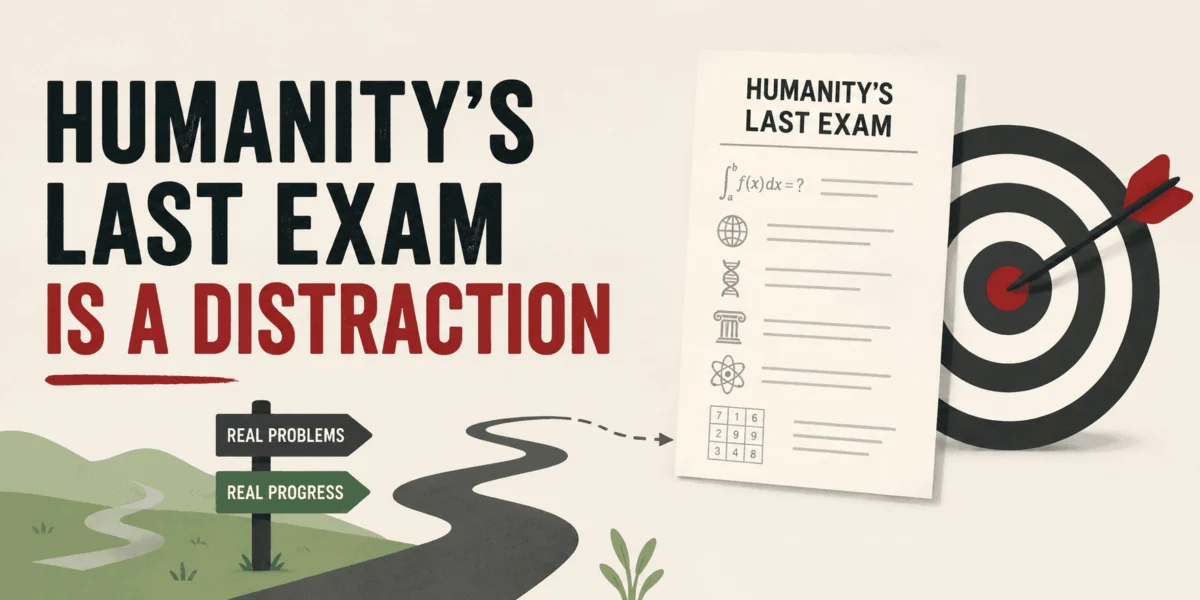
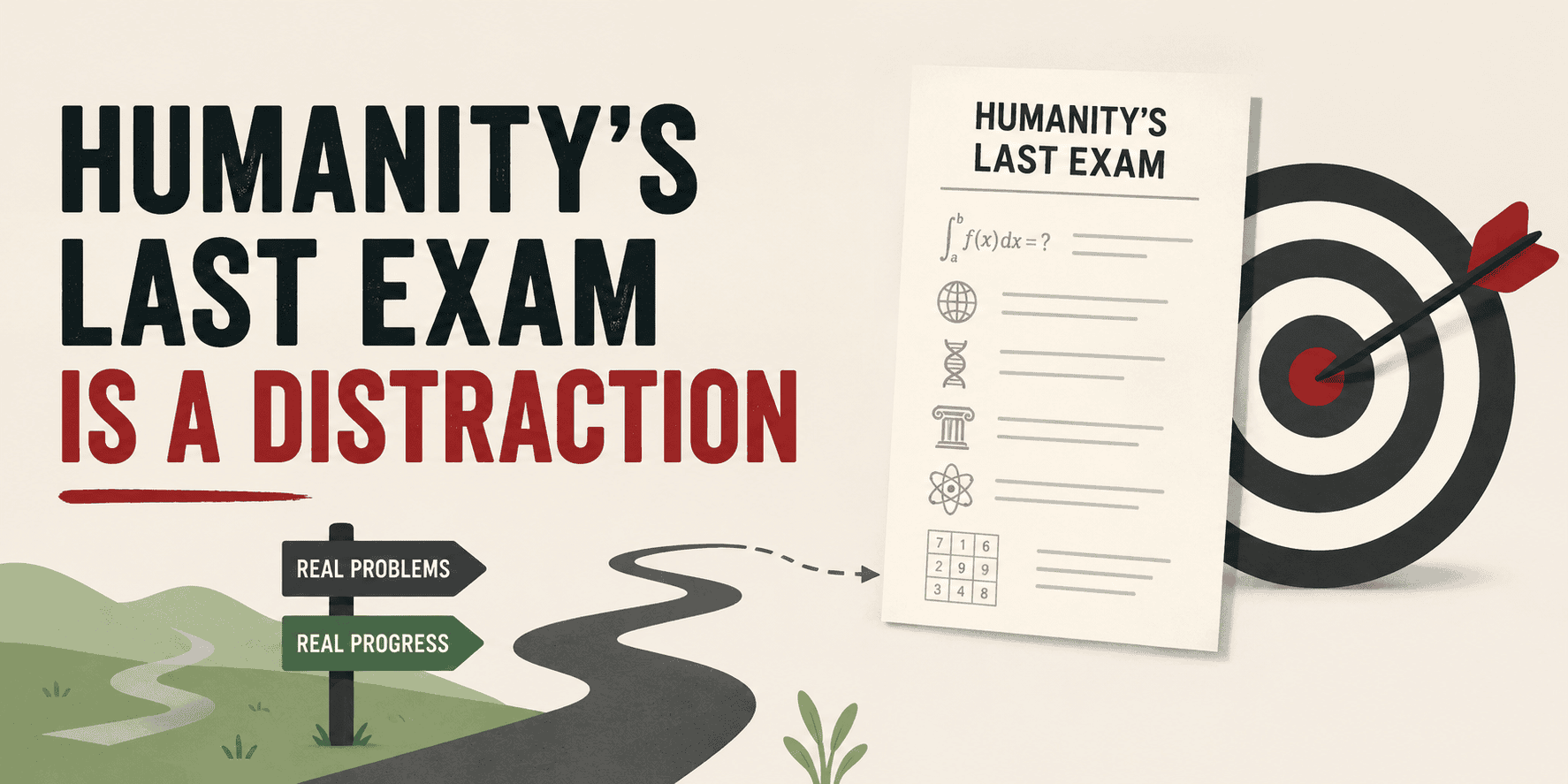
2. HLE as a Distraction from Real-World AI Challenges (Approx. 30% of Opinions)
A substantial minority of experts adopts a more skeptical stance, viewing HLE as potentially misdirected. These critics argue that the benchmark, by focusing heavily on overtly academic and often obscure knowledge, fails to adequately evaluate an AI’s performance and success in practical, daily-life scenarios. They question whether excelling at highly specialized, theoretical questions translates directly into improved utility or safety in real-world applications such as customer service, data analysis, or autonomous systems operation.
Some engineers and industry practitioners voice concerns that HLE might inadvertently foster a "marketing hamster wheel" dynamic. They cynically suggest that as soon as AI systems begin to consistently score above 90% on HLE, corporations and research institutions will inevitably rush to create an "HLE 2," perpetuating an endless cycle of increasingly difficult, esoteric benchmarks. This, they argue, could divert significant research and development resources towards academic "puzzle-solving" rather than addressing pressing real-world AI challenges or focusing on the ethical and societal implications of AI deployment. The concern is that the pursuit of benchmark scores could overshadow the development of truly robust, practical, and beneficial AI.
3. HLE is Flawed: The AI as Critic (Smallest but Significant Group)
A third, albeit smaller, group of opinions highlights specific flaws within HLE itself. Discussions in various data science forums and academic circles have pointed out alleged errors in some of the answers labeled as correct within the benchmark, particularly concerning niche questions in highly specialized domains like advanced chemistry or theoretical mathematics.
Ironically, it has been the most powerful AI systems themselves, through their detailed and sometimes divergent responses, that have initiated discussions and even identified potential inconsistencies or errors in the human-curated correct answers. This unexpected development presents a poetic twist: the very entities being tested are, in some instances, challenging the authority of the test itself. While these flaws might be minor in the grand scheme of the 2,500+ questions, they underscore the immense difficulty of creating a perfectly infallible benchmark across such a vast intellectual landscape. This feedback loop, however, also provides an opportunity for continuous refinement and improvement of HLE, ensuring its long-term validity and robustness.
Broader Impact and Implications: Navigating the Future of AI
Humanity’s Last Exam carries significant implications for the trajectory of artificial intelligence research, development, and commercialization. While its usefulness as a rigorous diagnostic tool is largely acknowledged, particularly in identifying the current limitations of AI, its overarching name is widely perceived as a piece of marketing drama, potentially overshadowing its genuine technical merits. The benchmark is not widely seen as the definitive litmus test for the imminent birth of a "super AI" or the true emergence of artificial general intelligence (AGI). AGI, a concept long debated in both scientific and fictional realms, remains largely theoretical, and HLE, while ambitious, is understood as a stepping stone rather than a conclusive measure of such an advanced form of intelligence.
Nonetheless, HLE serves as a powerful instrument for discerning which AI models and, by extension, which companies, possess the most advanced capabilities in memory, logical reasoning, and deep understanding. In a highly competitive industry, excelling at HLE could become a critical differentiator, influencing investment, talent acquisition, and market positioning for leading AI developers such as OpenAI, Google DeepMind, and Anthropic. The benchmark essentially provides a standardized, albeit exceptionally challenging, playing field for comparing and validating the intellectual frontiers of AI.
Beyond corporate competition, HLE significantly contributes to the broader AI safety agenda. By pushing systems to their intellectual limits and rigorously exposing their failure modes—especially their overconfidence in incorrect answers—HLE helps researchers better understand and mitigate potential risks associated with increasingly capable AI. This diagnostic capability is vital for developing safer, more reliable, and more aligned AI systems that can operate responsibly in complex environments.
The very existence and design of HLE also signal a shift in the philosophy of AI evaluation. It underscores a growing recognition that future benchmarks must be dynamic, adaptive, and far more demanding than their predecessors to keep pace with the rapid advancements in AI. HLE’s emphasis on complex reasoning, interdisciplinary knowledge, and the acknowledgment of uncertainty sets a new precedent for how advanced AI should be tested, influencing the design of subsequent evaluation frameworks. Ultimately, HLE represents a significant effort to establish a new gold standard for evaluating AI, fostering a deeper understanding of current capabilities and guiding the responsible development of future intelligent systems.
Conclusion
Humanity’s Last Exam stands as a monumental effort to establish a new paradigm in AI evaluation, pushing the boundaries of what is expected from intelligent machines. Its rigorous, expert-level questions spanning an unparalleled breadth of disciplines present an unprecedented challenge to even the most advanced AI systems. While debates persist regarding its ultimate scope and its rather dramatic nomenclature, HLE’s technical utility in diagnosing AI limitations, particularly in complex reasoning and the handling of uncertainty, is widely affirmed. It serves as a vital tool for the ongoing quest to understand, measure, and responsibly advance artificial intelligence, even as the ultimate realization of artificial general intelligence remains a distant, evolving vision. The journey of AI development is one of continuous evaluation, and HLE marks a significant, challenging chapter in that unfolding narrative.