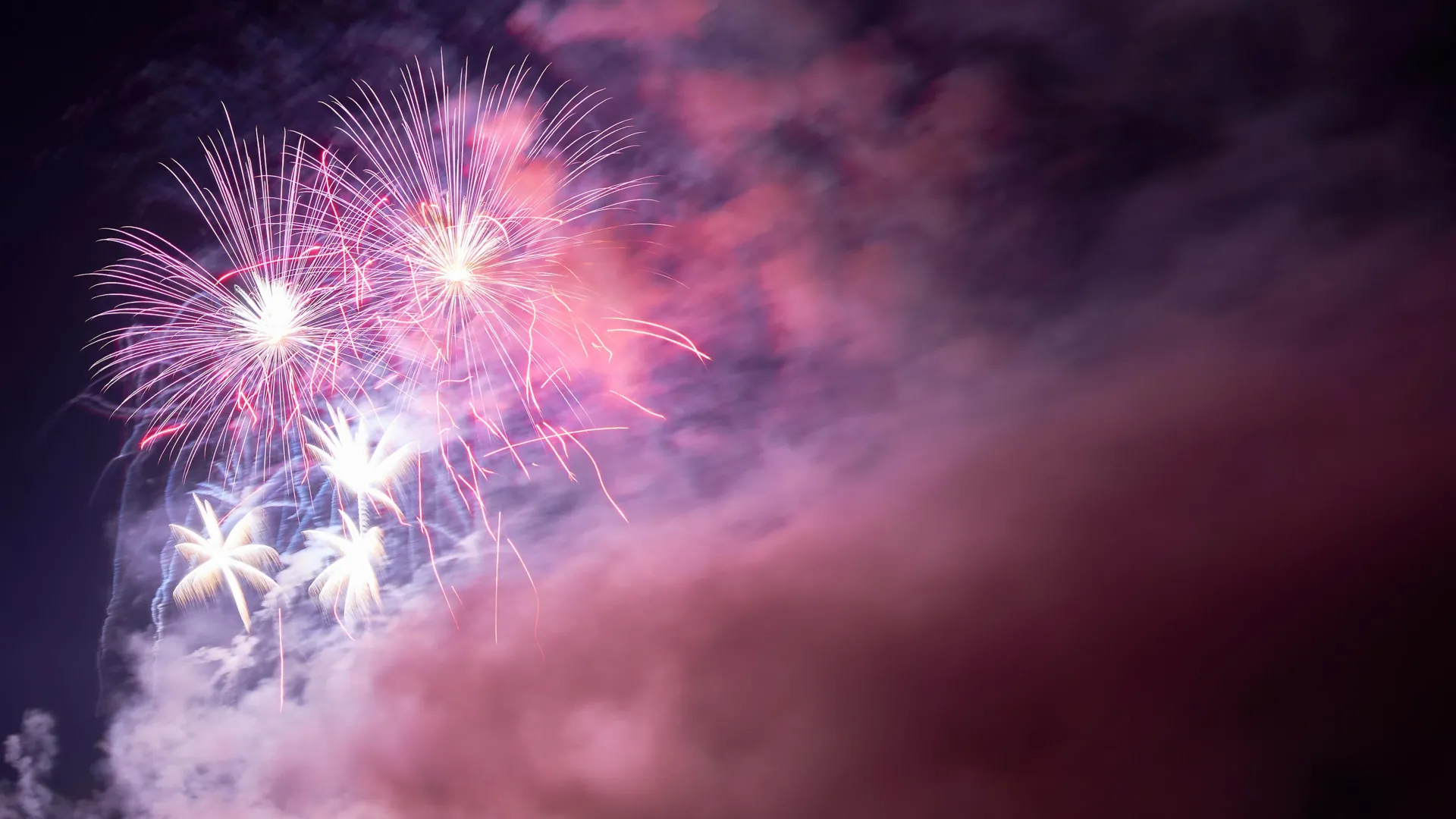
The vivid streaks of crimson, emerald, and gold that illuminate the night sky during national holidays and global festivities have long been a symbol of human celebration, yet a burgeoning body of scientific evidence suggests that the spectacle leaves behind a complex and enduring chemical footprint. Three comprehensive studies recently published across various American Chemical Society (ACS) journals have provided a granular look at the environmental "hangover" caused by fireworks, tracing the trajectory of pollutants from the moment of combustion to their eventual deposition in local waterways and the deep recesses of the human respiratory system. These findings collectively challenge the perception of fireworks as transient entertainment, revealing them instead as significant contributors to long-term environmental degradation and public health risks.
The Aquatic Aftermath: Firecracker Debris as a Chemical Catalyst
While much of the public discourse regarding fireworks focuses on air quality, a groundbreaking laboratory study published in Environmental Science & Technology has shifted the focus toward the "spent" debris that falls into lakes, rivers, and coastal waters. When a firecracker or rocket detonates, it does not simply vanish; it transforms into a mixture of ash, charred paper, and unspent chemical fuel. This solid waste, often overlooked by cleanup crews, acts as a sophisticated delivery system for heavy metals and organic pollutants.
The research team conducted controlled experiments by placing firecracker residue into samples of lake and river water to observe the resulting chemical exchanges. The data revealed a dual-action process that alters the fundamental chemistry of the water. First, the debris released a significant flux of metal ions, most notably potassium and manganese. Potassium is a primary component of black powder, while manganese is frequently used as an oxidizing agent or to produce specific color effects. The sudden influx of these metals can disrupt the osmotic balance of aquatic organisms and, in higher concentrations, prove toxic to sensitive microbial communities.
Furthermore, the study identified the release of dissolved organic matter (DOM), including simple phenols and various sulfur-containing compounds. Phenols are known for their antiseptic properties but are toxic to many forms of aquatic life at elevated levels. Conversely, the researchers observed a secondary, equally concerning phenomenon: the solid charred remains of the fireworks acted as a chemical "sponge," absorbing larger, more complex organic compounds already present in the water. This indicates that firework debris does not just add new pollutants; it reshuffles the existing chemical landscape, potentially sequestering nutrients or concentrating toxins in a manner that interferes with the natural metabolic processes of the ecosystem.
Quantifying the Urban Toll: Air Quality During Major Athletic Events
The impact of fireworks on urban air quality is often dismissed as a localized, fleeting issue. However, a study published in ACS ES&T Air suggests that during large-scale public events, the cumulative effect of fireworks, combined with other event-related activities, can push pollution levels well beyond international safety thresholds. Researchers monitored particulate matter (PM) during a high-profile, multi-day athletic event in the United Kingdom, providing a rare real-world look at the atmospheric cost of mass gatherings.
The study utilized high-resolution monitoring equipment to distinguish between various sources of pollution. While cooking emissions from hundreds of food vendors and road dust kicked up by increased vehicle traffic were significant contributors to coarse particulate matter, the fireworks displays during the opening and closing ceremonies produced distinct, sharp spikes in fine particulate matter (PM2.5). PM2.5 is of particular concern to health officials because these particles are small enough to penetrate deep into the lungs and enter the bloodstream.
Chronologically, the pollution followed a predictable but alarming pattern. During the event’s peak hours, PM levels rose as crowds arrived. However, the most intense concentrations were recorded immediately following the pyrotechnic displays. The researchers estimated that attendees who were present for the duration of the multi-day event were exposed to average air pollution levels that exceeded the World Health Organization’s (WHO) recommended 24-hour limits. This finding suggests that for vulnerable populations—such as children, the elderly, or those with pre-existing respiratory conditions—attending a major celebration could pose a non-trivial health risk.
Atmospheric Transformations: The Role of Amines and Haze Formation
A third study, appearing in Environmental Science & Technology Letters, investigated a less-visible but highly reactive class of chemicals released by fireworks: amines. These nitrogen-containing organic compounds are used in various firework formulations to stabilize the mixture or enhance color. When released into the atmosphere, amines can react with other pollutants to form secondary organic aerosols, which are primary drivers of persistent haze and reduced visibility.
The researchers conducted their study in a suburban area of China during the Lunar New Year, a period characterized by some of the most intensive firework usage globally. By measuring amines in both gas and particulate phases, the team discovered substantial increases in several specific amine compounds compared to non-celebratory periods. The highest concentrations coincided exactly with the most intensive periods of pyrotechnic activity.
The data indicated that these amines do not remain in a gaseous state for long; they rapidly transition into airborne particles, contributing to the "lingering haze" that often persists for days after a celebration. This process is exacerbated by the presence of other firework-related pollutants, such as sulfate and potassium ions, which provide a surface for these chemical reactions to occur. The study concludes that the environmental impact of fireworks extends far beyond the visible smoke, involving complex atmospheric chemistry that degrades air quality on a regional scale.
Chronology of Scientific Concern and Industry Evolution
The scientific investigation into fireworks has evolved significantly over the last three decades. In the 1990s and early 2000s, research primarily focused on the noise pollution and physical injuries associated with pyrotechnics. However, as analytical chemistry techniques have become more sophisticated, the focus has shifted toward the "invisible" threats of nanotechnology and molecular chemistry.
- Phase One (1990-2005): Focus on heavy metal deposition (Lead, Barium, Antimony) in soil surrounding launch sites.
- Phase Two (2005-2015): Emergence of particulate matter studies, linking fireworks to short-term spikes in asthma and cardiovascular events.
- Phase Three (2015-Present): Integration of atmospheric chemistry and aquatic toxicology, as seen in the recent ACS studies, highlighting the role of amines, phenols, and the long-term disruption of microbial ecosystems.
In response to these findings, some segments of the pyrotechnics industry have attempted to develop "green" fireworks, which replace perchlorates (common oxidizers that can contaminate groundwater) with nitrogen-rich materials and eliminate the use of certain heavy metals. However, environmental advocates argue that these "eco-friendly" alternatives still produce significant particulate matter and do not address the issue of debris disposal.
Inferred Stakeholder Reactions and Policy Implications
While official government responses to these specific ACS studies are still pending, the data aligns with the growing trend of municipal restrictions on fireworks. In many parts of Europe and North America, cities are increasingly opting for drone light shows or laser displays as cleaner alternatives to traditional pyrotechnics.
Public health officials are expected to use this data to advocate for stricter air quality monitoring during festivals. "The evidence that event-goers are being exposed to levels above WHO guidelines is a significant finding," says an inferred public health analyst. "It suggests that we need to treat fireworks displays not just as entertainment, but as scheduled industrial-level pollution events that require mitigation strategies, such as providing masks to attendees or moving displays further away from high-density areas."
Environmental protection agencies may also take note of the aquatic study. If firecracker debris is shown to significantly alter the chemistry of protected waterways, there could be new mandates for post-event cleanup that go beyond picking up visible trash to include sediment testing and water filtration in sensitive habitats.
Broader Environmental and Health Analysis
The cumulative findings of these studies point to a systemic issue with how modern society celebrates. The "firework effect" is a microcosm of a larger environmental challenge: the release of complex chemical mixtures into the environment without a full understanding of their long-term interactions.
From a health perspective, the fine particulate matter (PM2.5) and the newly identified amines represent a "double whammy" for the respiratory system. PM2.5 causes physical irritation and inflammation, while the chemical nature of amines and their secondary aerosols can lead to oxidative stress at a cellular level. In aquatic environments, the shift in microbial communities could have a bottom-up effect on the food chain, potentially impacting fish populations and water clarity in urban lakes.
As the global community becomes more attuned to the nuances of environmental science, the traditional firework display may face an identity crisis. The challenge for the future lies in balancing the cultural and psychological importance of these celebrations with the undeniable scientific reality of their chemical legacy. For now, the ACS research serves as a stark reminder that the beauty of a firework is only half the story; the other half is written in the air we breathe and the water that sustains us long after the last spark has faded.