The pharmaceutical landscape for psychiatric care is currently witnessing a paradigm shift as New York City-based Definium Therapeutics advances its lead candidate, DT120, through the final stages of regulatory scrutiny. Following a string of positive topline data from the Phase 3 Voyage trial, which assessed the efficacy of an orally disintegrating 100 µg dose of LSD for adults with generalized anxiety disorder (GAD), the company has positioned itself at the forefront of the burgeoning psychedelic medicine sector. Having already secured positive Phase 3 results for the same compound in major depressive disorder (MDD) earlier in June 2026, Definium now faces the complex task of navigating the commercial, regulatory, and economic hurdles inherent in bringing a psychedelic therapeutic to market.
A Chronology of Clinical Development
The journey of DT120—previously known in industry circles as MM120 during the company’s former branding as MindMed—has been marked by a rigorous, data-driven approach to drug development. The development timeline accelerated significantly in 2025, following the publication of Phase 2b data in JAMA, which established a proof-of-concept for the compound’s efficacy. In that study, researchers observed that 97.5% of participants met the clinical criteria for discharge by the 12-hour mark, providing a baseline for the subsequent, more streamlined Phase 3 protocols.
By late 2025, Definium had initiated the Voyage program. Throughout these pivotal trials, the company implemented a strict 8-hour minimum observation window. This decision was framed as a necessary safety precaution to ensure patient stability while navigating the profound psychoaffective effects of the LSD formulation. As the company prepares for a potential New Drug Application (NDA) submission, the focus has shifted from mere efficacy to the practical realities of "real-world" clinical administration.
The Economics of Psychedelic Therapy
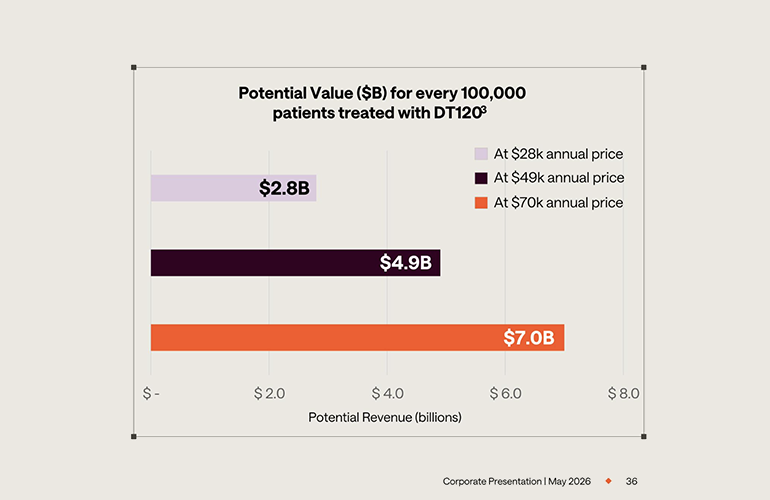
One of the most critical components of Definium’s market entry strategy is its pricing model. In a corporate presentation filed with the Securities and Exchange Commission (SEC) in January 2026, the company outlined projected revenue models based on annual patient costs ranging from $28,000 to $70,000. These figures were derived using Johnson & Johnson’s Spravato (esketamine) as a benchmark for high-value, clinic-administered mental health therapies.
While Definium has explicitly stated that an official price point for DT120 has not yet been established, the proposed range highlights the significant investment required to manage the logistics of supervised dosing. The "value-based" argument rests on the potential for a single or infrequent dosing regimen to replace daily, lifelong medication, thereby reducing the cumulative burden on both the healthcare system and the patient. Analysts suggest that if DT120 can demonstrate sustained, multi-month symptom relief, these price points may become defensible to payers and pharmacy benefit managers (PBMs) who are increasingly focused on long-term clinical outcomes.
Clinical Monitoring and the "Trial Artifact"
A point of contention among industry observers has been the logistical burden of the mandatory observation period. During the Phase 3 Voyage trial, patients were required to stay onsite for at least eight hours, supported by two specialized staff members. However, Definium’s leadership has moved to clarify that this protocol was a trial-specific safeguard rather than a permanent requirement for future clinical practice.
Chief Medical Officer Dan Karlin addressed this on the company’s August 12 earnings and results call, labeling the eight-hour minimum a "trial artifact." The company intends to transition toward an "End of Session Checklist" (EOSC) model, which would allow clinicians to discharge patients once they reach a predetermined threshold of stability. By utilizing this instrument, Definium aims to optimize clinic flow and reduce the strain on healthcare providers, effectively moving closer to the model used for existing REMS (Risk Evaluation and Mitigation Strategy) programs.
Competitive Benchmarking: Definium vs. Compass Pathways
The commercial viability of DT120 is frequently compared to the development of synthetic psilocybin compounds, most notably COMP360, currently being developed by Compass Pathways. Both companies are operating within the same niche of serotonergic psychedelics, which act on the 5-HT2A receptor to induce neuroplasticity.
The differences, however, are noteworthy. While both require supervised administration, the duration of the psychoaffective experience differs significantly between LSD and psilocybin. COMP360 trials have consistently required six to eight hours of monitoring, a timeframe that aligns closely with the data seen in the Voyage study. As Compass Pathways proceeds with its rolling FDA submission following successful Phase 3 trials in treatment-resistant depression, the industry is closely watching to see which company establishes the definitive standard for "supervised psychedelic care." The outcomes of these two programs will likely dictate how regulators like the FDA view the safety requirements for the entire class of hallucinogenic medicines.
Addressing the Patient Experience
Despite the technical and financial hurdles, Definium CEO Robert Barrow has remained steadfast in his assertion that patients are willing to commit the necessary time for treatment. In interviews conducted throughout the development cycle, Barrow has emphasized that for patients suffering from severe, treatment-resistant anxiety or depression, the prospect of a meaningful reduction in symptoms—after years of unsuccessful traditional therapy—far outweighs the inconvenience of an eight-hour clinical visit.
Barrow’s perspective is supported by the data from the Voyage trial, which utilized central, blinded raters to ensure objectivity. The study saw a robust, standardized effect size of 0.81, even as the placebo-adjusted difference between Phase 2 and Phase 3 narrowed. This stability in effect size suggests that the efficacy of DT120 is not merely a result of trial design but a consistent pharmacological response.
Strategic Implications and Future Outlook
The path forward for Definium involves more than just regulatory approval; it requires the successful integration of psychedelic medicine into a standard medical infrastructure that is currently unprepared for such interventions. The implications of this are twofold:
- Healthcare Infrastructure: Clinics will need to adapt their physical space and staffing models to accommodate multi-hour, high-touch sessions. This could create a new sub-sector within psychiatry, potentially shifting the focus from pharmacy-dispensed daily pills to center-based "experience" medicine.
- Regulatory Precedent: The FDA’s willingness to approve a drug that requires such intense, day-long supervision will set a legal and administrative precedent for the future of psychiatric care. If the EOSC model is accepted, it could pave the way for other fast-acting, short-duration therapies to be administered with minimal oversight.
As Definium continues its dialogue with regulators, the focus will remain on the long-term durability of the therapy. Preliminary data suggests that the benefits of DT120 may persist for months, a prospect that could fundamentally alter the treatment landscape for GAD and MDD. However, the ultimate success of the program will hinge on the company’s ability to prove that the clinical "value" of a single session is worth the high price tag it has modeled.
With the second half of 2026 approaching, stakeholders in the biotech sector are bracing for the next phase of the process. If Definium can successfully navigate the final steps toward an FDA filing, DT120 could well become the flagship product that validates the commercial potential of psychedelic medicine, transforming a fringe therapeutic approach into a mainstream clinical reality. For now, the company remains in a state of quiet transition, refining its commercial strategy while ensuring that the clinical rigor of the Voyage trial remains the cornerstone of its regulatory narrative.