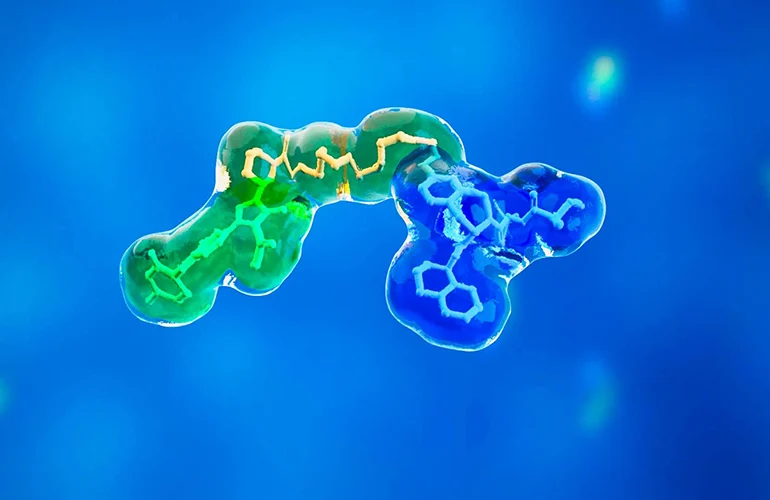
The landscape of modern pharmacology shifted fundamentally in May 2026 with the U.S. Food and Drug Administration’s approval of vepdegestrant, marketed as Veppanu. As the first Proteolysis Targeting Chimera (PROTAC) to reach the clinic and receive regulatory endorsement, vepdegestrant serves as a milestone for the targeted protein degradation (TPD) modality. While traditional pharmaceuticals typically function by binding to a protein’s active site to inhibit its function—a stoichiometric process—PROTACs utilize a catalytic, event-driven mechanism to induce the selective degradation of "undruggable" targets. By bridging a target-binding warhead with an E3 ligase recruiter via a chemical linker, these molecules hijack the body’s natural ubiquitin-proteasome system to achieve "chemical knockdown." However, the structural complexity required for this mechanism presents a significant hurdle: the transition from laboratory potency to viable oral bioavailability.
A Chronology of the PROTAC Evolution
The concept of PROTACs was first introduced in the early 2000s, pioneered by researchers such as Craig Crews and Raymond Deshaies. For over two decades, the field moved from initial proof-of-concept studies in yeast to complex mammalian systems. By the mid-2010s, the development of small-molecule E3 ligase ligands—most notably those targeting Cereblon (CRBN) and Von Hippel-Lindau (VHL)—accelerated the transition of these degraders into clinical trials.
The approval of vepdegestrant for ER-positive, HER2-negative, ESR1-mutated advanced or metastatic breast cancer confirms that the modality is not merely a theoretical construct but a therapeutic reality. This regulatory victory follows years of preclinical refinement, where companies grappled with the inherent "Beyond Rule of Five" (bRo5) characteristics of these molecules. The journey from the laboratory bench to the patient bedside highlights a clear timeline: the initial focus on potency, followed by a pivot toward "drug-likeness," and finally, the mastery of oral pharmacokinetic (PK) optimization.
Deconstructing the Beyond Rule of Five Dilemma
The primary challenge in developing oral PROTACs lies in their physicochemical properties. Lipinski’s Rule of Five, a cornerstone of medicinal chemistry for decades, posits that molecules with high molecular weight, excessive hydrogen-bond donors, and high lipophilicity are likely to suffer from poor oral absorption. Many PROTACs systematically violate these criteria. With molecular weights frequently exceeding 700 Da, polar surface areas surpassing 150 Ų, and a high number of rotatable bonds, these degraders often fail to cross the intestinal epithelium via passive diffusion.
Recent industry data suggests that traditional screening methods are insufficient. Instead, successful developers are shifting toward evaluating "exposed hydrogen-bond donors" (eHBD). Research published in 2024 indicated that an eHBD count of two or fewer acts as a critical discriminator for success in oral PROTAC series. When molecules are too polar or too large, they lack the membrane permeability required for systemic exposure. Conversely, attempts to increase lipophilicity to aid absorption often sacrifice aqueous solubility, creating a "catch-22" where the molecule is either too insoluble to dissolve in the gut or too polar to penetrate the intestinal wall.
Strategic Approaches to Oral Optimization
To navigate these challenges, developers are increasingly adopting an integrated, cross-functional approach that begins at the hit-to-lead stage. Solving the oral exposure puzzle requires addressing four critical vectors: solubility, permeability, metabolism, and metabolic stability.
Leveraging the Food Effect
Clinical evidence, including the label for vepdegestrant, which specifies administration with food, highlights the importance of the "food effect" in TPD development. Biorelevant media, such as Fasted-State Simulated Intestinal Fluid (FaSSIF) and Fed-State Simulated Intestinal Fluid (FeSSIF), provide a more accurate prediction of how these complex molecules behave in the human gastrointestinal tract. By conducting early DMPK (Drug Metabolism and Pharmacokinetics) studies in these matrices, developers can determine if a compound’s solubility is enhanced by the presence of lipids and bile salts, potentially bypassing the need for extensive structural redesign if the compound can be "piggybacked" on a meal.
Linker Engineering and Conformation
The linker is the most modular component of a PROTAC and arguably the most important for balancing activity and bioavailability. Replacing flexible PEG-based linkers with more rigid, semi-cyclized, or 1,4-disubstituted phenyl structures has been shown to improve both membrane permeability and metabolic stability. Modern computational chemistry allows researchers to design linkers that encourage "folded" conformations in non-polar environments. By hiding polar functional groups within the molecule’s own structure—often through the strategic use of intramolecular hydrogen bonds—developers can effectively reduce the exposed surface area of the molecule, facilitating better passage through cell membranes.
The Role of E3 Ligase Selection
The choice of E3 ligase is not merely a biological decision but a structural one. Because the ligase recruiter occupies a significant portion of the PROTAC’s molecular weight, the choice between CRBN, VHL, IAP, or MDM2 dictates the starting point for developability. Industry analysis indicates that CRBN-based degraders generally offer more favorable scaffolds for oral optimization due to the compact nature of existing CRBN ligands. As seen with vepdegestrant, the ability to maintain a small, manageable footprint while recruiting the E3 ligase is a hallmark of a viable oral candidate.
Advanced Mitigation: Prodrugs and Molecular Glues
When structural optimization reaches a plateau, industry leaders are turning to advanced strategies such as prodrugs and alternative modalities like molecular glues. Prodrugs function as a "Trojan horse," where the active PROTAC is modified with a chemical handle that improves solubility or permeability, only to be cleaved by systemic enzymes once the molecule has crossed the intestinal barrier. While this adds complexity to the regulatory and manufacturing process, it provides a viable escape route for high-potency molecules that are otherwise impossible to dose orally.
Alternatively, the rise of molecular glues offers a streamlined approach. By utilizing a smaller architecture that induces protein-protein interactions without the need for a long, flexible linker, these molecules often bypass the permeability issues that plague larger PROTACs. However, experts emphasize that molecular glues are not a universal replacement; they serve as a distinct strategic tool for targets where the "glue" mechanism is biologically appropriate.
Implications for Future Drug Development
The success of the first wave of PROTACs signals a shift in the pharmaceutical industry’s R&D priorities. It is no longer sufficient to demonstrate degradation in a cellular assay; developers must now demonstrate the ability to "design for delivery" from the very first day of the discovery phase. This necessitates a tighter integration between medicinal chemistry, structural biology, and translational DMPK.
As Tao Xiong, a Director in the DMPK Department at WuXi AppTec, has noted, the path to an IND (Investigational New Drug) application for a PROTAC is fraught with potential pitfalls. With nearly two decades of experience in the field, experts like Xiong emphasize that the most successful programs are those that treat oral bioavailability as a multifaceted challenge. The ability to identify metabolic liabilities—such as intestinal or hepatic degradation of the linker—early in the preclinical process can save years of development time and prevent the failure of otherwise potent candidates.
Conclusion: The Path Forward
The regulatory approval of vepdegestrant has provided a template for the industry, proving that the technical hurdles of PROTAC development are surmountable. The future of this modality depends on the industry’s ability to transition from "hit-or-miss" experimentation to a predictive, data-driven design framework. By focusing on intramolecular hydrogen bonding, the strategic selection of E3 ligases, and the early use of biorelevant solubility testing, the next generation of degraders will likely be more potent, more stable, and, crucially, more accessible as oral medicines. The era of targeted protein degradation has officially arrived, but its long-term success will be defined by the precision with which developers solve the oral exposure challenge.