In a significant advancement for renewable energy technology, researchers at the École Polytechnique Fédérale de Lausanne (EPFL) have successfully addressed one of the primary hurdles in the development of osmotic energy. By utilizing a "hydration lubrication" strategy involving lipid-coated nanopores, the team has demonstrated a method to significantly enhance ion transport while maintaining high selectivity, a breakthrough that could pave the way for the large-scale commercialization of "blue energy." The study, published in the journal Nature Energy, details how this bio-inspired approach overcomes the mechanical and chemical limitations that have long confined osmotic power to laboratory-scale prototypes.
The Mechanics of Blue Energy and the Permeability Dilemma
Osmotic energy, or blue energy, is generated at the interface where saltwater meets freshwater, such as in estuaries where rivers flow into the sea. The process relies on the natural chemical potential difference between these two bodies of water. When separated by a semi-permeable, ion-selective membrane, ions—predominantly sodium and chloride—spontaneously migrate from the high-salinity side to the low-salinity side. This movement creates an electrochemical gradient that can be harvested as an electric current.
Unlike solar or wind energy, blue energy is not dependent on weather conditions or time of day, making it a potentially stable source of baseload power. It is estimated that the global potential for osmotic power is approximately 2 terawatts, roughly equivalent to the total global electricity production from all sources in the mid-20th century. However, the technology has historically struggled with a fundamental engineering trade-off: the "permeability-selectivity" dilemma.
Traditional polymer membranes used in reverse electrodialysis (RED) often suffer from low permeability; while they are good at selecting which ions pass through, they do so at a rate too slow to generate significant power. Conversely, membranes with larger or more numerous pores intended to increase flow often lose their "selectivity," allowing both positive and negative ions to pass indiscriminately, which neutralizes the charge separation required to generate voltage. Furthermore, the friction between ions and the pore walls in nanofluidic channels has historically hampered the speed of transport, limiting the power density of these systems.
A Bio-Inspired Solution: Hydration Lubrication
The research team at EPFL’s Laboratory for Nanoscale Biology (LBEN), led by Professor Aleksandra Radenovic, looked to nature for a solution. Biological cell membranes are masterworks of ion selectivity and transport efficiency. They utilize specialized channels that move ions rapidly while maintaining strict control over charge and molecular type.
The EPFL team, in collaboration with the Interdisciplinary Centre for Electron Microscopy (CIME), engineered a silicon-nitride membrane containing stalactite-shaped nanopores. To optimize these pores, they applied a coating of lipid bilayers—the same fatty molecules that form the structural basis of cell membranes. These lipids naturally organize themselves into a bilayer with hydrophobic (water-repelling) tails facing inward and hydrophilic (water-attracting) heads facing outward.
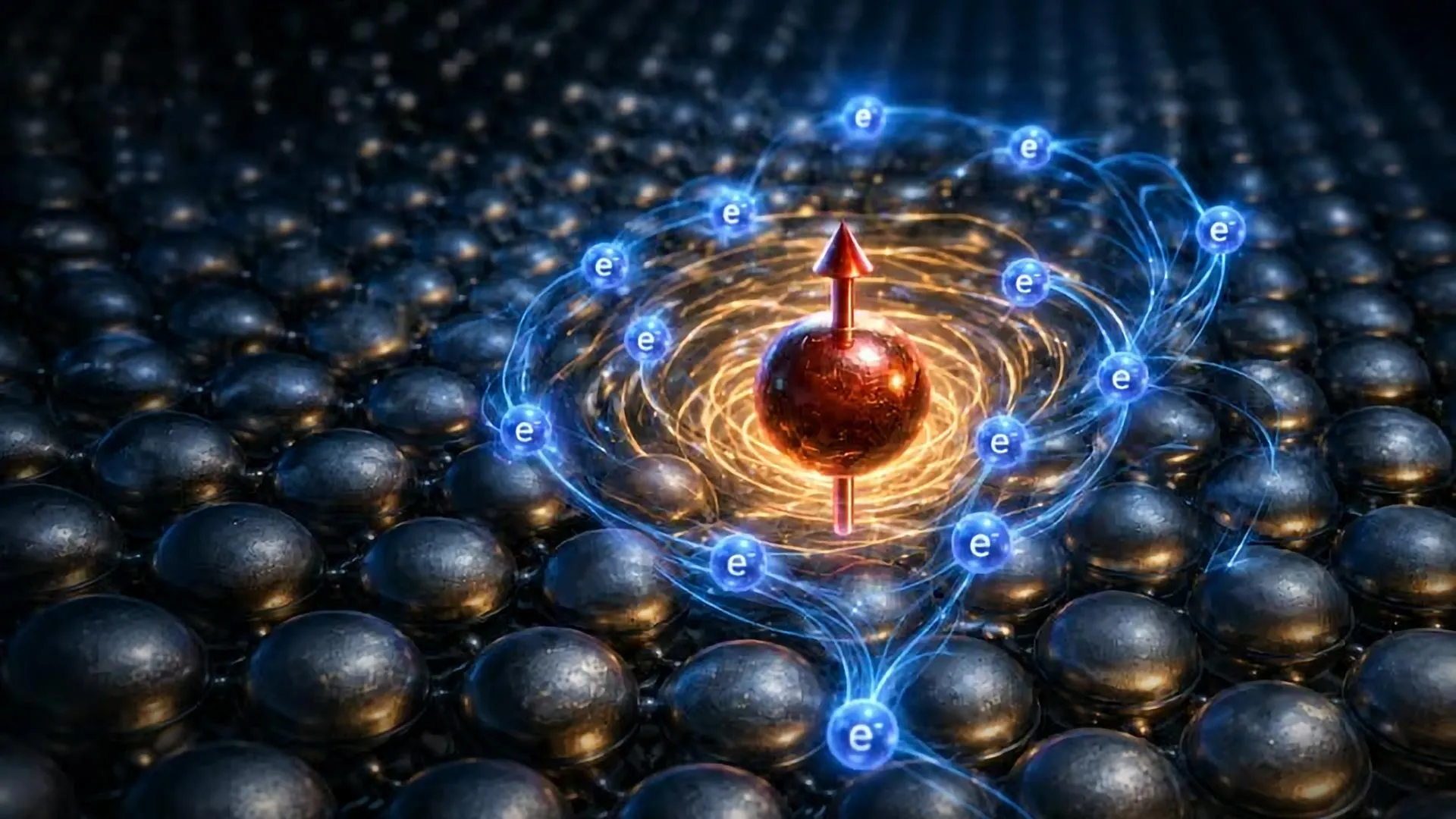
This lipid coating introduces a phenomenon known as "hydration lubrication." The hydrophilic heads of the lipids attract a thin, stable layer of water molecules only a few nanometers thick. This water layer acts as a molecular lubricant, preventing ions from directly interacting with the solid surface of the nanopore. By reducing the frictional resistance between the ions and the pore walls, the researchers were able to drastically increase the rate of ion transport.
"Our work brings together the strengths of two main approaches to osmotic energy harvesting: polymer membranes, which inspire our high-porosity architecture; and nanofluidic devices, which we use to define highly charged nanopores," stated Professor Radenovic. "By combining a scalable membrane layout with precisely engineered nanofluidic channels, we achieve highly efficient osmotic energy conversion and open a route toward nanofluidic-based blue-energy systems."
Quantifiable Performance Gains and Data Analysis
To validate their design, the researchers constructed a membrane containing an array of 1,000 lipid-coated nanopores arranged in a precise hexagonal pattern. When tested under conditions mimicking the salinity gradient found at a typical river-sea junction, the results were unprecedented.
The system achieved a power density of approximately 15 watts per square meter (W/m²). To put this into perspective, current commercial benchmarks for polymer-based osmotic membranes typically hover between 1 and 2 W/m², and the widely recognized threshold for industrial economic viability is roughly 5 W/m². The EPFL device, therefore, produces 2-3 times the power of existing polymer technologies and comfortably exceeds the requirements for commercial feasibility.
Data from the study indicates that the lipid coating not only reduced friction but also stabilized the charge within the nanopores. The "stalactite" geometry of the pores, combined with the lipid layer, ensured that the membrane remained highly selective even at high flow rates. This dual-improvement—increasing both the speed and the efficiency of ion separation—addresses the core challenge that has stymied blue energy research for decades.
Historical Context: The Long Path to Blue Energy
The concept of harnessing energy from salinity gradients was first proposed by R.E. Pattle in 1954. However, it wasn’t until the 1970s, during the global energy crisis, that Professor Sidney Loeb developed the practical framework for Pressure-Retarded Osmosis (PRO). Despite the theoretical potential, early attempts to build large-scale plants were hindered by the high cost and low efficiency of the membranes.
In 2009, the Norwegian energy company Statkraft opened the world’s first prototype osmotic power plant in Tofte, Norway. While a landmark achievement, the plant was decommissioned in 2013 because the polymer membranes could not produce enough energy to offset the costs of pumping and maintenance. Since then, the scientific community has shifted its focus toward nanotechnology and 2D materials, such as molybdenum disulfide (MoS2) and boron nitride, to find more efficient alternatives.
The 2024 EPFL breakthrough represents a pivotal moment in this timeline. By moving away from purely solid-state materials and integrating biological "soft" matter (lipids), the researchers have found a way to bridge the gap between theoretical nanofluidic efficiency and practical, scalable engineering.
Institutional Collaboration and Advanced Methodology
The success of the project was predicated on high-level interdisciplinary collaboration. While the LBEN team focused on the design and energy harvesting aspects, the Interdisciplinary Centre for Electron Microscopy (CIME), led by Dr. Victor Boureau, provided the critical imaging and chemical analysis required to understand the behavior of the lipid layers at the atomic level.
The researchers utilized EPFL’s specialized facilities, including the Center of MicroNanoTechnology (CMi) for the fabrication of the silicon-nitride membranes, and the High-Performance Computing (SCITAS) clusters for complex molecular dynamics simulations. These simulations were essential for predicting how the hydration layer would interact with various ion types before moving to physical experimentation.
Tzu-Heng Chen, a researcher at LBEN, emphasized the shift in methodology: "By showing how precise control over nanopore geometry and surface properties can fundamentally reshape ion transport, our study moves blue-energy research beyond performance testing and into a true design era."
Broader Implications and Future Applications
While the primary focus of the EPFL study is osmotic energy, the "hydration lubrication" strategy has implications that extend far beyond the energy sector. Yunfei Teng, the study’s first author, noted that the principle of reducing friction at the nanoscale is universal.
Potential applications include:
- Desalination: The same principles used to move ions out of water to create energy could be reversed to remove salt from water more efficiently, potentially lowering the energy costs of producing fresh water.
- Bio-sensing and Diagnostics: The ability to control ion flow with such precision could lead to more sensitive devices for detecting DNA, proteins, or other biomarkers in medical diagnostics.
- Microfluidics: The lubrication strategy could be applied to Lab-on-a-Chip technologies, where moving fluids through microscopic channels often suffers from high pressure requirements due to surface friction.
From a climate perspective, the advancement of blue energy offers a unique advantage. Unlike lithium-ion batteries, which require intensive mining of rare earth metals, or solar panels, which face recycling challenges, osmotic systems primarily require water and scalable membranes. If the lipid-coated nanopore technology can be scaled to industrial sizes, it could provide a continuous, carbon-free energy source for coastal cities worldwide.
Conclusion: Moving Toward Commercial Scalability
The next challenge for the EPFL team and the wider scientific community will be the transition from millimetric membrane samples to large-scale industrial sheets. While silicon-nitride membranes and lipid coatings are effective in a laboratory setting, researchers will need to explore more cost-effective materials that can mimic these properties at scale.
The study in Nature Energy serves as a proof of concept that the "permeability-selectivity" trade-off is not an insurmountable physical law, but rather a design challenge that can be solved through biomimetic engineering. By achieving a power density of 15 W/m², the EPFL team has moved blue energy from the realm of scientific curiosity into the territory of viable renewable alternatives. As the world seeks to diversify its green energy portfolio, the quiet mixing of river and sea water may soon become a loud contributor to the global power grid.