In the fundamental world of chemistry, every transformation is governed by an energetic threshold known as activation energy. This barrier acts as a gatekeeper; until a specific amount of energy is supplied to a system, the reactant molecules remain inert, unable to transition into their desired products. In everyday life, this is observed in the simple act of striking a match, where friction provides the initial spark to overcome the hurdle. However, on an industrial scale, where millions of tons of chemicals are synthesized daily, these energy barriers represent a massive economic and environmental burden. High energy requirements translate directly into increased fuel consumption, higher operational costs, and a larger carbon footprint. To circumvent these challenges, the global chemical industry relies heavily on catalysts—substances that facilitate reactions by lowering the activation energy without being consumed in the process.
While catalysts are the engines of modern industry, their efficiency has historically been limited by the architecture of the materials used. Many of the world’s most effective catalysts utilize precious or rare-earth metals, which are often clustered into nanoparticles. A significant breakthrough from a research team at ETH Zurich has now redefined this paradigm. By engineering a catalyst that functions at the level of individual atoms, the team has successfully demonstrated a method to convert carbon dioxide (CO2) into methanol with unprecedented efficiency and precision. This development not only marks a milestone in material science but also offers a viable pathway toward a circular carbon economy.
The Evolution of Catalysis: From Nanoparticles to Single Atoms
For decades, the standard approach to industrial catalysis has involved dispersing metal particles across a support material. While effective, this method is inherently wasteful. In a nanoparticle containing hundreds or thousands of atoms, only the atoms on the outermost surface are exposed to the reactants. The "bulk" atoms trapped within the interior of the particle remain shielded and inactive, contributing nothing to the reaction while adding significantly to the cost of the catalyst. This is particularly problematic when using expensive metals like platinum, palladium, or indium.
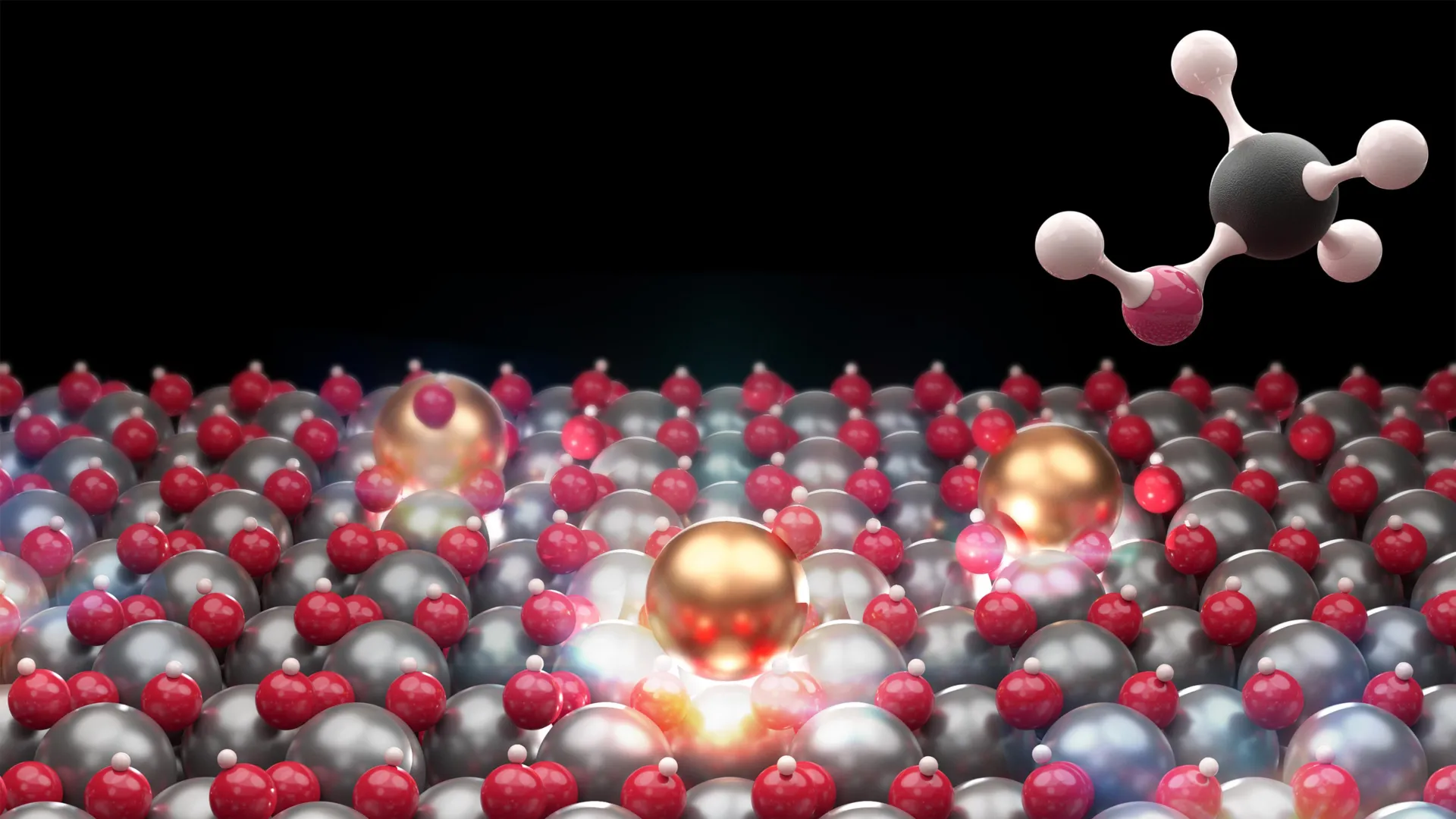
The researchers at ETH Zurich, led by Javier Pérez-Ramírez, Professor of Catalysis Engineering, have pivoted toward "single-atom catalysts" (SACs). In this architecture, isolated metal atoms are anchored individually onto a support material. Because every single atom is exposed and serves as an active site, the efficiency of the metal usage reaches its theoretical maximum. In the study published by the team, they utilized indium atoms anchored on a hafnium oxide (HfO2) support.
"Our new catalyst has a single atom architecture, in which isolated active metal atoms are anchored on the surface of a specially developed support material," explains Professor Pérez-Ramírez. This shift from clusters to individuals does more than just save money; it fundamentally changes the chemical environment of the reaction. Single atoms interact with the support material and the reactants in ways that nanoparticles cannot, often leading to higher selectivity—meaning the reaction produces the desired methanol without generating unwanted byproducts.
Methanol: The Versatile "Swiss Army Knife" of Industry
The target of this breakthrough, methanol (CH3OH), is one of the most critical building blocks in the global chemical industry. Often referred to by Pérez-Ramírez as the "Swiss army knife of chemistry," methanol serves as a precursor for a staggering array of products. It is a primary feedstock for the production of formaldehyde, acetic acid, and various plastics, resins, and synthetic fibers. Beyond its role in materials science, methanol is increasingly viewed as a high-density energy carrier. It can be used directly as a fuel or converted into dimethyl ether (DME) or biodiesel.
Currently, the vast majority of global methanol production relies on the reforming of natural gas or coal, processes that are carbon-intensive. The ETH Zurich breakthrough focuses on "green methanol," which is produced by hydrogenating CO2 captured from industrial emissions or the atmosphere. If the hydrogen used in this reaction is produced via electrolysis powered by renewable energy (green hydrogen), the entire lifecycle of the methanol becomes climate-neutral.
The ability to efficiently turn CO2—a waste product and primary greenhouse gas—into a valuable commodity like methanol is a cornerstone of Carbon Capture and Utilization (CCU) strategies. By providing a more energy-efficient catalyst, the ETH Zurich team is lowering the economic barrier for industries to adopt these sustainable practices.
Technical Chronology and the Synthesis Breakthrough
The development of this catalyst is the culmination of over a decade of research. Professor Pérez-Ramírez has been investigating CO2-to-methanol synthesis since 2010, working to refine the use of indium, a metal that had already shown promise in nanoparticle form. However, the transition from nanoparticles to stable single atoms required a new approach to chemical engineering.
The primary challenge in creating single-atom catalysts is "sintering." Atoms naturally want to clump together to form stable particles, especially under the high temperatures required for industrial reactions. To prevent this, the ETH Zurich team collaborated with other research groups to develop a specialized synthesis method involving flame spray pyrolysis.
In this process, the starting materials are injected into a high-temperature flame reaching between 2,000 and 3,000 degrees Celsius. This extreme heat ensures that the indium atoms are thoroughly dispersed. The mixture is then cooled at an incredibly rapid rate. This "quenching" locks the indium atoms into place on the surface of the hafnium oxide support before they have a chance to migrate and cluster together. The result is a highly stable, durable material where the indium atoms are firmly embedded into the lattice of the support.
The durability of this system was a key focus of the study. Industrial methanol synthesis is a punishing process, typically requiring temperatures of approximately 300°C and pressures reaching 50 times that of the Earth’s atmosphere (50 bar). The ETH team’s catalyst demonstrated the ability to withstand these demanding conditions without losing its single-atom structure or its catalytic activity, a feat that has historically been difficult to achieve with SACs.
Data-Driven Insights and Precision Engineering
One of the most significant advantages of the single-atom approach is the clarity it provides to researchers. Traditional nanoparticle catalysts are notoriously difficult to study at the molecular level. Because a nanoparticle has various types of surface sites (edges, corners, and flat planes), it is hard to determine exactly which site is responsible for a specific chemical transformation. Furthermore, analytical signals are often drowned out by the inactive atoms inside the particle.
With single-atom catalysts, the "signal-to-noise" ratio is drastically improved. Every indium atom is identical and performs the same function. This allowed the ETH Zurich team to observe the reaction mechanism with unprecedented precision. Using advanced spectroscopic techniques, they were able to map how CO2 and hydrogen molecules interact with the individual indium sites.
This shift from empirical "trial and error" to "deliberate design" is a major turning point for the field. By understanding the exact mechanics of the reaction, scientists can optimize the support material and the metal placement to further increase yields. The study showed that isolated indium atoms on hafnium oxide are significantly more efficient than the nanoparticle versions used in the past, producing more methanol per gram of metal used.
Broader Impact and the Future of Sustainable Chemistry
The implications of this research extend far beyond the laboratory. As the world faces the urgent need to decarbonize, the chemical industry is under immense pressure to move away from fossil-based feedstocks. The ETH Zurich catalyst provides a tangible tool for this transition.
From an economic perspective, the increased efficiency of indium usage is vital. Indium is a relatively scarce metal, primarily used in the production of touchscreens and solar panels. By maximizing the utility of every atom, the ETH Zurich team makes it economically feasible to use such metals in large-scale industrial applications. Furthermore, the hafnium oxide support, while a specialty material, provides the necessary thermal stability to ensure a long lifespan for the catalyst, reducing the frequency of replacement and further lowering costs.
The success of this project also highlights the importance of interdisciplinary and inter-institutional collaboration. Pérez-Ramírez noted that the project’s success relied on the combined expertise of the Swiss research community, integrating advanced material synthesis, sophisticated chemical analysis, and industrial-scale engineering.
As this technology moves toward potential commercialization, it offers a dual benefit: it treats CO2 as a resource rather than a pollutant, and it provides a sustainable source of the chemicals that define modern life. The transition to a "methanol economy" could see the gas captured from a factory’s chimney today becoming the plastic casing of a laptop or the fuel for a cargo ship tomorrow. With the groundwork laid by the researchers at ETH Zurich, the "Swiss army knife of chemistry" is now closer to becoming a primary tool for a greener future.