In a significant advancement for the field of quantum information science, researchers at Chalmers University of Technology in Sweden have introduced a pioneering theoretical framework based on "giant superatoms." This novel design addresses the most persistent obstacles in the development of functional quantum computers: the fragility of quantum states and the immense complexity of scaling these systems for practical use. By merging two previously distinct concepts in quantum physics—giant atoms and superatoms—the research team has created a blueprint for a system that can protect, control, and distribute quantum information with unprecedented efficiency.
The study, led by postdoctoral researcher Lei Du alongside Associate Professor Anton Frisk Kockum and Professor Janine Splettstoesser, represents a shift in how scientists approach the interaction between matter and light at the quantum level. While traditional quantum systems struggle with "decoherence"—the process by which quantum information is lost to the environment—the giant superatom model utilizes intentional self-interaction and collective behavior to maintain stability. This theoretical breakthrough could pave the way for a new generation of quantum hardware that is both more robust and easier to manufacture than current iterations.
The Challenge of Decoherence and the Search for Stability
To understand the importance of giant superatoms, one must first recognize the fundamental barrier facing quantum computing today: decoherence. In a classical computer, bits represent either a zero or a one. In a quantum computer, quantum bits, or qubits, exist in a superposition of both states simultaneously. This allows quantum machines to perform calculations at speeds that would take classical supercomputers millennia to complete, particularly in fields such as molecular simulation, cryptography, and complex logistics.
However, qubits are notoriously sensitive. Any interaction with the external environment—whether it be heat, electromagnetic radiation, or even minor vibrations—causes the quantum state to collapse. This loss of information, or decoherence, has restricted the size of quantum processors to a relatively small number of qubits. Current efforts to mitigate decoherence often involve massive, complex shielding and cooling systems that keep processors at temperatures colder than outer space. The Chalmers team’s approach offers a different path: instead of just shielding the system from the environment, they have designed a system that manages its interaction with the environment in a way that preserves information.
The Genesis of the Giant Superatom: Merging Two Paradigms
The concept of the "giant superatom" is an ingenious synthesis of two established ideas that have been studied independently for years.
The Concept of Giant Atoms
The idea of "giant atoms" was first proposed by researchers at Chalmers University over a decade ago. In conventional quantum physics, an atom is considered a "point-like" particle because it is significantly smaller than the wavelength of the light (photons) it interacts with. A giant atom, by contrast, is an engineered quantum system—often a superconducting qubit—that is physically large enough to connect to a wave at multiple, spatially separated points.
Because a giant atom interacts with a wave at several locations, it experiences a phenomenon known as "non-local interaction." When the atom emits a wave from one connection point, that wave travels through the environment and can be reabsorbed or sensed by the same atom at a second connection point. This creates a "quantum echo," allowing the atom to interact with its own past. This self-interference can be tuned to cancel out the effects of the environment, effectively "hiding" the quantum information from the noise that causes decoherence.
The Concept of Superatoms
A superatom is a different kind of engineered structure. It consists of a collection of multiple natural atoms that are arranged so closely together that they behave as a single, collective entity. When these atoms are excited, they share a single quantum state. This collective behavior makes the superatom much more reactive to light than a single atom would be, which is useful for creating fast and efficient quantum gates—the building blocks of quantum logic.
Technical Synergy: How Giant Superatoms Work
The Chalmers research team realized that while giant atoms were excellent at preventing decoherence, they were difficult to "entangle" over long distances. Entanglement is the process by which two or more qubits become linked, such that the state of one instantly influences the state of the other, regardless of the distance between them. Entanglement is the "engine" of quantum computing power.
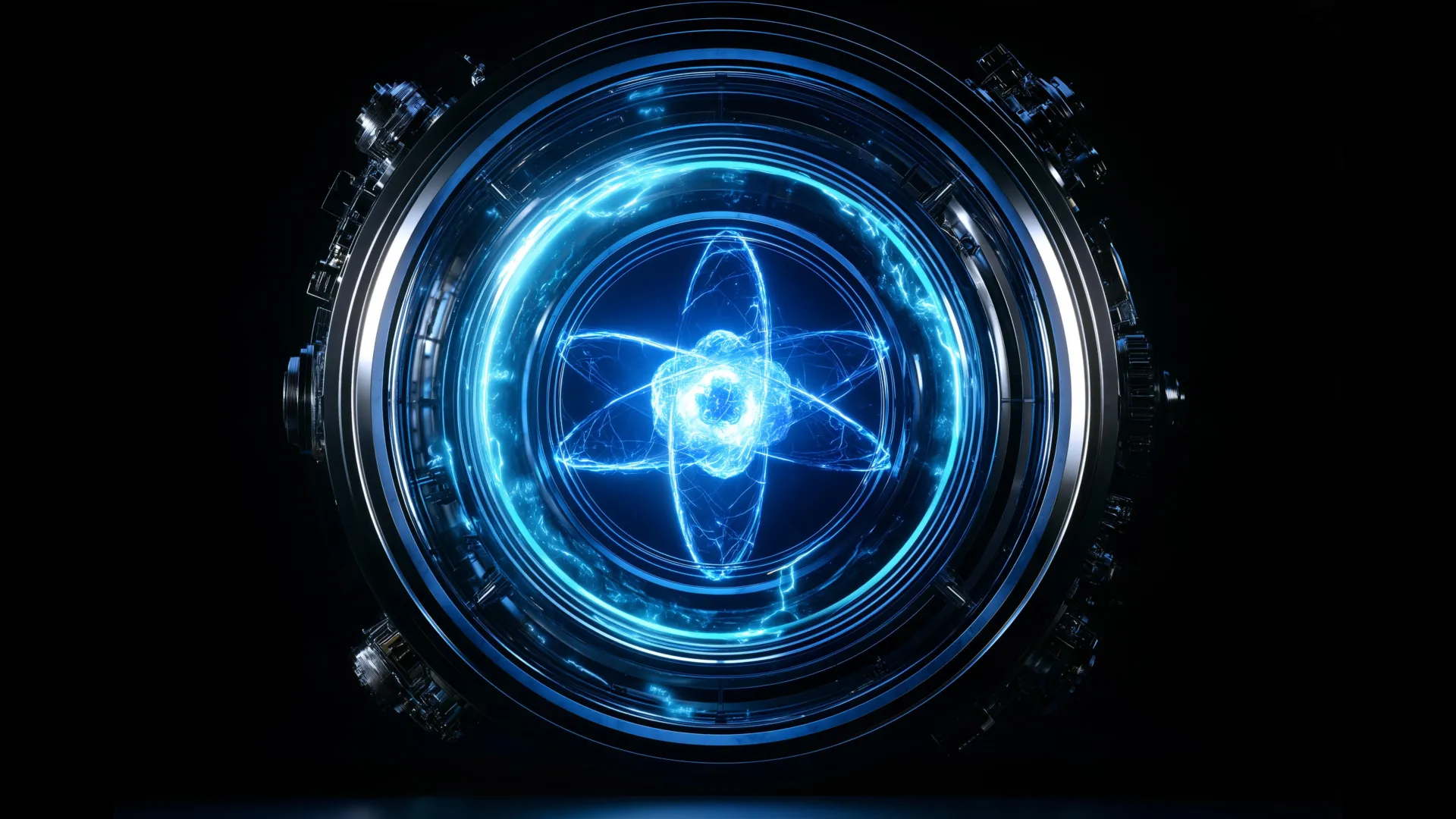
By combining the multi-point connection of giant atoms with the collective power of superatoms, the researchers created the "giant superatom." In this model, multiple giant atoms work together as a single unit. This allows for the storage and control of information across multiple qubits within a single functional entity.
"A giant superatom may be envisaged as multiple giant atoms working together as a single entity, exhibiting a non-local interaction between light and matter," explains Lei Du. "This enables quantum information from multiple qubits to be stored and controlled within one unit, without the need for increasingly complex surrounding circuitry."
Strategic Framework for Quantum Information Flow
The study outlines two primary configurations for giant superatoms, each serving a specific purpose in a quantum network:
- The Integrated Cluster: In this setup, several giant superatoms are placed in close proximity and linked in a specific topological arrangement. This configuration allows for the "lossless" transfer of quantum states between atoms. Because the system is designed to exploit the "echo" effect of giant atoms, the information can move through the cluster without being "seen" by the environment, preventing decoherence during the transfer process.
- The Distributed Network: In the second setup, the giant superatoms are spaced further apart but are connected via a waveguide (a path for light or sound waves) that is carefully tuned. By adjusting the distance between connection points, researchers can ensure that the waves traveling between the atoms remain perfectly synchronized. This allows for the distribution of entanglement over significant distances, a requirement for building a "quantum internet" where multiple quantum computers are linked together.
Chronology of Development at Chalmers
The development of giant superatoms is the latest milestone in a long-standing tradition of quantum research at Chalmers University.
- 2014: Chalmers researchers publish foundational work on giant atoms interacting with surface acoustic waves, proving that "atoms" can be engineered to be larger than the waves they interact with.
- 2018–2020: Experimental verification of giant atoms in superconducting circuits. Researchers demonstrate that these systems can indeed "tune out" the environment to reach "decoherence-free" states.
- 2021–2023: The team begins exploring how to scale these giant atoms. They identify a bottleneck: as more giant atoms are added, the wiring becomes too complex for practical chips.
- 2024: The "Giant Superatom" theory is finalized. By introducing the superatom concept, the team finds a way to group multiple qubits into a single "giant" interface, drastically reducing the hardware overhead.
Broader Impact and Industry Implications
The implications of this research extend far beyond the laboratory. As the global race for quantum supremacy intensifies, the transition from theoretical models to scalable hardware is the primary hurdle.
Reducing Hardware Complexity
One of the most significant advantages of the giant superatom design is the reduction in "control circuitry." In current quantum processors, such as those developed by IBM or Google, each qubit often requires its own dedicated lines for control and readout. As systems grow to thousands or millions of qubits, the sheer volume of wiring becomes an engineering nightmare. Giant superatoms allow multiple qubits to be controlled through a single "giant" interface, potentially simplifying the architecture of future quantum chips.
Hybrid Quantum Systems
The researchers emphasize that this design is highly compatible with "hybrid" approaches. "There is currently strong interest in hybrid approaches, in which different quantum systems work together, because each has its own strengths," says Anton Frisk Kockum. The giant superatom could serve as a "bridge" or a "bus" that connects different types of quantum hardware, such as superconducting qubits and trapped-ion systems, allowing them to communicate without losing information.
Real-World Applications
If successfully implemented in hardware, this technology could accelerate the timeline for practical quantum applications. In drug discovery, more stable qubits mean more accurate simulations of molecular interactions, potentially shaving years off the development of new medicines. In cybersecurity, the ability to distribute entanglement over distances using the "distributed network" setup is a prerequisite for "quantum key distribution" (QKD), which provides theoretically unhackable communication.
Future Outlook: From Theory to Experiment
While the current study is theoretical, the Chalmers team is already planning the experimental phase. The university is home to the Wallenberg Centre for Quantum Technology (WACQT), a massive initiative aimed at building a Swedish quantum computer. The infrastructure at WACQT provides the ideal environment to test the giant superatom theory using superconducting circuits.
Janine Splettstoesser, co-author of the study, notes that the giant superatom provides a "powerful new toolbox." The next steps will involve fabricating chips that feature these multi-point connections and measuring whether the collective behavior of the superatoms matches the theoretical predictions of stability and entanglement.
As quantum technology moves out of its infancy, the work at Chalmers highlights a crucial lesson: the path to the future may not just be about building more qubits, but about designing smarter ones. The giant superatom stands as a testament to the power of creative engineering in the quantum realm, offering a vision of a future where the fragile nature of the subatomic world is finally harnessed for the benefit of global technology.