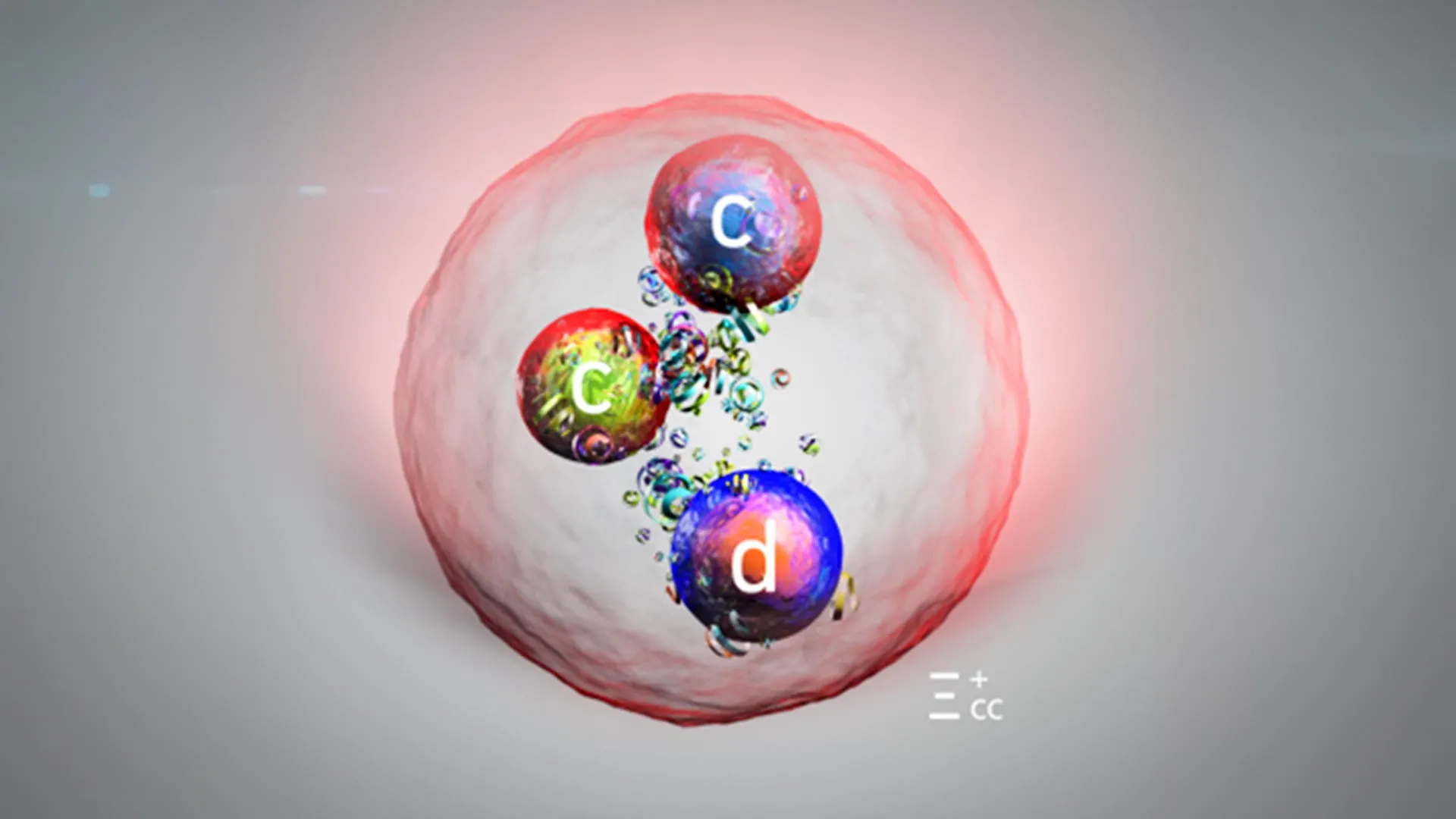
In a landmark achievement for the field of particle physics, researchers from The University of Manchester have spearheaded the identification of a previously unknown subatomic particle at the Large Hadron Collider (LHC) at CERN. The newly discovered particle, designated as the $Xicc^+$ (Xi-cc-plus), represents a significant milestone in our understanding of the fundamental building blocks of the universe. As a heavy, proton-like particle, the $Xicc^+$ is composed of two charm quarks and one down quark, a configuration that offers unique insights into the strong nuclear force that binds matter together.
This discovery is the first to emerge from the recently upgraded LHCb (Large Hadron Collider beauty) detector, a sophisticated instrument designed to study the slight differences between matter and antimatter. The upgrade was the result of a decade-long international collaboration involving over 1,000 researchers from 20 countries. Among these nations, the United Kingdom provided the largest contribution, with The University of Manchester occupying a central leadership role in both the technical development of the detector and the subsequent data analysis.
The Nature of the Xi-cc-plus Particle
The $Xicc^+$ belongs to the baryon family of particles, the most famous members of which are the protons and neutrons that form the nuclei of atoms. However, while a standard proton consists of two up quarks and one down quark, the $Xicc^+$ is considerably more exotic. It replaces the relatively light up quarks with two "charm" quarks. Quarks are elementary particles that come in six "flavors": up, down, charm, strange, top, and bottom. Charm quarks are significantly heavier than up and down quarks, making the $Xi_cc^+$ a "heavy" baryon with a mass nearly four times that of a proton.
The existence of such a particle was predicted by the Standard Model of particle physics, the theoretical framework that describes three of the four known fundamental forces. However, creating and detecting particles with two heavy quarks is exceptionally difficult. In the dense environment of high-energy proton collisions, these particles are produced only rarely and decay almost instantly into lighter, more stable particles.
A Legacy of Discovery in Manchester
The discovery of the $Xi_cc^+$ is deeply rooted in a historical continuum of scientific excellence at The University of Manchester. The university’s Department of Physics and Astronomy has a storied history of unraveling the mysteries of the atom. Between 1917 and 1919, Ernest Rutherford, working in Manchester, performed the groundbreaking experiments that led to the identification of the proton. Rutherford’s work laid the foundation for modern nuclear physics, proving that the atom’s mass and positive charge are concentrated in a tiny nucleus.
In the 1950s, Manchester scientists continued this tradition by identifying a member of the $Xi$ (Xi) particle family for the first time. These early discoveries provided the essential groundwork for the quark model developed in the 1960s. The identification of the $Xi_cc^+$ in 2024 is seen by the scientific community as a modern extension of Rutherford’s legacy, utilizing 21st-century technology to explore the same fundamental questions about the nature of matter that were posed over a century ago.
Technical Prowess: The Upgraded LHCb Detector
The identification of the $Xi_cc^+$ would not have been possible without the recent overhaul of the LHCb detector. Professor Chris Parkes, head of the Department of Physics and Astronomy at The University of Manchester, led the international collaboration during the installation and initial operational phases of the upgraded detector. His leadership spanned over ten years, overseeing the UK’s involvement from the project’s conceptual approval through to its successful completion.
A critical component of the upgrade was the development of a new tracking system. The Manchester LHCb team was responsible for the design and construction of essential silicon pixel detector modules. These modules were meticulously assembled within the university’s Schuster Building. These components function as the "eyes" of the experiment, located mere millimeters from the point where the LHC’s proton beams collide.
Dr. Stefano De Capua, who led the production of these silicon detector modules at Manchester, described the technology as a high-speed camera of unprecedented capability. The detector operates at a frequency of 40 million "photographs" per second, capturing the trajectories of particles produced in collisions with sub-micrometer precision. Interestingly, the custom-designed silicon chips used in this detector have also found applications in medical imaging, demonstrating the tangible societal benefits that often emerge from high-energy physics research.
The Chronology of the Discovery
The search for the $Xicc^+$ has been a multi-decade endeavor. For more than 20 years, the particle physics community was divided over the validity of earlier experimental claims. In the early 2000s, the SELEX experiment at Fermilab in the United States reported seeing a signal for the $Xicc^+$. However, subsequent experiments, including those at the BaBar, Belle, and the original LHCb detectors, failed to confirm the finding. This led to a long-standing mystery: did the particle exist at the mass reported by SELEX, or was that signal a statistical fluke?
The 2024 data run provided the definitive answer. This was the first year the upgraded LHCb experiment operated at full capacity, benefiting from higher collision rates and a more efficient data-triggering system. By analyzing proton-proton collisions, researchers looked for a specific decay chain: the $Xi_cc^+$ decaying into a $Lambda_c^+$ (lambda-c-plus) baryon, a $K^-$ (kaon), and a $pi^+$ (pion).
The analysis revealed a clear signal of approximately 915 events, appearing as a distinct "bump" on a graph of the mass distribution. The measured mass was $3619.97 text MeV/c^2$. This result is significant because it does not match the mass reported by the earlier SELEX experiment but aligns perfectly with theoretical predictions based on the $Xi_cc^++$ (Xi-cc-plus-plus), a sister particle containing two charm quarks and one up quark that was discovered by the LHCb in 2017.
Official Responses and Scientific Impact
The announcement of the discovery at the Rencontres de Moriond Electroweak conference was met with widespread acclaim. Professor Chris Parkes emphasized the importance of the achievement in the context of scientific history. "Rutherford’s gold-foil experiment in a Manchester basement transformed our understanding of matter, and today’s discovery builds on that legacy using state-of-the-art technology at CERN," Parkes stated. "Both milestones demonstrate just how far curiosity-driven research can take us. This discovery showcases the extraordinary capability of the upgraded LHCb detector and the strength of UK and Manchester contributions to the experiment."
The Science and Technology Facilities Council (STFC), which funds the UK’s participation in CERN, also lauded the result. Spokespersons for the council noted that the UK’s investment in the LHCb upgrade has yielded immediate and profound scientific dividends. The discovery confirms the UK’s position as a global leader in high-energy physics and highlights the importance of international collaboration in tackling the most complex questions in science.
Analysis of Implications and Future Research
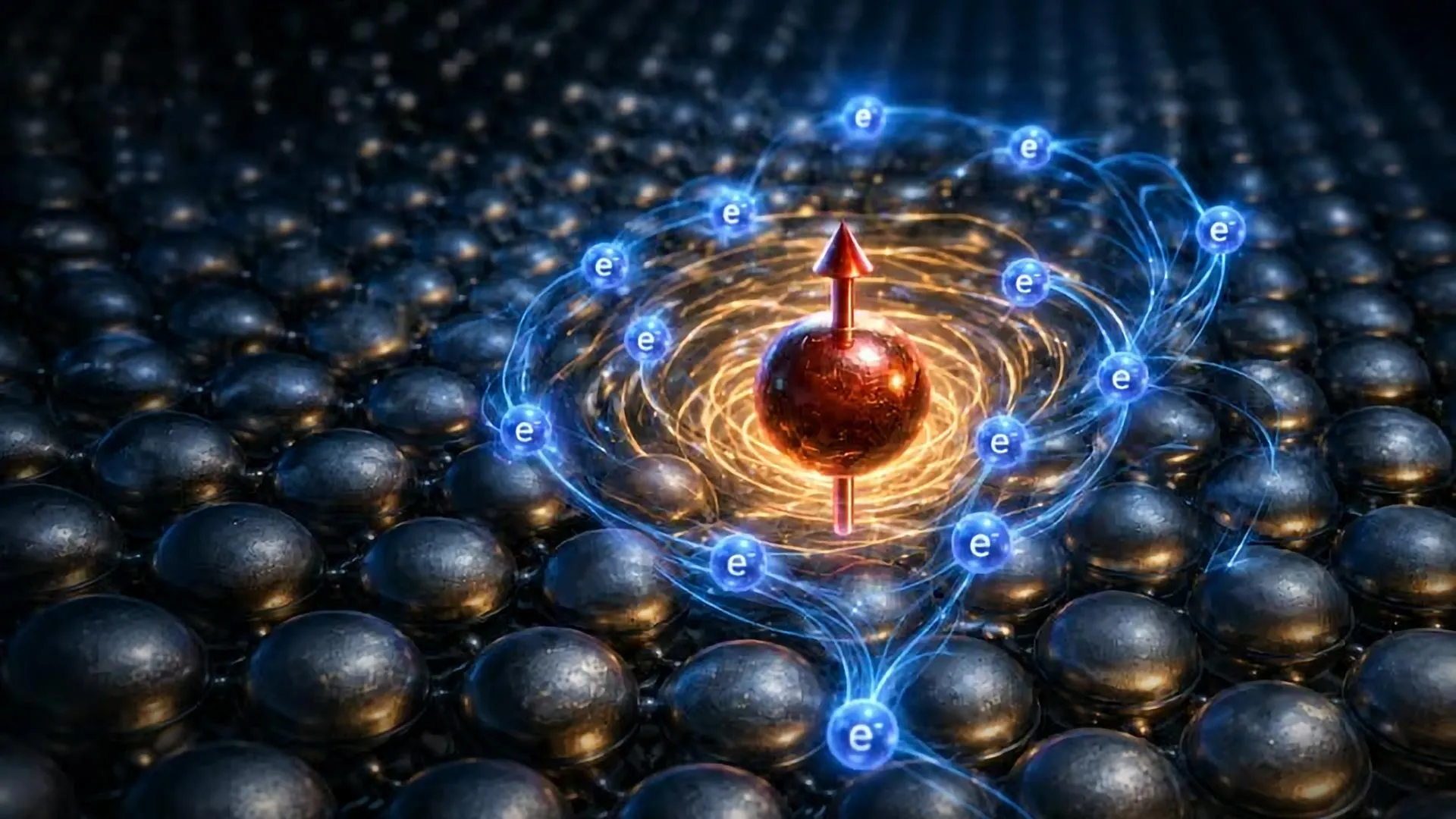
The discovery of the $Xicc^+$ is more than just the addition of a new entry in the catalog of subatomic particles; it is a vital test of Quantum Chromodynamics (QCD), the theory describing the strong interaction. Because the particle contains two heavy quarks, it provides a unique "laboratory" for studying how quarks interact. In a proton, the three light quarks move at near-light speeds in a complex, chaotic dance. In the $Xicc^+$, the two heavy charm quarks are expected to behave like a rigid core, with the lighter down quark orbiting them, much like a planet orbiting a binary star system. This structure allows physicists to simplify their calculations and test the precision of QCD in ways that are impossible with lighter particles.
Furthermore, the successful detection of the $Xi_cc^+$ validates the technological leap taken with the LHCb upgrade. The ability to isolate such a rare signal from the immense background noise of the LHC proves that the new silicon pixel detectors and data processing systems are performing at or above design specifications.
Looking forward, the collaboration is already preparing for the next phase of the program. The University of Manchester will continue to play a leading role in "LHCb Upgrade 2," scheduled for the next decade. This subsequent upgrade will coincide with the High-Luminosity LHC (HL-LHC) project, which aims to increase the number of collisions by a factor of ten. This will allow researchers to observe even rarer particles and perhaps find hints of "new physics" beyond the Standard Model, such as dark matter candidates or evidence of additional fundamental forces.
The identification of the $Xi_cc^+$ marks the end of a twenty-year mystery and the beginning of a new era of precision spectroscopy in heavy-quark physics. For The University of Manchester, it is a reaffirmation of a century of leadership in the quest to understand the fundamental nature of the universe. The findings presented at the Moriond conference serve as a testament to the power of international cooperation and the enduring spirit of scientific inquiry.