In the autumn of 2023, the scientific community was sent into a state of high alert when a subatomic particle of unprecedented energy struck the Earth’s atmosphere. This particle, a neutrino, arrived with a kinetic force so staggering that it defied the established parameters of the Standard Model of particle physics. Measured at levels approximately 100,000 times more energetic than the maximum output of the Large Hadron Collider (LHC)—humanity’s most advanced particle accelerator—the event lacked an immediate explanation. No known supernova, active galactic nucleus, or gamma-ray burst was thought capable of accelerating a single neutrino to such a degree.
The anomalous detection triggered a global effort among theoretical physicists to identify a source capable of such an output. Recently, a team of researchers at the University of Massachusetts Amherst published a landmark study in the journal Physical Review Letters, proposing a solution to this cosmic puzzle. Their research suggests that the source was not a conventional celestial body, but rather the violent, final expiration of a "quasi-extremal primordial black hole." This hypothesis not only accounts for the 2023 event but also offers a potential bridge between the observable universe and the elusive nature of dark matter.
The 2023 Detection: An Unprecedented Energy Spike
The neutrino in question was detected by the KM3NeT (Cubic Kilometre Neutrino Telescope) Collaboration, a network of underwater sensors located in the deep waters of the Mediterranean Sea. Neutrinos are often referred to as "ghost particles" because they lack an electric charge and possess almost no mass, allowing them to pass through solid matter—including the entire Earth—without interaction. However, when a neutrino does collide with an atom, it produces a flash of light known as Cherenkov radiation, which high-sensitivity sensors can record.
The 2023 event was singular due to its energy profile. While the LHC at CERN operates at a center-of-mass energy of 13.6 teraelectronvolts (TeV), this specific neutrino was recorded in the petaelectronvolt (PeV) or potentially exaelectronvolt (EeV) range. The discovery immediately created a schism in the data. While KM3NeT recorded the signal, the IceCube Neutrino Observatory—a massive detector buried in the Antarctic ice—had never recorded a neutrino of comparable magnitude in its decade-plus of operation. This discrepancy suggested that the event was either a statistical fluke or the result of a highly localized, rare phenomenon that occurred within a specific observational window.
The Theory of Primordial Black Holes
To understand the UMass Amherst team’s proposal, one must look back to the early 1970s. While standard black holes are the remnants of collapsed massive stars, the late physicist Stephen Hawking proposed the existence of Primordial Black Holes (PBHs). These objects are theorized to have formed in the chaotic, high-density environment of the universe mere fractions of a second after the Big Bang. Unlike stellar-mass black holes, PBHs could theoretically range in size from a subatomic particle to a massive planetary body.
The defining characteristic of Hawking’s theory was the discovery that black holes are not truly "black." Through quantum effects near the event horizon, black holes emit a faint glow of particles, a phenomenon now known as Hawking radiation. According to the laws of thermodynamics as applied to black holes, the temperature of a black hole is inversely proportional to its mass. As a black hole loses mass through radiation, it grows hotter. This creates a feedback loop: the lighter the black hole becomes, the faster it radiates, eventually culminating in a runaway evaporation process that ends in a violent explosion of high-energy particles.
Chronology of a Cosmic Theory
The path from Hawking’s 1971 hypothesis to the 2024 UMass Amherst study follows a distinct timeline of theoretical and experimental milestones:
- 1971–1974: Stephen Hawking publishes his foundational work on PBHs and the radiation that bears his name, suggesting that small black holes could "evaporate" over time.
- 2010: The IceCube Neutrino Observatory becomes fully operational at the South Pole, beginning the search for high-energy neutrinos.
- 2013: IceCube detects "Bert" and "Ernie," the first high-energy neutrinos originating from outside our solar system, though their energy is far below the 2023 event.
- 2020–2022: The UMass Amherst team begins developing models for "dark-charged" black holes, investigating how extra-dimensional or "hidden sector" forces might affect black hole stability.
- 2023: KM3NeT detects the ultra-high-energy neutrino, an event that does not align with standard astrophysical models.
- 2024: The UMass Amherst team, led by Assistant Professors Andrea Thamm and Michael Baker along with postdoctoral researcher Joaquim Iguaz Juan, publishes their findings in Physical Review Letters, linking the neutrino to quasi-extremal PBHs.
The Innovation of "Dark Charge" and Quasi-Extremal States
The core of the UMass Amherst breakthrough lies in the concept of "dark charge." In standard physics, an "extremal" black hole is one that carries the maximum possible amount of electric charge or angular momentum for its mass. Theoretical models suggest that as a black hole approaches this extremal limit, its Hawking radiation slows down or stops, effectively stabilizing the object.
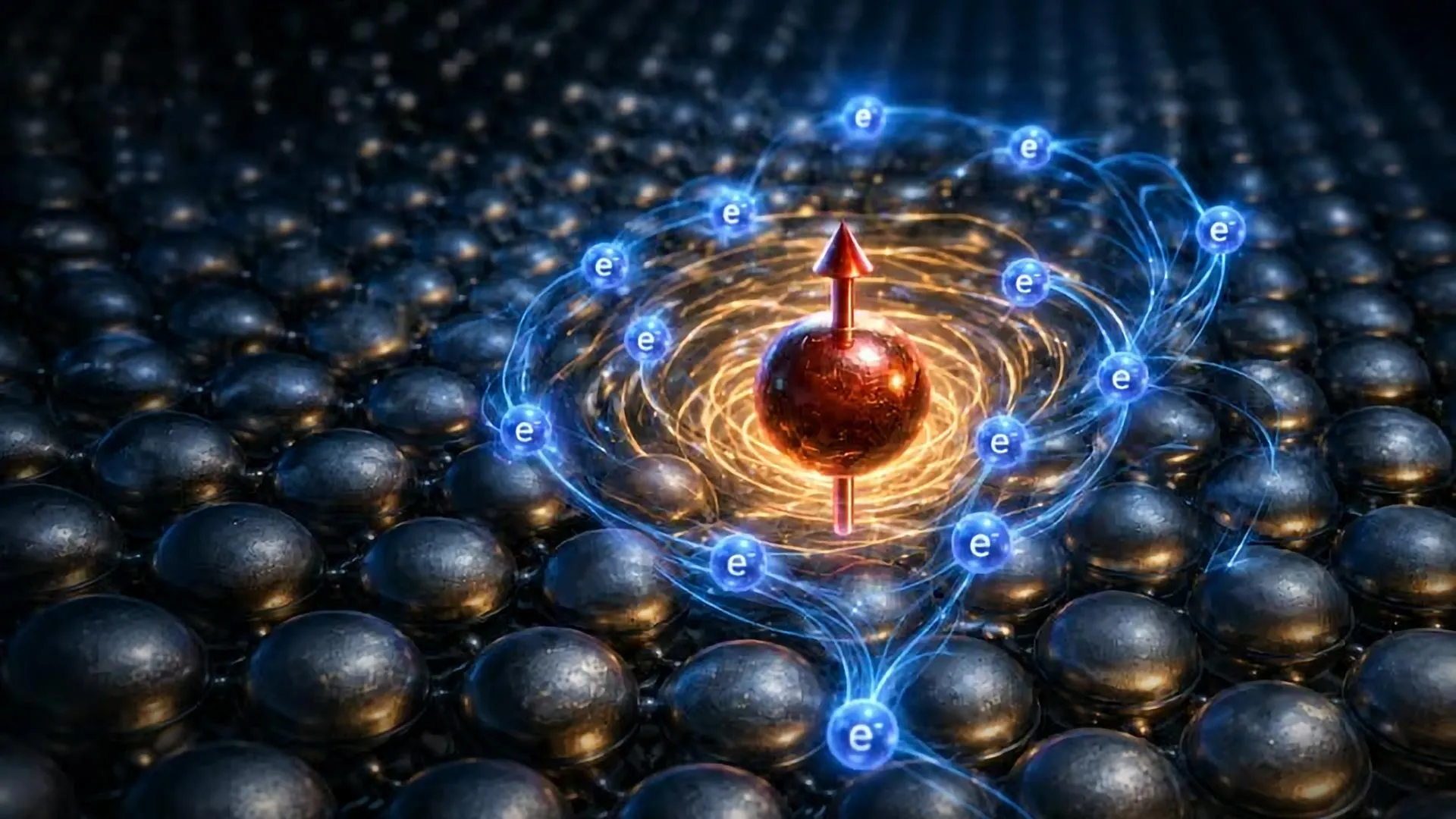
The researchers proposed a more complex model involving a "dark" version of electromagnetism. This model includes a "dark electron"—a particle significantly heavier than the standard electron—that interacts via a force invisible to conventional sensors. A PBH carrying this dark charge would enter a "quasi-extremal" state.
"A PBH with a dark charge has unique properties and behaves in ways that are different from other, simpler PBH models," explains Andrea Thamm. In this quasi-extremal state, the black hole remains stable for billions of years, potentially surviving from the Big Bang to the present day. However, once it begins the final stage of evaporation, the transition is far more energetic than a standard PBH explosion. This "dark-charge" model provides a mechanism that allows for the production of a single, ultra-high-energy neutrino while explaining why such events are not detected on a daily basis.
Resolving the KM3NeT and IceCube Discrepancy
One of the primary challenges for the researchers was explaining why KM3NeT saw the particle while IceCube did not. If the universe were filled with standard exploding PBHs, both detectors should have seen a steady "drizzle" of high-energy neutrinos over the years.
The UMass Amherst model suggests that because quasi-extremal PBHs are stabilized by their dark charge, they do not explode frequently. Instead, they represent a rare "pop" in the cosmic background. The team’s calculations suggest these explosions might occur only once every decade within a detectable range. The 2023 event was, essentially, a lucky catch by KM3NeT. The "dark-charge" model predicts that the energy spectrum of these explosions is so narrow and intense that it would not produce the lower-energy "noise" that IceCube is typically tuned to find.
Supporting Data and Implications for Dark Matter
The implications of this research extend far beyond the detection of a single neutrino. For decades, astronomers have observed that galaxies rotate faster than they should based on the visible matter they contain. This led to the theory of dark matter—an invisible substance that accounts for roughly 85% of the matter in the universe.
The UMass Amherst team suggests that if their dark-charge model is correct, a vast population of these quasi-extremal PBHs could exist throughout the cosmos. Because they are small, dark, and mostly stable, they would be nearly impossible to detect through traditional telescopes. However, their collective mass would exert the gravitational pull attributed to dark matter.
"If our hypothesized dark charge is true," says Joaquim Iguaz Juan, "then we believe there could be a significant population of PBHs, which would be consistent with other astrophysical observations and account for all the missing dark matter in the universe."
Official Responses and Scientific Analysis
While the broader scientific community remains cautious, the publication in Physical Review Letters—one of the most prestigious peer-reviewed journals in physics—indicates that the model is mathematically sound and scientifically significant.
Independent analysts have noted that the UMass Amherst model is "testable," a rarity in high-level theoretical physics. If the theory holds, future detections by KM3NeT and the upcoming IceCube-Gen2 expansion should reveal more neutrinos with specific "dark charge" signatures. Furthermore, these explosions would theoretically release other particles, such as Higgs bosons and perhaps previously undiscovered "dark sector" particles, providing a laboratory for physics beyond the Standard Model.
Michael Baker, co-author of the study, emphasizes the transformative potential of the discovery: "Observing the high-energy neutrino was an incredible event. It gave us a new window on the universe. But we could now be on the cusp of experimentally verifying Hawking radiation, obtaining evidence for both primordial black holes and new particles beyond the Standard Model."
Broader Impact on Modern Astrophysics
The validation of Hawking radiation would likely be a Nobel Prize-caliber achievement, bridging the gap between General Relativity (the physics of the very large) and Quantum Mechanics (the physics of the very small). For decades, these two pillars of science have remained stubbornly incompatible. Primordial black holes are one of the few places in the universe where both theories must work together.
By providing a plausible explanation for the most energetic particle ever recorded, the UMass Amherst team has shifted the conversation from "if" primordial black holes exist to "how" we can better detect their final moments. As detector technology improves and more data is gathered from the depths of the Mediterranean and the Antarctic ice, the "dark charge" model may prove to be the key that unlocks the remaining mysteries of the Big Bang and the invisible scaffold of the universe.