

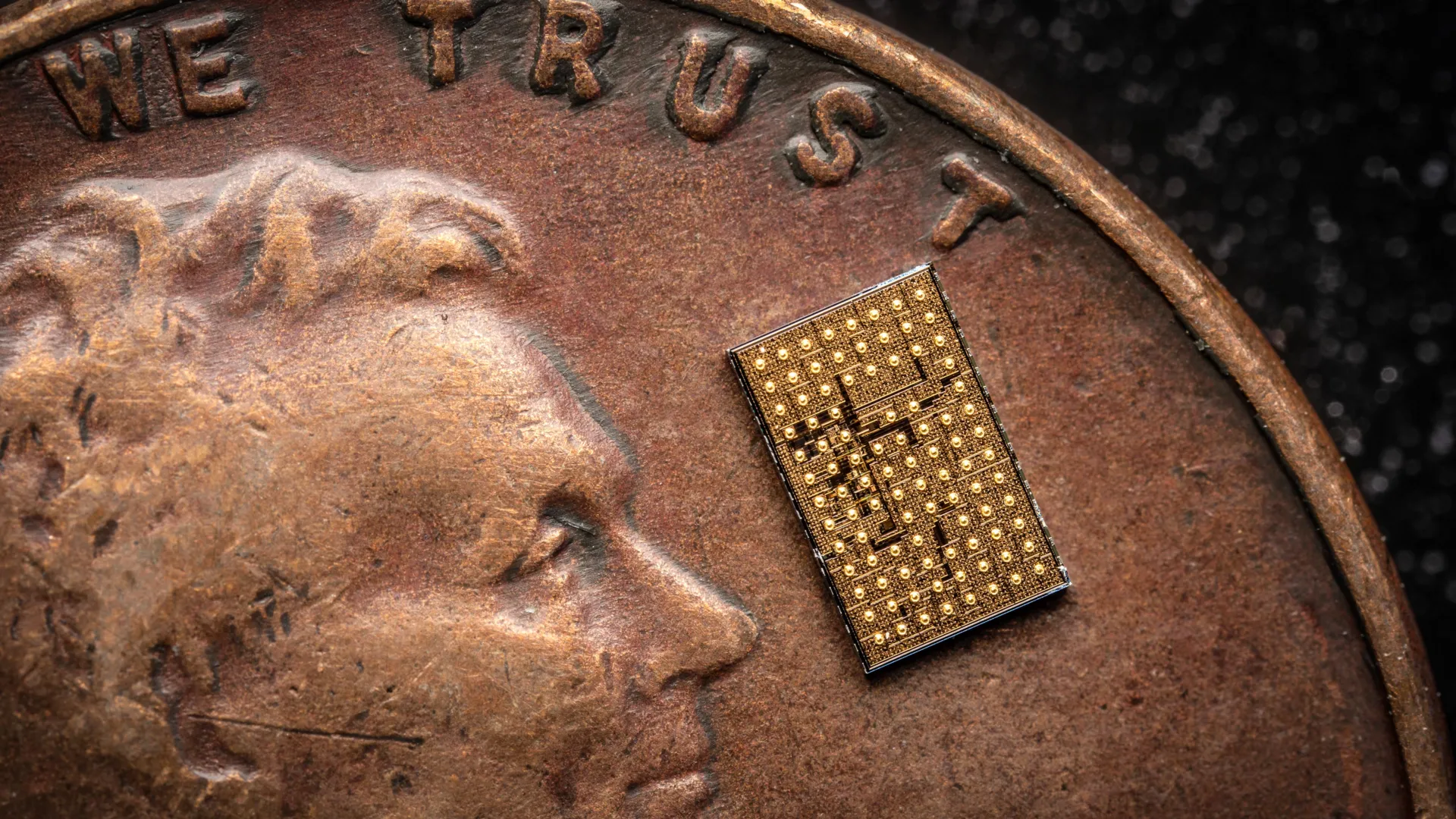
As the global appetite for artificial intelligence and cloud computing continues to accelerate, the infrastructure supporting these technologies is facing an unprecedented energy crisis. Data centers, the silent engines of the modern digital economy, are consuming vast quantities of electricity, leading to significant environmental and economic challenges. In response to this growing pressure, engineers at the University of California San Diego have unveiled a groundbreaking chip design that could fundamentally alter how power is delivered to graphics processing units (GPUs) and other high-performance computing hardware. By rethinking the fundamental physics of voltage conversion, the research team has developed a hybrid converter that utilizes piezoelectric resonators to achieve levels of efficiency and power density that were previously thought unattainable with traditional components.
The findings, recently published in the prestigious journal Nature Communications, represent a significant leap forward in power electronics. The prototype chip, developed at the UC San Diego Jacobs School of Engineering, addresses the "last mile" of power delivery—the process of converting high-voltage electricity from the grid into the precise, low-voltage current required by sensitive silicon chips. In laboratory settings, the device demonstrated a peak efficiency of 96.2% when converting 48 volts down to 4.8 volts, a standard requirement for modern data center architectures. This innovation arrives at a critical juncture, as the semiconductor industry struggles to keep pace with the power demands of next-generation AI accelerators.
The Rising Energy Demands of the Digital Age
To understand the significance of the UC San Diego breakthrough, one must first look at the sheer scale of the energy challenge facing the tech industry. According to reports from the International Energy Agency (IEA), data centers currently account for approximately 1% to 1.5% of global electricity use. However, with the explosion of generative AI models like ChatGPT and the massive hardware clusters required to train them, some estimates suggest this figure could rise to 4% or higher by 2030.
A significant portion of this energy is lost not in the computation itself, but in the conversion and distribution of power. Modern data centers typically distribute electricity at 48 volts to minimize transmission losses across the facility. However, the GPUs and CPUs that perform the actual calculations operate at much lower voltages—often between 1 and 5 volts. This massive step-down process is inherently inefficient. Every percentage point of efficiency lost in conversion results in excess heat, which then requires even more energy to dissipate through cooling systems. In a large-scale facility, a 1% improvement in conversion efficiency can equate to millions of dollars in saved electricity costs and a substantial reduction in carbon emissions.
The Critical Role of DC-DC Converters in Modern Computing
At the heart of this power struggle is the DC-DC step-down converter, also known as a "buck converter." These components are ubiquitous in electronics, found in everything from smartphones and laptops to the massive server racks that power the internet. Their primary function is to act as a high-speed valve, taking a high input voltage and "stepping it down" to a lower, stable output voltage.
For decades, the industry has relied on inductive converters, which use magnetic components called inductors to store and transfer energy. While highly refined, these components are reaching their physical limits. Inductors are notoriously difficult to shrink; as they get smaller, their internal resistance increases, leading to higher energy losses and heat generation. Furthermore, inductors generate electromagnetic interference (EMI), which can disrupt the operation of nearby high-speed data circuits. As GPUs become more compact and power-hungry, the space required for traditional inductive power delivery systems has become a major bottleneck in hardware design.
Technological Stagnation in Inductive Power Systems
The limitations of traditional technology have created what engineers call the "inductor wall." Patrick Mercier, a professor in the Department of Electrical and Computer Engineering at UC San Diego and the senior author of the study, noted that the industry has reached a point of diminishing returns. "We’ve gotten so good at designing inductive converters that there’s not really much room left to improve them to meet future needs," Mercier explained.
This stagnation has forced engineers to look for alternative ways to store and move energy. The goal is to find a component that can handle high power density—the amount of power delivered per unit of volume—without the bulk and efficiency trade-offs of magnetic inductors. This search led the UC San Diego team to revisit a phenomenon discovered in the late 19th century: piezoelectricity.
Piezoelectric Resonators: A Mechanical Solution to an Electrical Problem
Piezoelectric materials have the unique ability to convert mechanical strain into electrical energy and vice versa. Instead of using magnetic fields to store energy like an inductor, a piezoelectric resonator stores energy through high-frequency mechanical vibrations. These devices are already common in electronics, used primarily as timing references or filters in radio-frequency (RF) circuits.
Piezoelectric resonators offer several theoretical advantages over inductors. They can be made much smaller while maintaining high "quality factors," meaning they lose very little energy during the storage and transfer process. Because they do not rely on magnetic fields, they do not produce EMI, allowing them to be placed much closer to the processor. However, implementing them in power converters has historically been difficult. Early piezoelectric converters struggled to maintain efficiency when the difference between input and output voltage was large, and they often failed to provide the high levels of current required by modern GPUs.
Engineering the Hybrid Architecture: The UC San Diego Approach
The breakthrough achieved by Mercier and his team, including lead author Jae-Young Ko, lies in a "hybrid" design. Rather than relying solely on the piezoelectric resonator, the researchers integrated it with a network of small, high-efficiency capacitors. This configuration allows the system to divide the voltage conversion task into smaller, more manageable steps.
By using capacitors to assist the resonator, the team created multiple energy pathways within the chip. This hybrid approach significantly reduces the electrical stress on any single component and minimizes "switching losses"—the energy dissipated when the circuit toggles between states. The design ensures that the piezoelectric resonator operates at its optimal frequency, maximizing its ability to transfer power while maintaining a compact footprint.
"They have a lot of room to grow and have the potential to deliver better performance than anything that’s come before them," Mercier stated, highlighting the untapped potential of this technology compared to the mature but plateaued inductive market.
Experimental Results and Performance Benchmarks
The prototype developed by the UC San Diego team was subjected to rigorous testing to simulate real-world data center conditions. The chip was tasked with stepping down a 48V input to a 4.8V output, a common intermediate step in server power rails.
The results were compelling:
- Peak Efficiency: The device achieved a peak efficiency of 96.2%, rivaling or exceeding the best available inductive converters in the same class.
- Current Density: The hybrid design delivered approximately four times more output current than previous state-of-the-art piezoelectric-based designs.
- Size Advantage: Because the components are primarily electrostatic and mechanical rather than magnetic, the overall volume of the converter is significantly reduced, allowing for more compact server blades.
These metrics suggest that the hybrid piezoelectric converter could potentially double the power density of existing solutions, allowing hardware manufacturers to pack more computing power into the same physical space without increasing heat output.
Chronology of Development and Industry Context
The development of this chip is the culmination of years of research into alternative power topologies.
- 2010s: The shift from 12V to 48V power distribution in data centers began, led by the Open Compute Project and companies like Google to reduce distribution losses.
- 2018-2021: Researchers globally began intensifying work on "Gallium Nitride" (GaN) and "Silicon Carbide" (SiC) transistors to speed up switching, but the inductor remained the weak link.
- 2022: The UC San Diego team, supported by the Power Management Integration Center (PMIC), began focused work on integrating piezoelectric resonators into high-voltage step-down architectures.
- 2024: The successful testing of the hybrid prototype and subsequent publication in Nature Communications marks a major milestone in the transition toward non-magnetic power conversion.
The project received support from the National Science Foundation (NSF) through the Industry-University Cooperative Research Center (IUCRC) program. This collaboration ensures that the research remains aligned with the practical needs of the semiconductor industry, involving stakeholders who are eager to find solutions to the power delivery bottleneck.
Overcoming the "Vibration Barrier" in Semiconductor Manufacturing
Despite the impressive laboratory results, several hurdles remain before piezoelectric converters can be mass-produced. One of the most significant challenges is the physical nature of the device itself. Because piezoelectric resonators work by vibrating, they cannot be attached to a circuit board using standard soldering techniques, which would dampen the vibrations and kill the device’s efficiency.
"Piezoelectric-based converters aren’t quite ready to replace existing power converter technologies yet," Mercier cautioned. "But they offer a trajectory for improvement."
The industry will need to develop new packaging and integration strategies. This might include "suspended" mounting techniques or specialized adhesives that allow the resonator to vibrate freely while maintaining a robust electrical connection. Additionally, further research into the long-term durability of these materials under constant high-frequency vibration is necessary to ensure they can survive the 5-to-10-year lifespan expected of data center hardware.
Broader Implications for the Semiconductor Industry and Sustainability
The implications of this technology extend far beyond the walls of data centers. If piezoelectric converters can be successfully commercialized, they could revolutionize the design of all battery-powered electronics.
- Mobile Devices: Thinner, lighter smartphones with longer battery life could result from smaller, more efficient internal power converters.
- Electric Vehicles (EVs): The automotive industry, which is also shifting toward higher-voltage internal systems (800V architectures), could benefit from the high power density and EMI-free nature of piezoelectric technology.
- Sustainability: On a global scale, widespread adoption of more efficient voltage conversion could lead to a measurable decrease in carbon emissions associated with the IT sector.
Industry analysts suggest that as AI models grow in complexity, the "thermal envelope" of the GPU—the maximum amount of heat it can generate before failing—will become the primary limit on AI progress. Technologies like the UC San Diego chip provide a roadmap for extending that limit, allowing for more powerful chips that run cooler and consume less raw energy.
Future Research and the Path to Commercialization
The UC San Diego team is now focused on the next phase of development. This includes refining the materials used in the piezoelectric resonators to handle even higher temperatures and power levels. They are also working on integrated circuit (IC) designs that can control the hybrid system more precisely, ensuring stability across a wider range of operating conditions.
The road to commercialization will likely involve partnerships with major semiconductor firms and power supply manufacturers. The Power Management Integration Center (PMIC) will continue to play a vital role in bridging the gap between academic innovation and industrial application. While it may take several years for piezoelectric converters to appear in commercial server racks, the successful prototype at UC San Diego has proven that the "inductor wall" is not an impassable barrier, but rather a prompt for a new era of mechanical-electrical innovation.
















Leave a Reply