

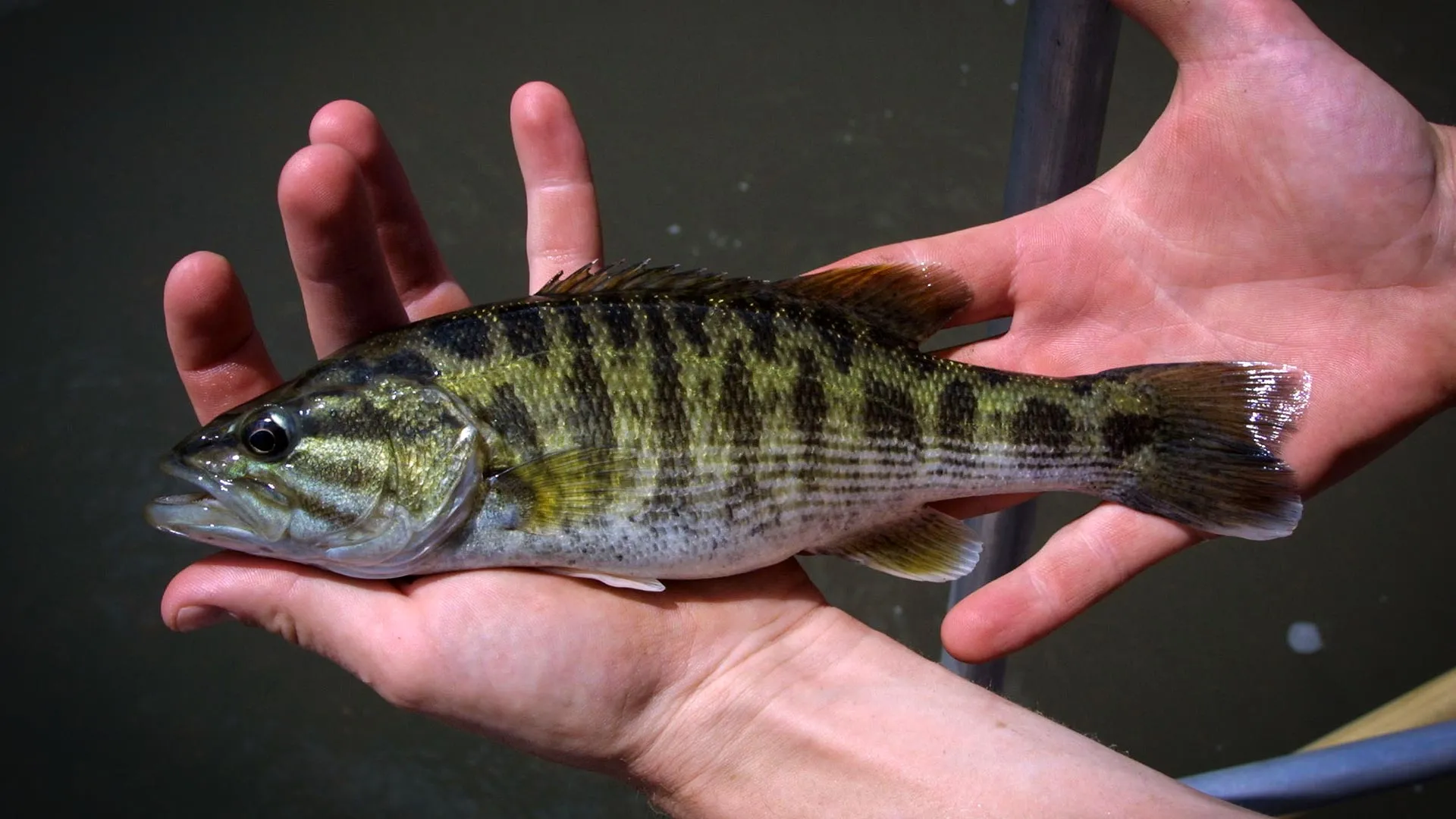
University of Georgia researchers have officially identified and described two previously unrecognized species of black bass, Bartram’s bass and Altamaha bass, a groundbreaking discovery detailed in a recent publication. This meticulous classification, rooted in decades of observation and advanced genetic analysis, sheds new light on the biodiversity of southeastern U.S. freshwater ecosystems and underscores the growing threats posed by habitat degradation and hybridization.
The formal recognition of Bartram’s bass (Micropterus pucpuggy) and Altamaha bass (Micropterus calliurus) culminates a long journey of scientific inquiry, initiated by the keen observations of ecologist Bud Freeman. Freeman, now a senior public service associate emeritus at the UGA Odum School of Ecology and lead author of the study, first encountered what he suspected was an unknown bass species in the 1980s. His initial encounter, while visiting the Broad River, involved a memorable interaction with local anglers who had caught an unusual fish. Freeman’s immediate recognition of its distinctiveness led him to offer the fishermen $5 for the specimen, a proposal they declined, intending to consume their catch. "That would have been an important specimen," Freeman reflected on the missed opportunity, highlighting the serendipitous nature of initial scientific discovery.
A Decades-Long Pursuit of Discovery
Following this pivotal encounter, Freeman and his research team embarked on a sustained effort to collect and document these elusive fish. Over the subsequent decades, samples were meticulously gathered from numerous sites across the southeastern United States. Bartram’s bass were ultimately identified from 14 distinct locations within the Savannah and Saluda River basins. Concurrently, Altamaha bass were sampled from 14 sites spanning the Altamaha and Ogeechee River systems. This extensive sampling strategy was crucial in establishing the geographic distribution and genetic distinctiveness of each species.
Unveiling Distinct Physical Traits
Prior to this formal description, both Bartram’s bass and Altamaha bass were often grouped with the more broadly recognized redeye bass. However, careful examination by the UGA researchers revealed significant morphological differences that set them apart.
Bartram’s bass are characterized by a striking light golden coloration, punctuated by dark brown blotches that extend along their flanks. Their bellies exhibit a mottled pattern, and their fins possess a distinct rosy hue. A notable physical characteristic is their oval tooth patch, and their eyes are a vivid red, distinguished by a black pupil encircled by a thin gold ring. These individuals can attain lengths of up to 15 inches, showcasing a robust physique.
Altamaha bass, while also possessing golden scales, present with olive edging and more subdued darker markings on their sides. Their fins are adorned with accents of orange, and they feature a smaller oval tooth patch. Similar to Bartram’s bass, they share the characteristic red eyes with a gold ring around the pupil. Altamaha bass can reach lengths of approximately 14 inches, making them comparable in size to their newly recognized relatives.
The Crucial Role of Genetic Analysis
Beyond observable physical traits, the research team leveraged cutting-edge genetic analyses to provide irrefutable evidence for the distinctiveness of these two bass species. This modern approach represents a significant evolution in ichthyological research.
"It used to be that you’d have to go out and catch the fish, bring it in, count the scales, measure the tail, measure this and that, write a description, and you’re done," explained Mary Freeman, a co-author of the study and adjunct faculty at the Odum School. "Now there is also genetic characterization. In this case, there’s genetic characterization of every single individual used to describe that fish to prevent including hybrid specimens."
To ensure the highest level of accuracy, the scientists analyzed mitochondrial DNA, a maternally inherited genetic component that is highly informative for species identification. Furthermore, advanced bioinformatics tools were employed to meticulously compare small segments of nuclear DNA, the genetic material inherited from both parents. The study’s definitive description of the two new species is based on an analysis of over 100 specimens. The broader research dataset, however, encompasses an impressive 570 fish, including specimens from a wide array of related bass species such as smallmouth, largemouth, northern spotted, shoal, Tallapoosa, redeye, and Alabama bass. This comprehensive genetic database allows for precise comparisons and the validation of species boundaries.
"You’re laying the baseline for the future," Mary Freeman emphasized. "Hybridization may result in Bartram’s bass not existing as it has existed, but we’ll know what it was." This statement underscores the proactive nature of the research, aiming to preserve a genetic record even in the face of potential future ecological changes.
Ecological Niches and Emerging Threats
Bartram’s and Altamaha bass are native to the dynamic environments of flowing river systems. Their preferred habitats typically include tranquil pools and faster-moving sections of rivers, often found in proximity to rocky shoals. These areas provide ample food sources and suitable conditions for spawning and growth.
However, these crucial habitats have undergone substantial alteration over recent decades. Sedimentation, a common consequence of land use changes and deforestation, can degrade water quality and obscure the rocky substrates preferred by these fish. More significantly, the construction of dams has profoundly impacted riverine ecosystems. Dams fragment waterways, creating artificial barriers that disrupt natural flow regimes, alter water temperatures, and impede the movement of fish and other aquatic organisms. This fragmentation can isolate populations, limiting genetic exchange and making them more vulnerable to local extinction.
Adding to these environmental pressures is the increased risk of hybridization. The introduction of other Micropterus species outside their native ranges, often facilitated by human activities such as stocking for sport fishing, has led to increased interbreeding between closely related species. This genetic mixing can dilute the unique genetic makeup of native species, potentially leading to a loss of fitness and adaptation. For newly recognized species like Bartram’s bass and Altamaha bass, the threat of hybridization poses a significant challenge to their long-term survival and genetic integrity.
"These evolutionarily distinct lineages are important to name," stated Bud Freeman. "In recognizing these species, we recognize how quickly they are becoming lost as extrinsic barriers are breached by human activities." His words convey a sense of urgency, highlighting the critical juncture at which these newly identified species find themselves. The formal recognition serves not only as a scientific achievement but also as a stark warning about the fragility of biodiversity in the face of anthropogenic pressures.
Honoring History and Scientific Legacy
The naming of these new species carries both ecological and historical significance. Bud Freeman first proposed the name Bartram’s bass in the 1990s, a designation that honors the legacy of William Bartram. The scientific name, M. pucpuggy, is a tribute to the Seminole-Creek people of Florida. Bartram himself was given the name "Puc Puggy" by a Seminole-Creek chief, a term that translates to "Flower Hunter." During his extensive travels through the southeastern United States between 1773 and 1776, Bartram meticulously documented a wealth of flora and fauna that were then unfamiliar to early North American settlers. His detailed observations laid crucial groundwork for subsequent natural history studies in the region, making the association of this bass species with his name a fitting tribute to his pioneering work.
The Altamaha bass, M. calliurus, received its scientific name at a later stage. The term "calliurus" is derived from Greek roots meaning "beautiful" and "tail," a descriptive moniker likely inspired by the fish’s physical appearance.
The comprehensive study detailing these discoveries was published in the esteemed scientific journal Zootaxa. The research team responsible for this significant contribution includes a collaborative effort from various institutions. Contributing authors from the UGA Odum School of Ecology and Department of Genetics include Kelly N. Petersen, Bryson G. Hilburn, Mary C. Freeman, and John P. Wares. Additional collaborators include Mark C. Scott from the South Carolina Department of Natural Resources, Natalia J. Bayona-Vásquez of Oxford College of Emory University, and Andrew T. Taylor from the University of North Georgia.
The financial support for this extensive research initiative was provided through a Competitive State Wildlife Grant. This grant was awarded to the South Carolina Department of Natural Resources and the Georgia Department of Natural Resources, underscoring the collaborative commitment of state agencies to advancing our understanding of regional biodiversity and conservation needs. The findings from this study will be instrumental in informing future conservation strategies for these newly identified species and the riverine ecosystems they inhabit.















Leave a Reply