

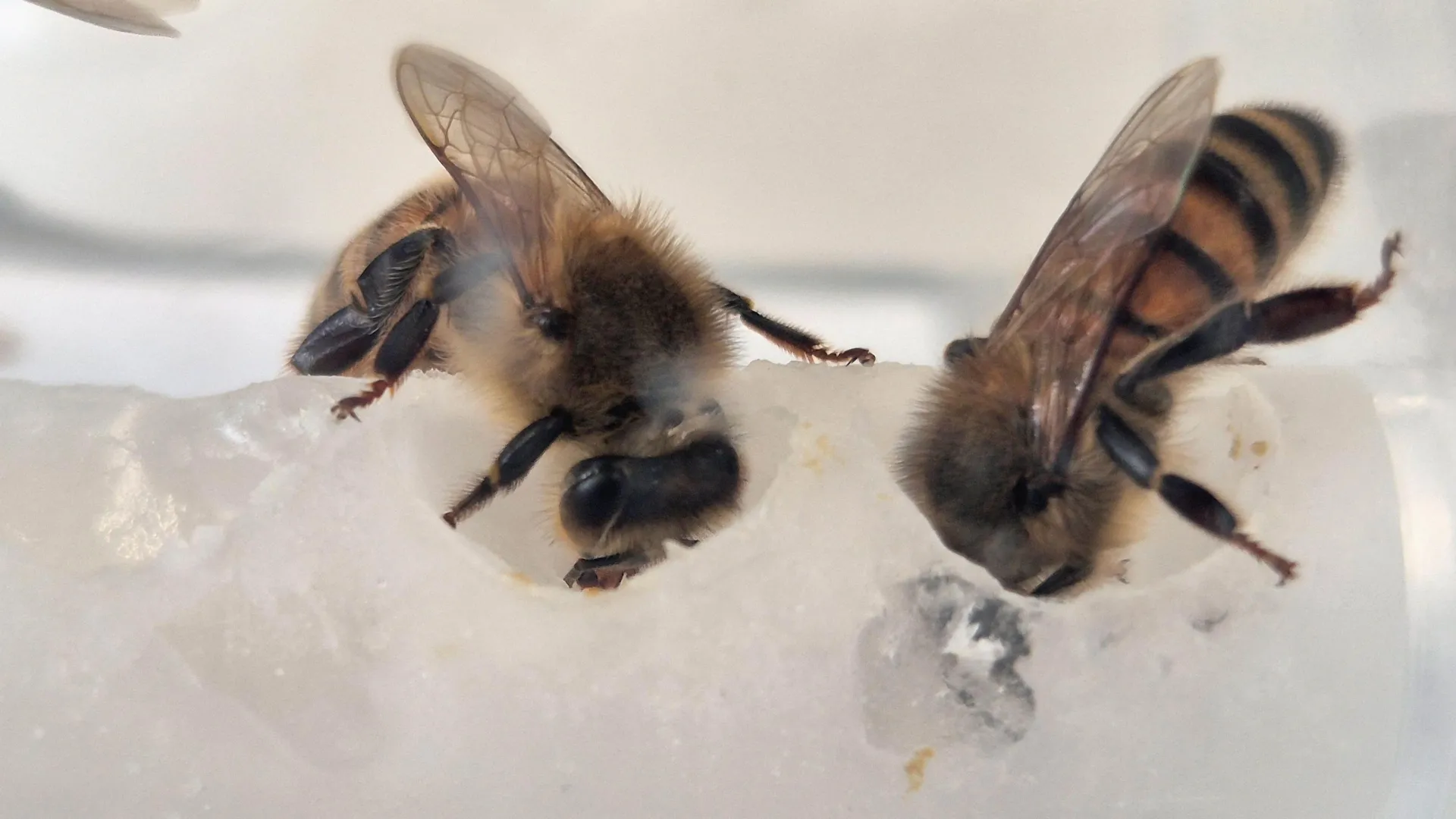
A groundbreaking development in the fight to save honeybees has emerged from the hallowed halls of academia, with a team of researchers led by the University of Oxford unveiling a revolutionary food supplement poised to counteract the precipitous decline of these vital pollinators. Collaborating with esteemed institutions including the Royal Botanic Gardens Kew, the University of Greenwich, and the Technical University of Denmark, the scientists have meticulously engineered a synthetic diet that effectively replicates the crucial sterol nutrients bees typically derive from natural pollen. The initial findings, published in the prestigious journal Nature, are nothing short of dramatic, revealing that honeybee colonies fed this enriched diet produced an astonishing 15 times more offspring. This advancement signals a potential turning point in addressing a global ecological crisis that threatens not only biodiversity but also the very foundation of our food security.
The Silent Scarcity: Why Bees Are Starving for Essential Nutrients
The plight of the honeybee, Apis mellifera, is a complex tapestry woven with threads of habitat loss, pesticide exposure, disease, and, critically, nutritional deficiency. For millennia, honeybees have relied on pollen as their primary sustenance, a rich source of proteins, carbohydrates, lipids, and micronutrients essential for their growth, development, and reproductive success. Among the most vital components of pollen are sterols, a class of lipids indispensable for bee physiology. These molecules play a crucial role in the development of larvae into healthy adults, influencing everything from wing formation to immune function.
However, the modern agricultural landscape presents a starkly different reality for these industrious insects. The relentless march of intensive monoculture farming, coupled with the pervasive impacts of climate change, has led to a significant reduction in the floral diversity that bees depend on. This environmental shift results in a limited and often unbalanced diet, leaving bee colonies chronically undersupplied with the specific sterols they require. Beekeepers, acutely aware of this nutritional gap, have long employed artificial pollen substitutes. These formulations, typically composed of protein flours, sugars, and oils, provide caloric energy but crucially lack the specific sterol profiles found in natural pollen. Consequently, many managed colonies, despite receiving supplementary feeding, remain nutritionally compromised, rendering them more susceptible to diseases and environmental stressors.
Engineering a Solution: Harnessing the Power of Engineered Yeast
Recognizing the critical need for a nutritionally complete and scalable pollen substitute, the Oxford-led research team embarked on an ambitious journey to engineer a solution at the molecular level. Their approach centered on harnessing the remarkable metabolic capabilities of the yeast species Yarrowia lipolytica. This versatile microorganism was genetically programmed to synthesize a precise cocktail of six essential sterols identified as being paramount to bee biology.
The development process involved a meticulous investigation into the precise nutritional requirements of honeybees. This demanding research entailed the delicate dissection and analysis of tissues from bee pupae and adult bees, a process that required extraordinary precision and dedication from the scientific team. Through this painstaking work, they identified the six key sterols that are dominant in bee physiology: 24-methylenecholesterol, campesterol, isofucosterol, β-sitosterol, cholesterol, and desmosterol.
Once these vital sterols were identified, the researchers employed cutting-edge CRISPR-Cas9 gene editing technology to reprogram Yarrowia lipolytica. This genetic modification enabled the yeast to efficiently produce these specific sterols. The choice of Yarrowia lipolytica was strategic; it is known for its natural ability to produce lipids, is recognized as safe for food applications, and, crucially, can be scaled up for industrial production. The resulting supplement is produced by cultivating the engineered yeast in bioreactors, a process akin to brewing, and then drying the biomass into a fine powder that can be easily incorporated into bee feed.
The Proof is in the Brood: Dramatic Improvements in Colony Health
The efficacy of this innovative sterol-enriched diet was rigorously tested in controlled glasshouse experiments conducted over a three-month period. These enclosed environments ensured that the bees had no access to natural pollen, consuming only the experimental feed. The results were nothing short of transformative. Honeybee colonies that received the sterol-supplemented diet exhibited a remarkable increase in reproductive output, producing up to 15 times more larvae that successfully progressed to the pupal stage when compared to control colonies fed standard diets.
Furthermore, the colonies on the enriched diet demonstrated sustained brood-rearing activity throughout the entire three-month study. In stark contrast, colonies deprived of sterols ceased producing brood after approximately 90 days, highlighting the critical role of these nutrients in maintaining colony viability and reproduction. Perhaps most compellingly, the nutrient profile of larvae fed the supplemented diet closely mirrored that of larvae consuming natural pollen, indicating that the engineered supplement effectively replicates the nutritional completeness of real pollen.
A Game Changer for Pollination and Agriculture
The implications of this research extend far beyond the laboratory, offering a tangible solution to one of the most pressing ecological challenges of our time. Professor Geraldine Wright, a senior author of the study from the University of Oxford’s Department of Biology, emphasized the power of synthetic biology in addressing real-world environmental issues. She noted that "most of the pollen sterols used by bees are not available naturally in quantities that could be harvested on a commercial scale, making it otherwise impossible to create a nutritionally complete feed that is a substitute for pollen." This breakthrough effectively overcomes that limitation.
Dr. Elynor Moore, lead author of the study and formerly of the University of Oxford’s Department of Biology, drew a compelling analogy to human nutrition: "For bees, the difference between the sterol-enriched diet and conventional bee feeds would be comparable to the difference for humans between eating balanced, nutritionally complete meals and eating meals missing essential nutrients like essential fatty acids. Using precision fermentation, we are now able to provide bees with a tailor-made feed that is nutritionally complete at the molecular level." This statement underscores the precision and effectiveness of the engineered solution.
The significance of this development for global food production cannot be overstated. Honeybees are indispensable pollinators, responsible for the fertilization of over 70% of major global crops. From almonds and apples to cherries and a vast array of vegetables, our agricultural systems are profoundly reliant on their tireless work. However, bee populations worldwide have been in severe decline, facing a relentless barrage of threats including poor nutrition, the impacts of climate change, the spread of parasites and diseases like Varroa mites and American foulbrood, and the detrimental effects of pesticides, particularly neonicotinoids. In the United States alone, annual colony losses have hovered between 40% and 50% in recent years, with projections indicating potentially even higher losses, reaching 60% to 70% in 2025. This new supplement offers a critical pathway to bolstering bee health and resilience without exacerbating competition for dwindling wildflower resources.
Alleviating Pressure on Wild Bee Populations
The benefits of this research are not limited to managed honeybee colonies. Professor Phil Stevenson of RBG Kew and the Natural Resources Institute at the University of Greenwich, a co-author of the study, highlighted the potential positive impact on wild bee species. "Honey bees are critically important pollinators for the production of crops such as almonds, apples, and cherries and so are present in some crop locations in very large numbers, which can put pressure on limited wildflowers," he stated. "Our engineered supplement could therefore benefit wild bee species by reducing competition for limited pollen supplies." By providing a readily available and nutritionally complete food source for managed bees, the pressure on natural floral resources, which are also vital for wild pollinators, could be significantly reduced, creating a more balanced ecosystem.
A Beacon of Hope for Beekeepers and the Food Industry
The potential impact of this breakthrough on beekeepers and the broader agricultural industry is immense. Danielle Downey, Executive Director of the honeybee research nonprofit Project Apis m., who is not affiliated with the study, expressed optimism about the discovery. "We rely on honey bees to pollinate one in three bites of our food, yet bees face many stressors," Downey commented. "Good nutrition is one way to improve their resilience to these threats, and in landscapes with dwindling natural forage for bees, a more complete diet supplement could be a game changer. This breakthrough discovery of key phytonutrients that, when included in feed supplements, allow sustained honey bee brood rearing has immense potential to improve outcomes for colony survival, and in turn the beekeeping businesses we rely on for our food production." Her statement underscores the direct economic and food security implications of this scientific advancement.
The Road Ahead: From Lab to Field
While the laboratory results are highly promising, the next crucial step involves scaling up the research to larger field trials. These trials will be essential for confirming the long-term benefits and practical applicability of the supplement in real-world beekeeping scenarios. The research team is optimistic that, if these trials prove successful, the supplement could be available to farmers and beekeepers within the next two years.
Beyond honeybees, the underlying technology developed for this project holds significant promise for other applications. The principles of using engineered yeast to produce essential nutrients could be adapted to support a diverse range of other pollinators, as well as other farmed insects used for food or industrial purposes. This opens exciting new avenues for developing more sustainable and efficient agricultural practices in the future, further solidifying the far-reaching implications of this pioneering work.









Leave a Reply