

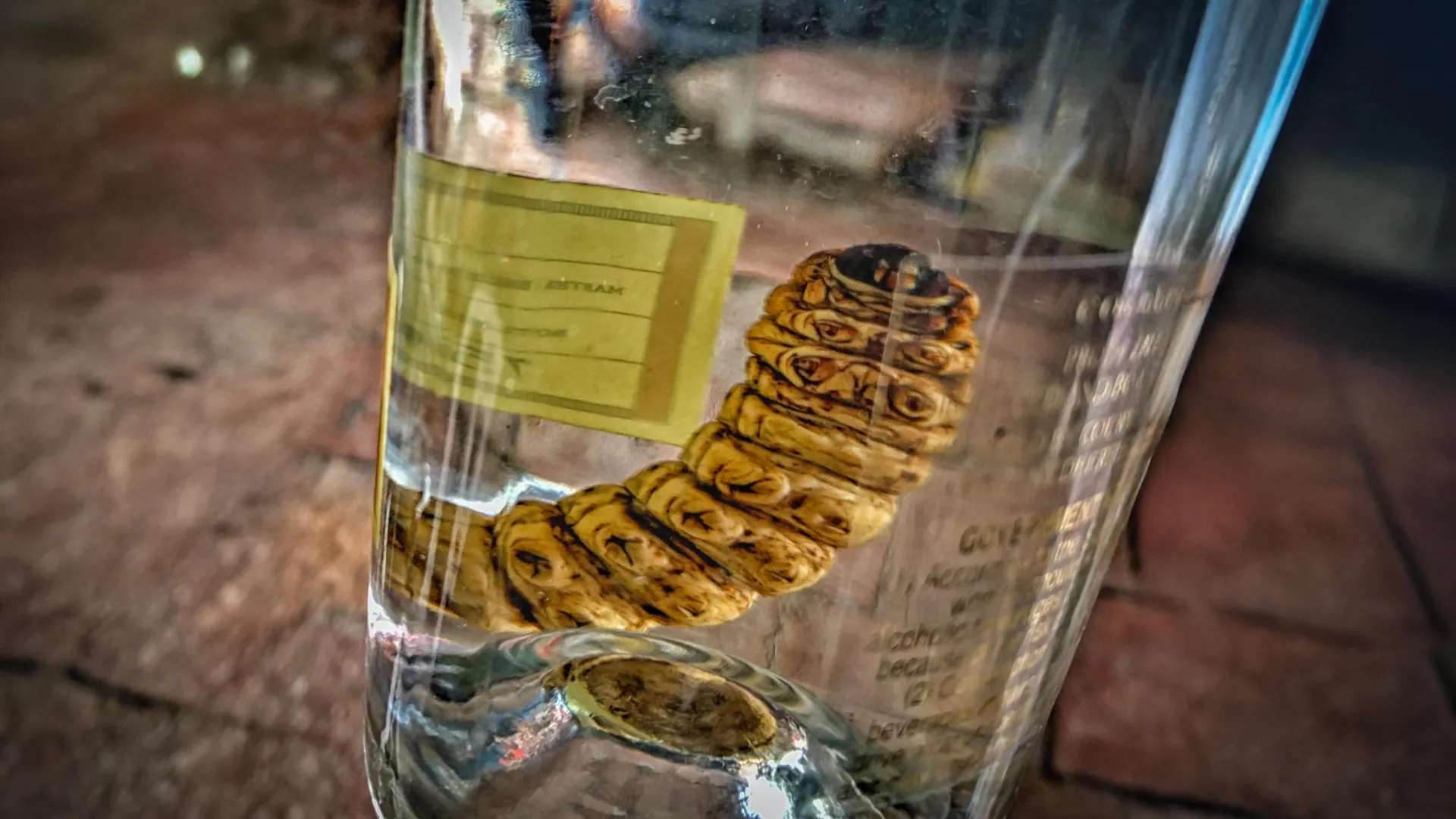
At the bottom of some mezcal bottles sits one of the most recognizable curiosities in the world of spirits: a pale, curled "worm" preserved in alcohol. For decades, this iconic bottle stowaway has imbued mezcal with an air of mystery and allure, a visual signature that distinguishes it from its tequila cousin. However, groundbreaking scientific research has now definitively revealed that this famous inhabitant is not a worm at all, but rather the caterpillar of a specific moth species, a revelation that carries significant implications for the sustainability of both the spirit and its environment.
Unraveling the Mystery of the Gusano de Maguey
Mezcal, a complex and increasingly popular distilled beverage, is crafted from the fermented and distilled sap of the agave plant. While tequila is exclusively made from the blue Weber agave, mezcal boasts a broader spectrum, utilizing over 30 different species of agave, each contributing unique flavor profiles. The practice of infusing mezcal with a larva, known as gusano de maguey (Spanish for agave worm), is a tradition that, while feeling ancient, is surprisingly recent. While the distillation of agave for spirits dates back centuries in Mexico, the deliberate inclusion of these larvae in bottles is believed to have originated in the 1940s, a marketing innovation rather than an age-old practice.
For many years, the precise identity of these bottled larvae remained a subject of speculation among both consumers and experts. Descriptions varied wildly, with suggestions ranging from moth larvae and butterfly larvae to even weevil larvae. This uncertainty was further fueled by the observable differences in color and appearance among the "worms" found in various mezcal bottles, leading some to believe that multiple species might be involved.
Dr. Akito Kawahara, a curator at the Florida Museum’s McGuire Center for Lepidoptera and Biodiversity, noted the persistent ambiguity. "It’s relatively easy to broadly determine the kind of larva based on the shape of the head, but their identity has never been confirmed," Dr. Kawahara stated. "This is probably because most biologists are not looking inside mezcal bottles." This statement underscores the niche nature of the research and the unusual environment in which these specimens are found.
The Scientific Expedition to Oaxaca
To definitively resolve this long-standing mezcal mystery, Dr. Kawahara and his research team embarked on a scientific expedition. In 2022, they traveled to Oaxaca, Mexico, a region intrinsically linked to mezcal production and renowned for its diverse agave landscapes. Their mission was to visit numerous distilleries and meticulously gather as many different brands of mezcal containing the gusanos de maguey as they could find. This painstaking collection effort allowed them to sample larvae from a wide array of sources, aiming for a comprehensive understanding of what commonly inhabits these bottles.
Upon initial examination, the preserved larvae presented limited obvious clues. The preservation process, typically involving submersion in alcohol, effectively halted decomposition but also significantly altered or obscured many of the external morphological traits that would normally aid in species identification. However, this same preservation method inadvertently safeguarded something far more valuable for scientific inquiry: the larvae’s DNA.
DNA Analysis: The Surprising Revelation
The researchers were able to successfully extract and analyze genetic material from 18 specimens. Their initial hypothesis anticipated that the results might point to several different insect species. This expectation was based on the understanding that gusanos de maguey are harvested from the wild, rather than being cultivated under controlled, standardized commercial systems, making a diverse range of species a plausible outcome.
A prominent candidate in the scientific community had been the tequila giant skipper (Aegiale hesperiaris), a butterfly whose caterpillars are known to feed on agave plants. The large, whitish larvae of this species bore a visual resemblance to many of the pale gusanos observed in mezcal bottles, and its common name made it an obvious subject of suspicion.
However, the DNA analysis told a strikingly different story. Every larva that yielded usable genetic data consistently matched the agave redworm moth (Comadia redtenbacheri). Further morphological assessments of specimens that did not produce usable DNA also identified them as belonging to the same species, reinforcing the genetic findings.
This groundbreaking discovery definitively suggests that the mezcal "worm" is not a random assortment of agave-dwelling insects. Instead, within the sampled bottles, it appears to be consistently the caterpillar of a single moth species. The research team also proposed a compelling explanation for the pale, "white worm" appearance sometimes reported: larvae that have been submerged in alcohol for extended periods may gradually lose some of their natural reddish pigmentation over time.
The Broader Implications: Sustainability and Cultural Heritage
The unmasking of the mezcal "worm" arrives at a pivotal moment for the spirit. Mezcal’s popularity has surged dramatically on the international stage, propelled by a growing consumer appreciation for artisanal spirits, unique flavor profiles, and small-batch production methods. This global ascent, however, brings with it complex sustainability challenges.
While tequila production is often characterized by industrial-scale operations, mezcal remains predominantly crafted in smaller, traditional facilities scattered across Mexico’s arid countryside. The artisanal production process typically involves roasting the rounded hearts of agave plants in earthen pits or kilns, followed by crushing, fermentation, and distillation in relatively small batches. As global demand escalates, a critical question arises: can producers, landowners, and the delicate agave ecosystems scale up production to meet this demand without incurring long-term environmental harm?
This concern extends directly to the agave redworm moth, the true identity of the "worm." Its larvae, also known as chinicuiles, have been a part of traditional Mexican cuisine for centuries, prized for their distinctive flavor. However, the wild harvesting of these larvae can be intensive. Unlike surface-dwelling insects, red agave caterpillars burrow deep into the core of their host agaves. The process of collecting them often involves the destruction of the agave plant itself.
"Agave worms are still fairly common, but the impact of mezcal becoming popular can have long-term negative effects on local populations because they are harvested in the wild," Dr. Kawahara cautioned, highlighting the potential ecological ramifications of increased demand.
Emerging Research: A Growing Sustainability Warning
More recent scientific investigations have further amplified these sustainability concerns. A study published in 2025 in Botanical Sciences specifically examined the impact of chinicuil extraction on populations of Agave applanata. The findings were stark: agave populations that were not subjected to larval extraction exhibited significantly higher growth rates. The study reported that the extraction of larvae could reduce agave populations by as much as 57 percent. Juvenile plants were found to be particularly vulnerable, often harvested for larvae despite their crucial role in ensuring the long-term persistence of the agave population.
While this research focused on agave populations rather than the contents of mezcal bottles, it powerfully reinforces the overarching issue: the market for edible agave larvae can have detrimental effects on both the insect and the plant species upon which it depends. The study also noted that harvesting practices can necessitate the sacrifice of agave plants before they reach sexual maturity, thereby altering future population dynamics and genetic diversity.
For mezcal producers and those involved in harvesting gusanos de maguey, these findings present a more complicated landscape for sustainable production. If the demand for mezcal bottles featuring the gusanos continues its upward trajectory, local communities may be compelled to adopt more sustainable harvesting strategies. These could include improved methods for managing wild harvesting, the establishment of dedicated agave farms for larval cultivation, or the development of innovative techniques for producing larvae without causing irreparable damage to their host plants.
A Marketing Novelty Becomes an Ecological Indicator
The mezcal "worm," once a perceived marketing novelty, has, through the lens of scientific inquiry and DNA analysis, transformed into something far more profound. It has emerged as a creature with a distinct identity, intricately interwoven with the ecological fabric of agave landscapes. Its future, and indeed the future of sustainable mezcal production, is now inextricably linked to how conscientiously the burgeoning popularity of this celebrated spirit is managed. The unmasking of the gusano serves as a potent reminder that behind every iconic product lies an ecosystem, and responsible stewardship is paramount for ensuring its continued existence.












Leave a Reply