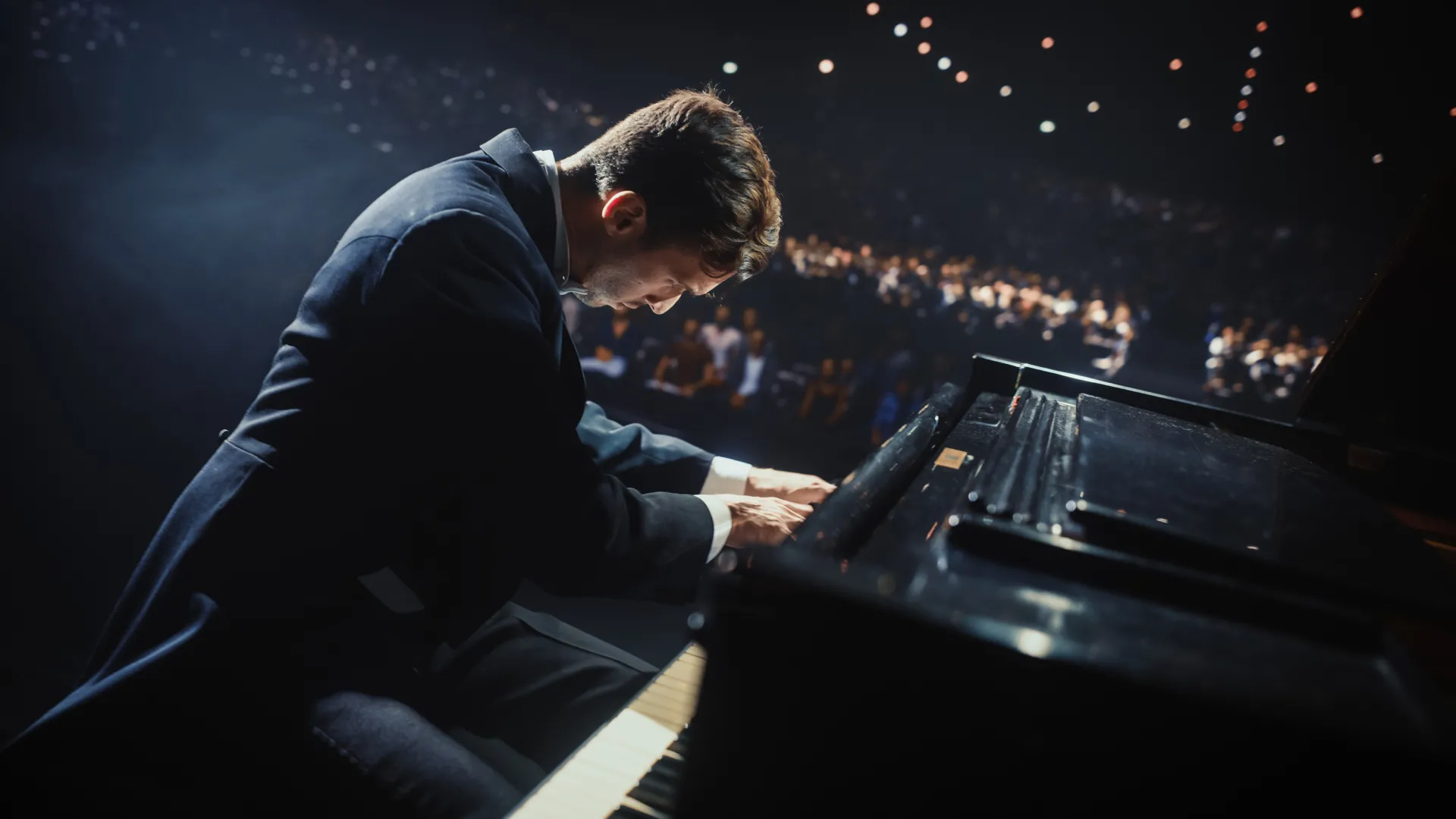
For over a century, the world of classical music has been divided by a fundamental disagreement between performers and physicists regarding the nature of the piano. While legendary virtuosos and dedicated pedagogues have long maintained that a pianist’s specific "touch"—the way a finger interacts with a key—can fundamentally alter the character and color of a note, many scientists remained skeptical. The traditional physical argument held that because a piano hammer is a free-flying object once it is launched toward the strings, the resulting sound is determined solely by the velocity of the hammer at the moment of impact. According to this view, any perceived difference in "tone quality" was merely an illusion created by volume, timing, or the performer’s body language.
However, a landmark study led by Dr. Shinichi Furuya at the NeuroPiano Institute and Sony Computer Science Laboratories, Inc. has finally provided empirical evidence to support the artistic intuition of musicians. Published in the Proceedings of the National Academy of Sciences (PNAS), the research utilizes ultra-high-speed sensing technology to demonstrate that pianists can indeed shape a piano’s timbre through touch alone, independent of loudness. This discovery not only settles a long-standing debate in musicology but also carries profound implications for neuroscience, robotics, and the future of music education.
The Century-Long Debate Over the Piano’s Mechanics
The controversy surrounding piano timbre dates back to the early 20th century. In the 1930s, researchers such as Otto Ortmann used early mechanical recording devices to argue that "touch" was a myth. They posited that since the hammer loses contact with the key mechanism just before striking the string, the pianist has no control over the hammer’s behavior during the actual production of sound beyond its speed. For decades, this led to a disconnect between the conservatory and the laboratory. Teachers would instruct students to play with a "velvet touch" or "sharp attack" to achieve specific colors, while scientists dismissed these descriptions as metaphorical or psychological.
The skepticism was rooted in the "one-degree-of-freedom" theory of the piano key. Critics argued that if two different touches produced the same hammer velocity, the resulting sound waves would be identical. However, the new research by Dr. Furuya’s team suggests that this model was overly simplistic. By ignoring the microscopic vibrations and the complex interaction between the key, the action, and the instrument’s frame, previous studies failed to capture the nuances that professional ears have recognized for generations.
Methodology: The HackKey Sensing System
To investigate these subtle phenomena, the research team developed a custom-built, non-contact sensing system named "HackKey." Unlike standard MIDI interfaces, which often lack the resolution to capture fine motor nuances, HackKey records the movements of all 88 piano keys at a staggering frequency of 1,000 frames per second. This high-speed optical sensing allows for microscopic spatial precision, capturing the exact acceleration curves and deceleration patterns of the keys as they are depressed and released.
The study involved 20 internationally acclaimed professional pianists, a cohort representing the highest echelon of musical expertise. These performers were tasked with playing individual notes and sequences while intentionally aiming for contrasting tonal qualities—specifically "bright" versus "dark" and "light" versus "heavy" sounds. Crucially, the researchers controlled for loudness, ensuring that the perceived differences in timbre were not merely a byproduct of one note being played louder than another.
Following the recording phase, the team conducted rigorous listening tests involving both professional musicians and individuals with no formal musical training. The results were striking: listeners across all backgrounds were consistently able to identify the intended timbre of the notes. Professional pianists in the listening group showed the highest sensitivity, but even laypeople could distinguish between a "bright" touch and a "dark" touch with statistical significance.
Identifying the Physical Drivers of Timbre
The core of the study’s findings lies in the identification of specific movement features that correlate with timbre perception. Through advanced data analysis, Dr. Furuya’s team discovered that the "artistry" of touch is grounded in a handful of extremely precise motor actions.
The research highlighted three primary physical factors:
- Micro-Acceleration: The way a pianist accelerates the key throughout its downward travel. A "bright" sound often involves a different acceleration profile than a "dark" sound, even if the final velocity at the point of escapement is the same.
- Impact Vibrations: The study suggests that the way the finger hits the key surface—and the subsequent way the key hits the "keybed"—creates percussive vibrations that travel through the instrument’s frame and soundboard. These high-frequency components blend with the vibrating string to alter the listener’s perception of the tone.
- Synchronization and Release: The timing and coordination of the release of the key were also found to play a role in the perceived "heaviness" or "clarity" of the sound, affecting the dampers and the resonance of the instrument.
By isolating these variables, the researchers demonstrated that altering a single movement feature could reliably change how a listener described the sound. This provides the first direct evidence that touch plays a causal role in shaping timbre. It confirms that the piano is not merely a machine triggered by velocity, but a complex acoustic system sensitive to the holistic physical approach of the performer.
Reimagining Music Education and Pedagogy
The implications of this study for music education are transformative. For centuries, piano pedagogy has relied on subjective, often abstract language. Students are frequently told to "imagine the sound" or "use the weight of the arm," phrases that can be difficult for a novice to translate into physical action.
With the data provided by the HackKey system, the "Science of Music Performance"—or dynaformics—can now offer concrete visualizations of expressive techniques. Future music conservatories may utilize high-speed sensors to provide students with real-time feedback on their touch. Instead of a teacher simply saying a tone is "too harsh," a digital interface could show the student the exact acceleration spike responsible for that harshness. This transition from metaphorical instruction to evidence-based training could significantly accelerate the development of expressive skills and help students achieve a higher level of tonal control earlier in their studies.
Furthermore, this research offers a pathway to reducing playing-related injuries. By understanding the most efficient physical movements required to produce a specific sound, educators can help pianists avoid the excessive tension or repetitive strain that often leads to conditions like carpal tunnel syndrome or focal dystonia.
Beyond the Concert Hall: Robotics and Neuroscience
The reach of Dr. Furuya’s work extends into the fields of robotics and human-computer interaction. Engineers working on haptic feedback systems and robotic prosthetics can use this data to create machines that mimic the sophisticated motor control of a human artist. If a robot can be programmed to understand the "causal touch" required for timbre, we may see a new generation of expressive digital instruments that feel and sound indistinguishable from high-end acoustic pianos.
In the realm of neuroscience, the study sheds light on how the brain integrates motor commands with sensory feedback. The fact that professional pianists develop a "shared motor skill"—a common physical language for producing specific sounds—suggests that years of intense practice actually rewire the brain’s motor cortex to achieve sub-millisecond precision. This has potential applications in rehabilitation science, where musical tasks could be used to help stroke victims or patients with motor disorders regain fine motor coordination.
Analysis: The Intersection of Art and Science
This study represents a significant shift in how we view the "Science of Creativity." For decades, scientific inquiries into music focused on the "what" (the notes, the rhythm, the frequency). This research focuses on the "how"—the physical embodiment of artistic intent.
The findings challenge the reductionist view that art can be entirely explained by simple physical laws. While the laws of physics still apply, the study shows that those laws are far more complex than previously understood when applied to the interaction between a human and a multi-component instrument like the piano. The "ghost in the machine" that pianists have claimed to control for 300 years has finally been measured and mapped.
As Dr. Furuya noted, the work bridges the gap between artistic intuition and scientific reality. It validates the life’s work of countless performers who spent decades refining a "touch" that skeptics claimed didn’t exist. It proves that the emotional power of a performance is not just in the choice of notes, but in movements so subtle they are nearly invisible to the naked eye, yet profound enough to be felt by the human ear.
Conclusion and Future Directions
The publication of this research in PNAS marks a turning point in the study of musical acoustics. Moving forward, the NeuroPiano Institute and its partners intend to expand their research to include other instruments and more complex musical contexts, such as how touch influences the "singing" quality (cantabile) of a melodic line.
The excitement in the scientific and musical communities is palpable. By proving that the performer’s touch is a measurable physical reality, the study opens the door to a new era where the mysteries of musical expression are no longer relegated to the realm of the "ineffable." Instead, they are recognized as a pinnacle of human motor achievement, a sophisticated dance of physics and feeling that continues to resonate across the boundaries of science and art.