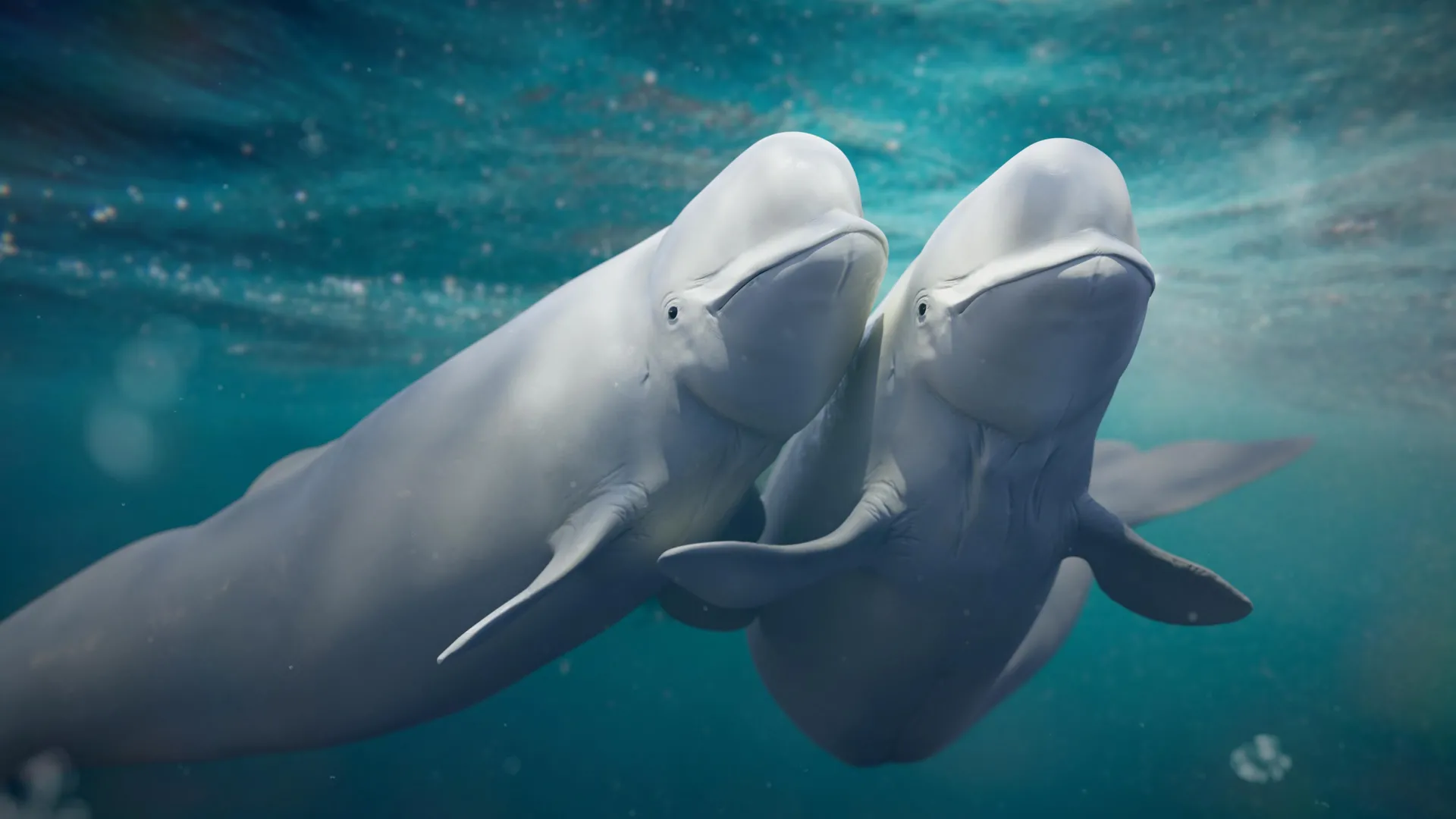
The intricate social tapestry and reproductive strategies of beluga whales, the Arctic’s charismatic white cetaceans, have long remained shrouded in mystery. Their lives are predominantly lived beneath the formidable expanse of Arctic waters and the pervasive sea ice, creating significant obstacles for direct observation. However, a groundbreaking, long-term DNA study has now cast a rare and illuminating beam of light into the heart of a specific beluga population in Bristol Bay, Alaska, revealing nuanced insights into their familial connections and the remarkable maintenance of their genetic health.
The comprehensive research, spanning over a decade, suggests a reproductive model far more complex and dynamic than previously assumed. Both male and female belugas in this population have been observed to engage in partnerships with multiple individuals throughout their lifespans. Scientists hypothesize that this flexible mating behavior is a critical evolutionary adaptation, enabling this relatively small and geographically isolated group to effectively circumvent the perils of inbreeding and vigorously preserve their genetic diversity, a cornerstone of long-term species survival.
"We still know very little about beluga whales, despite their immense popularity," stated Dr. Greg O’Corry-Crowe, a leading researcher from Florida Atlantic University and the principal author of the study published in the esteemed journal Frontiers in Marine Science. "The primary reason for this is the difficulty of studying a species that lives beneath the waves in the cold and often frozen north. But this is the challenge that makes discovery, when it happens, more exciting."
A Decade of Dedication: The DNA Approach to Studying Elusive Arctic Whales
The ambitious project, initiated in the early 2000s, involved a sustained, thirteen-year effort to collect genetic material from beluga whales inhabiting the waters of Bristol Bay. Over this extensive period, researchers meticulously gathered small tissue samples from an impressive 623 individual beluga whales. This collaborative endeavor brought together a diverse array of expertise, including scientists from Florida Atlantic University, the Alaska Department of Fish and Game, and crucially, indigenous Alaska Native subsistence hunters from the Bristol Bay region. Their invaluable knowledge of the local environment and their participation in the sampling process were instrumental to the study’s success.
Prior to the commencement of this research, understanding of beluga mating patterns in wild populations was notably scarce. The scientific team therefore began by formulating predictions grounded in established evolutionary theory and the limited existing knowledge about the species. Key observations that informed these predictions included the pronounced sexual dimorphism in belugas, with males being significantly larger than females, and the well-documented reproductive biology of females, which typically produce only one calf every several years.
"We predicted that beluga whales had a polygynous mating system where a few of the most competitive and possibly largest males secure most of the matings within a season or even across a few seasons, and that they provide little or no parental care," Dr. O’Corry-Crowe elaborated. This initial hypothesis posited a scenario where a select group of dominant males would largely control reproductive opportunities.
However, the researchers also factored in the known social structure of belugas. These whales are known to congregate in large, fluid social groups that frequently coalesce and then disperse. This dynamic social environment, the team reasoned, could potentially afford females ample opportunities to encounter a wide array of potential mates over extended periods. Consequently, a secondary prediction emerged: females might engage in reproductive partnerships with multiple different males across various breeding seasons. This dual prediction set the stage for a fascinating genetic investigation.
Genetic Revelations: Unforeseen Mating Dynamics Emerge
The comprehensive genetic analysis, the culmination of years of painstaking sample collection and laboratory work, yielded a set of results that significantly diverged from initial expectations. The genetic profiling revealed that both male and female belugas in the Bristol Bay population exhibited a propensity for mating with multiple partners over successive years. A particularly striking finding was that when calves were found to have siblings, they typically shared only one parent, rather than both, indicating a pattern of shared paternal or maternal lineage with different partners.
While it was confirmed that beluga whales, as a species, produce a relatively low number of offspring, the study observed a greater degree of variation in reproductive success among males than initially hypothesized. Certain males did indeed sire more calves than others, but the disparities were not as extreme as the team had anticipated.
"Beluga males were indeed polygynous, but, surprisingly, only moderately so," Dr. O’Corry-Crowe explained, highlighting the nuanced nature of the findings. He further posited that the inherent challenges of the three-dimensional aquatic environment likely play a role in limiting a male’s ability to successfully court or effectively manage multiple females simultaneously. "However, a long life may also be key," he added, referring to the species’ remarkable longevity. "Belugas can live 90 years, possibly more. Male beluga whales may, therefore, play a long game of securing a few matings each year over a very long reproductive life!" This suggests a strategy of sustained, rather than concentrated, reproductive effort for males.
The reproductive behavior of females also proved to be a source of considerable intrigue. The genetic data unequivocally demonstrated that female belugas regularly switch mates across different breeding seasons, mirroring the long reproductive lifespans observed in males. This pattern is interpreted as a potential "bet-hedging strategy," a sophisticated evolutionary approach to mitigate the risk associated with mating with potentially lower-quality males. By diversifying their partners over time, females may increase the probability of securing favorable genetic contributions for their offspring.
A Paradox of Plenty: High Genetic Diversity in a Small Population
Perhaps one of the most unexpected and significant discoveries of the study pertained to the genetic health of the Bristol Bay beluga population. Despite numbering only approximately 2,000 individuals, a relatively modest size for a marine mammal population, these belugas displayed exceptionally high levels of genetic diversity. Furthermore, the genetic analysis revealed a surprisingly low incidence of inbreeding within the population.
When researchers compared these findings with historical genetic samples and data from other beluga populations globally, the results were striking. The genetic diversity observed in Bristol Bay was found to be comparable to that of much larger beluga populations, and critically, this diversity had remained remarkably stable over the study period.
"A leading concern for small populations is that they tend to lose genetic diversity faster than large populations and the risks of inbreeding are higher," Dr. O’Corry-Crowe explained, underscoring the conventional wisdom in conservation biology. "We expected to find low diversity and high inbreeding, but we found something quite different. The mating system may explain this surprising finding." The study’s authors propose that the observed flexible mating strategies, with frequent mate switching by both sexes, play a pivotal role in preventing the accumulation of highly related offspring within the population. This, in turn, significantly reduces the likelihood of inbred individuals mating and producing offspring with compromised genetic health, thereby safeguarding against diversity loss. "We cannot afford to be complacent, but we can be optimistic that beluga whale mating strategies provide evidence of nature’s resilience," he concluded, offering a note of cautious optimism.
Future Frontiers: Unanswered Questions and Emerging Research
While this study has provided unprecedented insights, the researchers are quick to acknowledge that the specific behaviors observed in the Bristol Bay belugas may not be universally representative of all beluga populations. Subtle differences in physical characteristics, such as the degree of sexual dimorphism, between various beluga populations could indicate variations in their social structures and mating systems.
"To me, the differences in sexual dimorphism among populations of beluga whales could indicate that mating systems also vary, and this is something we are currently working on," Dr. O’Corry-Crowe indicated, pointing towards ongoing research. He also noted limitations inherent in genetic analysis. "We also can’t determine if females mate with multiple males within a season using genetics, as a female only produces one calf from one lucky male. But we are working on this, using drones at other locations to determine if we can observe mating behaviors in the wild. More on that soon…" This forward-looking statement highlights the commitment to further unraveling the complexities of beluga reproduction.
The study’s implications extend beyond mere academic curiosity. The findings offer one of the clearest glimpses yet into the largely unseen social and reproductive lives of beluga whales. The evidence suggests that their adaptable mating behaviors may be a crucial factor in their ability to maintain robust genetic diversity, even within a population that is relatively small and geographically constrained. This resilience is a vital characteristic for species facing the multifaceted challenges of a changing Arctic environment.
Broader Impact and Conservation Implications
The implications of this research are significant for the conservation of beluga whales, particularly those in smaller, isolated populations. Understanding the intricate mechanisms that underpin genetic health is paramount for effective conservation planning. The Bristol Bay belugas, through their unique mating strategies, offer a compelling case study in how evolutionary adaptations can foster resilience in the face of potential genetic bottlenecks.
The study’s findings challenge some long-held assumptions about the reproductive strategies of these elusive marine mammals. The moderate polygyny observed in males, coupled with the consistent mate-switching behavior of females, paints a picture of a complex reproductive ecosystem where individual success is not solely dictated by dominance or a limited number of pairings. Instead, it suggests a more distributed and perhaps more stable approach to gene propagation.
Conservationists and marine biologists will undoubtedly draw upon this research to refine population monitoring and management strategies. The emphasis on genetic diversity as a key indicator of population health underscores the importance of preserving a wide range of reproductive behaviors and social structures within beluga populations across their range.
Furthermore, the study highlights the critical role of collaborative research efforts, particularly those involving indigenous communities. The intimate knowledge and practical participation of Alaska Native hunters were indispensable to the successful execution of this long-term study, demonstrating a powerful synergy between scientific inquiry and traditional ecological understanding. This model of collaboration can serve as a blueprint for future research initiatives aimed at understanding and protecting vulnerable marine species.
As the Arctic continues to undergo rapid environmental transformations, understanding the adaptive capacities of its inhabitants becomes increasingly urgent. The beluga whales of Bristol Bay, through the lens of their DNA, have provided a remarkable testament to the power of behavioral flexibility and genetic diversity in ensuring the survival of a species in a challenging and ever-changing world. The ongoing research promises to further illuminate the lives of these iconic Arctic dwellers, reinforcing the need for continued scientific exploration and robust conservation efforts.