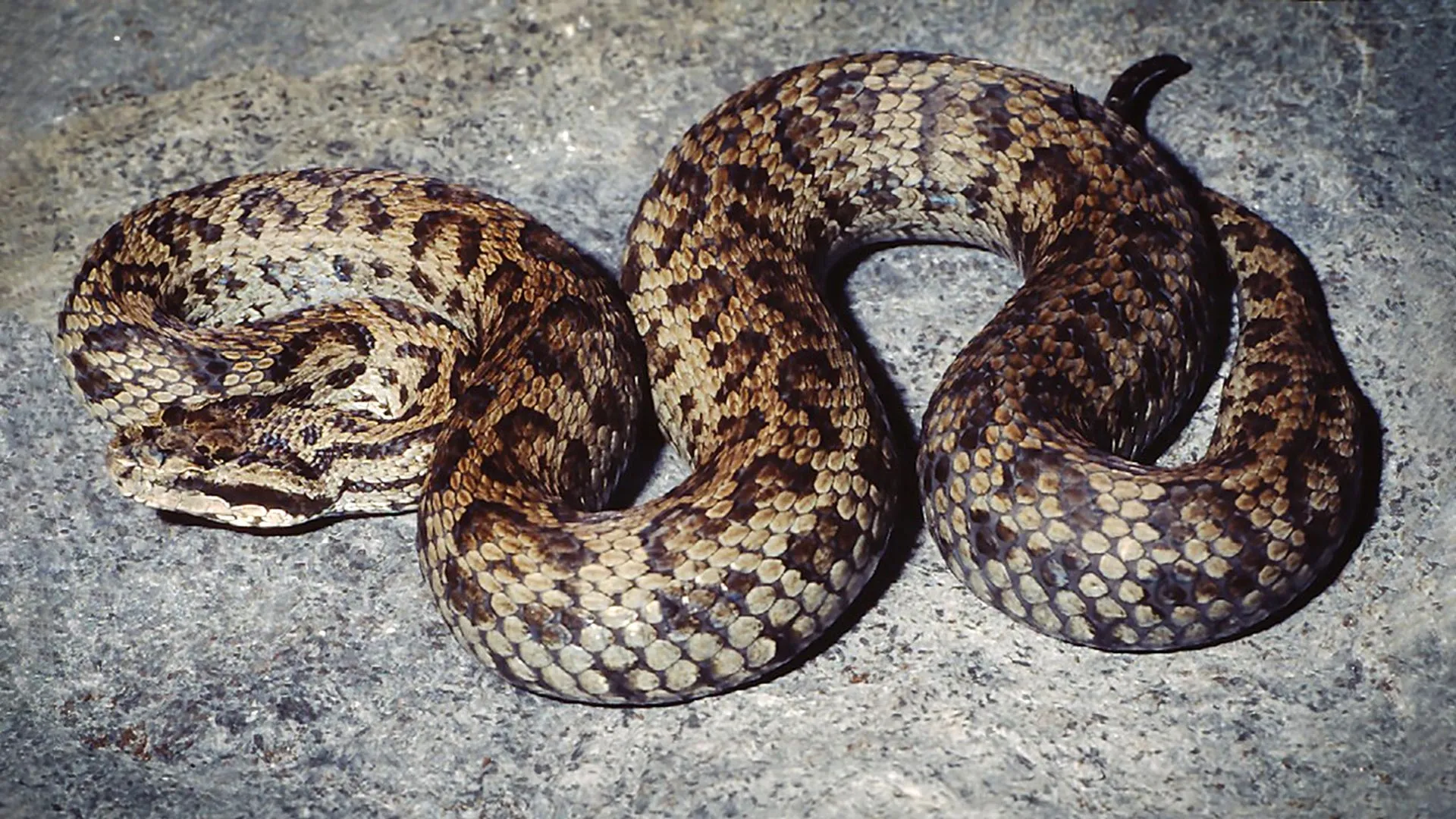
The towering mountain ranges of Asia, often perceived as pristine wilderness, continue to guard profound secrets regarding their wildlife. In a groundbreaking discovery that underscores the vastness of Earth’s unexplored biodiversity, an international team of scientists has conclusively demonstrated that a group of the region’s most enigmatic venomous snakes, long considered a single species, is in fact comprised of five distinct evolutionary lineages. This reclassification includes the identification of three previously unknown species, a testament to the ongoing potential for significant zoological discoveries even in the 21st century.
A Deeper Look into the Himalayan Pit Viper Complex
The findings, meticulously detailed in the recent publication of the open-access journal ZooKeys, represent the culmination of a multi-faceted research effort. Scientists employed a sophisticated blend of modern genetic sequencing, detailed osteological (skeletal) analysis, comparative morphological studies of physical characteristics, and ecological observations to meticulously re-examine specimens of what was traditionally known as the Himalayan pit viper. This comprehensive approach allowed researchers to move beyond superficial similarities and delve into the deep evolutionary divergences that had remained masked for over a century.
The long-held belief that the Himalayan pit viper, first scientifically described in 1864, was a single, widespread species has now been definitively challenged. The research has revealed that this designation was an oversimplification, obscuring the existence of several deeply distinct evolutionary lineages that have independently evolved over millennia within the challenging and varied terrains of the Himalayas and surrounding mountainous regions.
Unpacking the Five Lineages: From Known to Novel
The international scientific team successfully identified five distinct species-level lineages within the previously recognized pit viper group. These include the species now designated as the Himalayan pit viper in its strict scientific sense. Additionally, the study formally recognizes Gloydius chambensis, a species that was only recently described in 2022. Most significantly, the research introduces three entirely new species to science, each discovered in separate geographical pockets within Pakistan and Nepal.
Beyond the crucial genetic markers that confirmed their distinct evolutionary paths, these newly identified pit vipers also exhibit discernible differences in their skeletal structures and external physical traits. These variations, though subtle to the untrained eye, are significant indicators of their separate evolutionary histories and adaptations to their specific ecological niches.
Daniel Jablonski of Comenius University Bratislava, a lead researcher on the project with extensive experience in the herpetofauna of Pakistan and Afghanistan, emphasized the broader implications of these findings. "These mountain systems still harbor overlooked vertebrate diversity and hold important clues to the biogeography of Asia," Jablonski stated. He further elaborated on the methodology: "By combining modern field sampling with data from historical museum specimens, we uncovered evolutionary lineages that had remained hidden for more than a century after the original description of the Himalayan pit viper."
The Indispensable Role of Historical Collections
A cornerstone of this transformative discovery was the invaluable contribution of ancient museum specimens. Researchers meticulously extracted DNA from specimens collected during the 19th and early 20th centuries, a period when intrepid naturalists and explorers were actively cataloging the world’s biodiversity. Among these historical archives was the crucial "type specimen"—the original individual snake upon which the initial scientific description of the Himalayan pit viper was based. By analyzing this specimen alongside others, scientists were able to accurately confirm the true scientific identity of the original species and distinguish it from its newly revealed relatives.
This study serves as a powerful testament to the enduring importance and often underestimated value of natural history collections. These repositories, meticulously curated over generations, continue to yield profound scientific insights, particularly for remote and challenging regions where contemporary fieldwork is often fraught with logistical and environmental difficulties. In many instances, the critical evidence needed to resolve these long-standing taxonomic mysteries had been silently residing within museum drawers for decades, awaiting the development of advanced analytical techniques.
Sylvia Hofmann from the Museum Koenig, part of the Leibniz Institute for the Analysis of Biodiversity Change, who has dedicated the past two decades to comprehensive research in the Himalayas and the Tibetan Plateau, underscored this point. "Museum specimens are not just records of the past," Hofmann explained. "They are active research tools and essential infrastructure for future science." She further elaborated on the transformative power of evolving technology: "Some of the key evidence had been sitting in museum collections for more than a hundred years. We just didn’t have the tools to recognize it. As analytical methods continue to improve, the scientific value of these collections will only grow, revealing biodiversity we didn’t even know was there."
Ecological Significance and Conservation Imperatives
The herpetofauna of any region, including snakes, lizards, and amphibians, plays a vital role in the intricate web of ecosystems. These creatures often serve as sensitive ecological indicators, reflecting the health and stability of their environments. As predators within complex food chains, they help regulate populations of prey species, and many contribute to natural pest control. Within the rugged and demanding mountain landscapes of the Himalayas, pit vipers represent some of the apex predators. However, despite their ecological importance, they have historically been subjects of relatively little scientific study in this vast region.
Frank Tillack of the Museum für Naturkunde Berlin, Leibniz Institute for Evolution and Biodiversity Research, a seasoned researcher with 35 years of collaborative work on Himalayan reptile and amphibian biodiversity with colleagues in Nepal, highlighted the study’s contribution to filling these knowledge gaps. "Our work aims to close these gaps in knowledge and to lay the groundwork and provide inspiration for further, in-depth studies on this ecologically and medically relevant group," Tillack stated.
Unveiling Asia’s Biological Frontiers
The discovery of these hidden pit viper species further reinforces the understanding that remote and geographically challenging areas of Asia continue to be fertile grounds for biological surprises. These regions, often inaccessible due to difficult terrain and historical socio-political factors, are proving to be reservoirs of undiscovered and understudied biodiversity.
Rafaqat Masroor, a leading herpetologist from the Pakistan Museum of Natural History and a key contributor to the study, expressed his enthusiasm for the findings. "Pakistan’s high mountains are still full of biological surprises," Masroor remarked. He also pointed to the broader context: "This finding highlights how little we still know about a region long shaped by socio-political instability."
Beyond the taxonomic implications, this research carries significant conservation weight. Each of the newly recognized pit viper species appears to be confined to relatively restricted ranges within fragile mountain environments. This localized distribution raises immediate concerns about their vulnerability to habitat disturbance and other environmental threats.
"Each of the newly recognized species seems to occupy a relatively restricted range in fragile mountain environments, highlighting new ecological and evolutionary questions," noted Daniel Jablonski. The researchers emphasize that the accurate identification and delineation of species are fundamental prerequisites for effective conservation. Without a clear understanding of the true extent of biodiversity, including the number of distinct species and their specific geographic distributions, scientists are unable to accurately assess the threats they face or develop robust and targeted conservation strategies. This discovery serves as a critical reminder that much of our planet’s biodiversity remains unknown, necessitating continued exploration and dedicated research efforts to safeguard these invaluable natural resources for future generations. The implications extend to understanding venom composition and potential applications, as well as appreciating the unique evolutionary trajectories these species have taken in one of the world’s most dramatic landscapes.