For decades, the quest to discover life beyond Earth has been largely defined by a singular, monumental challenge: identifying the specific molecules that would serve as definitive biosignatures on distant planets and moons. This relentless pursuit has led scientists to scrutinize the chemical composition of celestial bodies, searching for telltale signs of biological processes. However, groundbreaking research recently published in the prestigious journal Nature Astronomy suggests a paradigm shift in this approach, proposing that the answer may not lie in the molecules themselves, but rather in the intricate, hidden patterns that connect them.
This novel research, spearheaded by a team of international scientists, introduces a statistical framework that can discern the signature of life from nonbiological chemical processes. "We’re showing that life does not only produce molecules," explained Fabian Klenner, an assistant professor of planetary sciences at UC Riverside and a co-author of the study. "Life also produces an organizational principle that we can see by applying statistics." This principle, according to the researchers, is a more fundamental indicator of biological activity than the mere presence of specific compounds.
The Subtle Art of Distinguishing Life from Nonlife
The core of the discovery lies in the analysis of two key classes of organic molecules: amino acids and fatty acids. These are fundamental building blocks for life as we know it on Earth. Amino acids are the components of proteins, essential for virtually all biological functions. Fatty acids are integral to cell membranes and energy storage. While these molecules have been detected in extraterrestrial samples, such as meteorites, their abiotic (non-biological) formation in space environments has made their interpretation as definitive biosignatures problematic.
The researchers found a consistent trend: amino acids originating from living systems tend to exhibit greater diversity (a higher number of different types) and a more even distribution among those types. In contrast, amino acids formed through nonbiological processes are often less varied and their distribution is more skewed, with a few types dominating.
Conversely, fatty acids showed an opposing pattern. Nonliving chemical processes were observed to produce more evenly distributed sets of fatty acids, whereas biological processes tended to result in less even distributions. This nuanced distinction, the study argues, provides a statistical fingerprint that can be identified even in degraded or incomplete samples.
A Universal Signature, Independent of Specific Instruments
A significant implication of this research is its potential to revolutionize how we search for life. The study demonstrates that this underlying signature of life can be detected through statistical analysis alone, without the need for any single, highly specialized instrument. This means that data already being collected by current and future space missions, which often employ a suite of analytical tools, could be re-examined through this new statistical lens.
"This is the first study to show that this underlying signature of life can be detected through statistics alone, without relying on any single specialized instrument," the authors state. This opens up a vast reservoir of existing and forthcoming data, potentially accelerating the pace of discovery in astrobiology.
Contextualizing the Discovery in a Rapidly Advancing Era of Exploration
The findings arrive at a pivotal moment in planetary exploration. Missions such as NASA’s Perseverance rover on Mars, the Europa Clipper mission (scheduled for launch in 2024) targeting Jupiter’s moon Europa, and the Enceladus Orbilander concept (under consideration for future exploration of Saturn’s moon Enceladus) are all producing increasingly detailed measurements of organic chemistry on other worlds. These missions are equipped with sophisticated instruments capable of analyzing the elemental and molecular composition of extraterrestrial materials.
However, the interpretation of these complex chemical signals has consistently been a major hurdle. As the study highlights, "Many molecules linked to life on Earth, including amino acids and fatty acids, can also form naturally without biology. Scientists have found them in meteorites and created them in laboratory experiments designed to mimic space environments." This fundamental ambiguity has meant that simply detecting these compounds is not considered strong enough evidence to confirm the existence of life.
Gideon Yoffe, a postdoctoral researcher at the Weizmann Institute of Science in Israel and the first author of the study, aptly described the challenge: "Astrobiology is fundamentally a forensic science. We’re trying to infer processes from incomplete clues, often with very limited data collected by missions that are extraordinarily expensive and infrequent." This new statistical approach offers a powerful new tool to aid in this inferential process.
Borrowing a Powerful Framework from Ecology
To develop this novel approach, the researchers turned to a discipline not typically associated with space exploration: ecology. They adapted a statistical method commonly employed by ecologists to measure biodiversity. In ecology, biodiversity is assessed using two primary concepts: richness, which quantifies the number of different species present in an ecosystem, and evenness, which measures how uniformly those species are distributed.
Yoffe’s initial encounter with this framework occurred during his doctoral studies in statistics and data science, where diversity metrics were utilized to unravel patterns in complex datasets, including historical research on ancient human cultures. Recognizing the universality of these statistical principles, the team hypothesized that they could be applied to the chemical signatures associated with potential extraterrestrial life.
Rigorous Analysis and Surprising Resilience
The team rigorously tested their hypothesis by analyzing approximately 100 existing datasets. These datasets encompassed a wide range of samples, including amino acids and fatty acids extracted from various sources: living microbes, soils, fossilized remains, meteorites, asteroids, and synthetic laboratory samples designed to mimic abiotic chemical reactions.
The results were striking and consistent. Across these diverse datasets, biological materials repeatedly displayed distinct organizational patterns that clearly differentiated them from samples formed through nonliving chemical processes. This consistent separation between biological and abiotic chemistry, based solely on statistical metrics, provided strong validation for their approach.
The Enduring Echoes of Ancient Life
One of the most surprising and significant findings of the study was the remarkable resilience of these statistical patterns, even in samples that had undergone substantial degradation over geological timescales. By analyzing samples through this statistical lens, the researchers could reliably distinguish biological samples from abiotic ones. Furthermore, they observed that biological materials formed a continuum, ranging from those that were well-preserved to those that were heavily degraded.
"That was genuinely surprising," Klenner remarked. "The method captured not only the distinction between life and nonlife, but also degrees of preservation and alteration." This implies that even if direct molecular evidence is lost to time, the underlying organizational structure imprinted by life might persist.
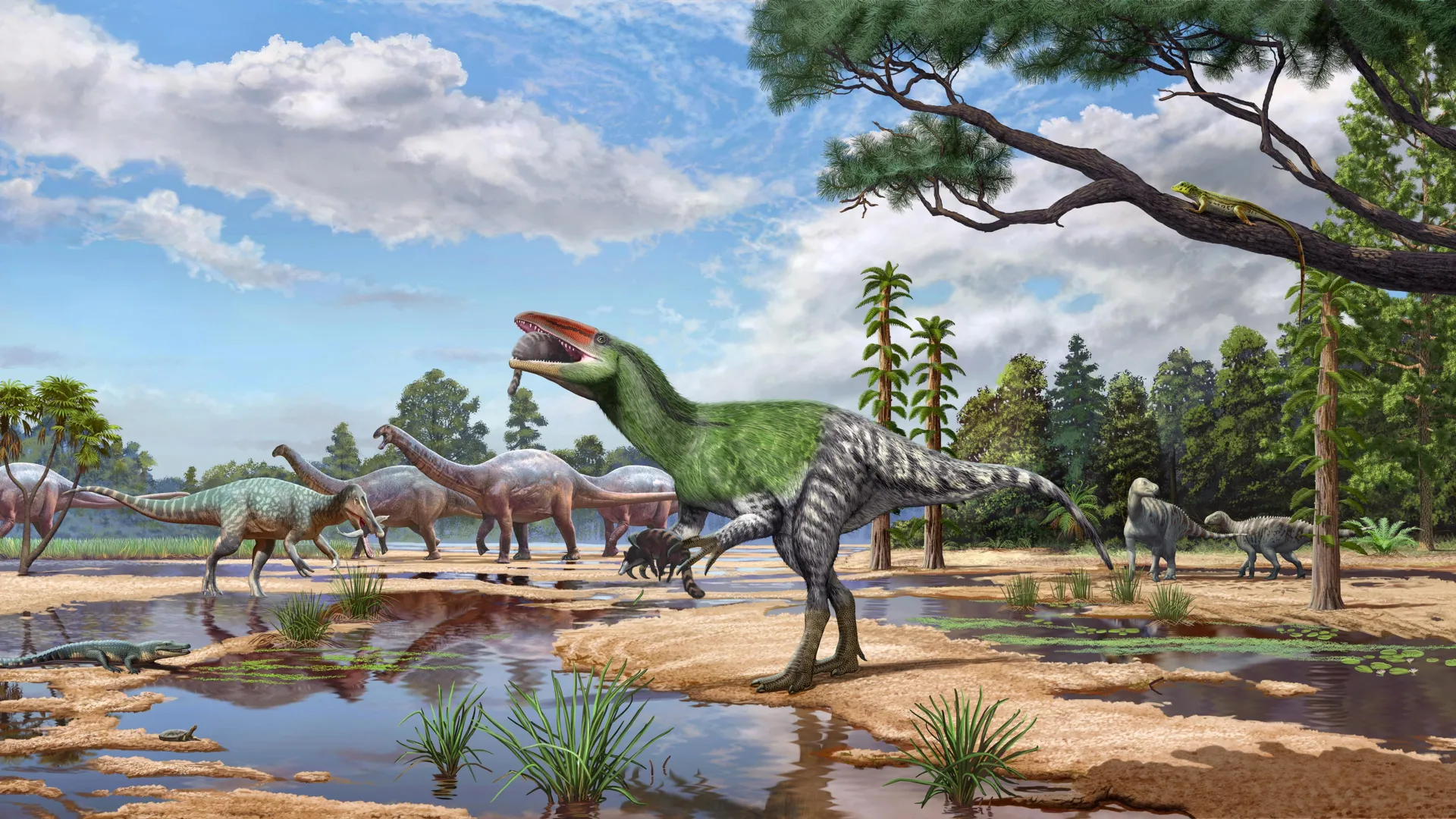
The study provided compelling evidence for this persistence. Fossilized dinosaur eggshells, included in the research, still exhibited detectable statistical patterns connected to ancient biological activity. This suggests that the statistical fingerprint of life can endure for millions, or even billions, of years, offering a tantalizing prospect for discovering evidence of past life on planets like Mars, which is believed to have once harbored liquid water.
Implications for Future Space Missions and the Broader Search for Life
While acknowledging the immense potential of their findings, the researchers are careful to emphasize that no single technique will definitively prove the existence of extraterrestrial life. "Any future claim of having found life would require multiple independent lines of evidence, interpreted within the geological and chemical context of a planetary environment," Klenner stated. This principle of corroboration is a cornerstone of scientific discovery, particularly in fields as complex as astrobiology.
Despite this caveat, the team firmly believes that their statistical framework could become an invaluable addition to the toolkit of future planetary missions. By providing an independent and novel method for assessing the likelihood of biological origin, it can complement existing analytical techniques.
"Our approach is one more way to assess whether life may have been there," Klenner elaborated. "And if different techniques all point in the same direction, then that becomes very powerful." This convergence of evidence from multiple, independent lines of inquiry would significantly bolster the confidence in any potential discovery.
The implications extend beyond the immediate search for microbial life. This statistical approach could also be applied to the analysis of exoplanet atmospheres, where complex mixtures of gases are detected. Identifying non-random patterns in the distribution of atmospheric molecules could potentially indicate the presence of biological processes on those distant worlds, even if direct sampling is impossible.
A New Dawn for Astrobiological Forensics
The research represents a significant leap forward in astrobiological forensics. By shifting the focus from individual molecules to the statistical relationships between them, scientists are gaining a more sophisticated understanding of what constitutes a universal biosignature. This method has the potential to unlock the secrets held within existing data archives and guide future missions toward more targeted and efficient investigations.
The study, therefore, marks not just an advancement in a specific analytical technique, but a conceptual evolution in the way we approach the profound question of whether we are alone in the universe. As our observational capabilities continue to expand, the ability to discern the subtle, statistical whispers of life amidst the vast chemical complexity of the cosmos will be increasingly crucial. This innovative statistical framework offers a powerful new voice in that cosmic conversation, promising to amplify the faint signals of life that may be waiting to be heard.