The distance between a model that produces correct textual output and a fully realized system that independently completes a complex, multi-step business task has proven to be significantly wider than most early enterprise deployments anticipated. Over the past two years, organizations globally have rushed to integrate generative artificial intelligence into their daily workflows, often treating foundation models as plug-and-play solutions for operational efficiency. However, empirical workplace data now reveals a stark operational friction. A comprehensive 2024 survey conducted by Workday, which analyzed the experiences of 3,200 employees across North America, Europe, and Asia, illuminated a paradoxical reality: while 85 percent of respondents reported that AI tools saved them anywhere from one to seven hours per week, roughly 37 percent of that newly reclaimed time was subsequently consumed by correcting, clarifying, or entirely rewriting low-quality or hallucinated output.
This productivity tax falls disproportionately on the most enthusiastic adopters. Only 14 percent of survey participants reported consistently achieving net-positive outcomes from their current AI integration. The heaviest users actually suffered the steepest losses, with highly engaged employees forfeiting an estimated 1.5 weeks of productive time annually solely to rework flawed AI-generated artifacts. Workday’s analysis characterized this phenomenon as structural rather than behavioral. Rather than employees lacking prompt-engineering skills, the root cause lies in the fact that generative AI has largely been retrofitted onto operational roles and corporate frameworks that were never fundamentally redesigned to accommodate autonomous digital labor.
This friction is increasingly reflected at the executive level. A 2025 study of global chief executive officers conducted by IBM found that approximately only one-quarter of enterprise AI initiatives had met their expected financial return on investment. Furthermore, technology advisory firm Gartner has projected that more than 40 percent of all agentic AI projects initiated by enterprises will be abruptly cancelled by the year 2027. Gartner attributes these anticipated failures to escalating infrastructure costs, unverified or unclear business value, and a widespread industry phenomenon it terms "agent washing"—the practice of rebranding conventional, deterministic automation scripts as sophisticated, autonomous agentic systems.
Understanding the Structural Failure Modes of Early AI Systems
The underlying mechanics driving these high failure rates are reasonably well understood by computer scientists and enterprise architects. Most notably, multi-step reliability in machine learning workflows degrades multiplicatively. If a sequential computational pipeline consists of seven distinct execution steps, and each individual step maintains a high success rate of 90 percent, the probability of the entire pipeline completing successfully without human intervention drops to less than 50 percent.
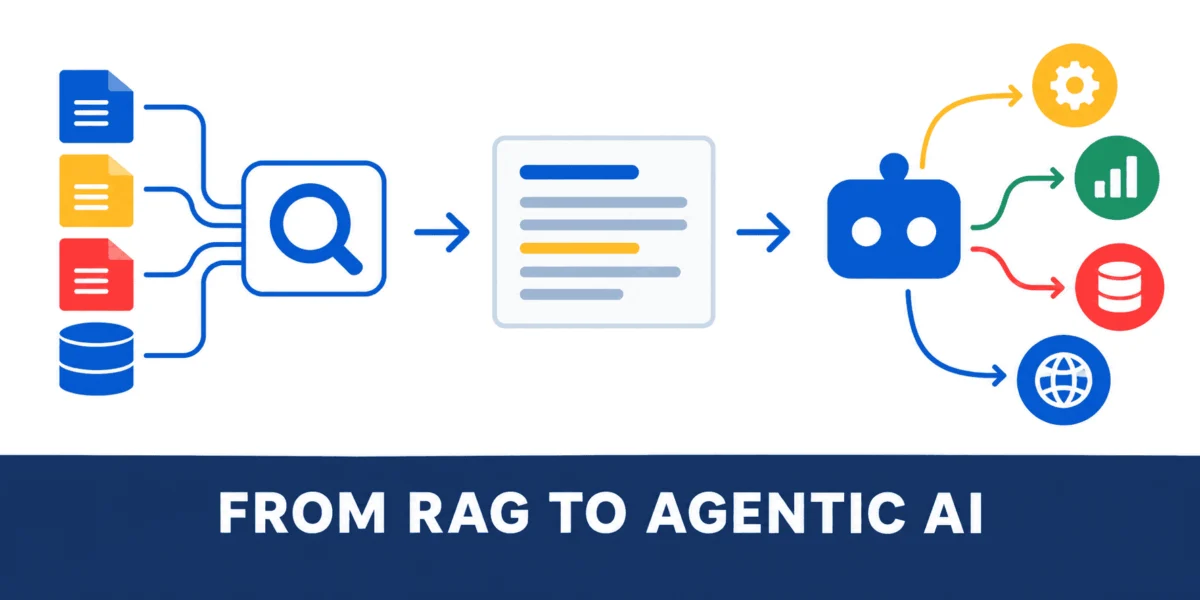
Compounding this mathematical reality is the persistent issue of context fragmentation. In standard chat-based interfaces, contextual understanding rarely persists securely or dynamically between discrete sessions, forcing human operators to constantly re-establish parameters. Furthermore, the vast majority of software systems currently marketed as "agentic" fundamentally terminate at the point of content generation. They produce text, code, or images, but leave the critical final actions—such as cloud provisioning, live publishing, financial transacting, and database management—entirely to a human operator.
To bridge this operational divide, a new class of orchestration platforms has emerged. Among them, JONI, developed by the self-funded Israeli software firm Mezada Development and Software Ltd., has positioned itself not as a foundation model provider, but as a dedicated orchestration and execution layer that sits above existing large language models to manage multi-step, real-world tasks autonomously.
The Architectural Blueprint: Balancing Persistence, Burst Compute, and Cost
The technical architecture of modern orchestration layers must solve a difficult economic and engineering puzzle: how to maintain persistent operational state for an autonomous agent without incurring prohibitive cloud infrastructure costs. JONI addresses this by allocating each registered user a dedicated, persistent cloud runtime environment. This secure environment houses individual memory stores, working files, third-party integrations, and scheduled background tasks.
These environments are designed to continue executing autonomous background work even when the user is disconnected, eventually hibernating after approximately fourteen days of total inactivity to conserve resources. Meanwhile, heavy computational workloads are provisioned dynamically on demand as ephemeral instances, which are immediately released upon task completion. All heavy processing executes within strictly isolated sandboxes, ensuring complete separation between individual user environments for enterprise-grade security and data privacy.
This hybrid infrastructure strategy is primarily a calculated economic decision. Operating persistent per-user infrastructure carries a materially higher cost of goods sold (COGS) than delivering a traditional, stateless software-as-a-service inference product. By combining intelligent hibernation with on-demand burst compute, the platform achieves the margins necessary to make always-on, long-running agentic operation economically viable at commercial scale.
In addition to infrastructure management, model access is decoupled from direct vendor integration through a gateway abstraction layer. This architectural choice permits the platform to dynamically substitute underlying foundation models without requiring changes to the core application logic. Company leadership describes this design as both an availability hedge against sudden API outages and a crucial commercial hedge, given that provider pricing models and usage terms remain the most volatile external variables in the platform’s financial cost structure.
Intelligent Routing and Provider Agnosticism
Task routing within the platform is entirely automated and managed by the system, shielding the end-user from the complexities of selecting the optimal model for a given sub-task. When an enterprise user submits a complex request, the platform classifies the intent and dynamically dispatches the payload to whichever connected foundation model it determines is best suited for that specific class of problem. As new foundation models are released by research laboratories, they are integrated into the routing pool.
The company defends this automated routing approach on structural rather than purely technical grounds. An orchestration platform that does not develop its own proprietary foundation model maintains no commercial incentive to favor any specific upstream provider. In contrast, foundational model laboratories inherently possess economic incentives to drive traffic toward their own proprietary models, regardless of whether they represent the optimal tool for a specific enterprise task.
While whether automated multi-model routing consistently outperforms informed manual model selection remains an open empirical question within the artificial intelligence community, the platform is uniquely positioned to gather definitive data. By observing comparative performance across diverse commercial providers on identical enterprise task classes, the company has stated its intention to publish recurring comparative performance benchmarks.
From Content Generation to Real-World Execution
The primary differentiator claimed by platforms operating at the execution layer is the transition from passive text generation to active, end-to-end task completion. In operational tests, the platform has demonstrated the ability to execute complex, multi-layered workflows that span external software environments.
Reported capabilities include registering active domain names, provisioning cloud hosting environments, and deploying live websites complete with functional backend services and database persistence. The system can construct, monitor, and manage digital advertising campaigns through platform marketing APIs, as well as publish rich media content directly to social media networks via official, credentialed OAuth connections. Furthermore, its media generation suite handles complex requirements, such as producing multi-scene video outputs while verifying reference-based identity consistency across frames. It can also manage enterprise telephony and email operations operating directly from dedicated digital phone numbers and email addresses.
To manage the inherent risks of autonomous software executing real-world transactions, actions are categorized strictly by consequence. Routine, non-destructive operations execute directly in the background, whereas consequential actions—such as financial procurement, contract signing, or outbound third-party communications—mandate explicit, human-in-the-loop user approval before execution can proceed. Every action taken by the system is permanently logged to a comprehensive audit trail accessible to account administrators, complete with automated reversal windows and an immediate platform termination control.
For long-running, unattended enterprise workflows, the engineering challenges shift from artificial intelligence theory to distributed systems reliability. The platform incorporates stall detection mechanisms with automatic process restarts, heartbeat recovery protocols to salvage orphaned jobs following host machine restarts, and granular checkpointing to allow pipelines to resume mid-task after an interruption. Industry analysts note that these unglamorous engineering safeguards are ultimately what determine whether multi-hour autonomous execution can be trusted in production environments.
Extensibility and Ecosystem Development
To scale its operational footprint without relying solely on internal software development, the platform features an open marketplace. This ecosystem allows third-party developers to publish specialized agents and distinct functional skills that can be installed directly into user environments. Revenue generated from these extensions is shared heavily in favor of the publisher, incentivizing external developer adoption.
To maintain enterprise security, organizational accounts retain strict administrative governance, allowing IT managers to dictate precisely which third-party agents and skills may or may not be installed across employee workspaces. This strategy is designed to ignite a classic two-sided network effect: published agents attract a broader user base, and a growing user base subsequently attracts more third-party developers, continuously expanding the platform’s utility organically.
Commercial Strategy and Market Dynamics
The platform is commercialized through a predictable per-seat licensing model priced at $65 per user per month, with raw usage credits purchased separately and pooled across the organization. Model inference capacity is acquired in high-volume batches and passed through to customers at or near actual cost. Company executives emphasize this transparent pricing model, noting that software margin is captured strictly on the platform license rather than marked up on underlying token inference—a direct critique of traditional vendors who resell a single, locked-in model behind a proprietary interface.
Initial market traction targets small-to-medium-sized organizations ranging from approximately 5 to 200 employees, with larger, highly complex enterprise deployments slated as a secondary priority.
Independent market sizing illustrates substantial momentum within this specific software category. Research firm Deloitte estimates the global agentic AI market at approximately $9 billion for 2026, scaling rapidly to between $35 billion and $45 billion by the year 2030, with the upper bound dependent on the efficiency of enterprise orchestration adoption. Concurrently, Gartner forecasts that over 40 percent of enterprise software applications will natively embed task-specific autonomous agents by the end of 2026, a dramatic acceleration from less than 5 percent just twelve months prior.
Industry Assessment and Future Implications
Despite robust market projections, the enterprise orchestration layer is rapidly becoming crowded. Established enterprise software platforms, including Portkey, Langdock, and Kore.ai, already provide robust multi-model access management coupled with strict governance and security controls. Concurrently, major foundation model laboratories are rapidly extending their native products to encompass direct task execution capabilities. As a result, multi-model routing on its own is quickly converging toward a basic baseline market expectation rather than serving as a durable competitive differentiator.
The ultimate test for platforms entering the agentic execution space will be operational reliability at scale. Systems capable of provisioning live cloud infrastructure, executing financial transactions, and publishing public content represent a microscopic fraction of the broader software category currently described as agentic. The operational surface area exposed by these systems—spanning complex credential management, dynamic spend authorization, graceful failure recovery, and absolute action reversibility—is exponentially larger than that of a standard text-generation product. Whether robust reliability engineering can successfully hold up under enterprise-grade stress remains the defining question for the category, a determination that can only be answered through prolonged, real-world operational deployment.