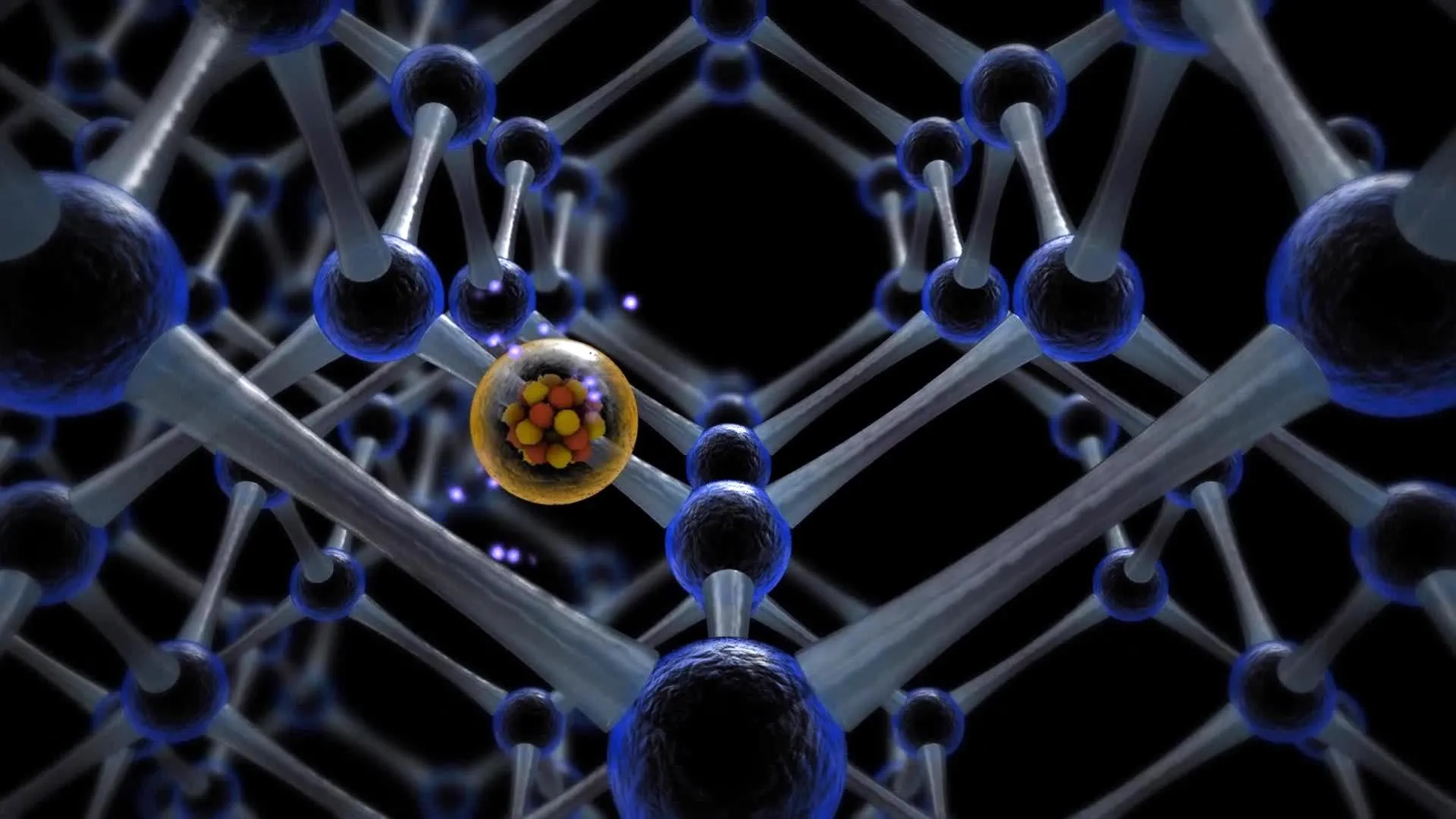
The field of theoretical physics is currently grappling with what has been described as the most significant discrepancy between theory and observation in the history of science. At the center of this crisis is the cosmological constant, a value representing the energy density of empty space, often associated with dark energy. While quantum field theory (QFT) predicts a value for this constant that is staggeringly large, astronomical observations indicate a value that is nearly zero. Recently, a team of physicists at Brown University published a paper in Physical Review Letters proposing a novel solution to this "deadliest" of problems by drawing an unexpected parallel between the large-scale structure of the universe and the behavior of electrons in condensed matter physics.
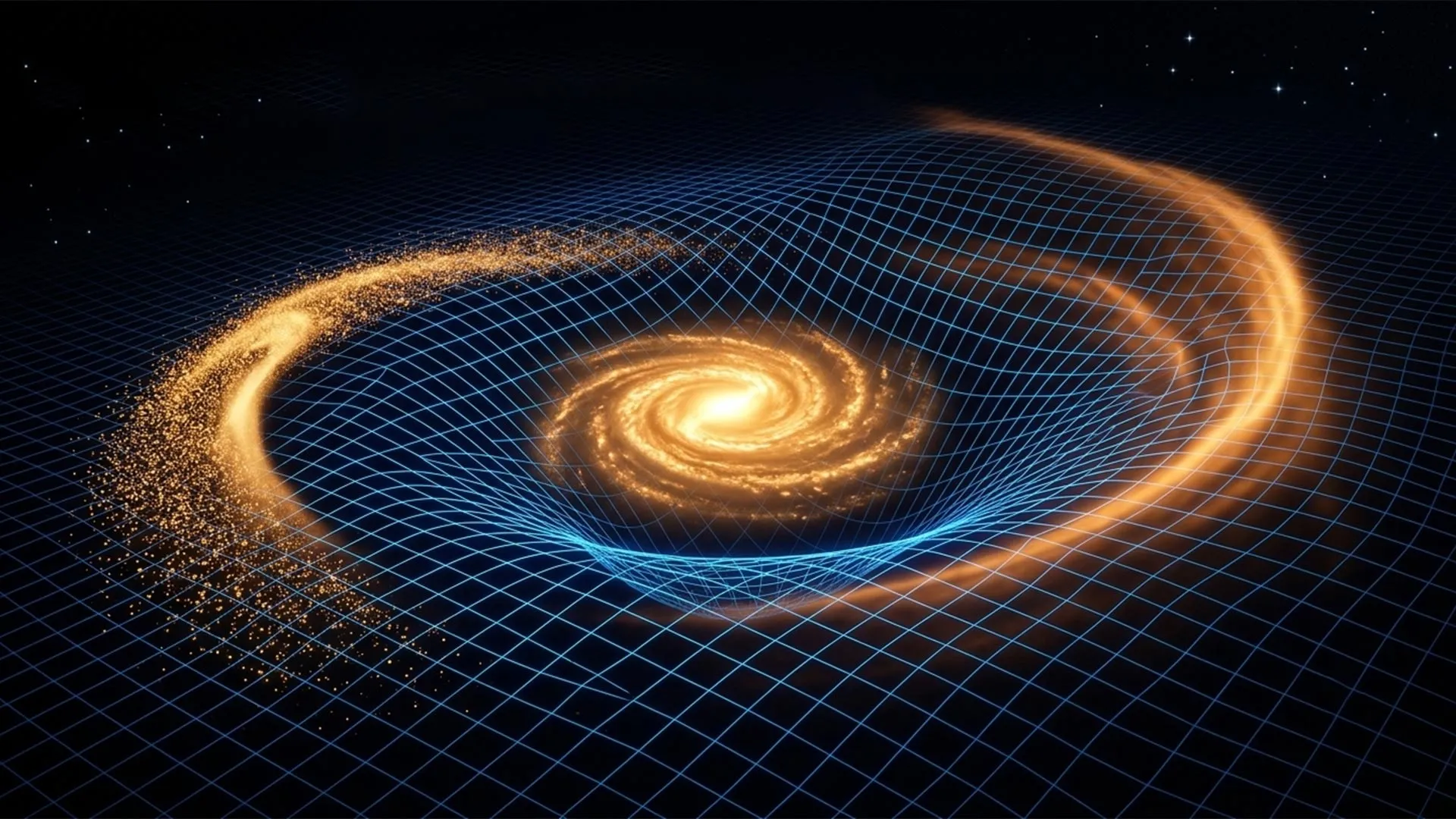
The study, authored by Stephon Alexander, Aaron Hui, and Heliudson Bernardo, suggests that the cosmological constant is kept stable and small due to a mathematical property known as topological protection. This mechanism is remarkably similar to the one found in the quantum Hall effect, a phenomenon observed in two-dimensional electron systems. By applying the principles of topology—a branch of mathematics focused on properties that remain unchanged under continuous deformation—the researchers argue that the fabric of space-time itself may possess a "shape" that renders enormous quantum energy fluctuations inert.
The Magnitude of the Cosmological Constant Problem
To understand the significance of the Brown University proposal, one must first grasp the scale of the conflict between General Relativity and Quantum Field Theory. In the framework of QFT, "empty" space is never truly empty. Instead, it is a roiling sea of virtual particles that constantly pop in and out of existence. These quantum fluctuations contribute to the "vacuum energy density." When physicists use the Standard Model to calculate this energy, the results are catastrophic.
Theoretical calculations suggest the vacuum energy should be approximately $10^120$ times larger than what astronomers observe. If the cosmological constant were actually as large as QFT predicts, the repulsive force of vacuum energy would have been so intense that the universe would have ripped itself apart milliseconds after the Big Bang. Matter would never have had the opportunity to clump together, meaning galaxies, stars, and planets could not exist. The fact that the universe is habitable and expanding at a relatively slow, accelerating rate implies that either the theory of QFT is incomplete or there is a mechanism suppressing this energy.
A Chronological History of the Cosmological Constant
The history of the cosmological constant is one of the most ironic chapters in physics. It was first introduced by Albert Einstein in 1917 as an addition to his field equations for General Relativity. At the time, the prevailing scientific consensus was that the universe was static. However, Einstein’s equations suggested that gravity should cause the universe to contract. To counteract this, he added the cosmological constant ($Lambda$) as a "fudge factor" to provide a repulsive force that would maintain a steady state.
The landscape changed in 1929 when Edwin Hubble, using the 100-inch Hooker telescope at Mount Wilson Observatory, discovered that distant galaxies were moving away from Earth at speeds proportional to their distance. This proved the universe was expanding. Einstein subsequently discarded the cosmological constant, famously calling it his "biggest blunder." For the next seven decades, the constant was largely assumed to be zero.
The situation shifted again in 1998. Two independent teams—the Supernova Cosmology Project and the High-Z Supernova Search Team—observed Type Ia supernovae and discovered that the expansion of the universe was not slowing down under the influence of gravity, as expected, but was actually accelerating. This discovery, which earned the 2011 Nobel Prize in Physics, necessitated the reintroduction of the cosmological constant as the simplest explanation for "dark energy." However, its revival immediately brought the $10^120$ discrepancy to the forefront of modern cosmology.
The Quantum Hall Effect as a Mathematical Blueprint
The breakthrough at Brown University came from looking at a seemingly unrelated field: condensed matter physics. The quantum Hall effect (QHE) occurs when a thin layer of conducting material is subjected to extremely low temperatures and powerful magnetic fields. Under these conditions, the electrical conductance of the material becomes "quantized," meaning it changes only in discrete, highly precise steps.
What makes the QHE remarkable is its robustness. Even if the material is "dirty" or contains structural imperfections, the conductance values remain exact. In the 1980s, physicists discovered that this stability is due to topology. The electrons in a quantum Hall system move in a collective state that is topologically protected; much like the number of holes in a donut remains the same no matter how much you squash or stretch the dough, the conductance remains fixed by the underlying mathematical "shape" of the electron system.
Stephon Alexander and his colleagues realized that the mathematics describing the Chern-Simons-Kodama (CSK) state—a proposed ground state for quantum gravity—shares a deep structural similarity with the mathematics of the quantum Hall effect. "What we find is that this quantization of the electrical conductance in quantum Hall has an analog with the cosmological constant," explained Aaron Hui. "It also ends up becoming quantized for topological reasons."
The Chern-Simons-Kodama State and Topological Protection
The research team focused on the CSK state because it represents a "conservative" approach to quantizing gravity. Unlike more complex frameworks like String Theory, which require extra dimensions and a vast "landscape" of possible universes, the CSK approach utilizes standard quantization methods used by pioneers like Paul Dirac and Erwin Schrödinger.
In this model, the cosmological constant is not just a random number but is tied to the topological properties of space-time. The researchers found that when space-time is treated as having non-trivial topology, the massive energy contributions from quantum fluctuations effectively "cancel out" or are blocked from affecting the expansion rate of the universe.
By applying the logic of the quantum Hall effect to the CSK state, the researchers demonstrated that the cosmological constant could be "locked" into a specific, small value. This prevents the "ballooning" effect predicted by standard QFT. The topology acts as a shield, ensuring that the constant remains stable despite the chaotic quantum activity occurring at the Planck scale.
Official Responses and Theoretical Implications
While the paper has generated significant interest within the theoretical physics community, the authors acknowledge that this is a starting point rather than a final solution. The scientific community generally views the "topological approach" as a promising avenue because it addresses the stability of the constant without requiring the fine-tuning of multiple parameters.
"We took something old, which is this conservative, canonical approach to quantum gravity, and discovered something new that had been there all along," said Stephon Alexander. The collaboration between Alexander, a cosmologist, and Hui, a condensed matter theorist, highlights a growing trend in physics: using the well-understood behaviors of small-scale matter systems to solve the largest mysteries of the cosmos.
External observers have noted that if the cosmological constant is indeed quantized, it could have profound implications for our understanding of the early universe. If the constant can only take certain discrete values, the transition between different energy states in the early cosmos might have been more "jumpy" than previously thought, potentially leaving signatures in the Cosmic Microwave Background (CMB) radiation that future telescopes might detect.
Analysis of Broader Impact and Future Research
The Brown University study provides a potential bridge between the two pillars of modern physics: General Relativity, which describes the macro-world of gravity and galaxies, and Quantum Mechanics, which describes the micro-world of atoms and subatomic particles. The inability to reconcile these two theories is the primary obstacle to a "Theory of Everything."
By showing that gravity might obey the same topological rules as condensed matter systems, the researchers have opened a new door for quantum gravity research. If the cosmological constant problem can be resolved through topology, it may suggest that other "fine-tuning" problems in physics—such as the mass of the Higgs boson—could also have topological origins.
The team is now moving toward a "bigger picture" analysis. Their future work will involve testing the CSK state against other observational data, such as the distribution of galaxies and the rate of cosmic expansion over different epochs. If the topological model holds, it could finally explain why our universe is uniquely suited for the development of complexity and life, moving the cosmological constant from the category of Einstein’s "blunder" to a fundamental, protected feature of the cosmic architecture.
The research not only offers a potential solution to a century-old puzzle but also reaffirms the utility of interdisciplinary collaboration. As the Brown Theoretical Physics Center continues to explore these links, the "deadliest problem in physics" may eventually become a solved chapter in the quest to understand the fundamental nature of reality.