


In a landmark study that could redefine the clinical approach to metabolic bone diseases, a research team led by Professor Tomoki Nakashima at the Institute of Science Tokyo has identified a pivotal protein, Fam102a, which acts as a dual regulator for both bone-forming and bone-resorbing cells. The findings, published in the journal Nature Communications on January 2, 2025, provide a comprehensive molecular blueprint of how the "Family with sequence similarity 102 member A" (Fam102a) protein governs the delicate equilibrium of the human skeleton. By uncovering the role of Fam102a in the nuclear trafficking of essential transcription factors, the research offers a promising new target for therapeutic interventions against osteoporosis, a condition that affects hundreds of millions of individuals globally.
The Biological Equilibrium of Bone Health
To understand the significance of the Fam102a discovery, one must first consider the dynamic nature of the human skeleton. Far from being static structural supports, bones are living tissues undergoing constant renewal through a process known as bone remodeling. This process relies on a precise "coupling" between two primary cell types: osteoblasts, which are responsible for synthesizing new bone matrix, and osteoclasts, which break down and resorb old or damaged bone tissue.
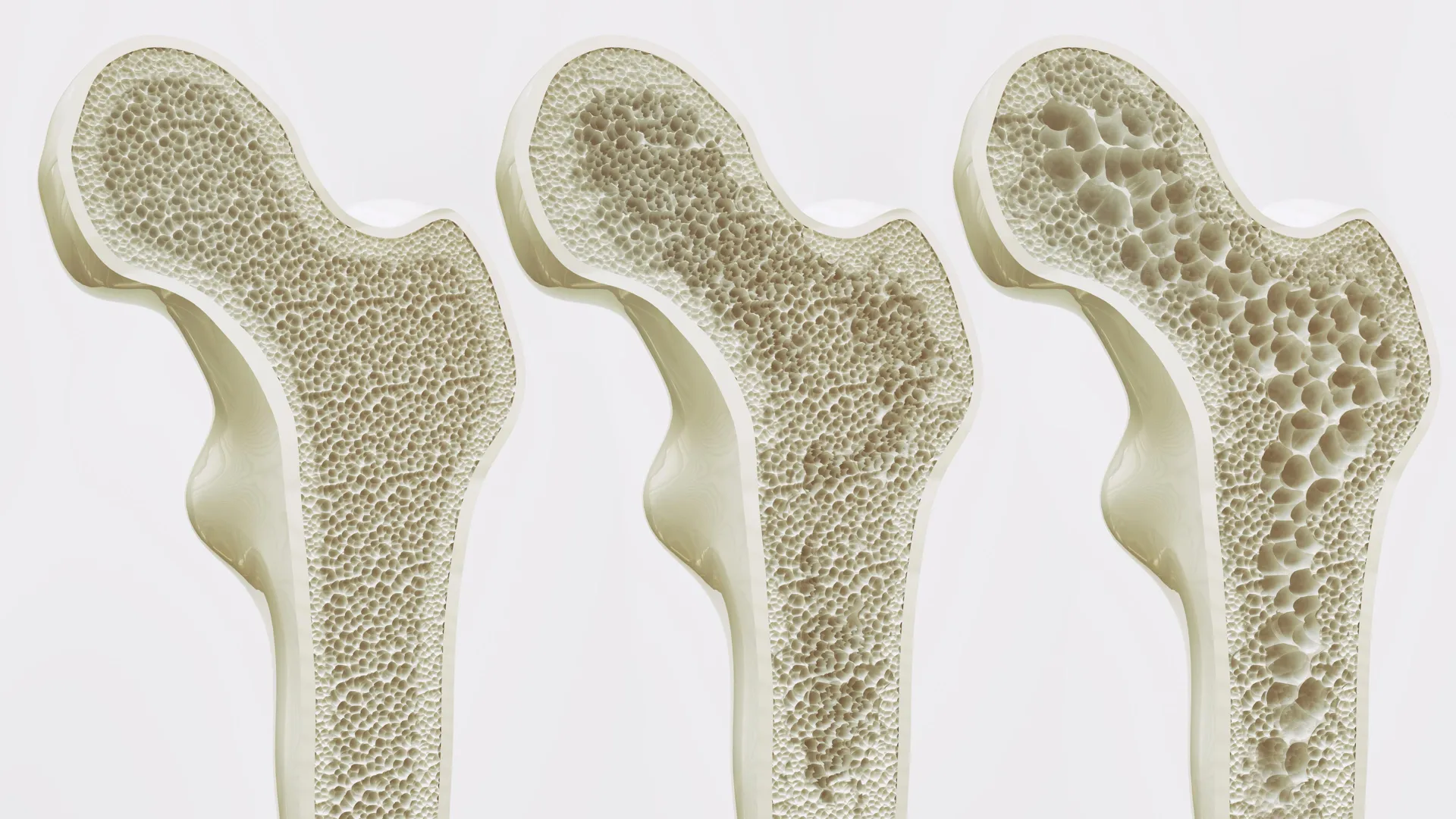
In a healthy adult, these two processes are perfectly balanced. However, as the body ages or under the influence of hormonal changes—such as the drop in estrogen during menopause—this balance is frequently disrupted. When bone resorption by osteoclasts outpaces bone formation by osteoblasts, the result is a systemic decrease in bone mineral density and the deterioration of bone microarchitecture. This condition, known as osteoporosis, renders the skeleton fragile and significantly increases the risk of fractures, which are a leading cause of morbidity and loss of independence among the elderly.
While modern medicine possesses several classes of drugs to treat osteoporosis, such as bisphosphonates and RANKL inhibitors, most current therapies focus primarily on inhibiting osteoclasts. Developing "anabolic" agents that simultaneously promote osteoblast activity while maintaining the necessary balance of bone turnover remains a significant challenge in the pharmaceutical industry. The identification of Fam102a as a factor influencing both cell lineages represents a major leap forward in addressing this therapeutic gap.
Chronology of the Discovery: From Gene Screening to Molecular Mapping
The journey to identifying Fam102a began with a systematic effort by Professor Nakashima’s team to find common denominators in bone cell development. Historically, research has treated osteoblasts and osteoclasts as distinct entities with separate regulatory pathways. The Science Tokyo team hypothesized that there might be overlooked "master switches" capable of modulating both sides of the remodeling equation.
The research timeline progressed through several critical phases:
- Initial Gene Expression Profiling: The team conducted high-throughput analyses of gene expression patterns in cells derived from specialized mouse models. By comparing cells with and without specific genetic modifications, they sought to identify genes that were consistently active during the differentiation of both osteoblasts and osteoclasts.
- Identification of Fam102a: Through this screening process, the Fam102a gene emerged as a central candidate. The data suggested that its expression was not only present but essential for the maturation of both bone-building and bone-clearing cells.
- In Vivo Validation (2023–2024): To confirm the gene’s systemic importance, the researchers developed Fam102a-deficient mice. These "knockout" models provided the definitive proof: the absence of the protein led to a significant reduction in bone volume and a phenotype strikingly similar to human osteoporosis.
- Mechanistic Elucidation (Late 2024): The final stage involved biochemical assays, including co-immunoprecipitation, to determine exactly how Fam102a interacted with other cellular components. This revealed the protein’s role in "nuclear trafficking"—the transport of vital instructions from the cell’s cytoplasm into its nucleus.
The Molecular Machinery: Fam102a and the Nuclear Gateway
The most groundbreaking aspect of the study is the elucidation of the Fam102a-Kpna2-Runx2 axis. For a cell to differentiate—meaning, to change from a generic stem cell into a specialized osteoblast—specific proteins called transcription factors must enter the cell’s nucleus to turn on the necessary genes.
The research team discovered that Fam102a acts as a facilitator for this process. Specifically, it binds to Karyopherin subunit alpha 2 (Kpna2), a transport protein that serves as a "shuttle" moving molecules across the nuclear membrane. This interaction is crucial for the localization of Runt-related transcription factor 2 (Runx2), which is widely considered the "master regulator" of osteoblast formation.
Without Fam102a, Runx2 cannot effectively enter the nucleus or function correctly, leading to a failure in the production of Osterix, another protein essential for bone formation. Furthermore, the researchers identified that another factor, the Recombination signal binding protein for immunoglobulin κ J region-like (Rbpjl), was the most significantly downregulated transcription factor in Fam102a-deficient osteoblasts, confirming a complex signaling network that ensures bones remain strong and dense.
Supporting Data and Experimental Evidence
The evidence presented in Nature Communications is supported by rigorous quantitative data. In the Fam102a-deficient mouse models, micro-computed tomography (micro-CT) scans revealed a dramatic thinning of the trabecular bone—the spongy, internal lattice that provides bones with their structural resilience.
Key data points from the study include:
- Bone Volume/Total Volume (BV/TV): A significant percentage decrease in bone volume was observed in knockout mice compared to wild-type (normal) control groups.
- Osteoblast Markers: Levels of alkaline phosphatase and collagen type I—indicators of active bone formation—were markedly lower in the absence of Fam102a.
- Osteoclast Activity: While Fam102a promotes the differentiation of osteoclasts, its absence led to a dysfunctional remodeling cycle where the lack of bone formation was the dominant pathological feature, resulting in the net loss of skeletal integrity.
These findings suggest that Fam102a is not merely a "helper" protein but an essential component of the skeletal system’s self-regulation mechanism.
Official Responses and Scientific Implications
Professor Tomoki Nakashima, reflecting on the broader implications of the study, emphasized the shift in perspective this discovery requires. "Initially, we carried out in-depth analyses of gene expression patterns… The gene expression profile showed that the Fam102a gene was central to regulating both osteoclast and osteoblast differentiation," Nakashima stated. He further noted that the study "sheds light on the critical molecular interactions involved in the bone remodeling process and can aid the development of innovative osteoporosis therapies."
The scientific community has reacted with cautious optimism. Independent experts in endocrinology and skeletal biology suggest that while human trials are still years away, the identification of a dual-regulator protein simplifies the target landscape for drug developers. Instead of designing a "cocktail" of drugs to target different cells, a single therapy modulating Fam102a could potentially recalibrate the entire remodeling environment.
Broader Impact on the Future of Osteoporosis Treatment
The discovery of Fam102a comes at a critical time for global public health. According to the International Osteoporosis Foundation, osteoporosis causes more than 8.9 million fractures annually, resulting in an osteoporotic fracture every three seconds. In the European Union alone, the economic burden of such fractures is estimated to exceed €37 billion per year, a figure expected to rise as the population ages.
The potential applications of this research extend beyond traditional osteoporosis. The Fam102a-Rbpjl axis and the protein’s role in nuclear trafficking could have implications for:
- Fracture Healing: Accelerating the bone repair process in patients with non-union fractures.
- Space Medicine: Addressing the rapid bone loss experienced by astronauts in microgravity environments.
- Rare Bone Diseases: Providing insights into genetic disorders where bone remodeling is severely impaired from birth.
As researchers move forward, the next step will involve screening for small molecules or monoclonal antibodies that can mimic or enhance Fam102a activity. If successful, these "Fam102a-mimetics" could represent a new generation of bone-strengthening drugs that work with the body’s natural trafficking systems to restore skeletal health.
In conclusion, the work of the Science Tokyo team has transformed Fam102a from an obscure genetic sequence into a high-priority target for molecular medicine. By decoding the complex "handshake" between Fam102a and the nuclear transport machinery, science has moved one step closer to a future where the debilitating effects of bone degradation can be effectively reversed.












Leave a Reply