In a discovery that challenges centuries of foundational fluid mechanics, a research team at Drexel University has demonstrated that simple, viscous liquids possess the capacity to fracture like solid glass when subjected to extreme stretching forces. This phenomenon, detailed in a recent publication in the prestigious journal Physical Review Letters, reveals that the distinction between a flowing liquid and a snapping solid is far more porous than previously understood. Led by researchers from Drexel’s College of Engineering in collaboration with ExxonMobil Technology & Engineering Company, the study indicates that all simple liquids—ranging from industrial oils to common water—may have a "breaking point" where they cease to flow and instead undergo a sudden, brittle failure.
The implications of this discovery are vast, potentially influencing everything from the precision of 3D printing and the efficiency of industrial hydraulics to our understanding of blood flow in high-pressure medical conditions. By identifying a "critical stress" threshold at which liquids snap, the researchers have provided a new framework for predicting and controlling fluid behavior in extreme environments.
The Traditional Divide Between Fluids and Solids
To understand the magnitude of this discovery, one must look at the long-standing principles of rheology—the study of the flow of matter. Traditionally, materials have been categorized into two broad camps: solids, which exhibit elasticity and break when stressed beyond their limit, and liquids, which exhibit viscosity and flow to accommodate applied force.
In classical fluid dynamics, "simple" liquids—those with a relatively uniform molecular structure—are expected to undergo continuous deformation. When you pull on a liquid like honey or water, it is supposed to thin out into a fine thread before eventually separating through a process of surface tension or "necking." It is not supposed to snap. Fracture has historically been reserved for solids or "complex" fluids like polymers and viscoelastic materials (such as slime or "Oobleck"), which contain long molecular chains that can store elastic energy.
The Drexel study upends this dichotomy. It suggests that viscosity alone, if high enough and coupled with sufficient force, can trigger a mechanical failure indistinguishable from the fracture of a solid. This means that even without the "memory" or elasticity of a polymer, a liquid can reach a point of critical stress where its internal cohesion simply fails.
The Chronology of an Unexpected Discovery
The discovery was not the result of a targeted search for liquid fracture, but rather a serendipitous observation during routine industrial testing. Dr. Thamires Lima, an assistant research professor at Drexel, and Dr. Nicolas Alvarez, a professor in the College of Engineering, were working with representatives from ExxonMobil to study the flow properties of two specific simple liquids: tar-like hydrocarbon blends and styrene oligomers.
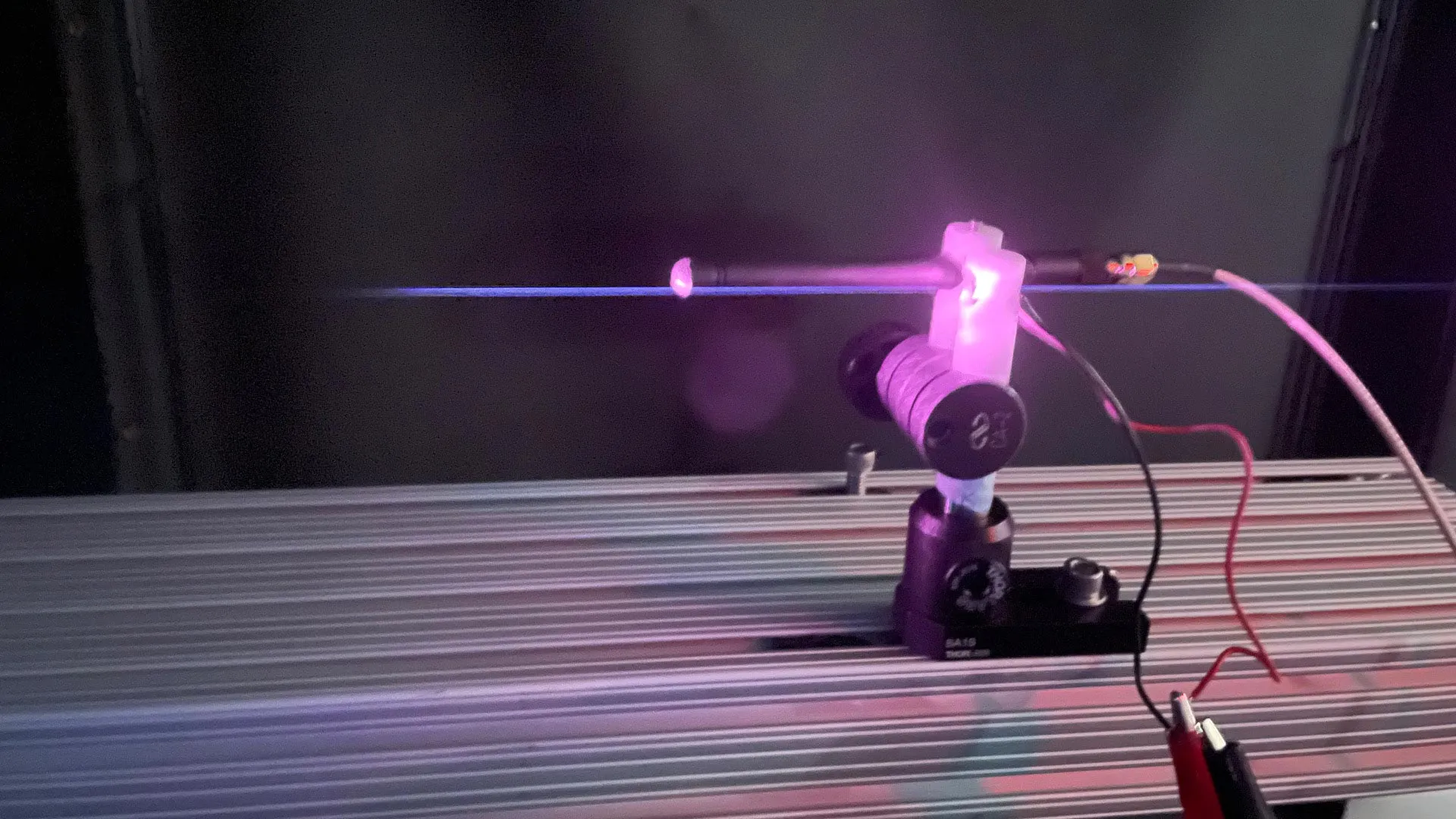
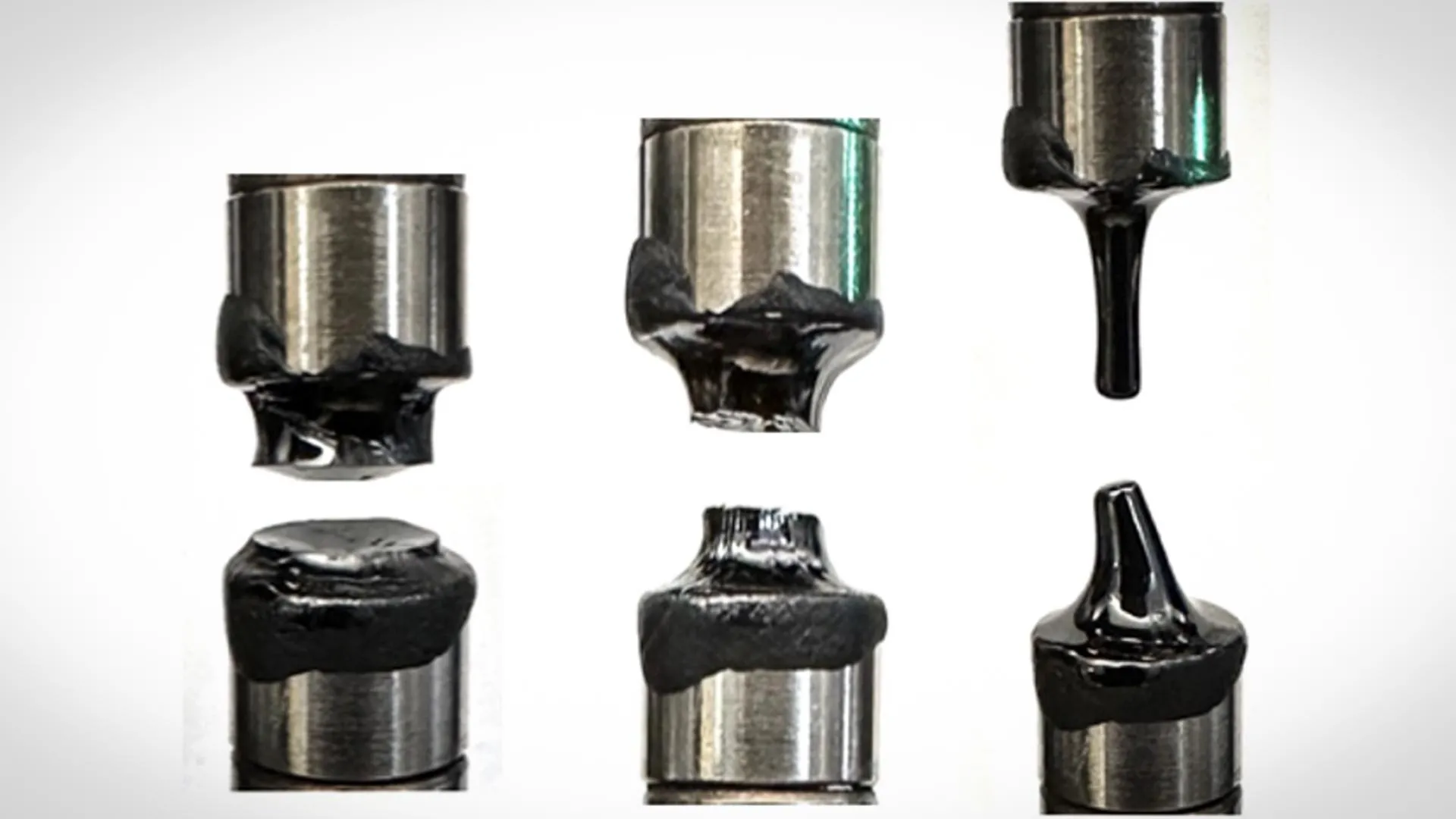
The team was employing a technique known as extensional rheology. This process involves placing a droplet of liquid between two plates and rapidly pulling them apart to measure the force required to make the liquid flow. Under normal circumstances, these viscous, tar-like substances were expected to stretch and elongate, much like pulling apart a piece of warm taffy.
However, during one particular trial, the researchers witnessed a phenomenon that defied their expectations. Instead of the liquid thinning into a thread, it produced a sharp, audible "crack"—a sound typically associated with the snapping of a dry twig or the breaking of glass.
"This was an incredibly surprising thing to behold," Dr. Lima noted in the report. "The fracture caused a very loud snapping noise that actually startled me. I thought at first the machine had broken, but soon realized that the noise came from the stretching fluid."
Recognizing that they had stumbled upon a potential anomaly in physics, the team pivoted their research. They utilized high-speed cameras capable of capturing thousands of frames per second to visualize the exact moment of failure. The footage confirmed their suspicions: the liquid was undergoing brittle fracture, a process where a material breaks suddenly without significant prior deformation.
Quantifying the Breaking Point: The 2 MegaPascal Threshold
Following the initial observation, the researchers sought to determine if this was a fluke of the specific hydrocarbon blend or a universal property of viscous liquids. They turned to styrene oligomers—shorter-chained versions of the molecules found in common plastics—which are classified as simple liquids because they lack the long-range elasticity of polymers.
The team discovered a remarkable consistency in the data. Regardless of the chemical composition of the simple liquid, the fracture consistently occurred at a critical stress point of approximately 2 megaPascals (MPa). To put this into perspective, 2 MPa is roughly 20 times the atmospheric pressure at sea level. In more tangible terms, it is equivalent to the pressure exerted if a laundry bag filled with ten heavy bricks were to snag on a single fingernail while falling.
To further validate the role of viscosity, the researchers manipulated the temperature of the liquids. Viscosity is highly temperature-dependent; as a liquid cools, it becomes thicker and more resistant to flow. The team found that at every temperature level, there was a specific "stretching rate" that would trigger a fracture. As long as the liquid was viscous enough and the rate of stretching was fast enough to hit that 2 MPa threshold, the liquid would snap.
Crucially, the team noted that at lower viscosities (thinner liquids), they could not achieve fracture—not because the liquid wouldn’t break, but because current laboratory equipment cannot stretch the liquid fast enough to reach the 2 MPa critical stress before the liquid simply flows out of the way. This suggests that even water could theoretically be fractured if it could be stretched at a high enough velocity.
Challenging the "Glass Transition" Assumption
For decades, the scientific consensus held that a liquid would only behave like a solid if it were cooled below its "glass transition" temperature. This is the point at which molecular motion slows down so much that the liquid becomes a "glassy" solid.
The Drexel study proves that this transition is not a requirement for fracture. The liquids tested were well above their glass transition temperatures, meaning they were fully in a liquid state, capable of flowing and taking the shape of their container. By demonstrating that "viscous effects" alone are sufficient to promote solid-like fracture, the researchers have opened a new chapter in the study of condensed matter physics.
"Showing that viscous effects are enough to promote solid-like fracture behavior opens a world of new questions to explore," Dr. Lima explained. This finding suggests that the mechanical limits of a material are not just defined by its state of matter (solid vs. liquid), but by the rate and intensity of the energy applied to it.
The Role of Cavitation: A Potential Explanation
While the fact of the fracture has been proven, the exact molecular "why" remains a subject of ongoing investigation. The Drexel team has proposed that the phenomenon may be linked to cavitation.
Cavitation is the rapid formation and collapse of vapor bubbles within a liquid. When a liquid is stretched rapidly, internal pressure drops. If the pressure drops low enough, it can cause the liquid to essentially "boil" at room temperature, creating tiny bubbles. As these bubbles form and then instantly collapse under the immense stress of the stretching, they generate shockwaves. The researchers believe these shockwaves may act as the "cracks" that propagate through the liquid, leading to the sudden, brittle snap observed in the experiments.
Broad Implications for Industry and Science
The discovery that simple liquids have a predictable breaking point has immediate and practical applications across several multi-billion-dollar industries.
1. 3D Printing and Additive Manufacturing
In 3D printing, liquids are extruded through fine nozzles at high speeds. One of the primary challenges in this field is "stringing" or "oozing," where the liquid doesn’t cut off cleanly, leading to defects in the printed object. Understanding the critical stress of the printing medium could allow engineers to design pulses that "fracture" the liquid at the nozzle, leading to cleaner breaks and higher-resolution prints.
2. Fiber Spinning and Textiles
The production of synthetic fibers involves extruding viscous polymers through spinnerets. If the liquid fractures prematurely, the fiber breaks, leading to industrial waste. By knowing the 2 MPa limit, manufacturers can optimize production speeds to stay just below the threshold of fracture, maximizing efficiency without risking material failure.
3. Hydraulics and Lubrication
High-pressure hydraulic systems rely on the consistent flow of oils to transmit power. If these oils reach a state of critical stress where they fracture, it could lead to sudden loss of pressure or mechanical "hammering" that damages equipment. This research provides a new safety parameter for the design of heavy machinery.
4. Medical Science and Blood Flow
While blood is a complex fluid, its plasma component behaves much like a simple liquid. In conditions where blood is forced through narrowed arteries (stenosis) or through artificial heart valves at extremely high velocities, the fluid may experience stresses approaching the critical limit. Understanding liquid fracture could lead to better designs for cardiovascular implants and a deeper understanding of blood-vessel damage.
Conclusion and Future Directions
The work conducted by Lima, Alvarez, and their colleagues at Drexel and ExxonMobil marks a significant shift in the landscape of fluid dynamics. By bridging the gap between the behavior of liquids and solids, they have provided a more unified view of material science.
The next steps for the research team involve testing a wider variety of liquids to see if the 2 MPa "universal" breaking point holds true across different chemical families. They also plan to use even more advanced imaging techniques to observe the role of cavitation at the microsecond scale.
As Dr. Alvarez noted, what began as a surprising anomaly in a lab test has evolved into a fundamental inquiry into the nature of matter. "Once we confirmed the phenomenon, the research became an entirely different scientific endeavor," he said. The "snap" heard in the Drexel lab may well be the sound of old scientific certainties breaking away to make room for a more complex and accurate understanding of the world around us.