

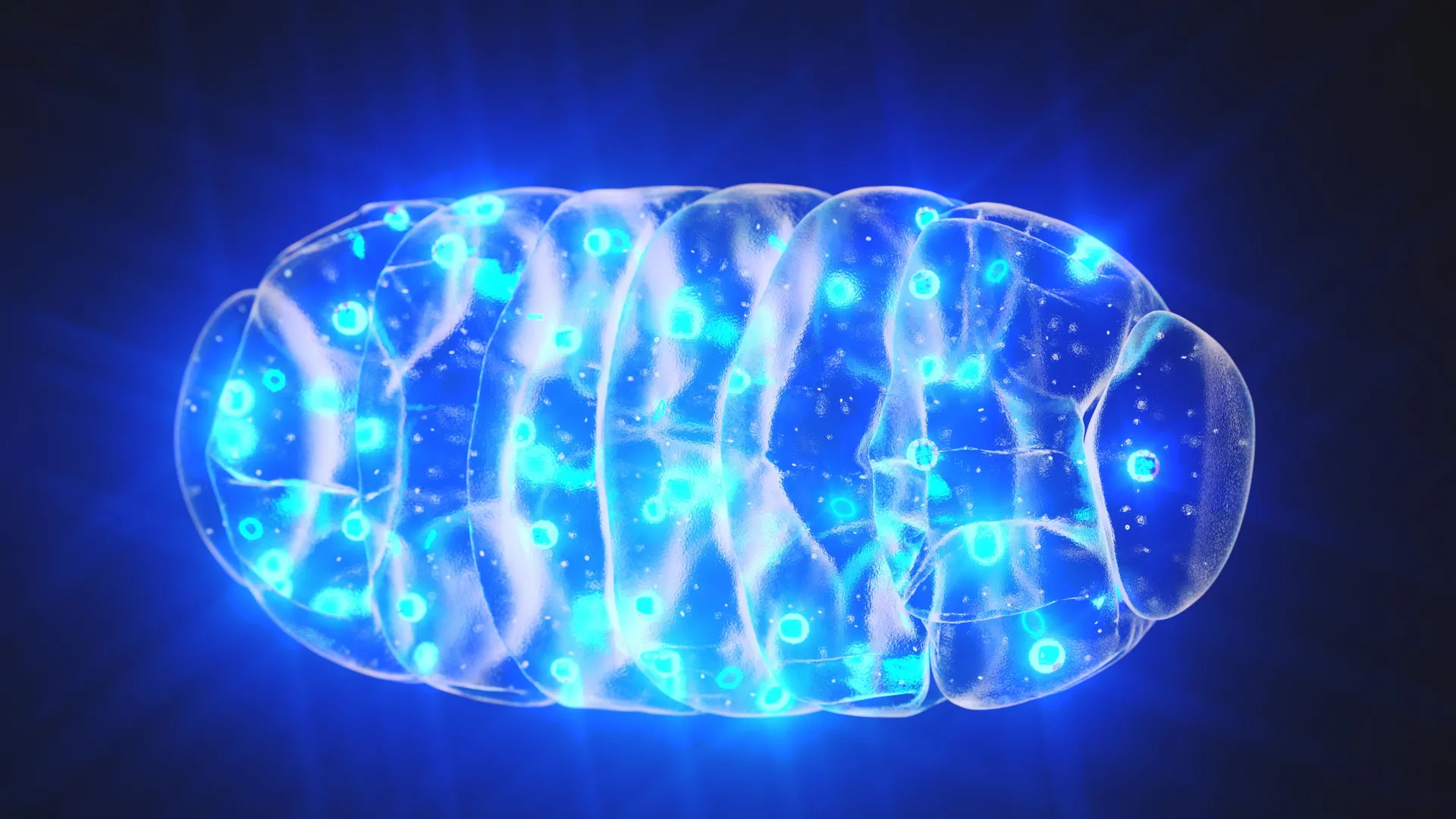
Mitochondria, the indispensable powerhouses of eukaryotic cells, are not only responsible for generating the vast majority of cellular energy through oxidative phosphorylation but also harbor their own distinct genetic blueprint. This mitochondrial DNA (mtDNA), present in hundreds to thousands of copies within each mitochondrion, is organized into compact structures known as nucleoids. For decades, a persistent observation has intrigued cell biologists: the remarkably regular spacing of these nucleoids within the mitochondrial network. This ordered arrangement is crucial for ensuring the faithful inheritance of mtDNA during cell division and for maintaining the uniform expression of its genes, thereby underpinning cellular vitality. When this intricate system falters, the consequences can be severe, manifesting in a spectrum of debilitating conditions ranging from metabolic and neurological disorders like liver failure and encephalopathy to age-related neurodegenerative diseases such as Alzheimer’s and Parkinson’s.
The Enduring Enigma of Nucleoid Spacing
The precise mechanism by which cells achieve such consistent nucleoid spacing has remained a profound mystery in cell biology for over a century. Despite numerous hypotheses postulating roles for mitochondrial dynamics—such as fusion and fission events—or molecular tethering mechanisms, these explanations proved insufficient. As noted by Suliana Manley, a professor at the Laboratory of Experimental Biophysics (LEB) at EPFL, these proposed pathways could not fully account for the maintenance of regular nucleoid spacing even when mitochondrial dynamics were experimentally disrupted. This suggested an underlying principle that operated independently of, or in concert with, these dynamic processes.
A Rediscovered Mechanism Comes to Light
Now, a groundbreaking study by Juan Landoni, a postdoctoral fellow at the LEB, and Professor Suliana Manley has illuminated the answer, identifying a long-overlooked process termed "mitochondrial pearling" as the key to this cellular puzzle. While the phenomenon of mitochondrial pearling—a transient morphological transformation of mitochondria into a "beads-on-a-string" configuration—was first described by Margaret Reed Lewis in 1915, it had largely been relegated to the realm of cellular anomalies, often dismissed as a sign of cellular stress. This recent research, however, elevates mitochondrial pearling from an obscure observation to a fundamental biophysical mechanism integral to the organization and function of the mitochondrial genome.
Observing Mitochondria in Unprecedented Detail
To unravel the secrets of mitochondrial pearling, Landoni and Manley employed a sophisticated arsenal of cutting-edge imaging techniques. Their methodology integrated super-resolution microscopy, which allows for visualization of cellular structures at resolutions far beyond the diffraction limit of light, with correlated light and electron microscopy (CLEM) for high-resolution ultrastructural details, and phase contrast microscopy for observing live cell dynamics. This multi-modal approach enabled the researchers to track individual nucleoids, capture the rapid and dynamic changes in mitochondrial shape during pearling events, and gain an unprecedented understanding of the internal organization of mitochondria.
The Dynamics of Mitochondrial Pearling
The live-cell imaging experiments revealed the remarkable dynamism of mitochondrial pearling. These shape transformations were observed to occur with surprising frequency, sometimes multiple times per minute within a single mitochondrion. During these brief but critical periods, mitochondria transiently develop a series of evenly spaced constrictions along their length, creating the characteristic beaded appearance. Crucially, the spacing between these "pearls" closely mirrored the established, regular spacing of nucleoids within the mitochondrial matrix.
Further detailed analysis showed that each of these pearl-like segments typically harbors a nucleoid at its core. While the presence of mtDNA is often associated with these structures, the pearling process itself can occur even in the absence of mtDNA. As the pearling sequence progresses, larger aggregations of nucleoids were observed to fragment into smaller clusters. These smaller nucleoid groups then migrate and settle into adjacent pearl structures. Upon the mitochondrion’s return to its more common tubular morphology, the nucleoids remain separated and evenly distributed, thereby preserving the vital order that was established during the pearling event.
The Regulatory Orchestration of Pearling
The research also delved into the intrinsic mechanisms that govern and regulate mitochondrial pearling. Through a series of meticulous genetic and pharmacological experiments, the team identified key players in this process. They discovered that the influx of calcium ions into the mitochondria serves as a potent trigger for initiating pearling. Furthermore, the internal membrane structures within the mitochondria play a critical role in facilitating and maintaining the separation of nucleoids during these shape transformations.
Conversely, when these regulatory factors were experimentally perturbed, a distinct consequence was observed: nucleoids exhibited a propensity to aggregate, losing their characteristic even spacing. This finding underscores the finely tuned nature of the pearling mechanism and its dependence on specific cellular signals and structural components.
A Paradigm Shift in Understanding Mitochondrial Biology
The rediscovery and detailed characterization of mitochondrial pearling represent a significant paradigm shift in our understanding of mitochondrial biology. "Since Margaret Reed Lewis first sketched mitochondrial pearling in 1915, it has largely been dismissed as an anomaly linked to cellular stress," Landoni commented. "Over a century later, it is emerging as an elegantly conserved mechanism at the heart of mitochondrial biology. This biophysical process offers a simple and energy efficient means to distribute the mitochondrial genome." This statement highlights the long journey of this scientific observation, from a nascent sketch to a fundamental biological principle.
Implications for Human Health and Disease
The implications of this discovery extend far beyond fundamental cell biology, holding significant promise for advancing our understanding and treatment of human diseases linked to mitochondrial dysfunction. The findings demonstrate that cellular organization relies not only on complex molecular machinery but also on fundamental physical processes. By elucidating the intricacies of mitochondrial pearling and its regulatory pathways, researchers gain critical insights into the origins of diseases associated with mtDNA defects.
Mitochondrial dysfunction is implicated in a wide array of human ailments, including neurodegenerative disorders like Alzheimer’s, Parkinson’s, and Huntington’s disease, as well as metabolic disorders such as diabetes and certain forms of cancer. The aging process itself is also closely linked to the declining efficiency and integrity of mitochondria. Understanding how the mitochondrial genome is meticulously organized and maintained through processes like pearling could pave the way for novel therapeutic strategies.
For instance, if abnormal pearling or nucleoid clumping contributes to the pathology of specific diseases, interventions aimed at restoring or enhancing the pearling process could offer a new avenue for treatment. This could involve pharmacological agents that modulate calcium signaling within mitochondria or influence the formation of internal membrane structures. The energy efficiency of this biophysical mechanism also suggests it could be a more sustainable target for therapeutic intervention compared to complex genetic manipulations.
Historical Context and Future Directions
The timeline of this discovery is noteworthy. Margaret Reed Lewis’s initial observation in 1915, made during an era of burgeoning microscopic techniques, hinted at a dynamic process within mitochondria. However, without the advanced imaging capabilities available today, her findings were difficult to interpret and validate, leading to their marginalization. The subsequent century saw a focus on other aspects of mitochondrial biology, such as their role in ATP production and their dynamic network formation through fusion and fission.
The recent work by Landoni and Manley, leveraging state-of-the-art technologies, has effectively resurrected Lewis’s observation, placing it at the forefront of current mitochondrial research. This underscores the iterative nature of scientific progress, where seemingly minor or overlooked findings can gain profound significance with the advent of new tools and perspectives.
Looking ahead, several avenues of research are likely to emerge from this discovery. Further investigation into the specific molecular components that mediate the membrane constrictions during pearling will be crucial. Understanding the precise interplay between calcium signaling, the inner mitochondrial membrane, and the nucleoid proteins is essential. Additionally, comparative studies across different cell types and organisms will reveal the evolutionary conservation and functional diversity of mitochondrial pearling.
Moreover, exploring the direct link between defects in mitochondrial pearling and specific disease pathologies is a critical next step. This could involve developing cellular and animal models that mimic human mitochondrial diseases and examining the status of nucleoid organization and pearling in these models. The ultimate goal is to translate this fundamental biological understanding into tangible clinical benefits, offering new hope for patients suffering from a range of debilitating mitochondrial disorders. The elegant simplicity and energetic efficiency of mitochondrial pearling offer a compelling testament to the power of biophysical principles in orchestrating the complex dance of cellular life.


















Leave a Reply