
The global fight against antimicrobial resistance (AMR) has reached a critical juncture as the pipeline for novel antibacterial agents continues to shrink. In October 2025, the World Health Organization (WHO) released a sobering report detailing a decline in the number of antibacterial agents in clinical development, dropping from 97 to 90 over a two-year period. Of these, only 15 are classified as truly innovative, and a mere five demonstrate activity against at least one of the pathogens categorized by the WHO as "critical." This stagnation underscores the urgency of World AMR Awareness Week 2026, as medical systems struggle to manage a landscape where one in six common bacterial infections now exhibits resistance to standard antibiotic treatments.
The implications of this crisis are severe. According to 2021 data, drug-resistant infections were associated with approximately 4.71 million deaths globally, a figure that continues to rise as pathogens evolve faster than the pharmaceutical industry can deliver new solutions. As the availability of effective drugs dwindles, the medical community is under immense pressure to ensure that existing and future treatments are deployed with maximum precision. This requires the rapid identification of resistance profiles—a process that artificial intelligence (AI) is uniquely positioned to accelerate. However, as recent reviews from the EUCAST subcommittee and the Align Foundation/Google DeepMind partnership have highlighted, the reliability of these AI models is currently hampered by the quality of the data used to train them.
A Chronology of the Data Crisis in AMR
The push for genomic-based resistance prediction has been characterized by rapid technological advancement in sequencing, yet it has been systematically undermined by a failure to standardize the underlying data.
In 2010, the Clinical and Laboratory Standards Institute (CLSI) introduced a pivotal shift in how clinicians define resistance by lowering carbapenem breakpoints for Enterobacteriaceae. This change meant that isolates previously categorized as "susceptible" might be reclassified as "resistant" under the new guidelines. While this change was scientifically necessary to reflect evolving clinical reality, it created a silent crisis for data integrity. AI models trained on historical data often conflate these labels, failing to account for the shifting thresholds.
By 2020, the scale of the data problem became evident when researchers identified over 2 million contaminated entries in GenBank, the National Institutes of Health’s public sequence database. These entries, which contained mixed DNA from multiple organisms, serve as a cautionary tale for any developer relying on unvetted public datasets. The presence of "missing negatives"—a lack of data on susceptible isolates because they are often deemed unremarkable—further skews AI models toward over-predicting resistance, as the algorithms lack the balanced exposure necessary to learn the distinction between resistant and non-resistant genotypes.
The Biological Blind Spots of AI Models
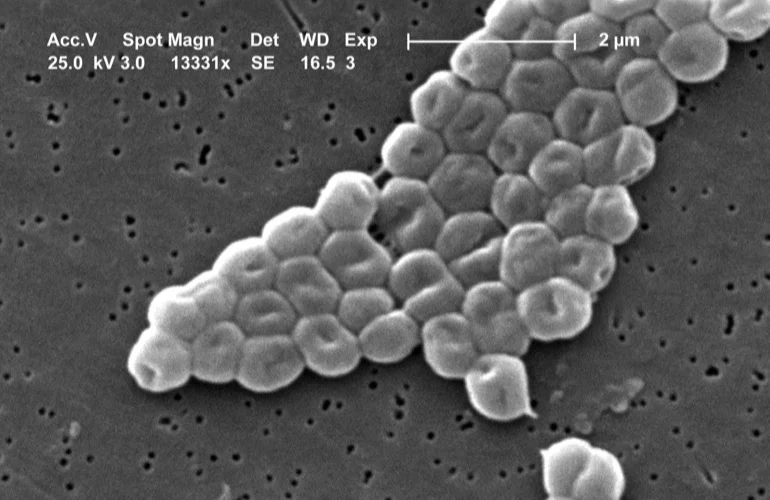
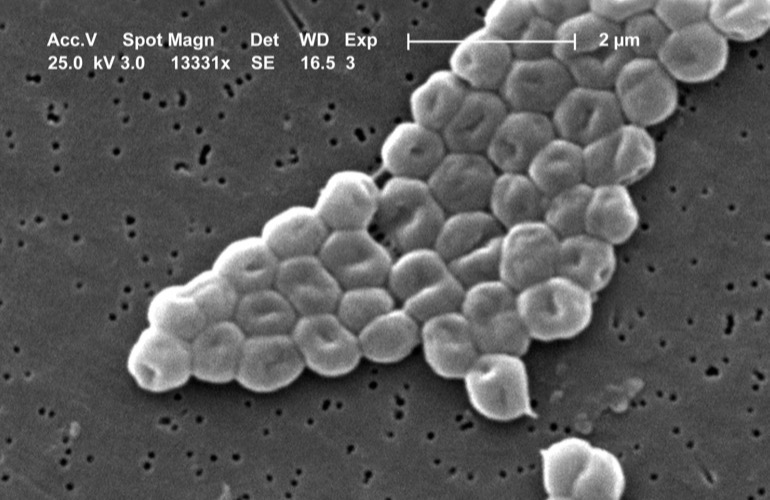
Current machine learning models frequently rely on the presence or absence of specific genes to predict resistance. While this approach is computationally efficient, it ignores the nuanced biological reality of how resistance is expressed. A classic example is the pathogen Acinetobacter baumannii. This bacterium often carries a carbapenemase gene (OXA-51-like) in its chromosome, but the gene typically only confers resistance when a mobile genetic element known as ISAba1 inserts itself upstream of the gene. An AI model that scans only for the presence of the gene will yield a high rate of false positives, misidentifying susceptible strains as resistant.
Furthermore, the phenomenon of heteroresistance—where a small subpopulation of resistant cells survives within a larger, susceptible culture—poses a significant challenge for conventional diagnostic tools. Because standard laboratory tests often miss these subpopulations, the resulting training data for AI models is fundamentally flawed. When the MIC (minimum inhibitory concentration) of an isolate sits exactly at the clinical breakpoint, the potential for error in labeling increases significantly. Without data that captures the full spectrum of these "gray-zone" cases, AI tools cannot reliably support the complex decision-making processes required in clinical settings.
Benchmarking and the Reproducibility Gap
A 2024 benchmark study highlighted the precarious nature of current AI progress by comparing four machine-learning models against ResFinder, a rule-based tool that flags known resistance genes. The study revealed that the reported accuracy of these models is highly dependent on how data is split between training and testing.
When test strains were randomly selected from the same pool as training strains, the AI models performed well, often appearing to outperform legacy tools. However, when the models were tasked with identifying resistance in strains that were less closely related to the training data, their performance dropped significantly. In these instances, ResFinder—which relies on established genetic rules—often proved more reliable. This suggests that much of the reported success of modern AI models in AMR is driven by "memorization" of familiar sequences rather than a true biological understanding of resistance mechanisms. Without a shared, community-governed set of benchmarks and fixed data splits, the industry lacks a reliable way to compare the efficacy of different AI architectures.

A Path Forward: Reference-Quality Data
To move beyond the current limitations, the scientific community must shift toward a model of "reference-grade" data. This requires three distinct pillars:
- Integrated Generation: Genomes and MIC values must be generated from the same physical isolate using standardized methods, such as ISO 20776-1 broth microdilution. By ensuring that the genotype and the phenotypic outcome are intrinsically linked, researchers can eliminate the noise that currently plagues large-scale public databases.
- Community Governance: The establishment of a shared, transparent, and validated test set is essential. This set should include not only clear-cut cases of resistance but also borderline isolates and discordant cases where genomic and phenotypic data appear to conflict. By publishing fixed data splits, the industry can ensure that future claims of accuracy are verifiable and comparable.
- Temporal Monitoring: Because resistance is a dynamic, evolutionary process, benchmarks must include both historic and recent clinical isolates. Training models on longitudinal collections allows algorithms to learn how resistance evolves across lineages, enabling them to identify novel variants earlier.
Culture collections, such as the ATCC Genome Portal, are already taking steps to address these gaps by linking authenticated strains to reference-grade genomes. These resources are critical for developing models that can keep pace with the emergence of new pathogens.
Implications for the Future of Antibiotic Stewardship
The current scarcity of new antibiotics necessitates a conservative approach to their use. As new therapies reach the market, they are often designated as "last-resort" drugs, protected from widespread use to prevent the rapid development of resistance. AI-based diagnostic tools could play a vital role in this strategy by ensuring these drugs are administered only when absolutely necessary and only to the patients most likely to benefit.
However, the medical community’s trust in these tools depends on their reliability. If an AI model fails to accurately predict resistance, it could lead to either the inappropriate use of a new antibiotic—accelerating the loss of its efficacy—or the withholding of a life-saving treatment due to a false-negative prediction.
As we observe World AMR Awareness Week 2026, the call to action for developers, researchers, and clinicians is clear: AI models for antimicrobial resistance must be held to the same rigorous standards of evidence as the drugs they are designed to protect. Achieving this will require a departure from the "more data is better" mindset in favor of a "better data is essential" approach. Only by grounding AI in verified, context-rich, and standardized reference materials can we build the diagnostic infrastructure necessary to preserve the next generation of antibiotics for the future.