

In a landmark achievement for the fields of neuromorphic computing and bioelectronics, researchers at Northwestern University have successfully engineered printed artificial neurons that do more than merely mimic the electrical patterns of the human brain; they can actively communicate with living biological tissue. These flexible, low-cost devices generate complex electrical signals that are nearly indistinguishable from those produced by natural neurons, enabling them to bridge the gap between digital hardware and organic nervous systems. This breakthrough, detailed in the April 15 issue of the journal Nature Nanotechnology, represents a significant leap toward a future where electronic implants can seamlessly integrate with the human body to restore lost sensory or motor functions.
The study, led by materials science expert Mark C. Hersam, introduces a paradigm shift in how engineers approach brain-machine interfaces (BMIs). Traditionally, the divide between the rigid, silicon-based world of computers and the soft, saline-rich environment of the human body has been a primary obstacle in medical technology. By utilizing printable, biocompatible materials, the Northwestern team has created a device that not only matches the mechanical flexibility of biological tissue but also replicates the sophisticated signaling "language" of the brain.
The Convergence of Nanotechnology and Neurobiology
The development of these artificial neurons is rooted in the convergence of advanced materials science and neurobiological principles. For decades, researchers have attempted to create "neuromorphic" hardware—electronics inspired by the brain’s architecture. However, most previous attempts relied on traditional silicon transistors, which, while powerful, are fundamentally different from biological neurons. Silicon chips are rigid, two-dimensional, and operate on binary logic, whereas the brain is soft, three-dimensional, and utilizes a vast array of chemical and electrical signals to process information.
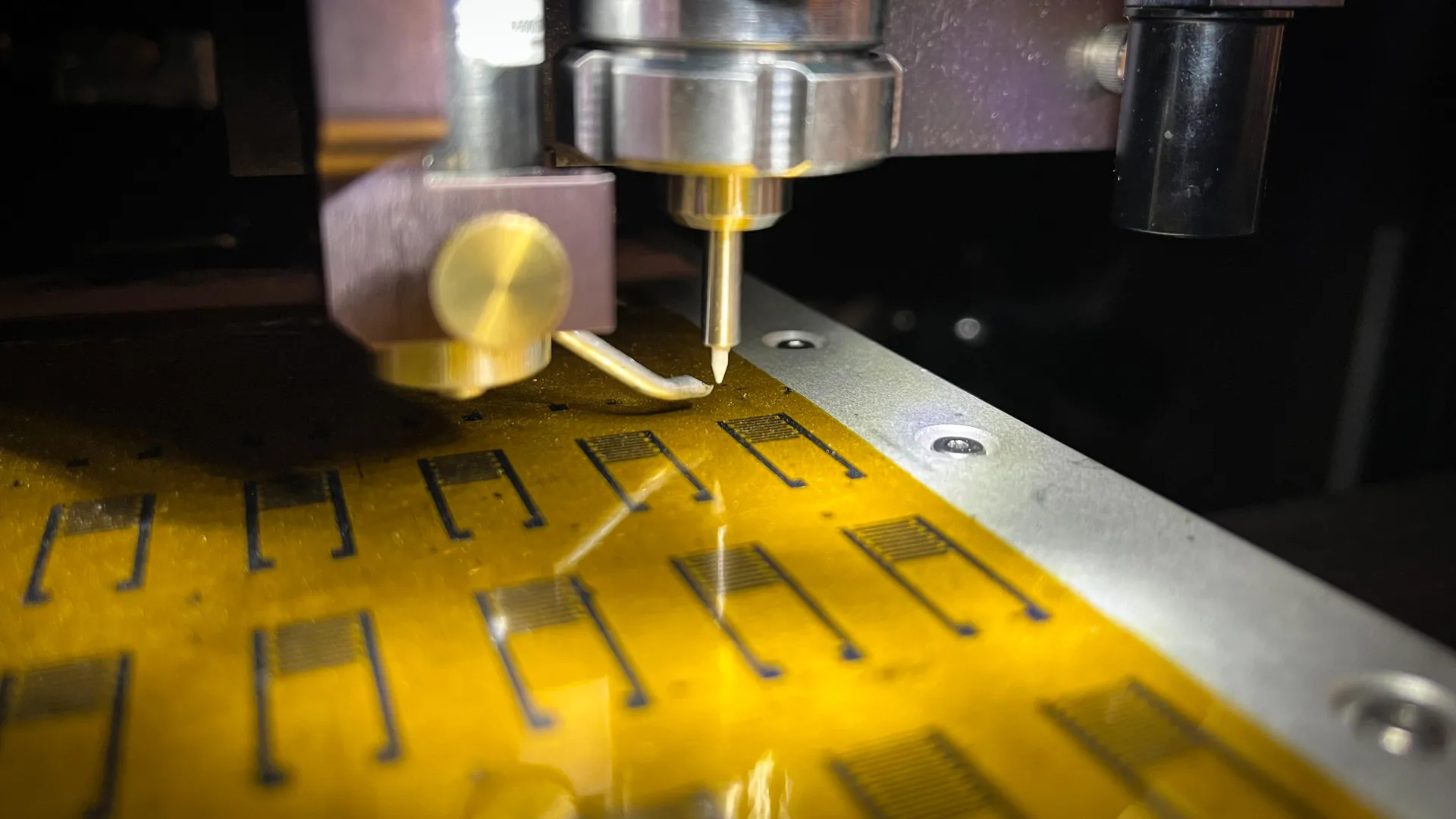
To overcome these limitations, the Northwestern team turned to two-dimensional nanomaterials: molybdenum disulfide (MoS2) and graphene. MoS2, a semiconductor, and graphene, a highly efficient conductor, were processed into electronic inks. Using a technique known as aerosol jet printing, the researchers deposited these inks onto flexible polymer substrates. This additive manufacturing process allows for the creation of complex, multi-layered circuits that can be bent and twisted without losing functionality, making them ideal for integration with the soft tissues of the brain or spinal cord.
A critical innovation in this research involved the role of the polymer within the electronic inks. In previous iterations of printed electronics, residual polymers were considered contaminants that hindered electrical performance and were typically removed. However, Hersam’s team discovered that by partially decomposing the polymer through controlled electrical currents, they could create a "conductive filament." This filament constricts current into a narrow spatial region, mimicking the way ions flow through the channels of a biological cell membrane. This mechanism allows the artificial neuron to produce a variety of firing patterns, including single spikes, continuous "tonic" firing, and rapid "bursting" sequences, all of which are essential for encoding information in the nervous system.
Experimental Validation: Bridging the Biological Divide
The most significant milestone of the study occurred when the artificial neurons were tested against live biological tissue. In collaboration with Indira M. Raman, a professor of neurobiology at Northwestern’s Weinberg College of Arts and Sciences, the team applied the signals generated by the printed devices to slices of mouse brain tissue—specifically the cerebellum, the region responsible for motor control and coordination.
The results were unprecedented. The biological neurons responded to the artificial inputs as if they were receiving signals from another living cell. The timing, duration, and shape of the artificial spikes were calibrated so precisely that they successfully triggered the natural neural circuits within the mouse brain.
"Other labs have tried to make artificial neurons with organic materials, but they spiked too slowly," Professor Hersam noted during the announcement of the findings. "Or they used metal oxides, which are too fast. We are within a temporal range that was not previously demonstrated for artificial neurons. You can see the living neurons respond to our artificial neuron. We’ve demonstrated signals that are not only the right timescale but also the right spike shape to interact directly with living neurons."
This successful interaction suggests that these devices could eventually be used to bypass damaged neural pathways. For instance, in patients with spinal cord injuries, these artificial neurons could potentially receive signals from the brain and transmit them directly to the muscles, effectively restoring movement. Similarly, they could be used in advanced retinal or cochlear implants to provide a more natural and high-fidelity interface for restoring sight and hearing.
Addressing the Energy Crisis in Artificial Intelligence
Beyond the medical implications, the Northwestern study addresses a looming environmental and logistical crisis in the world of computing: the massive energy consumption of modern artificial intelligence (AI). As AI models grow more complex, the data centers required to train and run them are consuming staggering amounts of electricity and water.
Professor Hersam highlighted the unsustainable trajectory of current digital computing. "To meet the energy demands of AI, tech companies are building gigawatt data centers powered by dedicated nuclear power plants," he said. "It is evident that this massive power consumption will limit further scaling of computing since it’s hard to imagine a next-generation data center requiring 100 nuclear power plants."
The human brain, by comparison, is roughly five orders of magnitude more energy-efficient than a digital computer. It performs complex pattern recognition, language processing, and motor control while consuming about as much power as a dim light bulb. The efficiency of the brain stems from its "heterogeneity"—the fact that it is composed of many different types of specialized neurons that communicate only when necessary.
By replicating this heterogeneity through printed electronics, the Northwestern team aims to create "brain-like" hardware that can process AI tasks with a fraction of the energy required by silicon chips. Because each printed artificial neuron can handle more complex signaling on its own, fewer total components are needed to perform advanced computations. This reduction in hardware complexity translates directly into lower power consumption and less heat generation, potentially solving the thermal management issues that currently plague high-performance computing.
A New Era of Sustainable and Low-Cost Manufacturing
The manufacturing process developed by the Northwestern team also offers significant economic and environmental advantages over traditional semiconductor fabrication. Silicon chip manufacturing is an incredibly resource-intensive process, requiring "clean rooms," high temperatures, and toxic chemicals. It also generates significant waste, as material is etched away from silicon wafers to create circuits.
In contrast, the aerosol jet printing method used in this study is an "additive" process. Material is only deposited where it is needed, virtually eliminating waste. Furthermore, the process can be carried out at lower temperatures and does not require the multi-billion-dollar infrastructure of a silicon foundry. This opens the door for localized, low-cost production of advanced neuro-electronics, which could be customized for individual patients or specific research applications.
The use of MoS2 and graphene also points toward a more sustainable material future. These materials are robust and can be sourced or synthesized with a lower environmental footprint than the rare-earth elements often found in modern electronics.
Chronology of Development and Future Outlook
The journey to this breakthrough has been years in the making. Professor Hersam and his colleagues have spent over a decade investigating the properties of 2D materials and their potential in neuromorphic engineering.
- 2015-2018: Early research focused on the basic electrical properties of MoS2 and graphene, establishing them as viable candidates for flexible electronics.
- 2019-2021: The team perfected the aerosol jet printing technique, moving from simple conductive lines to more complex transistor-like structures.
- 2022-2023: The discovery of the "polymer-filament" effect allowed the researchers to move beyond simple switching to the complex "spiking" behavior required to mimic neurons.
- 2024: Successful integration with biological tissue marks the transition from theoretical hardware to functional bioelectronics.
The study, titled "Multi-order complexity spiking neurons enabled by printed MoS2 memristive nanosheet networks," was supported by the National Science Foundation (NSF). While the current results are a significant proof of concept, the researchers emphasize that there is still work to be done before these devices reach clinical settings. The next phase of research will likely involve long-term studies in living models to ensure the biocompatibility and durability of the printed neurons over months or years.
Expert Analysis: The Implications for Society
The implications of this technology extend far beyond the laboratory. If artificial neurons can truly become a permanent, functional part of the human nervous system, the definition of "prosthetic" will be fundamentally altered. We are moving away from external mechanical aids toward internal, integrated biological-electronic hybrids.
From an AI perspective, this research suggests that the future of computing may not be found in making silicon chips smaller, but in making them more biological. As the world grapples with the carbon footprint of the digital age, looking to the 3.5 billion years of evolution that perfected the human brain may be the only viable path forward.
"The world we live in today is dominated by artificial intelligence," Hersam concluded. "The way you make AI smarter is by training it on more and more data. This leads to a massive power-consumption problem. We have to come up with more efficient hardware. Because the brain is so much more efficient, it makes sense to look there for inspiration."
As the scientific community digests the findings published in Nature Nanotechnology, the work at Northwestern University stands as a testament to the power of interdisciplinary collaboration. By combining the precision of engineering with the complexity of biology, researchers have moved one step closer to a world where the line between man and machine is not just blurred, but successfully bridged.


















Leave a Reply