The evolutionary trajectory of the human species is defined by a singular, dramatic expansion of the brain, a biological phenomenon that has long puzzled anthropologists and evolutionary biologists alike. New research published in the journal Early Human Development suggests that this cognitive leap may be intrinsically linked to prenatal hormonal environments, specifically higher levels of estrogen exposure during fetal development. This groundbreaking study, led by Professor John Manning of Swansea University’s Applied Sports, Technology, Exercise and Medicine (A-STEM) research team in collaboration with the Department of Anthropology at Istanbul University, posits that a visible record of this ancient evolutionary shift can be found in the relative lengths of a person’s fingers—a measurement known as the digit ratio.
The Biological Significance of the 2D:4D Digit Ratio
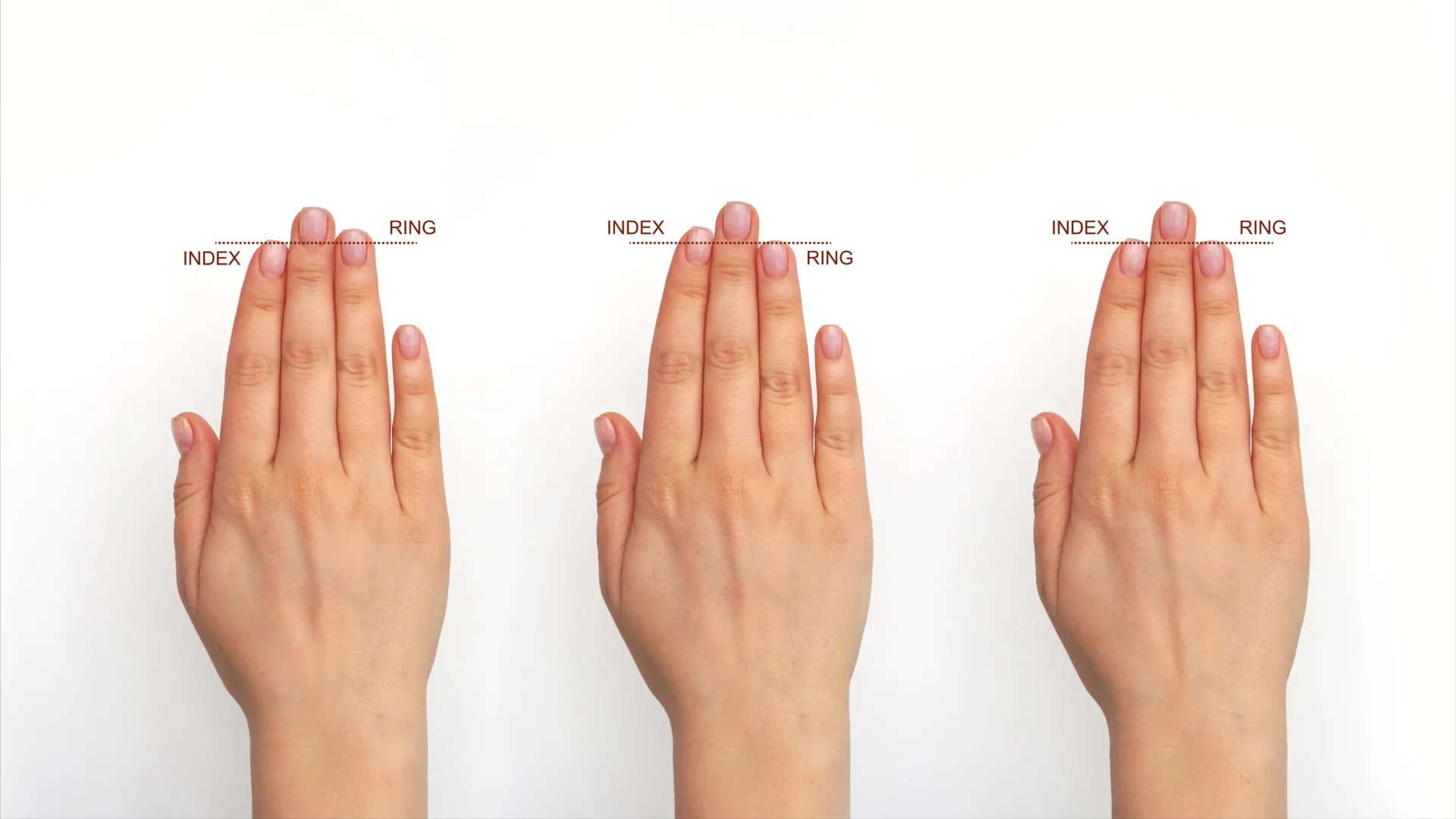
The digit ratio, or the 2D:4D ratio, is a comparison between the length of the index finger (the second digit) and the ring finger (the fourth digit). For decades, this metric has served as a non-invasive proxy for understanding the hormonal landscape of the womb during the first trimester of pregnancy. According to the prevailing scientific consensus, a lower 2D:4D ratio—where the ring finger is longer than the index finger—is typically associated with higher prenatal exposure to testosterone. Conversely, a higher 2D:4D ratio—where the index finger is longer than or nearly equal to the ring finger—is indicative of higher prenatal exposure to estrogen relative to testosterone.
In the newly released study, researchers sought to determine if these hormonal markers correlate with brain size at birth. To investigate this, the team examined a cohort of 225 newborns, consisting of 100 boys and 125 girls. The methodology involved precise measurements of each infant’s finger lengths alongside their head circumference. In the field of neonatology, head circumference is widely accepted as a reliable indirect indicator of brain volume and has been statistically linked to future cognitive development and intelligence quotients (IQ), though it is acknowledged that a multitude of environmental and genetic factors also play critical roles in determining adult intelligence.
Statistical Findings and Gender Divergence
The results of the study revealed a significant correlation specifically within the male subjects. The researchers found that newborn boys with higher 2D:4D ratios—those exposed to more estrogen in utero—tended to have larger head circumferences. Interestingly, this relationship was not observed in the female cohort. This sex-specific finding suggests that the influence of prenatal estrogen on brain expansion may operate differently across genders or that the male brain is particularly sensitive to these hormonal shifts during critical windows of development.
Professor Manning and his colleagues suggest that these findings provide empirical weight to a provocative evolutionary framework known as the "estrogenized ape hypothesis." This theory suggests that the transition from early hominids to modern humans involved a process of "feminization" of the skeleton. While earlier ancestors possessed robust, thick-boned, and heavily muscled frames, modern humans evolved to have more gracile (slender) skeletons. The hypothesis argues that this physical softening occurred in tandem with the massive expansion of the neocortex, fueled by a shift in the balance of sex hormones toward estrogen.
The Estrogenized Ape Hypothesis: A Chronology of Human Change
To understand the context of this study, one must look at the broader timeline of human evolution. Approximately 2 to 3 million years ago, the genus Homo began to exhibit a marked increase in cranial capacity. Homo habilis possessed a brain size of roughly 600 cubic centimeters (cc), which expanded to approximately 900 cc in Homo erectus, eventually reaching the 1,300 to 1,500 cc range seen in modern Homo sapiens.
During this same period, the human fossil record shows a distinct reduction in sexual dimorphism and skeletal robustness. The heavy brow ridges and massive jawbones of our ancestors began to recede. The "estrogenized ape hypothesis" posits that this was not a coincidence. Instead, it suggests that higher levels of estrogen (or a heightened sensitivity to it) facilitated the growth of neural tissue while simultaneously reducing the metabolic energy spent on maintaining a heavy, "masculinized" skeleton. The new data from the Istanbul study provides a contemporary biological link between these two seemingly disparate traits: "feminized" finger ratios and larger brain indicators.
The Biological Cost of Intelligence: A Risky Trade-Off
While a larger brain offers immense evolutionary advantages—such as the capacity for language, complex social structures, and advanced tool use—Professor Manning notes that this development may have come at a biological cost, particularly for males. In the study, Manning highlights a paradox: while higher 2D:4D ratios in males are associated with larger head sizes, they are also statistically linked to several negative health outcomes.
"This finding is relevant to human evolution because increases in brain size are found alongside feminization of the skeleton," Professor Manning explained. "High values of 2D:4D in males have been found to be related to elevated rates of heart problems, poor sperm counts, and a predisposition to schizophrenia."
The implications of this "evolutionary trade-off" are profound. It suggests that the drive for higher intelligence was so beneficial to the survival of the species that it outweighed the risks of cardiovascular disease and reduced fertility. In this view, the modern human male is a product of a delicate balancing act—maintaining enough viability to reproduce while carrying the hormonal signature required to house a massive, energy-hungry brain.
Contextualizing Manning’s Research Portfolio
The study on brain size is the latest in a long series of investigations by Professor Manning into the predictive power of the 2D:4D ratio. His previous work has spanned various disciplines, seeking to understand how prenatal hormones influence everything from athletic performance to disease susceptibility.
For instance, Manning has previously published research exploring:
- Athletic Prowess: Studies on oxygen consumption in professional footballers suggest that those with lower 2D:4D ratios (higher prenatal testosterone) often possess superior cardiovascular efficiency.
- Public Health: During the global pandemic, Manning’s team explored whether digit ratios could predict outcomes after contracting COVID-19, investigating the role of testosterone in immune response.
- Behavioral Health: Research has also delved into the links between digit ratios and alcohol consumption patterns, suggesting that hormonal exposure in the womb may set certain neurological "baselines" for addictive behaviors.
By adding brain evolution to this list, the research team moves from studying individual traits to addressing the very origins of our species’ unique cognitive profile.
Expert Analysis and Broader Implications
The scientific community views these findings with cautious optimism. While the correlation between head circumference and digit ratio is statistically significant in this sample, researchers emphasize that the index finger is not a "crystal ball" for intelligence. Rather, it serves as a biological marker of a specific moment in time—the first trimester—when the foundations of the brain and the extremities are being laid down simultaneously.
Anthropologists suggest that if estrogen indeed played a central role in human brain expansion, it might change how we view the "man the hunter" narrative of evolution. If the "feminization" of the human form was a prerequisite for our cognitive rise, it implies that the evolution of cooperation, social intelligence, and communication—traits often associated with estrogen-influenced neural pathways—were the primary drivers of our success, rather than raw physical power.
Furthermore, the study opens new avenues for neurodevelopmental research. If the hormonal environment of the womb can be mapped through physical traits like finger length, it may eventually help clinicians identify infants who might be at higher risk for certain conditions mentioned by Manning, such as schizophrenia or heart issues, allowing for earlier monitoring and intervention.
Conclusion: A New Lens on the Human Story
The collaboration between Swansea University and Istanbul University provides a compelling piece of evidence in the puzzle of human origins. By linking the "estrogenized ape hypothesis" to modern neonatal data, the researchers have bridged the gap between paleoanthropology and modern endocrinology.
The findings suggest that the very hormones that make us physically "softer" than our Neanderthal cousins are the same ones that allowed us to develop the most complex structure in the known universe: the human brain. While this evolution brought with it a suite of vulnerabilities, including risks to male reproductive and cardiovascular health, the trade-off resulted in a species capable of contemplating its own history.
As research continues, the digit ratio remains a silent witness to the ancient hormonal shifts that shaped our ancestors. While we often look to the stars or deep into the fossil record to understand our place in the world, this study reminds us that some of the most significant clues to our evolution are literally at our fingertips. Future studies will likely focus on longitudinal data, following these 225 newborns into childhood and adulthood to see if the correlation between their 2D:4D ratios and their cognitive trajectories holds firm, further illuminating the high-stakes biological gamble that produced the modern human mind.