For more than sixty years, the international physics community has been captivated by a persistent anomaly involving the muon—a subatomic particle often described as the electron’s "heavy cousin"—which suggested that our fundamental understanding of the universe might be incomplete. This discrepancy between the theoretical predictions of the Standard Model and experimental measurements led to widespread speculation regarding the existence of a "fifth force" of nature or previously undiscovered particles. However, a landmark study led by researchers at Penn State, recently published in the journal Nature, indicates that this long-standing mystery may finally be solved. By employing unprecedented computational precision, the research team has demonstrated that the perceived gap between theory and experiment was likely the result of limitations in previous mathematical models rather than an indication of "new physics."
The Muon and the Quest for New Physics
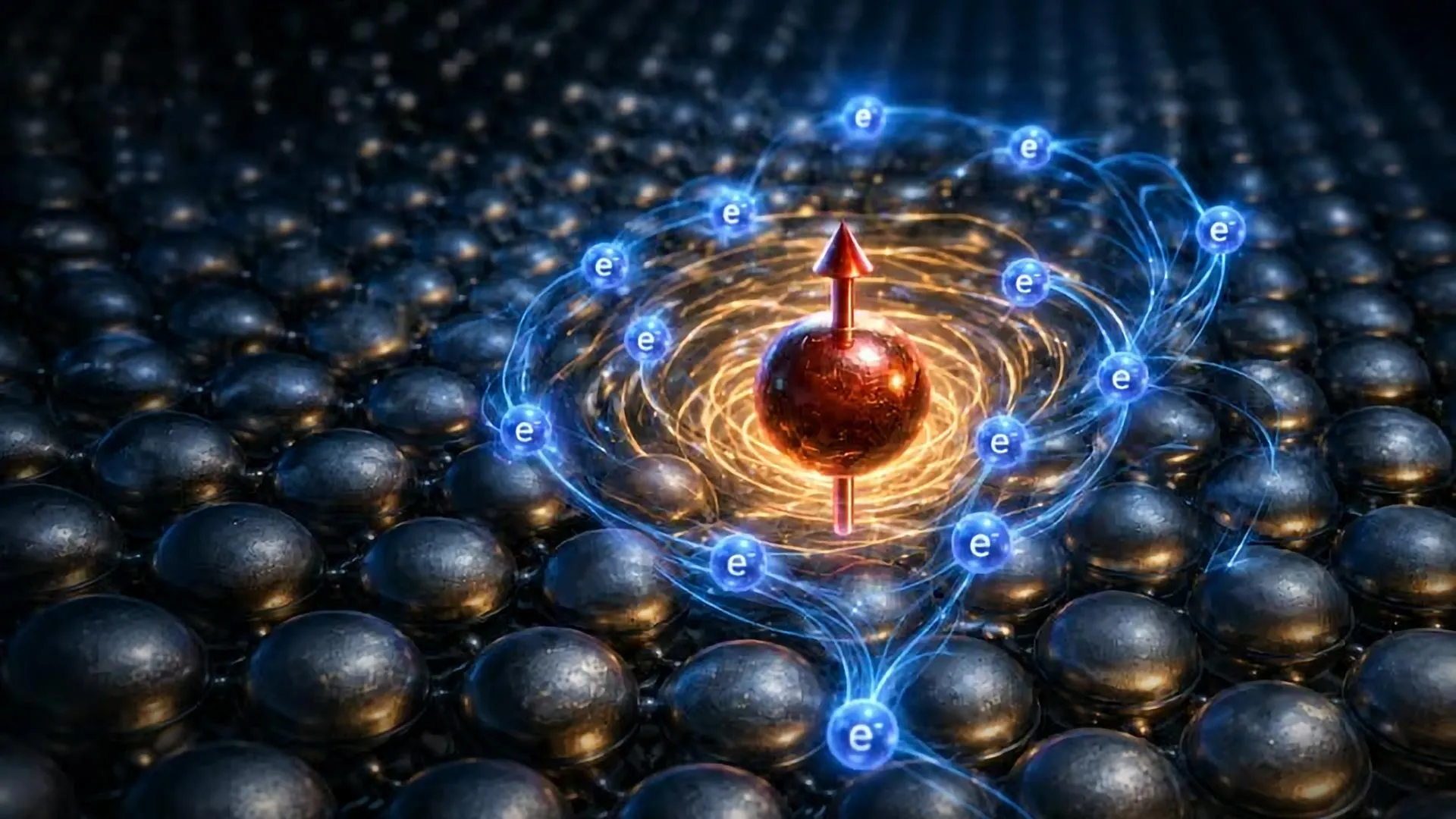
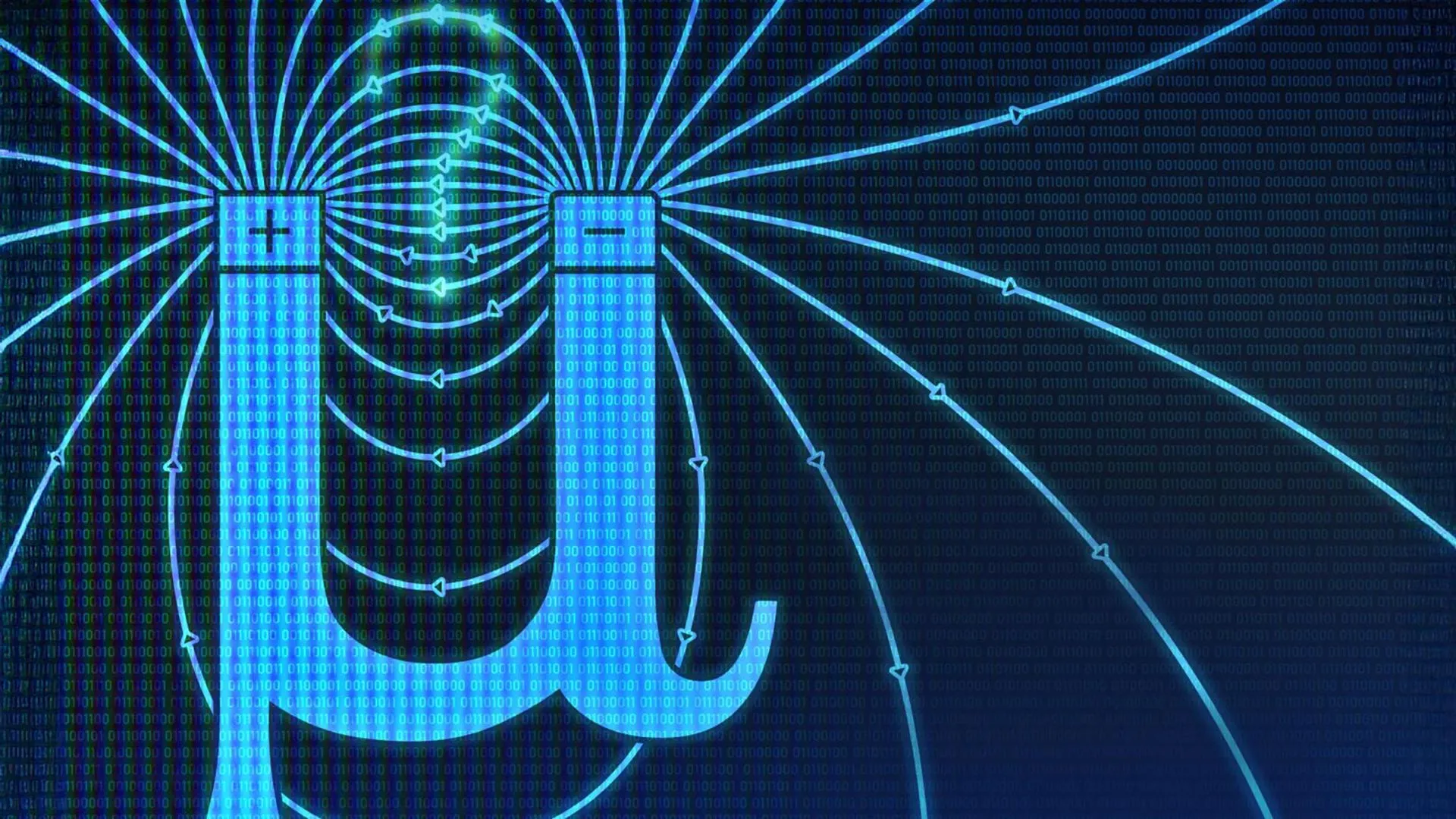
The muon is a fundamental particle that shares many characteristics with the electron, including its negative charge and quantum spin, but possesses approximately 200 times more mass. Because of this greater mass, muons act as highly sensitive probes for the quantum vacuum—the "empty" space that is actually teeming with virtual particles that pop in and out of existence. When a muon is placed in a magnetic field, its internal magnetism causes it to wobble, or precess, like a spinning top. This behavior is quantified as the magnetic moment, or "g."
According to the Dirac equation, a cornerstone of quantum mechanics, the value of g for a point-like particle should be exactly 2. However, quantum field theory dictates that the interaction of the muon with virtual particles in the vacuum causes a slight deviation from this integer. This deviation is known as the "anomalous magnetic moment," or g-2. For decades, the Standard Model—the theoretical framework that describes the electromagnetic, weak, and strong nuclear forces—has been used to predict this value with extreme precision.
The excitement in the physics world stemmed from the fact that for over twenty years, experimental measurements of g-2 appeared to be consistently higher than the theoretical predictions. If the experimental value was truly higher, it implied that the muon was interacting with something not accounted for in the Standard Model—perhaps a new force or a dark matter candidate. This gap reached a statistical significance of 4.2 sigma in 2021, a level that physicists consider highly suggestive of a major discovery.
A Breakthrough in Computational Precision
The recent study, led by Zoltan Fodor, a distinguished professor of physics at Penn State and a prominent member of the BMW (Budapest-Marseille-Wuppertal) collaboration, has fundamentally shifted this narrative. The team spent over a decade refining their calculations using a method known as Lattice Quantum Chromodynamics (Lattice QCD).
Lattice QCD allows scientists to simulate the strong force—the interaction that binds quarks together—by discretizing space-time into a four-dimensional grid or "lattice." This approach is necessary because the equations governing the strong force, unlike those for electromagnetism, are notoriously difficult to solve using traditional analytical methods. As particles move further apart, the strong force does not weaken; instead, it behaves like a stretching rubber band, requiring immense energy that can even lead to the creation of new particles.
"The old methodology involved collecting thousands of experimental results and reinterpreting them to get a single number," Fodor explained. "Our approach was completely different. We divided space-time into very small cells, a lattice, and then we solved the equations of the Standard Model on that."
The complexity of this task cannot be overstated. It required the use of some of the world’s most powerful supercomputers and a sophisticated "hybrid" strategy. The team used lattice calculations for short and medium distances between cells while incorporating highly reliable experimental data for larger distances where existing measurements were already consistent. By simulating the equations on finer lattices than any previous study, they were able to reduce uncertainty to a level of parts per billion.
Chronology of the Muon Mystery
To understand the weight of this new finding, one must look at the history of muon research, which has been a pillar of experimental physics for over half a century:
- The 1960s and 1970s: Experiments at CERN (the European Organization for Nuclear Research) provided the first high-precision measurements of the muon’s magnetic moment, confirming the basic tenets of quantum electrodynamics.
- 2001 (Brookhaven National Laboratory): The E821 experiment in New York produced a result that deviated significantly from the Standard Model prediction of the time. This sparked the first major wave of "new physics" speculation.
- 2020 (The Muon g-2 Theory Initiative): A massive international consortium of over 130 physicists released a consensus theoretical value for g-2, which confirmed a widening gap between theory and the Brookhaven data.
- 2021 (Fermi National Accelerator Laboratory): The first results from the Muon g-2 experiment at Fermilab matched the Brookhaven results with even higher precision. This brought the discrepancy to a 4.2-sigma level, tantalizingly close to the 5-sigma threshold required to claim a formal "discovery."
- Present Day: The Penn State-led team’s publication in Nature provides a new theoretical baseline. Their refined calculation brings the Standard Model prediction into alignment with the Fermilab and Brookhaven experiments within less than half a standard deviation.
The Role of the Strong Force
The primary source of uncertainty in previous theoretical models was the "hadronic vacuum polarization" (HVP). This term represents the contribution of the strong force to the muon’s magnetic moment. Because the strong force is so powerful and non-linear at the energy scales relevant to the muon, calculating its effect is the most difficult part of the equation.
Earlier theoretical predictions relied on a "data-driven" approach to estimate HVP, using experimental data from electron-positron collisions. However, the Lattice QCD approach used by Fodor’s team bypasses the need for that external data, instead calculating the HVP from first principles using the fundamental equations of the Standard Model. The discrepancy, it turns out, was not in the physics of the muon itself, but in the previous methods used to estimate the hadronic contributions.
Implications for the Scientific Community
The news has been met with a mixture of professional awe and a sense of "scientific mourning" among those who hoped for a revolution in physics. If the Standard Model can indeed explain the muon’s behavior to 11 decimal places, it reinforces the model’s status as one of the most successful theories in human history.
"People ask me how it feels to make this discovery and, to be honest, I feel somewhat sad," Fodor remarked. "We thought we were going to have a good and trustworthy calculation for a new fifth force. Instead, we found there is no fifth force."
However, from a purely scientific perspective, the achievement is monumental. It provides a rigorous proof of Quantum Field Theory, the mathematical foundation of the Standard Model. While the result suggests that the "fifth force" is not hiding in the muon’s magnetic moment, it does not mean that new physics does not exist elsewhere. Phenomena such as dark matter, dark energy, and the matter-antimatter asymmetry of the universe still cannot be explained by the Standard Model, meaning the search continues in other domains, such as high-energy collisions at the Large Hadron Collider or deep-underground neutrino experiments.
Analysis: The Future of Particle Physics
The resolution of the muon g-2 mystery highlights a critical trend in modern science: the increasing reliance on high-performance computing to validate theoretical frameworks. As experimental precision reaches the parts-per-billion level, the "pen-and-paper" era of theoretical physics is being supplemented—and sometimes supplanted—by massive computational simulations.
This study also serves as a cautionary tale regarding the "sigma" levels of discovery. While a 4.2-sigma discrepancy is statistically significant, it is only as reliable as the underlying theoretical assumptions. By correcting those assumptions, the Penn State team has demonstrated that what looks like a "new force" can sometimes be a "missing calculation."
The research was a global effort, supported by the U.S. Department of Energy and the European Research Council, involving researchers from several international institutions. As the scientific community digests these findings, the focus will likely shift to other potential anomalies. For now, the Standard Model remains the undisputed law of the subatomic land, proving once again that nature’s secrets are often hidden within the complexity of the forces we already know, rather than the ones we have yet to find.