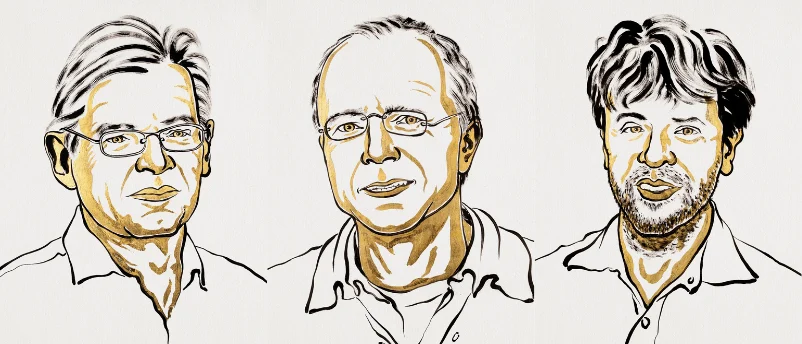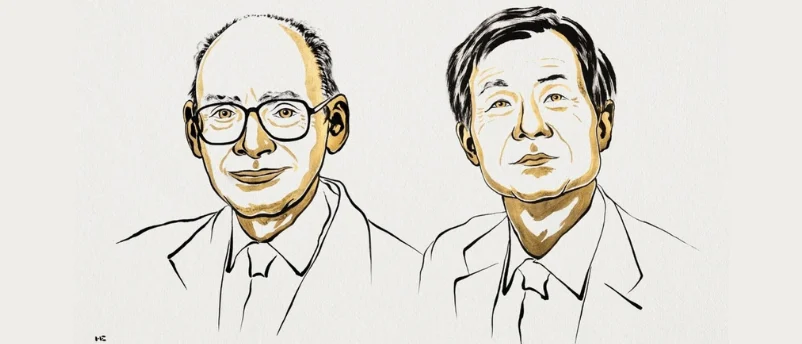
The 2026 Nobel Prize in Chemistry has been jointly awarded to French chemist Henri Kagan and Japanese chemist Kenso Soai for their groundbreaking discoveries explaining how life on Earth developed a fundamental chemical asymmetry. The Royal Swedish Academy of Sciences announced that the laureates were recognized for solving a puzzle that has perplexed the scientific community for more than a century: the origin of homochirality in nature.
Essential building blocks of life, such as amino acids, which form proteins, and sugars, which constitute the backbone of RNA and DNA, exist in two distinct spatial orientations. These variants are non-identical mirror images of each other, much like a human’s left and right hands. In chemistry and physics, this property is known as chirality, and the individual mirror-image versions are called enantiomers.
For reasons that had long eluded researchers, nature displays a strict preference for only one of these enantiomers. While amino acids found in terrestrial living organisms are almost exclusively "left-handed," biological sugars are predominantly "right-handed." Until the pioneering work of Kagan and Soai, the mechanism by which this extreme selectivity—known as homochirality—emerged from a prebiotic world containing equal mixtures of both forms remained one of science’s greatest unresolved mysteries.
The Foundations of Chirality and the Pharmaceutical Challenge
To understand the magnitude of Kagan and Soai’s achievement, it is necessary to examine the physical nature of chiral molecules. While two enantiomers share identical boiling points, melting points, and densities in a standard environment, they interact differently with polarized light and biological receptors.
This behavioral divergence carries profound practical implications, particularly in the pharmaceutical and agricultural industries. Biological systems are themselves inherently chiral, meaning that enzymes, receptors, and cell membranes interact with drug molecules in a highly stereospecific manner. Often, one enantiomer of a medication produces the desired therapeutic effect, while the mirror-image counterpart can be inactive or, in worst-case scenarios, induce severe toxicity.
A tragic historical illustration of this principle is thalidomide, a drug prescribed in the late 1950s and early 1960s to alleviate morning sickness in pregnant women. One enantiomer of thalidomide safely mitigated nausea, while the other caused devastating birth defects. Although modern pharmaceutical manufacturing employs sophisticated asymmetric synthesis techniques to produce single-enantiomer drugs, the broader question of how nature achieved this selectivity independently remained unanswered until the contributions of Kagan and Soai.
Chronology of Discovery: From Nonlinear Effects to Asymmetric Amplification
The journey toward understanding homochirality spans decades of meticulous experimentation in organic chemistry. The historical timeline of this scientific breakthrough highlights the incremental yet transformative nature of their findings:
- 1848: French chemist Louis Pasteur makes the foundational discovery of chirality by manually separating the left- and right-handed crystals of sodium ammonium tartrate, observing their opposite effects on polarized light.
- Late 20th Century (Early Work): Scientists establish that chemical reactions producing chiral molecules from achiral starting materials yield racemic mixtures—an equal 50:50 distribution of both left- and right-handed enantiomers. This realization deepens the paradox: how did a primordial Earth biasedly select one form?
- 1985: Henri Kagan, working at Université Paris-Sud in France, discovers the concept of non-linear effects in asymmetric catalysis. He demonstrates that a catalyst with less than 100% optical purity can yield products with high enantiomeric excess, defying the linear proportional assumptions previously held by chemists.
- 1995: Kenso Soai, at the Tokyo University of Science in Japan, publishes his landmark discovery of asymmetric autocatalysis, now widely known as the Soai reaction. He demonstrates a chemical process where a chiral product acts as a catalyst for its own formation, exponentially amplifying a minute initial imbalance into a nearly pure single enantiomer.
- 2000s–2020s: Subsequent research by both laureates and the global chemical community builds upon these foundational principles, connecting asymmetric amplification to prebiotic chemistry, meteorite compositions, and the origins of life.
- October 2026: The Royal Swedish Academy of Sciences awards the Nobel Prize in Chemistry to Henri Kagan and Kenso Soai for solving the mystery of homochirality.
Detailed Analysis of the Laureates’ Contributions
Henri Kagan’s breakthrough in the 1980s provided the mathematical and practical framework for understanding how chemical systems could amplify small asymmetries. Prior to his findings, chemists assumed that the optical purity of a catalyst directly correlated in a linear fashion with the optical purity of the resulting product. Kagan’s discovery of non-linear effects proved that complex catalytic cycles could break this linear rule, allowing a slightly unbalanced mixture to generate highly biased reaction outcomes.
Building upon these thermodynamic and catalytic principles, Kenso Soai achieved a major experimental leap in 1995. The Soai reaction involves the alkylation of pyrimidine carbaldehyde with diisopropylzinc. What makes this reaction unique is that the reaction product itself functions as the catalyst for the reaction.
If a microscopic imbalance—even a minuscule excess of one enantiomer as small as one part in a million—is introduced at the start, the reaction relentlessly amplifies that specific enantiomer while suppressing the other. Through successive cycles of replication, the system transitions from a racemic mixture to complete homochirality. Soai’s discovery provided the most plausible chemical model for how prebiotic Earth could have transitioned from a chaotic mixture of mirror-image molecules to the uniform biochemical systems observed in all living things today.
Official Reactions and Scientific Community Response
The announcement of the 2026 Nobel Prize in Chemistry was met with widespread acclaim across the international scientific community, with academic institutions, industrial research laboratories, and regulatory bodies praising the profound impact of the laureates’ work.
The Nobel Committee for Chemistry emphasized the transformative nature of their insights in its official statement, noting that Kagan and Soai transformed a philosophical question about the nature of life into an approachable, testable branch of modern chemistry. "By uncovering how small initial asymmetries can be systematically amplified through catalytic systems, Kagan and Soai bridged the gap between abiotic chemistry and biological organization," the committee noted.
Colleagues and contemporary researchers highlighted the practical utility of their discoveries. Dr. Elena Vance, a prominent professor of stereochemistry at a leading European research institute, remarked: "Before Kagan and Soai, we understood the symptoms of chirality, but we did not understand the engine driving it. Their work not only explains how life could choose a left-handed pathway billions of years ago, but it has fundamentally guided how we synthesize modern medicines with absolute precision."
Industrial leaders in the pharmaceutical sector similarly acknowledged the debt modern drug development owes to asymmetric catalysis. Modern synthesis routes, heavily influenced by the principles uncovered by the laureates, allow chemical manufacturers to avoid the costly and environmentally taxing separation of racemic mixtures, thereby reducing chemical waste and improving patient safety.
Broader Implications and Future Horizons
The implications of solving the mystery of homochirality extend far beyond organic chemistry and pharmaceutical manufacturing, touching fields as diverse as astrobiology, origin-of-life research, and materials science.
In the realm of astrobiology, scientists study the distribution of enantiomers in meteorites, such as the Murchison meteorite, which has been found to contain amino acids with a slight left-handed excess. The mechanisms demonstrated by Kagan and Soai suggest how an extraterrestrial or terrestrial seed imbalance, potentially caused by circularly polarized light in interstellar space, could have been amplified into the exclusive homochirality observed in terrestrial biology.
Furthermore, materials science is increasingly harnessing chiral principles to design advanced functional materials, including circularly polarized luminescent polymers, chiral metamaterials, and specialized sensors capable of detecting molecular enantiomers with extreme sensitivity. These technological innovations rely directly on the fundamental understanding of chiral amplification and non-linear catalytic behavior pioneered by the French and Japanese chemists.
As the scientific community celebrates the 2026 Nobel Prize in Chemistry, the legacy of Henri Kagan and Kenso Soai stands as a testament to the power of fundamental inquiry. By decoding nature’s preference for handedness, they have provided a cornerstone for understanding the chemical architecture of life itself.