A baffling discovery made during a 2023 National Oceanic and Atmospheric Administration (NOAA) expedition has finally been demystified, revealing itself to be the remnants of a colossal deep-sea anemone. The "golden orb," as it was colloquially dubbed, captivated the scientific community and the public alike for over two years, its true identity eluding researchers until a comprehensive investigation employing advanced genetic and microscopic techniques. The find underscores the vast unknowns that persist within the planet’s deepest oceanic realms and the critical role of ongoing exploration in unraveling these enigmas.
A Deep-Sea Enigma Emerges from the Gulf of Alaska
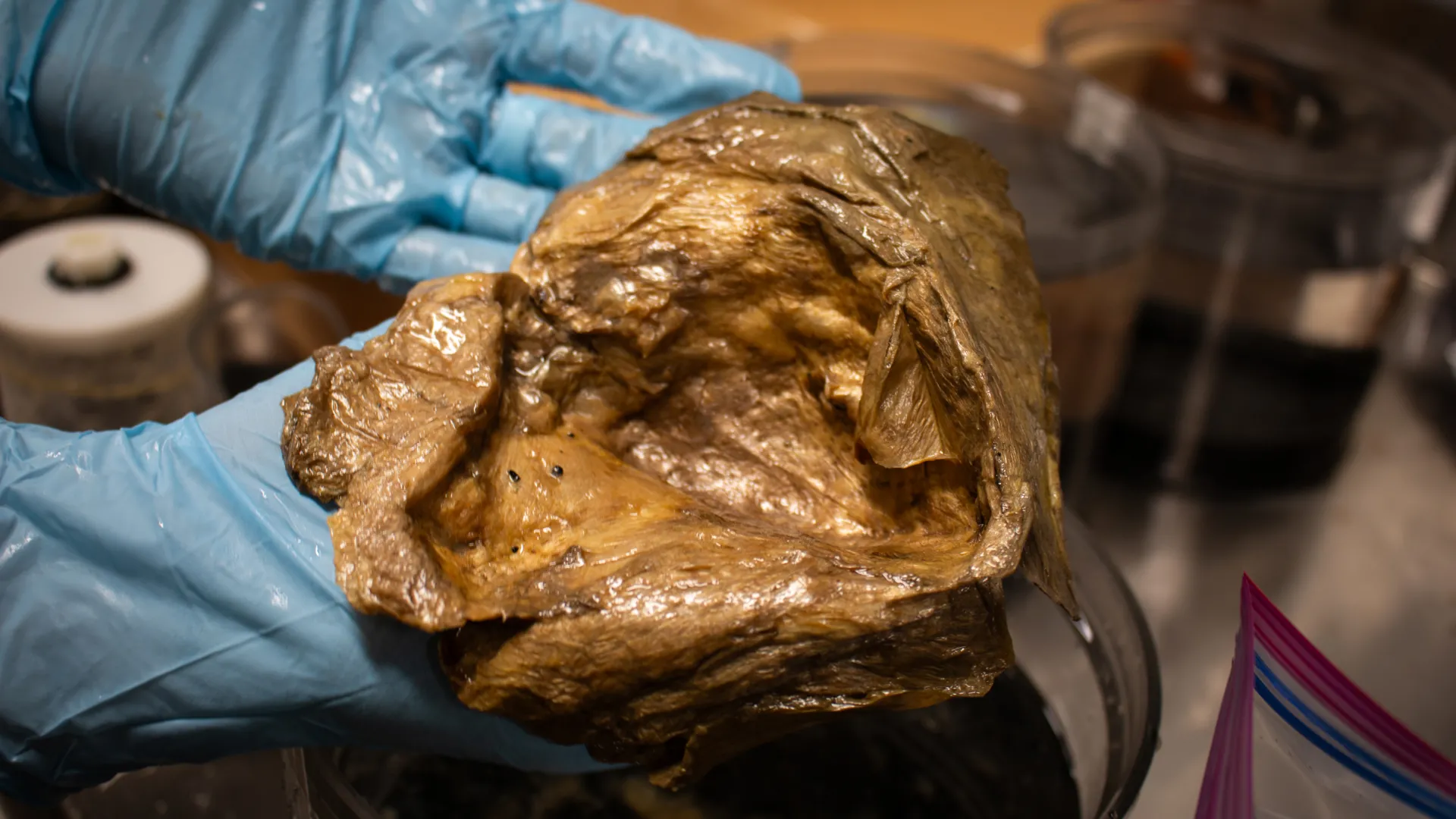
The peculiar golden mass was first encountered on March 15, 2023, by the remotely operated vehicle (ROV) Deep Discoverer, deployed from the NOAA Ship Okeanos Explorer. Operating at a staggering depth of 3,250 meters (approximately 2.02 miles) in the Gulf of Alaska, the ROV’s high-definition cameras captured an image of an unusual, rounded object resting on the seafloor. Its striking golden hue and a discernible small opening immediately set it apart from previously documented marine life and geological formations.
The initial observation sparked a flurry of hypotheses among the onboard science team. Was it an exceptionally large egg case, perhaps from an unknown species? Could it be a unique form of deep-sea sponge, or something entirely novel to science? The presence of an opening further fueled speculation, with some scientists considering the possibility that a creature had recently passed through it. The object’s distinct appearance and the lack of immediate identification rendered it a compelling mystery, a rare occurrence in NOAA’s extensive deep-sea exploration efforts where many organisms can be identified relatively quickly through collaborative knowledge sharing.
To facilitate a detailed examination, the expedition team carefully collected the object using the ROV’s suction sampler. This crucial step allowed the specimen to be transported back to the surface and subsequently delivered to the Smithsonian National Museum of Natural History (NMNH) for in-depth analysis by a team of specialists.
A Multifaceted Investigation: From Stinging Cells to Genomic Sequencing
The journey to identify the "golden orb" was far from straightforward, requiring a sophisticated, multi-disciplinary approach that spanned nearly two years. Dr. Allen Collins, a zoologist and director of NOAA Fisheries’ National Systematics Laboratory, which is housed within the NMNH, acknowledged the challenge: "We work on hundreds of different samples, and I initially suspected that our routine processes would clarify the mystery. However, this turned into a special case that required focused efforts and the expertise of several different individuals. This was a complex mystery that required morphological, genetic, and deep-sea and bioinformatics expertise to solve."
The initial stages of the investigation involved a detailed morphological examination. Researchers from NOAA Fisheries and the Smithsonian employed an integrative taxonomic approach, a method that combines the study of an organism’s physical characteristics with its genetic makeup. Early microscopic analysis revealed that the object did not possess the typical anatomical features of many known marine animals. Instead, it was composed of distinct fibrous layers densely packed with cnidocytes, the specialized stinging cells characteristic of cnidarians – the phylum that includes corals, jellyfish, and anemones. This finding narrowed the potential classification significantly, pointing towards a cnidarian origin.
Further microscopic scrutiny by Abigail Reft, a scientist at the National Systematics Lab, identified the stinging cells as spirocysts. These structures are particularly distinctive and are known to be unique to the Hexacorallia subgroup of cnidarians. Concurrently, scientists made a significant connection by comparing the specimen to a similar, albeit smaller, object that had been collected in 2021 during an expedition by the Schmidt Ocean Institute aboard their Research Vessel Falkor. This earlier find also exhibited matching cellular structures, suggesting a shared biological origin and reinforcing the hypothesis of a cnidarian source.
Unlocking the Genetic Code: The Definitive Identification
While cellular and morphological clues provided strong indications, definitive identification required a deeper dive into the specimen’s genetic material. Initial attempts at DNA barcoding, a common method for species identification, proved inconclusive. Scientists theorized that the sample might have been contaminated with genetic material from numerous other microscopic organisms inhabiting the deep-sea environment, obscuring the primary genetic signature.
To overcome this hurdle, the research team escalated their efforts, opting for whole-genome sequencing. This advanced technique sequences the entire genetic blueprint of an organism, providing a far more comprehensive and robust dataset. The results of this intensive genomic analysis were transformative. The sequencing confirmed the presence of animal DNA and, crucially, revealed a strong genetic match to a specific species: Relicanthus daphneae, a giant deep-sea anemone.
The team’s analysis of mitochondrial genomes extracted from both the 2023 "golden orb" and the 2021 specimen showed them to be nearly identical to a known reference genome for Relicanthus daphneae. This genetic evidence provided the irrefutable confirmation that scientists had been seeking, definitively identifying the enigmatic object.
The True Nature of the "Golden Orb" Revealed
With the culmination of morphological, cellular, and genetic analyses, the scientific consensus was established: the "golden orb" was not an egg, a sponge, or an entirely unknown life form. Instead, it represented a significant structural component of a deceased Relicanthus daphneae anemone – specifically, its basal disc. This disc is the robust, anchoring part of the anemone, which it uses to firmly attach itself to rocky substrates on the deep seafloor, enabling it to withstand strong currents and maintain its position. The golden color likely resulted from a combination of the anemone’s biological pigments and potential chemical reactions with the surrounding deep-sea environment after its death.
The discovery of Relicanthus daphneae itself is noteworthy. These are among the largest known anemones, capable of reaching considerable sizes, and they inhabit the extreme depths of the ocean. Their sessile nature means they are rooted to a specific location, making their discovery and collection a testament to the capabilities of modern deep-sea exploration technology.
Implications for Deep-Sea Science and Exploration
The resolution of the "golden orb" mystery holds significant implications for our understanding of deep-sea ecosystems and the methods used to explore them. It serves as a powerful reminder of the vast biological diversity that remains undiscovered and uncharacterized in the ocean’s depths. The challenges encountered in identifying the orb, particularly the initial difficulties with DNA barcoding, highlight the complexities of studying organisms from extreme environments and the need for adaptable and advanced analytical techniques.
Captain William Mowitt, acting director of NOAA Ocean Exploration, commented on the significance of such discoveries: "So often in deep ocean exploration, we find these captivating mysteries, like the ‘golden orb.’ With advanced techniques like DNA sequencing, we are able to solve more and more of them. This is why we keep exploring – to unlock the secrets of the deep and better understand how the ocean and its resources can drive economic growth, strengthen our national security, and sustain our planet."
The successful identification of the "golden orb" is a triumph for integrative taxonomy and showcases the power of collaboration between different scientific institutions, such as NOAA and the Smithsonian. It also underscores the importance of long-term data collection and specimen archiving, as the comparison with the 2021 find proved instrumental.
The Unending Frontier: The Deep Ocean’s Persistent Mysteries
Despite the resolution of this particular enigma, the deep sea continues to represent one of Earth’s least understood frontiers. The immense pressure, perpetual darkness, and frigid temperatures create a challenging environment for both life and human exploration. However, it is precisely these extreme conditions that foster unique adaptations and potentially novel biological discoveries.
Each solved mystery, like that of the "golden orb," not only expands our scientific knowledge but also fuels further curiosity and investment in deep-sea research. These explorations are vital for a multitude of reasons, ranging from the discovery of new pharmaceutical compounds and genetic resources to a better understanding of climate change impacts on marine ecosystems and the identification of potential deep-sea mineral resources.
The "golden orb" of the Gulf of Alaska, once a perplexing enigma, now stands as a symbol of scientific endeavor, technological advancement, and the enduring allure of the deep ocean, a realm still brimming with untold stories and secrets waiting to be unearthed by dedicated researchers. The continuous efforts of organizations like NOAA and their partners are instrumental in illuminating these dark depths and revealing the intricate tapestry of life that thrives far beneath the waves.