

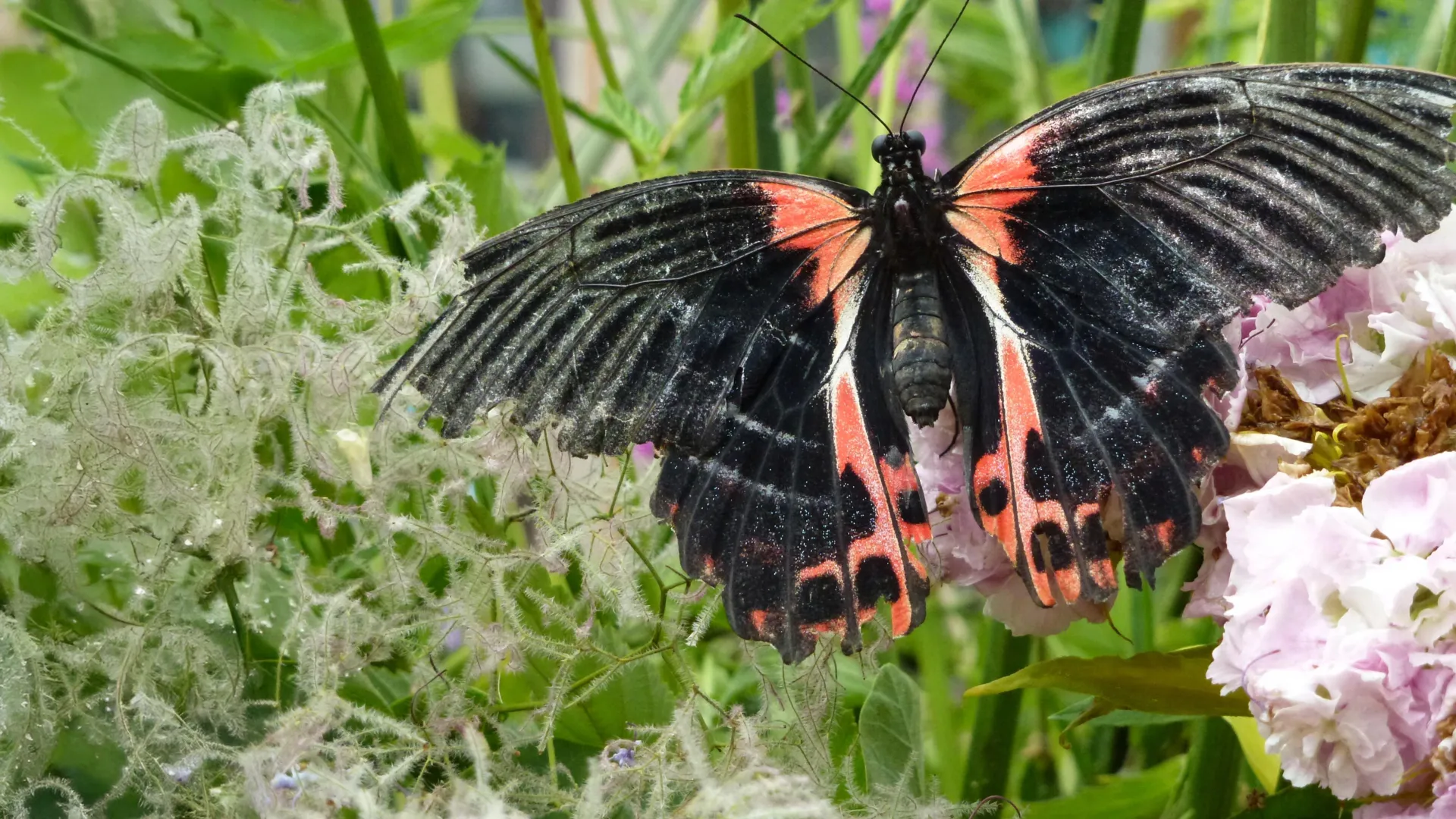
Scientists have uncovered evidence that evolution has relied on the same genetic "cheat sheet" for more than 120 million years, raising the possibility that life on Earth may be more predictable than once believed. This groundbreaking discovery, detailed in a recent study published in the journal PLoS Biology, challenges long-held assumptions about the randomness of evolutionary processes and offers a new lens through which to understand the diversification of life.
A Tale of Convergent Evolution in South American Rainforests
The research, spearheaded by an international consortium of scientists from the University of York and the Wellcome Sanger Institute, delved into the intricate world of butterflies and moths inhabiting the South American rainforests. These captivating insects, despite their often significant evolutionary distances, frequently exhibit remarkably similar wing color patterns. These striking resemblances are not mere aesthetic coincidences but serve a critical evolutionary purpose: acting as potent warning signals to potential predators. This phenomenon, known as mimicry, has long fascinated biologists, illustrating how unrelated species can converge on similar survival strategies.
The study focused on seven distinct butterfly lineages and a single species of day-flying moth. The researchers’ objective was to unravel the genetic underpinnings of these shared warning colorations. What they found was nothing short of astonishing: across these distantly related species, evolution has repeatedly tapped into the same limited set of genes, primarily the ivory and optix genes, to generate nearly identical warning signals. This suggests a remarkable degree of genetic conservation and a predictable evolutionary pathway for the development of these vital protective patterns.
Unlocking the Genetic Switches: The Role of Regulatory Elements
Instead of modifying the genes themselves, evolution has primarily acted upon the regulatory elements that govern gene expression. These regulatory elements, often referred to as "genetic switches," dictate when, where, and to what extent a gene is activated. In the case of butterfly wing coloration, the study revealed that these switches have been modified in strikingly similar ways across various species. This suggests that the fundamental genetic machinery for producing these colors is ancient and has been fine-tuned rather than fundamentally reinvented.
The findings for the moth species, however, introduced a surprising twist. While also utilizing the ivory and optix genes, the moth employed a more complex mechanism. It adopted an inversion strategy – a significant rearrangement of DNA where a large segment is flipped backwards. Intriguingly, this inversion mechanism closely mirrors a strategy previously observed in one of the studied butterfly species. This dual approach, employing both subtle modifications of regulatory switches and larger-scale DNA rearrangements, highlights the diverse yet ultimately convergent strategies evolution can employ to achieve similar outcomes.
The Predictability of Life: A 120-Million-Year Legacy
Professor Kanchon Dasmahapatra from the University of York’s Department of Biology elaborated on the significance of these findings. "Convergent evolution, where many unrelated species independently evolve the same trait, is common across the tree of life," he stated. "But we rarely have the opportunity to investigate the genetic basis of this phenomenon with such clarity. Investigating seven butterfly lineages and a day-flying moth, we show that evolution can be surprisingly predictable, and that butterflies and moths have been using the exact same genetic tricks repeatedly to achieve similar color patterns since the age of the dinosaurs."
This statement underscores a paradigm shift in our understanding of evolution. While the inherent variation within populations is a fundamental driver of evolutionary change, this research suggests that the pathways leading to specific adaptations may not be entirely random. The reuse of the ivory and optix genes, and the recurrent modification of their regulatory elements, points towards a degree of predictability in how life colonizes specific ecological niches and develops crucial survival traits. The mention of "since the age of the dinosaurs" situates this genetic "cheat sheet" within a deep evolutionary timescale, emphasizing its enduring significance.
The Evolutionary Advantage of Shared Warning Colors
The persistent reappearance of these specific warning color patterns is deeply rooted in ecological pressures. Professor Joana Meier from the Wellcome Sanger Institute explained the functional importance of these visual signals. "These distantly related butterflies and the moth are all toxic and distasteful to birds trying to eat them," she remarked. "They look very much alike because if birds have already learned that a specific color pattern means ‘do not eat, we are toxic,’ it is beneficial for other species to display the same warning colors." This phenomenon, known as Müllerian mimicry, benefits all involved species by reducing the predation pressure on each individual species as birds learn to avoid the shared aposematic (warning) signal.
Professor Meier further highlighted the genetic basis for this mimicry’s success. "Here, we show that these warning colors are particularly ideal as it seems quite easy to evolve these same color patterns due to the highly conserved genetic basis over 120 million years." The implication is that the genetic architecture for generating these specific colors is robust and readily available, making it an efficient evolutionary solution for species that develop toxicity. The 120-million-year timeframe suggests that this genetic toolkit has been instrumental in the survival and diversification of countless lepidopteran species throughout much of Earth’s Mesozoic and Cenozoic eras.
Implications for Predicting Future Adaptations
The profound implications of this research extend beyond understanding past evolutionary events. The recognition that evolution frequently revisits established genetic pathways could revolutionize our ability to predict future adaptations. In an era of rapid environmental change, understanding how species respond to novel pressures is paramount. If nature consistently favors certain genetic solutions, then anticipating how species might adapt to climate shifts, habitat fragmentation, or new diseases may become a more achievable scientific endeavor.
This predictability could inform conservation strategies, allowing scientists to better identify species that might be more resilient to certain environmental stressors due to their pre-existing genetic predispositions. Conversely, it could also help pinpoint species that are less adaptable, lacking the genetic "toolkit" to readily evolve new advantageous traits. The study suggests that evolution is not an entirely unguided, random walk but rather a process that often operates within the constraints and opportunities presented by ancient genetic blueprints.
A Deeper Dive into the Genetic Mechanism: Beyond Gene Sequences
The research team meticulously employed advanced genomic sequencing techniques and comparative genomics to achieve their findings. By comparing the genomes of these diverse species, they could identify not only the genes involved in color production but also the regulatory regions controlling their expression. This involved a multi-year effort, beginning with sample collection in the diverse ecosystems of South America, followed by extensive laboratory analysis.
The initial hypothesis likely centered on identifying unique mutations or gene duplications that could explain the convergent evolution of wing patterns. However, the discovery that changes in regulatory elements, rather than wholesale gene alterations, were the primary drivers of this mimicry was a significant departure. This highlights the sophistication of evolutionary mechanisms, demonstrating that subtle changes in the "volume knob" of gene expression can have profound phenotypic consequences.
The specific identification of the ivory and optix genes is crucial. These genes are known to play roles in pigment production and developmental pathways related to wing patterning. Their consistent involvement across such a broad evolutionary spectrum suggests they are central to the genetic architecture of color in Lepidoptera. The finding that a large DNA inversion, a substantial genomic rearrangement, could achieve a similar outcome in the moth further underscores the flexibility and ingenuity of evolutionary processes. This type of large-scale change can dramatically alter the regulation of multiple genes simultaneously, offering a powerful albeit less subtle, route to adaptation.
Supporting Data and Methodological Rigor
The study’s robustness is further supported by the breadth of its sample size, encompassing seven distinct butterfly species and one moth species. This extensive sampling across multiple evolutionary lineages provided a strong statistical foundation for their conclusions. The researchers utilized next-generation sequencing technologies to generate high-quality genomic data, allowing for precise comparisons of gene sequences and regulatory regions.
Furthermore, the study employed bioinformatics tools to analyze gene expression patterns and identify conserved regulatory elements. This computational approach was critical in pinpointing the specific "switches" that have been repeatedly modified over millions of years. The validation of these findings through experimental manipulation or ancestral reconstruction, while not explicitly detailed in the initial report, would further solidify the conclusions regarding the functional roles of these genetic elements and their evolutionary history. The publication in a peer-reviewed journal like PLoS Biology indicates that the study has undergone rigorous scrutiny by experts in the field.
Expert Reactions and Future Directions
While specific direct quotes from other leading evolutionary biologists were not provided in the initial summary, the implications of this research are likely to spark considerable discussion and further investigation within the scientific community. Experts in evolutionary genetics and developmental biology are expected to weigh in on the broader applicability of these findings. Questions will undoubtedly arise regarding whether similar "genetic cheat sheets" exist for other complex traits across different taxa.
Future research could focus on expanding the scope of this investigation to include a wider array of species and geographic locations. Understanding the prevalence of such conserved genetic pathways across different continents and evolutionary groups would provide a more comprehensive picture of evolutionary predictability. Additionally, exploring the specific environmental pressures that have driven the repeated evolution of these warning colorations would offer valuable insights into the interplay between genetics, ecology, and adaptation.
The study’s findings also open avenues for research into the evolution of developmental plasticity. How do these conserved genetic mechanisms allow for variations in color patterns within a species, and how do these variations respond to different environmental cues? These are critical questions for understanding the nuances of adaptation.
In conclusion, the discovery of evolution’s enduring genetic "cheat sheet" for wing coloration in butterflies and moths represents a significant advancement in our understanding of life’s history and its potential future trajectories. It suggests that while the tapestry of life is rich with diversity, the threads used to weave it may be fewer and more recurring than previously imagined, pointing towards a fascinating predictability within the grand, unfolding narrative of evolution.

















Leave a Reply